12 Play Console app testers for Android app testing in Bulgaria
Hire 12 Play Console app testers in Bulgaria. Pass Google Play closed testing in 14 days with real Android testers and gain Play Store production access.
Why Play Store Closed Testing Matters in Bulgaria
Bulgaria has evolved into one of Eastern Europe's most dynamic software development centers, where mobile smartphone adoption is exceptionally high. Bulgarian users expect mobile applications to be snappy, responsive, and resilient across a variety of hardware - ranging from premium flagship devices to budget-friendly Android smartphones running on local telecom networks like Vivacom, A1, and Yettel. When you submit your app for Google Play Closed Testing, Google's automated evaluation algorithms examine whether your software performs consistently without unexpected memory spikes, battery drains, or sudden ANR (Application Not Responding) crashes. If your testing group consists of people who open your app once and never return, Google flags the track as inactive. Achieving successful Play Store Closed Testing requires active testers who keep the app installed on their personal hardware, interact with core screens, and provide the usage metrics Google demands.
Real Human Testing vs Fake Bots
When facing strict launch deadlines, some developers make the critical mistake of buying bot traffic, emulator farms, or low-cost click scripts. Google's security systems can immediately detect artificial engagement patterns, and cutting corners will put your entire developer account in jeopardy. Here is how genuine human testing compares to automated shortcuts for your Android app testing in Bulgaria.
Real Human Testers
Real testers install your application directly on physical Android smartphones with active Google accounts. They interact with your buttons, scroll through dynamic lists, trigger network calls over realistic Wi-Fi and 4G/5G mobile data connections, and experience your user interface naturally. When real people evaluate your build, they generate genuine telemetry - including natural touch gestures, varied session durations, and realistic background state transitions. This organic activity gives Google's automated review system the exact proof it requires to grant production track approval.
Automated Bots and Emulators
Automated scripts and emulator farms operate from cloud data centers with static IP addresses and identical hardware fingerprints. They do not maintain real Google Play purchase histories, active email traffic, or realistic daily usage routines. Google's machine learning models easily detect this synthetic behavior. Using bots does not just cause your production access request to be rejected - it also risks triggering permanent policy strikes or full account termination on Google Play Console.
The difference between genuine human verification and artificial testing methods is substantial across every key metric:
| Feature | Real Human Service | DIY Friends & Family | Automated Bots & Emulators |
|---|---|---|---|
| Account Authenticity | Aged, genuine Google accounts | Real accounts but low engagement | Synthetic, newly created dummy accounts |
| Device Diversity | Varied physical Android devices & OS versions | Limited to personal circles | Virtual emulators and headless servers |
| Network Realism | Residential and commercial IP pools | Single local network | Data center IP ranges easily flagged |
| Engagement Quality | Daily active sessions and organic feedback | Sporadic logins, quick uninstalls | Scripted, repetitive, unnatural clicks |
| Production Approval Rate | Extremely high and fully compliant | Moderate due to tester drop-off | Near zero, high risk of account suspension |
| Developer Time Invested | Zero hassle, fully managed workflow | Constant begging and daily reminders | Wasted budget and lost launch momentum |
Struggling with the 14-Day Testing Requirement?
Skip the hassle of recruiting unreliable testers. Our professional fleet of real Android devices guarantees Google Play compliance in exactly 14 days. Zero bots. Zero emulators. 100% production approval guarantee.
Complete Pre-Launch Closed Testing Checklist
Before initiating your 14-day closed testing track, your application and Play Console configuration must be properly structured. Use this comprehensive checklist to verify your technical and administrative readiness before inviting testers.
Technical Build & Performance Optimization
Verify that your signed Android App Bundle (.aab) targets the latest Android API level required by Google Play policies.
Test deep link navigation and back stack handling to ensure users do not trigger sudden crashes when navigating between views.
Optimize network timeouts and graceful offline handling for users moving through fluctuating mobile coverage areas across Bulgaria.
Audit background tasks, push notification listeners, and battery optimization settings to prevent abnormal battery drain.
Run comprehensive UI layout tests across multiple aspect ratios, tablet form factors, and small-screen budget Android devices.
Play Console Configuration & Compliance
Complete the App Content questionnaire accurately, including Data Safety, privacy policy URLs, and target audience age declarations.
Configure an active Closed Testing track under Release Management and add all verified tester email addresses to your testing list.
Prepare localized store listing metadata, including high-resolution app icons, feature banners, and accurate translated descriptions.
Set up an accessible feedback channel (such as an in-app feedback dialog, support email, or Google Group) for testers to report bugs.
Ensure your test track availability includes Bulgaria and any secondary regional markets you plan to support upon public launch.
Step-by-Step Roadmap to Play Store Production
Passing the closed testing phase is a structured progression. Following these six steps ensures a smooth path from internal release to live production status on Google Play.
Step 1: Release Candidate Preparation
Begin by running rigorous internal testing on your release build. Eliminate obvious UI glitches, fix memory leaks, and verify that all external API endpoints function under production conditions. Your release candidate should represent the polished experience you want final end-users to receive.
Step 2: Track Setup and Closed Release
Upload your signed App Bundle to the Closed Testing track in Google Play Console. Complete all mandatory compliance declarations, specify your country availability, and generate your web and Android opt-in testing links.
Step 3: Onboarding Verified Testers
Distribute the opt-in invitations to your dedicated group of real human testers. Each tester must accept the invitation through their Google account, download the app directly via Google Play, and install the build on their physical Android device.
Step 4: Continuous 14-Day Engagement
Maintain active daily engagement throughout the 14-day test cycle. Testers open the app periodically, explore new screens, and submit feedback. Avoid making massive architectural rewrites during this period unless correcting a critical crash that impedes testing.
Step 5: Production Access Application
Once the 14-day requirement concludes, access the production application questionnaire inside Play Console. Detail your testing methodology, describe the user feedback gathered during the test, and explain the bug fixes or optimizations you implemented.
Step 6: Official Production Rollout
Upon receiving approval from the Google review team, promote your closed testing release to the Production track. Your app is now live for all users in Bulgaria and global territories to download directly from the Google Play Store.
Frequently Asked Questions
What is the exact requirement for Google Play Closed Testing in Bulgaria?
For personal developer accounts created after November 2023, Google mandates that you must run a closed test with real users who remain opted in and keep your app installed for a minimum of 14 consecutive days. While developers often refer to the benchmark of 12 Testers for 14 Days, having an active buffer of dedicated testers ensures that casual drop-offs or uninstalls do not interrupt your qualifying timeline. Google verifies that real human accounts install the app from the Play Store and open it over multiple sessions before you can unlock the Apply for Production button.
Why do friends and family often fail to help developers pass the 14-day test?
Relying solely on friends, colleagues, or family members is one of the most common causes of closed testing failure. While people may enthusiastically install your app on day one, they usually forget to open it after a few days or uninstall it to free up phone storage. Google's monitoring systems track continuous retention and daily active sessions. If half your testing group uninstalls your APK or never launches it after the first weekend, your 14-day continuous activity threshold will be broken, forcing you to restart the testing cycle from scratch.
Can testers be located outside Bulgaria if my app is targeted locally?
Yes. Google Play Console allows you to include testers globally as long as your Closed Testing track settings enable those countries and the testers accept your opt-in link using valid Google accounts. While technical stability, crash-free rates, and continuous engagement can be verified by real users worldwide, having testers familiar with local context, Cyrillic typography, and regional payment flows provides an added layer of qualitative assurance for your Bulgarian launch.
How does Google detect fake testing services and automated bot traffic?
Google evaluates comprehensive telemetry from testing devices, including Google account age, associated device hardware profiles, battery usage curves, touch event distributions, and network routing. Cloud servers, bot scripts, and virtual emulators lack natural human usage patterns - they do not receive SMS messages, check personal emails, or move between cellular cell towers. When Google identifies artificial engagement from data center IPs, it flags the test track as fraudulent and denies production access.
Can I push bug fixes and app updates while the 14-day closed test is running?
Yes, pushing updates during the test is completely supported and actually demonstrates proactive developer maintenance. If testers discover minor UI glitches or edge-case bugs, you can upload a new App Bundle version to the same Closed Testing track. Google's review team views incremental updates favorably in your production application summary, as long as the new builds remain stable and do not break core functionality for the active testing cohort.
What questions does Google ask when I apply for production access after 14 days?
After completing the 14-day closed testing period, Google Play Console requires you to fill out a detailed production access questionnaire. You must explain how you recruited your testers, describe the typical feedback and bug reports you received, summarize the technical changes you made in response to that feedback, and articulate why your app is ready for a broad public release. Providing clear, concrete details about real tester engagement is essential for passing the final manual review.
The Testing Pipeline
Your journey to Google Play production access, simplified and automated.
Sign In
Authenticate your account to initialize the 14-day QA fleet for your Android release.
Opt-In URL
Upload your testing link. We assign 12 verified users with real Android devices to download and test your Android release.
Testing Begins
A dedicated testing supervisor is assigned to monitor progress while testers engage with your Android app and provide feedback throughout the testing period.
Compliance Complete
Our lab maintains active installations for two weeks straight, ensuring a clean track record and providing a QA compliance log for your release.
Why Developers Trust Us
Satisfy your Play Store Console testing obligations with our managed physical device fleet tailored for Android builds.
The 14-Day Production Guarantee
We complete the required 14-day closed testing process with real human testers and physical Android devices, while providing clear testing evidence and documentation throughout the process.
If Google specifically rejects production access due to insufficient testing engagement, you are covered by our free re-run or 100% refund guarantee, subject to our Refund Policy.
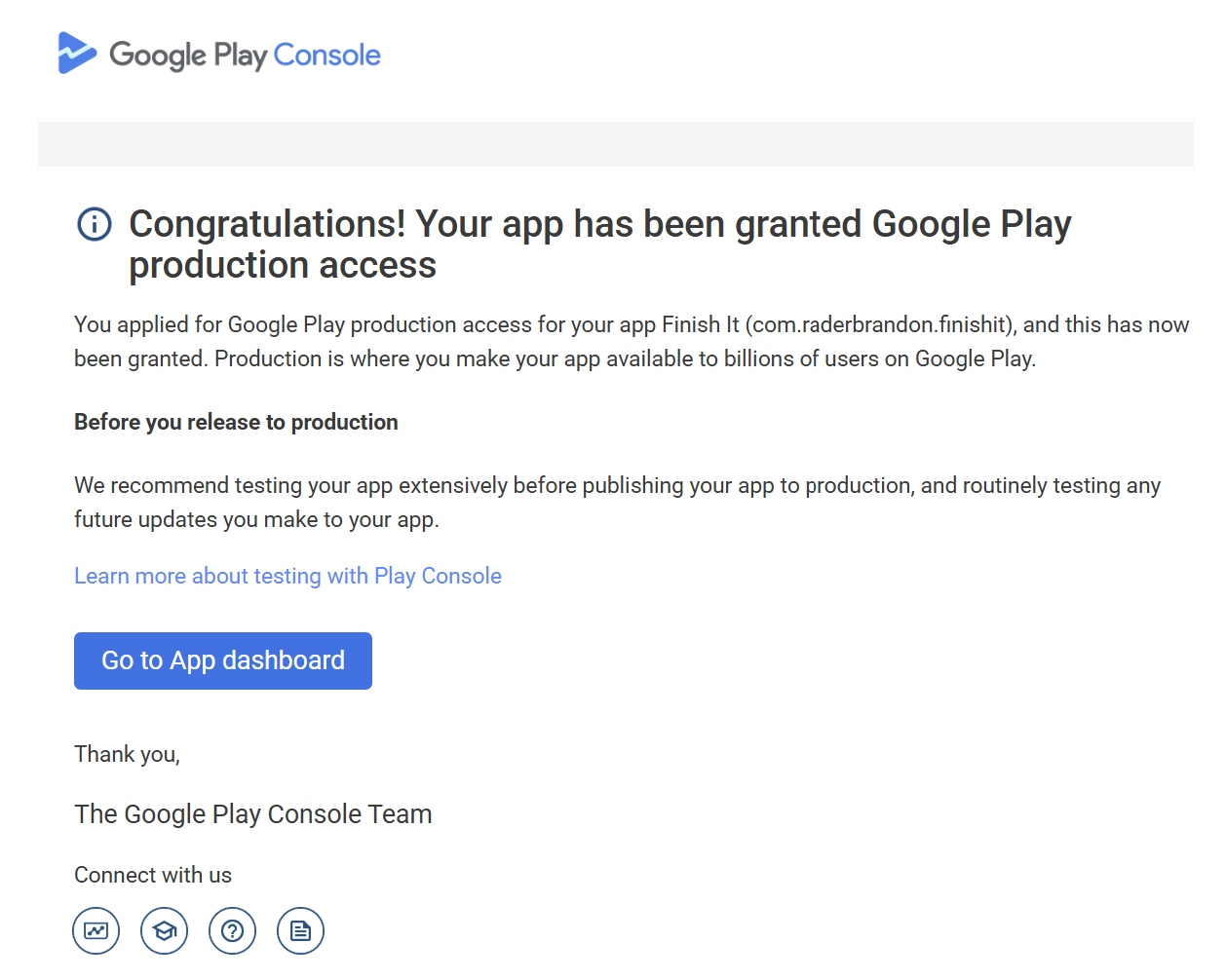
Verified Production Access
Quality QA Testing Reports
Clear, actionable reports with screenshots and evidence for every important issue found during testing.
Real Device Testing & Diagnostics
Real human testers use physical Android devices to test your app, verify real user flows, and provide clear testing evidence and professional QA reports.
Guaranteed App Approval
Our structured 14-day closed testing process is designed to meet Google Play's production requirements for your Android release.
Simple Closed Testing Pricing
Select the plan that fits your Android app complexity.
Loading Packages
Please wait while we fetch the best options for your region...
Frequently Asked Questions
Everything you need to know about passing your closed testing requirements.