12 Play Console app testers for Android app testing in Dominican Republic
Hire 12 Play Console app testers in Dominican Republic. Pass Google Play closed testing in 14 days with real Android testers and unlock Play Store production access.
Navigating Google Play Closed Testing for Dominican Republic App Developers
The Dominican Republic is rapidly emerging as a prominent Caribbean technology powerhouse. Software development studios, fintech creators, logistics startups, and independent mobile engineers in Santo Domingo, Santiago de los Caballeros, and Puerto Plata are launching inventive mobile products for domestic and global markets. However, taking a fresh Android app to open production on the Google Play Store requires passing an uncompromising compliance checkpoint. Under policies established for personal developer accounts created after November 2023, Google mandates that developers complete a rigorous closed testing stage with a minimum of 12 opt-in testers continuously active for at least 14 uninterrupted days before granting production track access.
For Android engineers and startup founders in the Dominican Republic, organizing 12 dependable testers across diverse physical devices poses a significant operational bottleneck. Relying on casual peer circles, family members, or unofficial testing forums often leads to early uninstalls, inactive days, and subsequent rejection when applying for production access. Conquering this hurdle requires a disciplined testing structure featuring real hardware, consistent user engagement, and clean telemetry data that satisfies Google Play Console automated review algorithms.
Understanding the 12 Testers for 14 Days Mandate
Google established the closed testing requirement to elevate app quality standards, reduce crash frequencies, and protect store users from unstable or fraudulent software. To qualify for production distribution, personal developer accounts must recruit at least 12 individual Google accounts who officially opt into the closed testing track, download the application build via Google Play, and keep the build installed on their physical Android devices across 14 consecutive calendar days.
Passing this evaluation involves far more than simply collecting a list of email addresses. Google Play Console continuously measures background telemetry, daily active device counts, install persistence, and opt-in continuity. If registered testers delete the application prematurely, fail to interact with the software, or utilize emulator-driven automated scripts, Google's compliance system resets the 14-day clock or denies the final production release application.
Unique Testing Challenges in the Dominican Republic Market
Software creators building Android applications across the Dominican Republic encounter several distinct technical and logistical hurdles during closed testing:
- Hardware and Brand Diversity: The Dominican mobile landscape features a wide distribution of budget, mid-range, and flagship devices from manufacturers like Xiaomi, Samsung, Tecno, and Motorola. Testing exclusively on a few local team phones often overlooks critical OEM-specific bugs, custom UI skins (such as MIUI/HyperOS or One UI), and screen aspect ratio clipping.
- Tester Inactivity and Drop-off: Friends and acquaintances typically install the app on Day 1 but forget to open it during the following two weeks. When Google's review pipeline detects flatlined telemetry between Day 3 and Day 14, production approval is routinely refused.
- Caribbean Network Variability: Apps designed for local services, remittance, or tourism must handle fluctuations between high-speed urban fiber Wi-Fi, variable 4G/LTE mobile networks, and spotty rural connectivity without triggering Application Not Responding (ANR) errors.
- Account Safety Risks from Bot Services: Purchasing artificial opt-ins or bot clicks from untrusted freelance marketplaces violates Google Play Developer Program Policies. Google Play Protect easily identifies synthetic engagement patterns, resulting in account strikes or permanent developer profile termination.
Real Physical Testers vs. Automated Bot Farms
Selecting the proper testing strategy directly determines whether your Android app passes production review seamlessly on the first attempt or remains trapped in endless testing loops.
Real Human Testers (Recommended)
- Real physical Android smartphones spanning Android 10 through Android 15.
- Authentic user engagement including genuine touch inputs, navigation flows, and network calls.
- Continuous 14-day opt-in retention with organic background sessions and daily opens.
- Meaningful bug reports, UI feedback, and crash diagnostics submitted via official Play channels.
- Total adherence to Google Play Developer Program Policies and account safety guidelines.
Bot Networks and Fake Testers (High Risk)
- Rooted device farms, emulators, and datacenter IP pools flagged by Google Play Protect.
- Repetitive, scripted interaction sequences and synchronized launch timestamps.
- High mid-test dropout rates and abrupt uninstalls that reset the 14-day testing timer.
- Zero actionable feedback, UX insights, or real-world crash reporting.
- Severe danger of immediate rejection and permanent Google Play Console account termination.
Comparative Evaluation of Closed Testing Solutions
The comparison table below outlines the core differences between a dedicated managed human testing service, internal DIY peer testing, and high-risk automated bot networks.
| Feature / Metric | Managed Human Testing Service | DIY Internal Network | Automated Bot Farms |
|---|---|---|---|
| Verified Human Testers | 12+ real testers with aged Google accounts | Reliant on personal contacts | Zero (automated scripts) |
| Physical Hardware Breadth | Varied brands (Samsung, Xiaomi, Pixel, Motorola) | Limited to personal/office phones | Cloud emulators and virtual machines |
| 14-Day Continuous Retention | 100% guaranteed active retention | Frequent early uninstalls | Unpredictable drops and resets |
| Play Console Telemetry Quality | Organic opens, sessions, and vital metrics | Irregular or stagnant data points | Flagged as inorganic bot behavior |
| Developer Console Protection | Fully compliant with Google Play rules | Safe, but failure rate is high | Extreme risk of account suspension |
| Engineering Time Investment | Under 15 minutes of initial setup | 25 to 40 hours of manual follow-ups | High remediation and appeal overhead |
Struggling with the 14-Day Testing Requirement?
Skip the hassle of recruiting unreliable testers. Our professional fleet of real Android devices guarantees Google Play compliance in exactly 14 days. Zero bots. Zero emulators. 100% production approval guarantee.
Critical Play Console Metrics for Dominican Developers
To ensure your application passes Google's automated compliance checks and manual production review, you must closely monitor your Google Play Console dashboard for key operational metrics:
- Daily Active Devices (DAD): Keep your active device telemetry steady across all 12+ opted-in devices throughout the entire 14-day evaluation timeframe. Stagnant periods signal abandonment to Google's evaluation systems.
- Opt-in Status and Persistence: Regularly check that testers maintain their opt-in status via the web or mobile invite link. An opt-out that pulls your active count below 12 will interrupt your evaluation progress.
- Android Vitals Health (ANR and Crash Thresholds): Ensure your Application Not Responding (ANR) rate remains well beneath 0.47% and your overall crash rate stays below 1.09%. Elevated crash rates across specific Android OS versions will jeopardize production approval.
- Background Wake Locks and Battery Consumption: Verify that background sync tasks, location services, and push notification receivers do not cause excessive background battery drain, which Google flags automatically in Android Vitals.
- App Startup and Frame Latency: Monitor cold, warm, and hot startup latencies to verify smooth performance across entry-level and flagship hardware configurations.
Pre-Launch Compliance Checklist for Dominican Republic Developers
Before completing your closed testing phase and applying for open production access, verify that your release meets all technical and operational benchmarks.
Play Console Configuration and Security
Engagement, Stability, and Documentation
Step-by-Step Roadmap to Production Approval
Follow this structured workflow to transition your Android app smoothly from closed testing track setup to live production deployment on Google Play.
Closed Track Setup and AAB Deployment
Create your closed testing track within Google Play Console. Upload your signed release AAB, configure supported geographic markets including the Dominican Republic and global regions, and generate your opt-in invite link.
Tester Onboarding and Program Opt-in
Invite 12+ verified human testers to your closed track. Testers accept the invitation via web or Android link, download the build directly from the Play Store, and verify proper initial onboarding.
14-Day Active Telemetry and Testing Cycle
Testers interact with your application daily across diverse physical Android devices, producing authentic touch gestures, session durations, and genuine network communication logs.
Telemetry Monitoring and Stability Patches
Review Android Vitals, crash analytics, and user reports. Push necessary bug fixes or performance improvements directly to the closed testing track without resetting the 14-day evaluation clock.
Production Access Submission and Launch
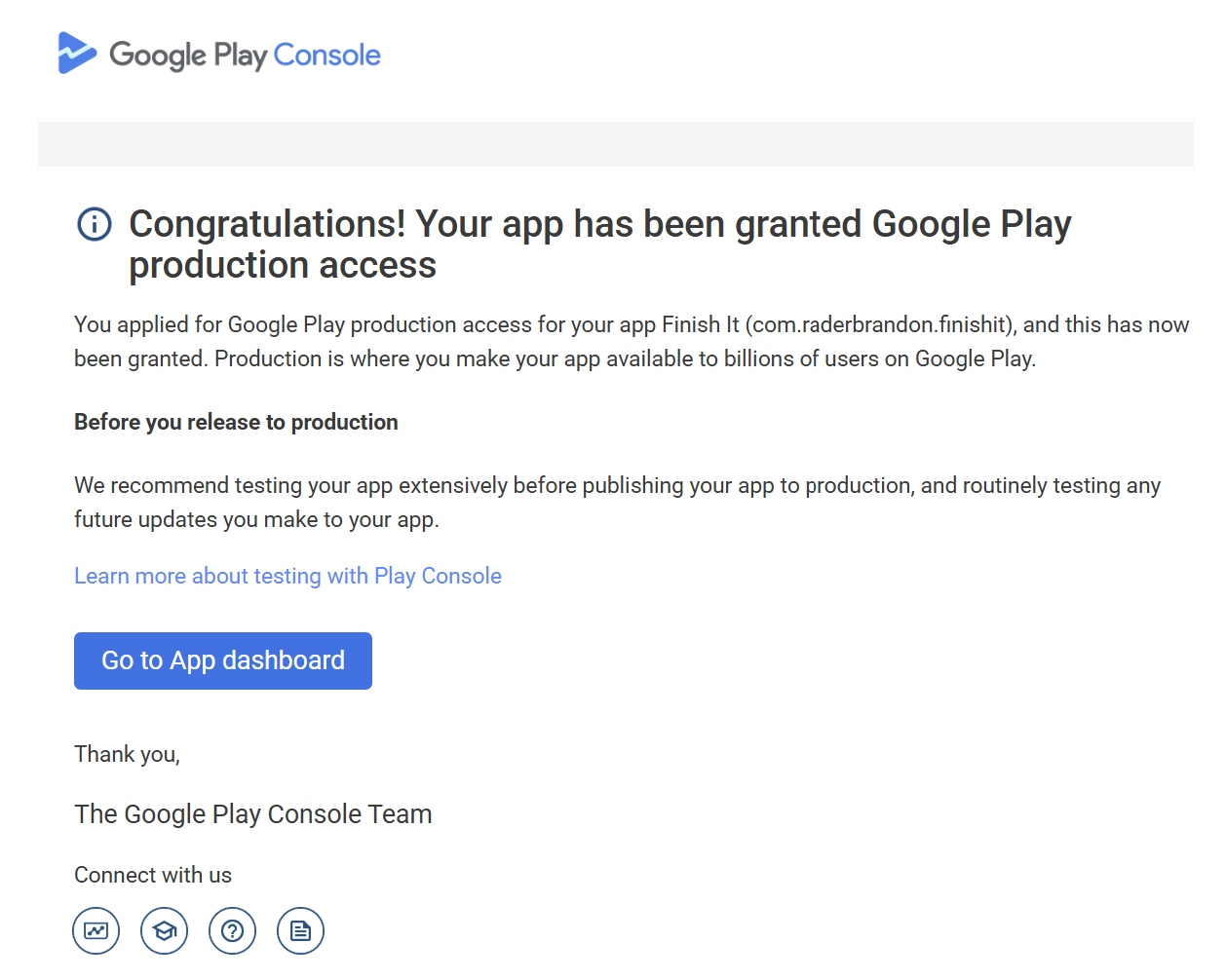
Upon finishing the continuous 14-day testing window, complete Google Play Console's production access questions with concrete testing feedback and deploy your application to live store users.
Frequently Asked Questions
Why does Google Play enforce the 12 testers for 14 days rule for personal developer accounts?
Google introduced this policy in November 2023 to improve overall app quality across the Google Play ecosystem. Requiring independent creators to run a verified 14-day closed test with at least 12 real users ensures that new applications are thoroughly evaluated on real hardware for stability, usability, and policy compliance before reaching public store listings.
Can developers in the Dominican Republic recruit testers located in other countries?
Yes. Google Play allows closed testing participants from any country as long as those regions are selected in your closed track availability settings. Including international testers who use diverse smartphone models and cellular carriers can strengthen your testing profile by proving your app performs reliably across diverse global environments.
What happens if a tester uninstalls the application before the 14-day period ends?
If a tester uninstalls the build or opts out of the program and your active tester count drops below 12, Google Play Console's automated tracking may pause or reset the 14-day countdown. Professional testing services mitigate this hazard by deploying a buffer of 15 to 20 testers, keeping your count securely above the required baseline at all times.
Is it safe to push updates or bug fixes to the closed track during the 14 days?
Yes. Deploying update builds to your closed testing track during the 14-day cycle is fully supported and recommended by Google. Releasing hotfixes in response to tester feedback shows active maintenance and continuous quality improvement, which positively influences your production access review.
How does Google Play detect automated bot farms and fake testing services?
Google Play Protect and Play Console backend diagnostics analyze device hardware identifiers, battery and sensor behavior, touch movement variance, Google account age, and IP network origins. Emulators, headless scripts, and bot farms exhibit rigid, unnatural interaction patterns that trigger fraud detection mechanisms, leading to application rejection or developer account bans.
What questions does Google ask when applying for production access after 14 days?
When you apply for production access, Google presents a questionnaire asking: how you recruited your testers, what feedback you collected during the testing phase, what specific changes or fixes you made based on user input, and why you believe the app is ready for open release. Providing clear, concrete answers backed by actual testing data ensures a swift and successful approval.
The Testing Pipeline
Your journey to Google Play production access, simplified and automated.
Sign In
Authenticate your account to initialize the 14-day QA fleet for your Android release.
Opt-In URL
Upload your testing link. We assign 12 verified users with real Android devices to download and test your Android release.
Testing Begins
A dedicated testing supervisor is assigned to monitor progress while testers engage with your Android app and provide feedback throughout the testing period.
Compliance Complete
Our lab maintains active installations for two weeks straight, ensuring a clean track record and providing a QA compliance log for your release.
Why Developers Trust Us
Satisfy your Play Store Console testing obligations with our managed physical device fleet tailored for Android builds.
The 14-Day Production Guarantee
We complete the required 14-day closed testing process with real human testers and physical Android devices, while providing clear testing evidence and documentation throughout the process.
If Google specifically rejects production access due to insufficient testing engagement, you are covered by our free re-run or 100% refund guarantee, subject to our Refund Policy.
Verified Production Access
Quality QA Testing Reports
Clear, actionable reports with screenshots and evidence for every important issue found during testing.
Real Device Testing & Diagnostics
Real human testers use physical Android devices to test your app, verify real user flows, and provide clear testing evidence and professional QA reports.
Guaranteed App Approval
Our structured 14-day closed testing process is designed to meet Google Play's production requirements for your Android release.
Simple Closed Testing Pricing
Select the plan that fits your Android app complexity.
Loading Packages
Please wait while we fetch the best options for your region...
Frequently Asked Questions
Everything you need to know about passing your closed testing requirements.