12 Play Console app testers for Android app testing in El Salvador
Hire 12 Play Console app testers in El Salvador. Pass Google Play closed testing in 14 days with real Android testers and unlock Play Store production access.
Navigating Google Play Closed Testing from El Salvador's Expanding Tech Ecosystem
El Salvador is quickly establishing itself as an energetic center for digital innovation, software entrepreneurship, and fintech transformation in Central America. From independent mobile app developers in San Salvador to development studios in Santa Ana and San Miguel, local engineers are architecting forward-thinking solutions for regional commerce, education, and global utility. However, turning a finished Android APK or App Bundle into a publicly distributed product on the Google Play Store requires passing a mandatory compliance milestone. For all personal Google Play Console developer accounts created after November 2023, Google strictly enforces a closed testing phase requiring at least 12 opt-in testers to continuously test the application for 14 straight days before production access can be requested.
For Salvadoran development teams and solo creators, coordinating 12 reliable testers across real hardware devices presents a challenging logistical obstacle. Relying on casual friend networks, family members, or unverified community chat groups regularly leads to low engagement, abandoned installs, and sudden rejections by Google Play review systems. Successfully crossing this milestone requires an organized testing structure characterized by authentic daily engagement, broad Android device variety, clean Android Vitals telemetry, and documented tester feedback.
Understanding the 12 Testers for 14 Days Policy
Google launched the 12 testers for 14 days policy to curb the flood of low-quality, crash-prone, or insecure applications reaching the Play Store. Under this mandate, personal developer accounts cannot immediately publish an app to open production. Instead, developers must set up a closed testing track and recruit a minimum of 12 distinct human testers who opt in through Google Play, download the closed track build, and keep it installed on their physical Android smartphones for two unbroken weeks.
Passing this evaluation is much more than collecting 12 email addresses on a testing list inside Play Console. Google's automated backend monitoring systems continuously evaluate telemetry logs, session persistence, launch frequency, and opt-in stability. If registered testers uninstall the application prematurely, stop opening the app altogether, or attempt to simulate usage via scripted bot farms, Google's algorithms will reset the 14-day countdown or reject the application during final production review.
Common Closed Testing Challenges for Salvadoran Developers
Independent developers and tech startups across El Salvador encounter several recurring obstacles when attempting to organize closed testing without dedicated infrastructure:
- Tester Drop-off and Stagnant Engagement: Informal testers often accept an email invitation, open the app on Day 1, and never launch it again. When Google Play Console detects flatlined activity between Day 3 and Day 14, automated review systems conclude that genuine testing did not occur.
- Limited Local Hardware Diversity: Gathering testers within a tight personal circle often results in testing across only two or three popular smartphone brands running identical Android OS versions, leaving manufacturer-specific UI bugs and background thread crashes completely undiscovered.
- Severe Bot Farm and Emulator Risks: Turning to cheap online marketplaces or bot networks to artificially satisfy tester counts triggers Google Play Protect fraud detection. This frequently leads to immediate closed test disqualification, permanent developer account strikes, or full account termination.
- Time Zone and Manual Management Overhead: Spending weeks reminding informal testers to open the app, submit feedback, and update builds takes valuable time away from coding features, optimizing database queries, and executing go-to-market strategies.
Real Device Testers vs. Automated Bot Farms
Selecting the right testing pathway determines whether your Android application gets approved for production on your first attempt or remains stuck in repetitive 14-day testing cycles.
Real Human Testers (Safe & Compliant)
- Authentic physical Android smartphones covering Android 10, 11, 12, 13, 14, and 15.
- Organic touch inputs, natural navigation pathways, diverse network connections, and real background wake cycles.
- Unbroken 14-day opt-in retention with consistent daily app open telemetry.
- Meaningful, actionable bug reports, user feedback, and UI observations submitted via official Google Play channels.
- 100% compliance with Google Play Developer Program Policies and personal account verification rules.
Automated Bots & Emulators (High Risk)
- Headless cloud emulators, rooted virtual machines, and farmed devices easily flagged by Google Play Protect.
- Synthetic touch paths, identical session timestamps, and abrupt spikes in anomalous network requests.
- Sudden uninstalls, dropped opt-in statuses, and fragmented telemetry that reset the 14-day review clock.
- Zero qualitative feedback, unusable crash logs, and no human context for reported UI glitches.
- Immediate rejection upon production application and high probability of permanent account bans.
Comparing Testing Approaches for Google Play Closed Testing
The comparison table below details the differences between professional managed human testing, internal DIY recruitment, and low-cost automated bot services.
| Feature / Metric | Managed Human Testing Service | DIY Personal Network | Automated Bot Farms |
|---|---|---|---|
| Verified Human Testers | 12+ real active testers guaranteed | Limited to friends and family | Zero (synthetic script profiles) |
| Hardware Diversity | Diverse Samsung, Xiaomi, Motorola, Pixel devices | Few local phones on identical chipsets | Virtual emulators / shared device pools |
| 14-Day Continuous Retention | 100% guaranteed opt-in retention | High rate of tester drop-outs | High fluctuation and sudden uninstalls |
| Google Play Telemetry Quality | Organic daily sessions, natural touch flows | Stagnant, sporadic, or one-time data | Flagged as inorganic bot behavior |
| Android Vitals Monitoring | Clear crash, ANR, and freeze diagnostics | Untracked background telemetry | Synthetic logs triggering fraud alerts |
| Play Console Account Safety | 100% safe and fully policy compliant | Safe but prone to review rejection | Extreme risk of developer account ban |
| Developer Time Investment | Under 15 minutes of initial setup | 25 to 50 hours chasing testers | Constant troubleshooting and repeated cycles |
Struggling with the 14-Day Testing Requirement?
Skip the hassle of recruiting unreliable testers. Our professional fleet of real Android devices guarantees Google Play compliance in exactly 14 days. Zero bots. Zero emulators. 100% production approval guarantee.
Critical Play Console Metrics You Must Monitor
To guarantee that your closed test satisfies Google review standards, developers must closely observe key performance indicators and technical telemetry inside the Google Play Console:
- Daily Active Devices (DAD): Keep track of daily active installations to verify that your testers launch the app consistently across all 14 consecutive calendar days.
- Opt-in Status Stability: Ensure that all 12+ testers maintain their enrolled status through the web opt-in link without leaving the test track before the full two-week period expires.
- Application Not Responding (ANR) Rate: Keep your ANR rate strictly under Google's bad behavior threshold of 0.47% across all active test devices.
- Crash Rate Threshold: Ensure unhandled exceptions and crashes remain below the maximum allowable threshold of 1.09% to protect your application's internal quality score.
- Android Vitals & Startup Latency: Review cold, warm, and hot start launch times, background battery wake locks, and memory usage patterns across various Android operating system releases.
- Tester Feedback Submissions: Verify that testers submit qualitative reviews through Google Play's built-in feedback mechanism, giving you legitimate user notes to reference during your final production request questionnaire.
Pre-Launch Verification Checklist for Salvadoran Developers
Before applying for production track approval in the Google Play Console, go through this comprehensive verification checklist to ensure your release satisfies all technical, architectural, and policy requirements.
Play Console Configuration & Compliance
Technical Stability, Telemetry & Documentation
Step-by-Step Roadmap to Production Approval
Follow this structured, battle-tested development workflow to navigate your Android application from closed testing setup to live production deployment on Google Play.
Track Configuration and Build Upload
Create your closed testing track inside Google Play Console. Upload your signed release AAB, configure target countries, and generate your secure opt-in invitation links.
Tester Recruitment and Opt-In Onboarding
Enroll 12+ verified human testers using real Android devices. Testers accept the opt-in invitation through the web or mobile Play Store link and install the build.
14-Day Active Telemetry Period
Testers interact with your app daily across diverse physical Android devices, producing authentic touch events, realistic session lengths, and valid network traffic.
Feedback Analysis and Stability Patches
Monitor Android Vitals, examine crash stack traces, and evaluate tester feedback. Push iterative hotfixes to the closed track without interrupting your 14-day countdown.
Production Access Application and Approval
Complete the 14-day testing period, answer Google Play Console's production readiness questions with concrete testing data, and receive official approval to launch publicly.
Frequently Asked Questions
Why does Google Play require 12 testers for 14 days for personal developer accounts?
In November 2023, Google updated its developer policies to require all newly registered personal developer accounts to run a closed test with at least 12 testers for 14 consecutive days before publishing to production. This measure ensures that indie developers and new accounts thoroughly validate app stability, performance, usability, and policy compliance on real physical devices, drastically reducing buggy, low-quality, or malicious apps on the Play Store.
Can developers in El Salvador use international testers for their closed test?
Yes. Google Play does not require testers to be physically located in El Salvador. As long as your closed testing track is configured to include the countries where your testers reside, international testers can participate seamlessly. In fact, utilizing testers from varied geographic markets and telecom carriers provides broader testing coverage across distinct network latencies, OEM skins, and device chipsets.
What happens if a tester uninstalls the app on Day 10 of the test?
If a tester uninstalls your application or leaves the testing group and your active tester count drops below the mandatory threshold of 12, Google's automated systems may pause or reset the 14-day timer. To prevent this risk, our managed testing service assigns 15 to 20 active testers to your track, providing a reliable safety buffer so your active tester count remains safely above 12 at all times.
Can I release updates or bug fixes to the closed track during the 14 days?
Yes. Deploying updates, minor UI tweaks, or bug fixes to your closed testing track during the 14-day window is fully supported and recommended by Google. Pushing updates shows Google's review team that you actively maintain the app and respond to user feedback, which greatly strengthens your answers on the production access application form.
How does Google distinguish between real human testers and bot farms?
Google Play Protect and Play Console diagnostics evaluate multiple hardware and behavioral signals. These include touch gesture entropy, accelerometer and gyroscope sensor data, Google account creation history, IP subnet diversity, and device battery drain patterns. Bot farms running on emulated environments or scripted devices produce uniform, mechanical patterns that trigger fraud flags, resulting in test rejections or developer account bans.
What specific questions does Google ask when applying for production access?
Once the 14-day closed testing period is complete, Google Play Console unlocks the Apply for Production button, presenting a detailed questionnaire. Google asks how you recruited your testers, what feedback you collected from them, what specific changes or bug fixes you made based on that feedback, and why you believe the app is ready for open production. Providing detailed, transparent answers backed by real testing data ensures quick approval.
How We Deliver 12 Testers
How we deploy real devices and guarantee compliance for your release.
Connect Account
Sign in with Google to configure the closed testing environment for your Android build.
Assign Testers
Submit your Google Play Console testing link, and our team will assign qualified testers from our testing network to join your Android closed testing release.
Daily QA Runs
A QA supervisor monitors daily check-ins, ensuring 12 unique Android users engage with your Android build every single day.
Launch Ready
We guarantee 14 consecutive days of active user check-ins to satisfy Google's compliance policies, delivering an audit-ready PDF feedback report.
Our Testing Infrastructure
Experience a next-generation testing infrastructure built for Google Play compliance for your Android release.
The 14-Day Production Guarantee
We complete the required 14-day closed testing process with real human testers and physical Android devices, while providing clear testing evidence and documentation throughout the process.
If Google specifically rejects production access due to insufficient testing engagement, you are covered by our free re-run or 100% refund guarantee, subject to our Refund Policy.
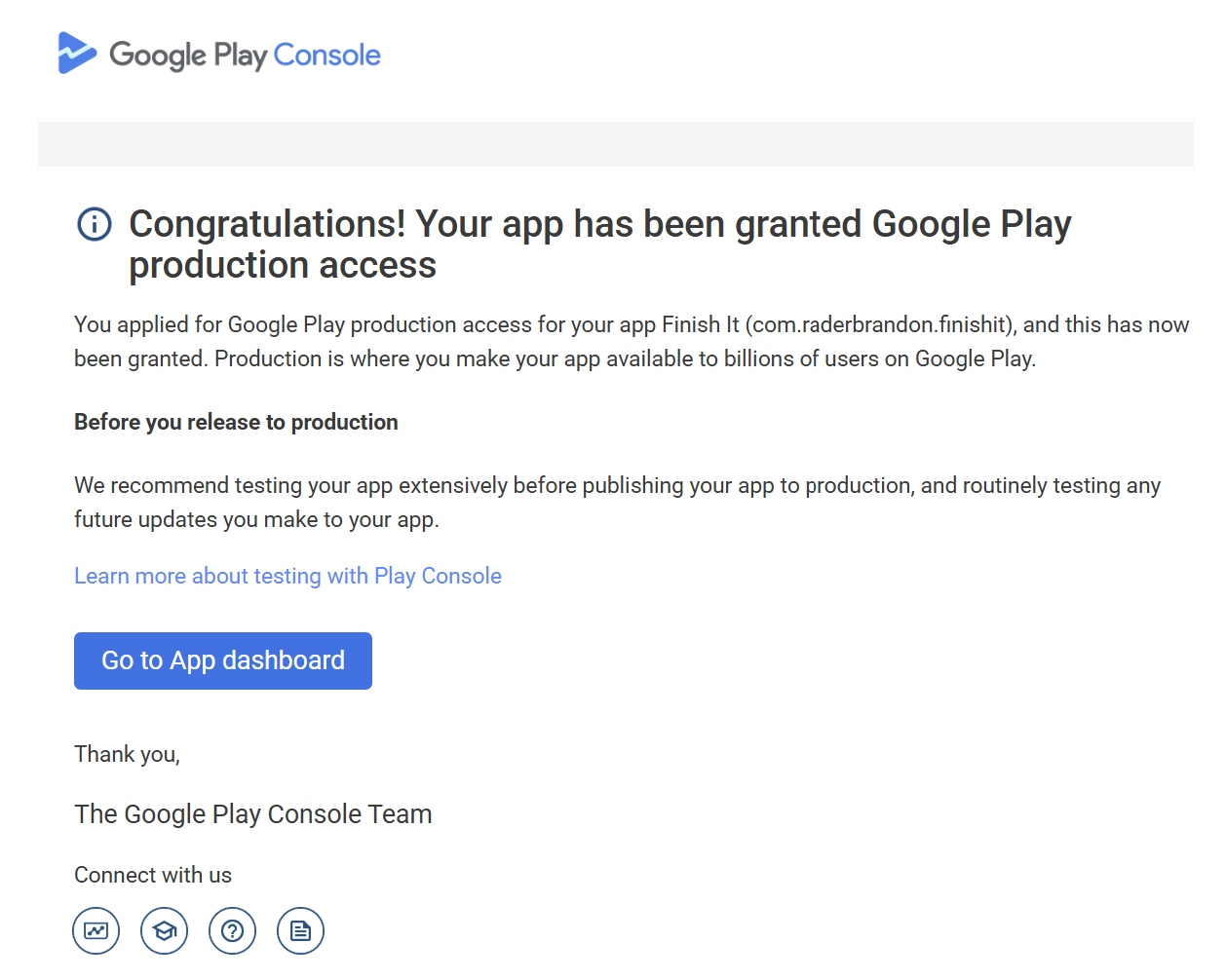
Verified Production Access
Quality QA Testing Reports
Clear, actionable reports with screenshots and evidence for every important issue found during testing.
Real Device Testing & Diagnostics
Real human testers use physical Android devices to test your app, verify real user flows, and provide clear testing evidence and professional QA reports.
Compliance Audit Passed
Get your Android build approved on the first try. We create an audit-ready compliance profile that proves thorough quality assurance.
Affordable Compliance Cycles
Transparent plans built to satisfy Google Play Console guidelines for your Android build.
Loading Packages
Please wait while we fetch the best options for your region...
Frequently Asked Questions
Everything you need to know about passing your closed testing requirements.