12 Play Console app testers for Android app testing in Georgia
Hire 12 Play Console app testers in Georgia. Pass Google Play closed testing in 14 days with real Android testers and unlock Play Store production access.
The Google Play Closed Testing Requirement Explained
Google introduced this policy to protect the Play Store ecosystem from low-quality builds, sudden crashes, and fraudulent apps. If you created your Google Play Console developer account after November 2023 as an individual developer, you cannot simply publish directly to production. You must set up a closed testing track, invite at least 12 testers, and keep that testing track active for 14 consecutive days.
Meeting this benchmark is not just about having names on an email list. The Google Play Console algorithms track real telemetry, such as whether your opted-in testers actually install the package, interact with screens, trigger network requests, and keep the build installed over the full two weeks. If user engagement drops or testers uninstall early, your countdown resets or your final production questionnaire will be rejected by human reviewers.
Real Testers vs. Emulator Farms and Bot Rings
Many Georgian developers facing tight deadlines consider shortcuts like hiring cheap bot services, buying temporary accounts on freelancer forums, or running automated Android emulators. While these solutions promise quick checkmarks on your dashboard, Google's automated telemetry and anti-abuse systems detect non-human behavioral signatures instantly. Using automated scripts or bot rings often leads to permanent developer account suspensions and device ID blacklists.
Real Human Testers (ACL Guaranteed)
- Physical Hardware: Real Android smartphones (Samsung, Xiaomi, Pixel, OnePlus) running Android 10 through 15.
- Natural Usage Patterns: Genuine UI interactions, authentic session times, organic screen navigations, and valid network requests.
- Verifiable Telemetry: Clean crash logs, valid Android Vitals data, and legitimate Google Play Store install sessions.
- Actionable Feedback: Helpful bug reports, UI/UX critiques, and authentic responses for your production access review.
Bot Farms & Fake Testers
- Emulators & Virtual Devices: Spoofed IMEI numbers and identical hardware signatures easily flagged by Google Play Protect.
- Scripted Interactions: Predictable click routines, zero gyroscope or sensor activity, and instant app exits.
- High Rejection Risk: 14-day timer resets, denied production access, and strict Play Console policy violations.
- Zero Insight: No actual bug discovery, no usability input, and synthetic crash logs that disguise real device bugs.
Navigating Georgia's Mobile Ecosystem and Developer Realities
Georgia's tech sector is expanding rapidly, with innovative fintech solutions, logistics tools, tourism guides, and e-commerce platforms launching every month. However, running a self-managed closed test in Georgia presents unique local challenges:
- Hardware Fragmentation: The local market features a high concentration of budget-friendly Xiaomi, Redmi, Samsung Galaxy A-series, and older flagship devices. Testing solely within a small circle of friends often means testing only on a couple of high-end phones, leaving critical budget-tier Android bugs undiscovered.
- Network Dynamics: Mobile users across Georgia connect over diverse 4G and growing 5G mobile networks provided by MagtiCom, Silknet, and Cellfie, alongside varying local Wi-Fi connections. Real testers ensure your app handles dynamic IP shifts, network drops, and offline caching gracefully.
- Tester Fatigue: Asking family, coworkers, or social media acquaintances to open your build every day for 14 straight days almost always fails. People forget after day three, leaving your Play Console engagement graphs flat and putting your production review at risk.
Strategic Comparison: Testing Approaches for Georgian Developers
Choosing the right testing approach directly impacts your launch timeline, developer budget, and account safety. Here is how professional managed testing compares to DIY peer swapping and automated bots:
| Feature | Managed Testing (ACL) | DIY Peer Swaps | Bot / Emulator Farms |
|---|---|---|---|
| Real Devices | 100% Physical Android Phones | Mixed, often limited variety | Emulators / Rooted VMs |
| 14-Day Retention | Guaranteed 100% daily activity | High drop-off after day 2 or 3 | Artificial, detected by telemetry |
| Console Compliance | Fully aligned with Google Play rules | Compliant if testers stay active | High risk of policy ban |
| Quality Feedback | Structured bug reports & UX logs | Informal, sparse feedback | None or auto-generated strings |
| Production Approval | High first-time pass rate | Frequently rejected / delayed | Immediate rejection / track flag |
| Time Investment | Zero setup hassle (Done-for-you) | 20+ hours chasing contacts | Minimal initial time, high fallout |
Struggling with the 14-Day Testing Requirement?
Skip the hassle of recruiting unreliable testers. Our professional fleet of real Android devices guarantees Google Play compliance in exactly 14 days. Zero bots. Zero emulators. 100% production approval guarantee.
Complete Pre-Launch Checklist for Play Console Compliance
Before inviting your 12 testers to the closed track, make sure your build and Google Play Console configurations are fully prepared. Skipping these fundamentals can cause delays or immediate track rejection.
1. Build Optimization & Technical Assets
Adopt Android App Bundle (AAB): Upload an .aab file instead of an .apk to reduce download size and support dynamic feature delivery.
Target Modern API Levels: Ensure your targetSdkVersion meets Google's latest target API level requirement (Android 14 / API level 34 or higher).
Implement ProGuard / R8 Rules: Verify that code obfuscation does not strip vital JSON serialization models, navigation routes, or third-party SDK entry points.
Configure Crash Reporting: Integrate Firebase Crashlytics or Sentry to capture unhandled exceptions, ANRs (Application Not Responding), and UI thread freezes during the test.
2. Store Listing & Compliance Metadata
Comprehensive Privacy Policy: Host a live, valid, publicly accessible privacy policy URL detailing all permissions, user data collection, and SDK disclosures.
Data Safety Section Accuracy: Complete the Play Console Data Safety form accurately, declaring all collected data points (location, analytics, device IDs, payment info).
Functional Demo Credentials: If your app contains login screens or paid paywalls, provide functional test account credentials in the App Access settings.
Store Listing Assets: Prepare high-resolution app icons (512x512 PNG), feature graphics (1024x500 JPG/PNG), and localized device screenshots.
The 5-Step Roadmap to Production Access Approval
Achieving production approval requires a systematic journey through Google's testing stages. Follow this proven roadmap to guide your project from closed release creation to live public release:
Step 1: Track Setup and Tester List Configuration
Create a Closed Testing track in your Google Play Console dashboard. Generate a dedicated Google Group or email list for your testers. Configure your feedback channel via an accessible web form, email address, or dedicated issue tracker.
Step 2: AAB Upload and Pre-Launch Report Review
Upload your release build signed with your production keystore or Google Play App Signing. Review Google's automated Pre-Launch Report (Robo test) to catch obvious crashes, layout overlaps, or security vulnerabilities before distributing to testers.
Step 3: Tester Opt-In and Real Device Installation
Distribute the Play Store web opt-in link or Android invite URL to all 12+ verified testers. Ensure every tester joins the group, accepts the web testing agreement, and downloads the app directly onto their physical Android smartphone.
Step 4: The 14-Day Active Engagement Phase
Maintain continuous daily interaction across the entire 14-day window. Testers explore UI flows, exercise key features, trigger edge cases, and submit structured feedback. You monitor Android Vitals to keep crash rates and ANR rates well below Google's bad-behavior thresholds.
Step 5: Production Access Questionnaire and Approval
Once the 14 days finish with 12 active testers, the 'Apply for Production' button lights up in your console. Complete Google's mandatory questionnaire with thorough, transparent answers detailing your testing process, feedback gathered, and bug fixes made.
How to Answer Google Play's Production Access Questionnaire
When your 14 days of closed testing conclude, Google requires you to complete an in-depth questionnaire before granting production access. Reviewers evaluate your answers manually along with your console telemetry. Here is how to answer each prompt effectively:
1. How did you recruit your testers?
Explain clearly that you engaged a dedicated cohort of professional Android testers equipped with diverse physical devices (Samsung, Xiaomi, Pixel, etc.). Emphasize that your testers represented realistic end users who tested across various screen sizes, operating system versions, and network environments.
2. What feedback did you receive during testing?
Do not provide a generic one-sentence answer like "everything worked great." Detail specific UI feedback, navigation bottlenecks, translation issues, or device-specific layout quirks that testers reported during the test period. Providing concrete examples proves that genuine humans interacted with your app.
3. What changes and improvements did you make?
List the exact bug fixes, performance optimizations, and design tweaks you pushed to the closed testing track during the 14 days. Mentioning updated build version codes (e.g., v1.0.1 to v1.0.3) demonstrates that you actively maintained the app in response to incoming user reports.
Frequently Asked Questions (FAQs)
Why does Google Play require 12 testers for 14 days for Georgian developers?
This policy applies universally to all new personal Google Play developer accounts created after November 13, 2023, regardless of geographic location. Google introduced this requirement to ensure individual developers thoroughly test their software on real hardware, identify critical bugs, and validate data safety compliance prior to releasing apps to the public Play Store.
Can I use Android emulators or virtual machines to complete the test?
No. Google Play Console uses advanced telemetry to analyze hardware metrics, sensor signals, screen touch dynamics, and network behavior. Emulators lack authentic device IDs and behavioral patterns. Relying on emulators or automated testing bots frequently leads to rejected production applications, timer resets, or developer account suspensions.
What happens if a tester uninstalls the app during the 14 days?
If the number of active opted-in testers falls below the required threshold of 12, Google's system may pause or reset the 14-day counter. Our service provides buffer testers (15 to 20 testers) to guarantee that you stay comfortably above the 12-tester minimum throughout the entire testing window without interruption.
Can I publish app updates or fix bugs while the 14-day test is running?
Yes, absolutely. Pushing new builds to your closed testing track is encouraged. It demonstrates to Google reviewers that you actively respond to tester feedback and maintain your application. Just ensure you roll out updates via the closed track without deleting or recreating the track.
How does ACL ensure my app passes the final production review?
ACL delivers 100% real human testers using authentic Android smartphones across multiple OS versions. Our testers install your app, engage with it consistently over the full 14 days, and submit detailed bug reports. We also provide strategic guidance on answering Google's production access questionnaire accurately.
Is this service suitable for developers working from Tbilisi, Batumi, or anywhere in Georgia?
Yes. Our testing network operates globally and supports developers located anywhere in Georgia and beyond. You simply add our tester group email to your Google Play Console closed track, share the opt-in link, and our team handles the rest seamlessly.
Our QA Process
A straightforward 4-step process to get your Android app approved.
Choose Package
Connect your Google account and choose your preferred closed testing package for your Android app.
Submit Link
Share your Play Store opt-in URL. We immediately deploy 12 real testers to launch and review your Android app daily.
Active Testing
Our crew initiates daily launch sessions on physical devices, verifying usability and logging crashes for your Android app.
Get Approved
We continuously perform closed app testing for 14 days to help you meet Google Play production requirements. We also provide a compliance report.
The Premium QA Advantage
Deploy your Android app onto real retail-grade handsets using our secure laboratory environment.
The 14-Day Production Guarantee
We complete the required 14-day closed testing process with real human testers and physical Android devices, while providing clear testing evidence and documentation throughout the process.
If Google specifically rejects production access due to insufficient testing engagement, you are covered by our free re-run or 100% refund guarantee, subject to our Refund Policy.
Verified Production Access
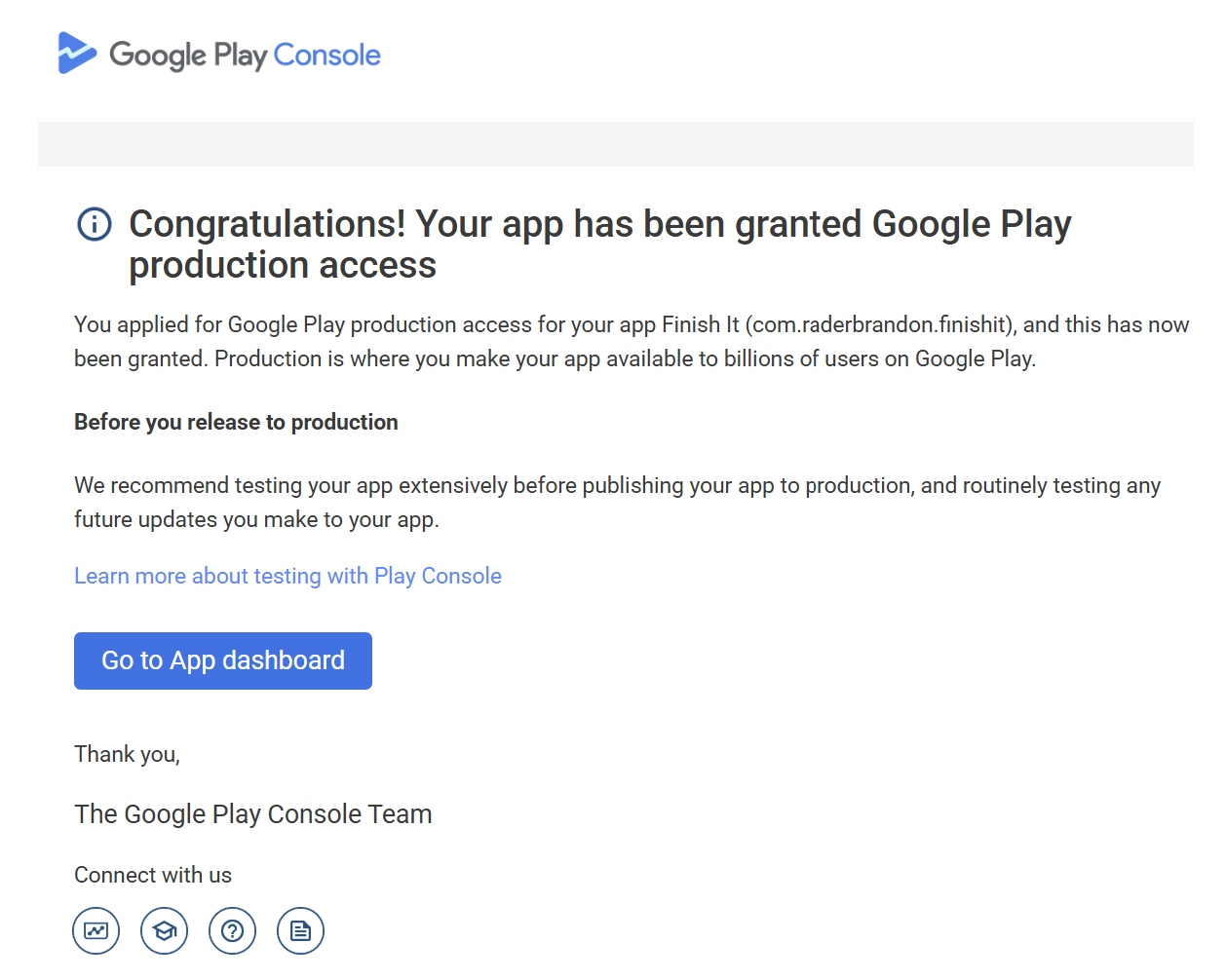
Quality QA Testing Reports
Clear, actionable reports with screenshots and evidence for every important issue found during testing.
Real Device Testing & Diagnostics
Real human testers use physical Android devices to test your app, verify real user flows, and provide clear testing evidence and professional QA reports.
Production Access Secured
Transition your Android app to public production access with confidence. We deliver verified session logs and compliant Console activity.
One Cycle. Complete Approval.
Choose the ideal closed testing cycle for your Android release.
Loading Packages
Please wait while we fetch the best options for your region...
Frequently Asked Questions
Everything you need to know about passing your closed testing requirements.