12 Play Console app testers for Android app testing in Ireland
Need 12 Play Console app testers in Ireland? Clear Google Play closed testing easily with our proven 12 testers for 14 days service for Play Store.
Picture standing on the Cliffs of Moher, looking out at the vast ocean. That is exactly what it feels like right before you hit the publish button on your new mobile application. You have spent months writing code, fixing bugs, and designing the perfect user interface. But before your app can join the thriving digital landscape of Ireland, from the busy tech hubs of Dublin to the quiet corners of Galway, you have to cross a very specific bridge. Google Play now requires new developers to complete a mandatory testing phase. Specifically, you need to find a group of real people to use your app continuously before you can go public.
If you are building an app tailored for the Irish market, finding these people locally is not just a box to tick. It is the secret to making sure your app actually resonates with people here. Whether your app helps tourists navigate the Wild Atlantic Way or helps local students in Cork find housing, having real locals test your software ensures it actually works in the real world. This is what Closed Testing is all about. It is the proving ground where your application goes from being a private project to a public product.
Why Google Needs 12 Testers for 14 Days
You might be wondering why there is a strict requirement for 12 testers for 14 days. Google did not invent this rule just to add red tape to your launch process. The Google Play Closed Testing requirement is a quality control filter. It actively prevents low quality, broken, or malicious applications from cluttering up the digital storefront.
By forcing developers to secure dedicated users for a solid two weeks, the platform ensures your app can survive actual human interaction without crashing and burning. Think of it as a stress test for your digital creation. During this period, these testers will open your app, tap on things they should not tap on, and test your app on various mobile networks across Ireland. If your app survives this phase without major issues, it tells the platform algorithms that you are ready for the big stage.
Struggling with the 14-Day Testing Requirement?
Skip the hassle of recruiting unreliable testers. Our professional fleet of real Android devices guarantees Google Play compliance in exactly 14 days. Zero bots. Zero emulators. 100% production approval guarantee.
The Hidden Trap of Fake Testing Accounts
When faced with the strict requirements of Play Store Closed Testing, many developers panic. They look at their small circle of friends and family, realize they cannot reach the required numbers, and start looking for shortcuts. This is where the dark market of fake testing comes in. You will find dozens of websites promising to deliver the exact number of users you need in five minutes. But falling into this trap is the fastest way to get your developer account permanently banned.
The platform uses incredibly advanced machine learning to track how users behave. If twelve accounts suddenly opt into your app at the exact same second, from the exact same server farm on the other side of the planet, warning bells will ring. Real users behave randomly. They open the app on the bus in Dublin, they check it briefly while waiting in line at a shop in Limerick, and they might forget to open it for a day or two. Bots just sit there and ping a server.
Real Testing
Real testing involves actual human beings holding physical smartphones. When you use real people for your Google Play Closed Testing, they provide genuine feedback. A real user in Ireland will tell you if your app struggles to connect on a spotty 3G network in the countryside. They will point out if your language feels unnatural or if your payment gateway does not accept local Irish bank cards. Real people click around your app unpredictably, which helps you uncover hidden crash loops that you never found during your own controlled tests. This natural behavior signals to the platform that your app is legitimately being evaluated by humans.
Fake Bot Testing
Automated bots are software scripts designed to mimic app installations. These bot farms use emulators hosted on cheap servers. While they might artificially inflate your installation numbers and trick the basic counters in the developer dashboard temporarily, they offer zero actual value. Bots do not leave meaningful feedback, they do not find complex user interface bugs, and they follow rigid, robotic patterns that the platform algorithms can spot a mile away. Using these services almost always leads to a rejected production application, and in many cases, a lifetime ban from the developer ecosystem. It is simply not worth the risk.
Your Roadmap to Passing Google Play Closed Testing
Navigating the transition from a finished codebase to a live store listing requires patience and strategy. You cannot just upload an APK file and hope for the best. You need a structured approach to guarantee that your 14 day testing phase goes smoothly and ends with an approved production release. Here is exactly how you should plan your journey.
Prepare Your Store Listing
Before you even think about inviting users, your store presence must look professional. This means writing a compelling description, designing an attractive app icon, and taking high quality screenshots. If you are targeting users in Ireland, make sure your screenshots show familiar locations, local currency formats, and culturally relevant examples. A polished listing builds trust and encourages your invited users to actually download the software.
Upload to the Testing Track
Once your app bundle is ready, navigate to your developer console and create a new release on the designated testing track. You will need to fill out content ratings, data safety forms, and privacy policy links. Take your time with the data safety section. The platform is extremely strict about how you declare the user data you collect. If your app collects location data for local Irish weather updates, you must explain exactly why and how that data is protected.
Recruit and Onboard 12 Testers
This is the core challenge. You need to gather your 12 testers for 14 days. You can use your personal network, local tech meetups in Dublin or Cork, or dedicated professional services that provide real human users. Once you have their email addresses, add them to your email list in the console and send them the official opt-in link. Make sure you explain exactly what you need them to do and how they can report bugs to you directly.
Monitor the 14 Day Window
The clock starts ticking once your users opt in. During this two week period, your job is not to sit back and relax. You need to actively encourage your group to open the app regularly. Send them polite reminders every few days. Ask them specific questions like how a certain feature feels or if they noticed any strange glitches. Keep an eye on your crash analytics dashboard. If you spot a critical bug, roll out a quick update to the testing track to keep the momentum going.
Apply for Production Access
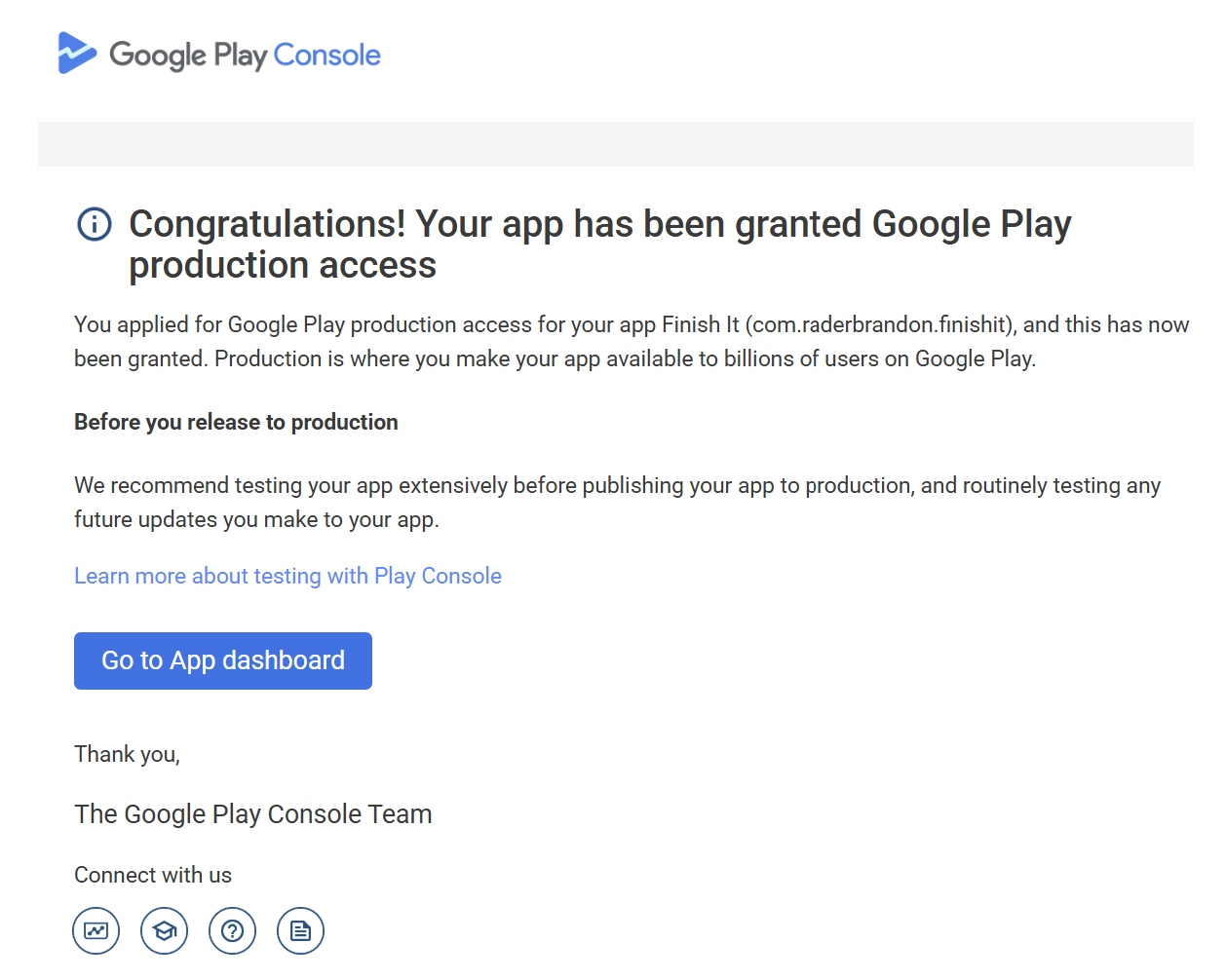
After the 14 days are up, the dashboard will finally unlock the option to apply for a production release. You will be asked to answer a series of questions about your testing process. You need to explain how you recruited your users, what kind of feedback they provided, and what changes you made based on that feedback. Be detailed and honest. Showing that you actively improved your app during the Closed Testing phase drastically increases your chances of approval.
Essential Pre-Launch Checklist for the Irish Market
Before you dive into the deep end of Play Store Closed Testing, you need to make sure your app is actually ready to be judged. Sending a half baked application to your testers is a waste of their time and your opportunity. Use this comprehensive checklist to ensure your software is robust, compliant, and optimized for the Irish audience before the 14 day clock starts.
Technical Readiness
Verify that your app targets the latest required Android API level. The platform regularly updates its minimum requirements, and falling behind means your app will not even be allowed onto the testing track.
Test your app on various network conditions. Ireland has excellent 5G in the cities, but connectivity can drop significantly in rural areas. Ensure your app handles offline states gracefully without crashing.
Implement a robust crash reporting tool. You need to know exactly which line of code caused a crash when a tester in Galway opens your app. Tools like Firebase Crashlytics are essential for this phase.
Store Listing and Compliance
Host a valid privacy policy on a live website. You cannot launch an app without one. Make sure it explicitly states how you handle the data of European Union citizens to comply with GDPR regulations.
Fill out the Data Safety form completely and accurately. If your app requires camera permissions or background location access, you must document it. Mismatches between your code and this form will cause instant rejections.
Localize your pricing and text. If your app has in-app purchases, ensure they are displayed in Euros. Check your spelling to make sure it aligns with local Irish English conventions rather than American English where appropriate.
Tester Management
Prepare a welcome email for your group. Explain the purpose of the Google Play Closed Testing phase and provide them with clear, step-by-step instructions on how to install the app using the opt-in link.
Set up a simple feedback channel. Do not force people to write long emails. Set up a quick Google Form or a dedicated Discord channel where they can easily drop screenshots and report weird behavior.
Plan your update schedule. Anticipate that bugs will be found. Have a plan in place to quickly compile and upload new app bundles during the two week period to keep your users engaged with a working product.
Testing Service Comparisons
When it comes to sourcing your 12 testers for 14 days, you have a few different paths you can take. You can try to do it all yourself, you can pay a premium service to handle it for you, or you can risk using cheap automated bots. Understanding the differences between these approaches is critical for the long term health of your developer account. Here is a clear breakdown of what each option actually looks like in practice.
| Feature | Professional Service | DIY Approach | Automated Bots |
|---|---|---|---|
| User Authenticity | 100% Real Humans | 100% Real Humans | Zero - Fake Emulator Scripts |
| Time Investment | Very Low - They handle the recruitment | Very High - You must find and manage everyone | Very Low - Instant delivery |
| Feedback Quality | High - Detailed bug reports and UX suggestions | Varies - Depends on how technically savvy your friends are | None - Bots do not speak or type |
| Compliance Risk | Zero - Completely safe and approved | Zero - Safe as long as they actually use the app | Extreme - High chance of permanent account ban |
| Market Localization | Excellent - Can target specific regions like Ireland | Good - Assuming your friends live locally | Terrible - Usually routed through generic proxy servers |
| Overall Cost | Moderate - You pay for guaranteed real human time | Free - But costs you massive amounts of personal time | Cheap - But costs you your entire business when banned |
Detailed FAQs on Play Store Closed Testing
Navigating the rules and requirements for launching an application can feel like trying to read a legal document in a foreign language. The policies change frequently, and the exact definitions of certain requirements can be confusing. To help you fully understand what is expected of you, we have compiled a massive, detailed list of the most common questions developers have when trying to pass the Google Play Closed Testing phase for the Irish market.
What exactly is the Play Store Closed Testing requirement?
The Play Store Closed Testing requirement is a mandatory phase for all newly registered personal developer accounts. Before you can publish any app to the public production track, you must invite a specific number of individual users to test your app privately. These users must install your application on their personal devices and keep it installed for a continuous block of time. The goal is to ensure that your app is functional, safe, and provides a reasonable user experience before it is exposed to the general public. This rule was introduced to drastically improve the overall quality of apps available on the storefront.
How does the 12 testers for 14 days rule actually work?
The 12 testers for 14 days rule means you must maintain a minimum baseline of twelve active installations for a full two weeks. The clock does not start when you simply send out the invitations. The clock only starts ticking when the required number of users have successfully clicked your opt-in link, downloaded the app to their phone, and opened it. If one of your users uninstalls the app on day ten, you dip below the threshold, and your progress might be severely impacted. Therefore, it is always a smart strategy to recruit fifteen or twenty people to give yourself a safety buffer against accidental uninstalls.
Can I use automated software or emulators to pass this requirement?
Absolutely not. Using automated scripts, emulators, or server farms to artificially inflate your tester count is a direct violation of the platform policies. The security systems in place are incredibly sophisticated. They analyze device hardware IDs, IP address behavior, touch event patterns, and screen time metrics. If the system determines that your app is being tested by bots instead of real human beings, your app will be rejected. Furthermore, your entire developer account is at a very high risk of being terminated permanently, which means you will never be able to publish an app under that name again.
Do my testers need to be physically located in Ireland?
From a strict policy perspective, the platform does not explicitly demand that your testers live in the exact country you are targeting. However, from a practical business perspective, having testers in Ireland is incredibly beneficial if that is your target market. Local users will interact with your app under local network conditions, they will notice if your localized pricing is incorrect, and they will understand the cultural context of your content. If you are building an app for Dublin commuters, a tester in Tokyo will not be able to give you the relevant feedback you need to succeed.
What should I do if a user finds a major bug during the 14 days?
Finding bugs is the exact reason the Google Play Closed Testing phase exists! If a user reports a critical issue, you should fix the code immediately and upload a new Android App Bundle to the testing track. Pushing updates during the two week window is highly encouraged because it demonstrates to the platform reviewers that you are actively managing your software and responding to feedback. Updating your app does not reset your 14 day timer, as long as your users simply download the update and keep the application installed on their devices.
What happens after the 14 days are finally over?
Once the required time has passed and you have maintained the necessary active installations, a new section will unlock in your developer dashboard allowing you to apply for production access. This is not an automatic approval. You will have to fill out a questionnaire detailing your testing process. You must explain how you found your testers, summarize the feedback they gave you, and detail the specific improvements you made to the app based on that feedback. A human reviewer will read your answers and look at your app metrics before making a final decision.
What if my production application gets rejected after testing?
If your application for production is rejected, do not panic. The platform will almost always provide a reason for the rejection. Common reasons include vague answers on the final questionnaire, not demonstrating that you actually engaged with your users, or having a high crash rate that you never bothered to fix. You will need to address the specific concerns raised by the reviewer. This usually means running another round of testing, gathering more concrete feedback, making tangible updates to your code, and then submitting a much more detailed and thoughtful application the second time around.
How much time should testers actually spend in the app each day?
There is no publicly stated rule that says a user must use the app for a specific number of minutes every single day. However, zero engagement is a massive red flag. Real users naturally open an app a few times a week to see what it does. You should encourage your group to open the app every couple of days, navigate through different screens, try creating an account, or test the main features. Organic, natural engagement is what the algorithms are looking for to verify that the testing phase is legitimate and valuable.
Is it okay to pay people to test my application?
Yes, it is completely acceptable to compensate people for their time and effort, provided they are real humans offering genuine feedback. Many developers use professional services that manage a pool of real testers. The distinction is between paying real people to do real work, versus paying shady websites for fake bot traffic. If you hire a professional testing agency that assigns twelve real people in Ireland to download, use, and review your app over two weeks, you are fully compliant with the rules and are actually conducting a very high quality beta test.
How It Works
A straightforward 4-step process to get your Android app approved.
Get Started
Connect your Google account and choose your preferred closed testing package for your Android app.
App Submission
Share your Play Store opt-in URL. We immediately deploy 12 real testers to launch and review your Android app daily.
14-Day Cycle
Our crew initiates daily launch sessions on physical devices, verifying usability and logging crashes for your Android app.
Production Access Approval
We continuously perform closed app testing for 14 days to help you meet Google Play production requirements. We also provide a compliance report.
Why Choose AppConsoleLab
Deploy your Android app onto real retail-grade handsets using our secure laboratory environment.
The 14-Day Production Guarantee
We complete the required 14-day closed testing process with real human testers and physical Android devices, while providing clear testing evidence and documentation throughout the process.
If Google specifically rejects production access due to insufficient testing engagement, you are covered by our free re-run or 100% refund guarantee, subject to our Refund Policy.
Verified Production Access
Quality QA Testing Reports
Clear, actionable reports with screenshots and evidence for every important issue found during testing.
Real Device Testing & Diagnostics
Real human testers use physical Android devices to test your app, verify real user flows, and provide clear testing evidence and professional QA reports.
Play Store Ready
Transition your Android app to public production access with confidence. We deliver verified session logs and compliant Console activity.
One Cycle. Complete Approval.
Choose the ideal closed testing cycle for your Android release.
Loading Packages
Please wait while we fetch the best options for your region...
Frequently Asked Questions
Everything you need to know about passing your closed testing requirements.