12 Play Console app testers for Android app testing in Japan
Hire 12 Play Console app testers in Japan. Pass Google Play closed testing securely using our authentic 12 testers for 14 days Play Store service.
Japan possesses one of the most uniquely demanding mobile ecosystems on the planet. If you are launching an Android app here, simply running your interface through a translation tool will not cut it. Japanese smartphone users interact with applications in a highly specific way, shaped by complex transit systems, densely packed UI preferences, and a cultural expectation of flawless performance. When you enter the Google Play Closed Testing phase, having actual testers based in Japan isn't just a regulatory hoop to jump through - it is the absolute baseline for determining if your app will survive contact with this audience. Play Console compliance demands genuine engagement, and a generic approach will quickly trigger Google's spam filters, especially if the user behavior does not match the geographic profile of your target market.
The Reality of the Mandatory Testing Period
Securing users who will genuinely interact with your application over the required testing window is incredibly difficult. You are not just looking for random downloads; you need consistent, daily activity that signals to Google that your app is stable and valuable. When targeting Japan, finding 12 Testers for 14 Days (or whatever specific threshold you are currently aiming for to complete your quota) requires overcoming language barriers, timezone differences, and a high barrier to trust. Failing to maintain this engagement does not just delay your launch - it often results in the Play Console rejecting your production application entirely.
Real Japanese Testers vs. Automated Bot Farms
When sourcing users for your Play Store Closed Testing phase, the internet is full of shortcuts. However, Google's detection algorithms are more sophisticated than ever. Here is why authentic local testing is the only viable path.
Authentic Local Testers
Using real users located in Japan provides an organic, natural footprint. These individuals use genuine devices connected to local networks like NTT Docomo or SoftBank. They open the app at normal local hours, tap through the screens at a human pace, and leave localized feedback. This behavior completely aligns with Google's requirements, ensuring your account remains in good standing while providing you with actual insights into how Japanese users navigate your application.
Automated Bots & VPNs
Fake testing services rely on server farms, emulators, and VPNs spoofing Japanese IP addresses. These bots often install the app, sit idle for two weeks, and never actually interact with the core features. Google Play's backend easily flags this behavior by analyzing device hardware IDs, network latency, and zero-engagement metrics. Using these black-hat methods almost always leads to a rejected closed track application, and frequently results in a permanent lifetime ban of your developer account.
Navigating Google Play Closed Testing in Japan
Successfully completing the closed track requirement for the Play Store is a nuanced process. Google implemented these rules to clean up the store and ensure only high-quality, tested applications make it to the public. For developers outside of Japan trying to break in, this presents a significant logistical hurdle. You must gather a dedicated group of testers, have them opt into your testing track via a specific Google Group or email list, and ensure they keep the app installed and active.
The algorithm is looking for specific markers of health. Are the users opening the app more than once? Are there frequent crash logs being generated and ignored? Is the session duration consistent with a real human being? When you are securing your required testers, especially if you are specifically seeking 12 Play Console app testers to finish out your required 20-tester quota, you cannot afford drop-offs. If a tester uninstalls your app on day eleven, that slot is empty, and your 14-day clock might be compromised.
Furthermore, the Japanese market has strict privacy expectations. Your app must clearly explain what permissions it is requesting and why, preferably in flawless Japanese. If your early testers feel that the app is intrusive or poorly localized, they will simply delete it. This is why having an organized, managed group of testers is so crucial. A professional service ensures that the users are briefed, understand the commitment, and will provide the consistent daily engagement that the Play Console dashboard requires to unlock the production release button.
Struggling with the 14-Day Testing Requirement?
Skip the hassle of recruiting unreliable testers. Our professional fleet of real Android devices guarantees Google Play compliance in exactly 14 days. Zero bots. Zero emulators. 100% production approval guarantee.
Comparing Your Testing Options
How does a professional localized testing service stack up against trying to do it yourself or risking cheap automated alternatives?
| Feature | Professional Service | DIY Outreach | Bot Networks |
|---|---|---|---|
| Geographic Accuracy | 100% Genuine Japanese IPs | Variable | VPN Spoofed (High Risk) |
| Engagement Tracking | Daily confirmed activity | Unreliable | Zero real activity |
| Play Console Safety | Extremely High | Moderate | Dangerously Low |
| Feedback Quality | Actionable local insights | Hit or miss | None |
| Time Investment | Minimal (Done for you) | Hundreds of hours | Minimal |
| Success Rate | Near guaranteed approval | Low due to drop-offs | Likely account ban |
The Pre-Launch Checklist for the Japanese App Market
Before you invite a single user to your Closed Testing track, your app must be prepared for the specific expectations of the Japanese market. Use this comprehensive checklist to ensure you are ready.
Cultural and Localization Readiness
Technical and Performance Benchmarks
Play Console Configuration
Your Roadmap to a Successful App Launch in Japan
Managing a testing cohort in a foreign country can feel overwhelming. Here is the step-by-step roadmap of how a professional testing engagement works, ensuring you meet every requirement flawlessly.
Initial Consultation and App Review
We start by reviewing your application to ensure it is fundamentally ready for the Japanese market. We check your Play Console setup, verify your testing link is active, and ensure that your app does not contain any obvious crash triggers that would frustrate testers on day one.
Tester Allocation and Opt-In
We match your app with the appropriate number of genuine Japanese users. If you specifically need 12 Testers for 14 Days to finalize your quota, we assign a dedicated cohort. We provide you with their email addresses to add to your testing track, and they officially opt-in through the Play Store.
The 14-Day Engagement Phase
This is the critical window. Our testers download your application and begin their daily engagement routines. They open the app, navigate through the menus, test core functionalities, and generate the organic usage data that Google's algorithm requires. We monitor their activity to ensure zero drop-offs.
Feedback Collection and Analytics
Throughout the testing period, we gather qualitative feedback regarding localization, UI quirks, and overall user experience from a Japanese perspective. This data is compiled into a report, giving you actionable insights before your public launch.
Production Application and Launch
Once the 14 consecutive days of testing are complete, the Play Console will unlock the option to apply for production. You will submit your final application to Google, backed by the solid, compliant testing data generated by our real local users.
Frequently Asked Questions About Android App Testing in Japan
Do I really need testers specifically located in Japan?
If your app is specifically targeting the Japanese market, having local testers is highly recommended, though technically Google allows testers from anywhere. However, testing with local users provides essential feedback on your localization efforts, cultural fit, and server latency. Furthermore, if your app is geofenced or only useful in Japan, you absolutely must use local testers to generate valid engagement data. This ensures your app is truly ready for its target audience.
How does the '12 Testers for 14 Days' requirement fit into Google's rules?
Google Play requires a total of 20 testers for 14 consecutive days for new personal developer accounts. Often, developers manage to find a few friends or colleagues to test their app, leaving them short of the goal. If you find yourself needing exactly 12 Play Console app testers to cross the finish line, a professional service can provide that exact supplemental number, ensuring they stay engaged for the full two-week period without any issues.
What happens if a tester uninstalls the app before the 14 days are finished?
If a tester opts out or uninstalls the app, they stop counting toward your required daily active user metric. If your total number of active testers drops below the threshold mandated by Google, your 14-day clock may be reset, or your production application may be denied. This is why using reliable, managed testers who are contractually obligated to keep the app installed is so critical to your overall success.
Can't I just use a VPN to simulate users in Tokyo or Osaka?
Using a Virtual Private Network to fake your location is a massive risk that we strongly advise against. Google's Play Store backend is incredibly sophisticated. It checks device fingerprints, hardware IDs, carrier networks, and historical account behavior. A brand new Google account using a known commercial VPN IP address will be instantly flagged as a bot, leading to the rejection of your app and a potential ban of your developer account.
Does using your service guarantee that Google will approve my app for production?
While we guarantee that our testers will fulfill the engagement requirements set by Google flawlessly, the final approval is always up to Google's review team. If your app violates core Play Store policies like containing malware, violating copyright, or showing excessive ads, Google will reject it regardless of the testing phase. However, assuming your app is compliant with their content policies, our testing process removes the biggest hurdle to approval.
What kind of Android devices do your Japanese testers use?
Our testers use a wide variety of genuine consumer hardware that accurately reflects the Japanese market. This includes popular models from Samsung, Sony Xperia, Sharp Aquos, and Google Pixel devices. They run various versions of the Android operating system, ensuring your app is tested across a realistic, fragmented hardware landscape rather than a single sterile emulator on a computer screen.
How do you handle the language barrier for app feedback?
Our testers are native Japanese speakers, which is essential for evaluating your app's localization. When they provide written feedback regarding confusing UI elements, poorly translated text, or cultural missteps, our team translates and summarizes these insights into clear, actionable English reports for your development team. This ensures you can make necessary adjustments without needing a translator.
Is this testing method safe for my Google Play Developer account?
Yes, it is completely safe and fully compliant with Google's Terms of Service. Google wants real humans to test your app to ensure it is stable and safe for the general public. By providing genuine, human testers who use real devices and authentic Google accounts, we are fulfilling the exact spirit and letter of the Play Store Closed Testing requirements without relying on deceptive practices.
How quickly can we begin the closed testing phase?
Once you have your app uploaded to the closed testing track in the Play Console and your tester email list is ready to be populated, we can typically begin within 24 to 48 hours. We assign the testers, provide you with their Google account emails, and as soon as you add them to your console, they begin downloading and engaging with the app immediately.
What exactly do the testers do during the 14-day period?
They do not just open the app and close it immediately. They will navigate through different screens, interact with core features, click buttons, and generate typical user data. This sustained, varied activity proves to Google that the app is functional and holds user interest, which is the primary metric analyzed during the Play Store Closed Testing review. This organic activity is what separates real testing from bot traffic.
Do your testers test in-app purchases or subscriptions?
During the closed testing phase, Google allows developers to set up a license testing environment where in-app purchases can be simulated without actually charging real money. Our testers can run through these mocked purchase flows to ensure your payment integration works correctly, but they do not use real credit cards to make actual financial transactions. This keeps the testing environment secure for everyone involved.
Why is user retention so critical during this specific testing phase?
Google uses retention as a proxy for app quality. If 20 people download an app and 15 uninstall it within three days, the algorithm assumes the app is broken, misleading, or heavily flawed. By ensuring a perfect retention rate over the 14-day period, we send a strong positive signal to the Play Console that your application is a high-quality product ready for the wider public market.
Our QA Process
How we deploy real devices and guarantee compliance for your release.
Choose Package
Sign in with Google to configure the closed testing environment for your Android build.
Submit Link
Submit your Google Play Console testing link, and our team will assign qualified testers from our testing network to join your Android closed testing release.
Active Testing
A QA supervisor monitors daily check-ins, ensuring 12 unique Android users engage with your Android build every single day.
Get Approved
We guarantee 14 consecutive days of active user check-ins to satisfy Google's compliance policies, delivering an audit-ready PDF feedback report.
The Premium QA Advantage
Experience a next-generation testing infrastructure built for Google Play compliance for your Android release.
The 14-Day Production Guarantee
We complete the required 14-day closed testing process with real human testers and physical Android devices, while providing clear testing evidence and documentation throughout the process.
If Google specifically rejects production access due to insufficient testing engagement, you are covered by our free re-run or 100% refund guarantee, subject to our Refund Policy.
Verified Production Access
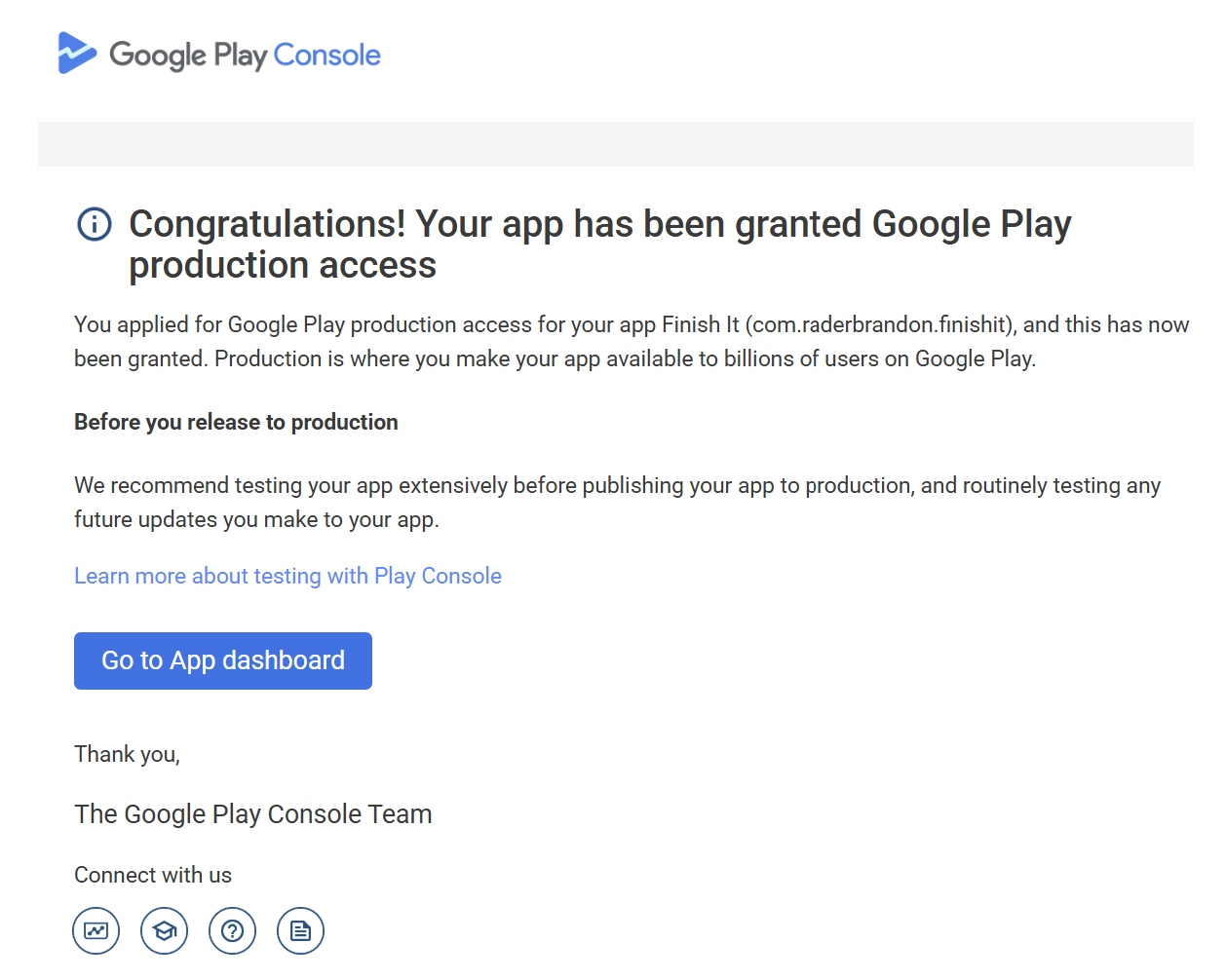
Quality QA Testing Reports
Clear, actionable reports with screenshots and evidence for every important issue found during testing.
Real Device Testing & Diagnostics
Real human testers use physical Android devices to test your app, verify real user flows, and provide clear testing evidence and professional QA reports.
Production Access Secured
Get your Android build approved on the first try. We create an audit-ready compliance profile that proves thorough quality assurance.
Affordable Compliance Cycles
Transparent plans built to satisfy Google Play Console guidelines for your Android build.
Loading Packages
Please wait while we fetch the best options for your region...
Frequently Asked Questions
Everything you need to know about passing your closed testing requirements.