12 Play Console app testers for Android app testing in Kenya
Need 12 Play Console app testers in Kenya? Fulfill Google Play closed testing requirements with 12 testers for 14 days and launch on Play Store.
Nairobi is often called the Silicon Savannah for a good reason. The mobile ecosystem in Kenya is booming, driven by affordable smartphones and widespread mobile internet. If you are building an app for this market, you are tapping into an audience that relies heavily on Android devices for everything from mobile money to local commerce.
But getting your app into the hands of Kenyan users is no longer just about uploading an APK and hitting publish. Google has tightened its grip on quality control. You cannot bypass the system. If you want your app to succeed here, you must prove it works flawlessly under real conditions.
This is where the mandatory testing phase comes in. You need actual people, preferably those who understand the local context, to interact with your app. They need to test it on the networks Safaricom, Airtel, and Telkom provide. If your app drains batteries or crashes on older devices commonly used in the region, your launch is doomed before it begins.
Understanding Google Play Closed Testing for the Kenyan Market
Google introduced strict policies to ensure only high quality apps reach their store. If you have a newly created personal developer account, you are required to run a comprehensive test before you can apply for production access.
This requirement is commonly referred to as the 12 Testers for 14 Days rule, although Google frequently updates its exact numbers based on account types and regions. The core philosophy remains the same: you need a continuous, engaged group of real users to validate your app.
For the Kenyan market, this means your Google Play Closed Testing phase cannot be an afterthought. You must gather people who will actually open your app, tap the buttons, and report back. If the platform detects low engagement or suspects you are gaming the system, your production request will be rejected. Play Store Closed Testing is your proving ground.
The Risks of Faking the 12 Testers for 14 Days Rule
Many developers feel tempted to take shortcuts. They might try to create multiple Google accounts themselves, or they might hire cheap bot farms to simulate app installs. Google's algorithms are incredibly sophisticated and will catch these tactics.
Real Testers in Kenya
When you use real people to test your app, you get genuine feedback. Real users will experience the app on diverse hardware, from low end local brands to high end imports. They will navigate your UI with real human behavior, pausing to read, tapping back buttons, and finding actual bugs. This authentic interaction signals to Google that your Closed Testing phase is legitimate and valuable.
Bot Farms and Fake Accounts
Using automated scripts or fake accounts is a massive risk. Google tracks IP addresses, device IDs, and behavioral patterns. If multiple accounts install your app at the exact same time from the exact same server location and do nothing for 14 days, your account will be flagged. This can lead to a permanent ban of your developer account, completely ruining your chances of publishing on the platform.
Preparing Your App for Play Store Closed Testing in Kenya
Before you invite a single tester, your app needs to be ready. A poorly prepared app will frustrate testers and lead to a failed test.
Technical Readiness
Store Listing and Assets
Compliance and Policy
Struggling with the 14-Day Testing Requirement?
Skip the hassle of recruiting unreliable testers. Our professional fleet of real Android devices guarantees Google Play compliance in exactly 14 days. Zero bots. Zero emulators. 100% production approval guarantee.
The Roadmap to Compliance
Getting your app approved is a journey. It requires careful planning and execution. Here is a step by step guide to navigating the process successfully.
Internal Alpha Testing
Before releasing to external testers, distribute the app to your internal team. Iron out the obvious bugs and ensure the core functionality works as intended. This saves time and ensures your external testers focus on nuanced issues.
Recruiting Your Testers
Find reliable individuals who match your target audience in Kenya. You need them to commit to the full duration of the test. Ensure they understand their role is not just to install the app, but to actively use it.
Setting Up the Release
Create a new release in the testing track within your developer console. Upload your signed App Bundle, add your release notes, and configure the countries where the test will be available.
The Active Testing Window
This is the critical 14 days. Monitor the dashboard daily. Reach out to your testers, encourage them to explore new features, and gather their feedback systematically.
Applying for Production
Once the time requirement is met and you have resolved major issues, submit your application for production access. You will need to answer questions about the testing process and how the feedback influenced your final build.
Comparing Your Testing Options
When it comes to fulfilling the Google Play Closed Testing requirements, you have a few paths to choose from. Each has its own costs and benefits.
| Feature | Professional Service | DIY Friends and Family | Bot Farms Do Not Use |
|---|---|---|---|
| Reliability | Extremely High | Low to Medium | Very Low |
| Engagement | Guaranteed daily activity | Inconsistent, requires nagging | Zero human interaction |
| Compliance Risk | Safe and compliant | Moderate if they forget to use it | Guaranteed rejection or ban |
| Feedback Quality | Detailed, actionable reports | Superficial | None |
| Time Investment | Minimal from your end | High effort to manage everyone | High effort recovering from a ban |
Frequently Asked Questions About App Testing in Kenya
Why does Google demand this testing phase for new developers?
Google implemented these rules to drastically reduce the number of low quality, malicious, or broken applications flooding the store. In the past, anyone could create an account and immediately publish an app. This led to a poor user experience, as people would download apps that crashed instantly or served spam. By forcing developers to go through a rigorous 14 days of evaluation with actual people, the platform ensures that only developers who are serious about their products make it to the production stage. It acts as a filter, protecting users in Kenya and globally from installing poorly optimized software on their mobile devices.
What exactly does the 12 Testers for 14 Days rule entail?
This rule is a specific threshold set by the platform to measure sustained engagement. It means you must recruit a minimum number of opted in users to install your application on their personal devices. These individuals cannot just install the app and ignore it. They must open it, interact with the interface, and keep it on their phones for a continuous period of two weeks. If a tester uninstalls the app on day ten, or if they never open it after the first download, their participation may not count toward your total requirement. The goal is continuous, meaningful engagement that mimics how real consumers will use your product after it launches.
Can I use testers from outside Kenya if my app is meant for Kenyans?
Technically, the platform does not restrict the geographic location of your testers unless you specifically limit the release to Kenya in the console. However, it is highly recommended to use testers who are actually located in your target market. A user in Nairobi will test the app under local network conditions, using local payment gateways if applicable, and evaluating localized content. A tester in Europe will not experience the app the same way. If your app relies on specific Kenyan infrastructure, such as M-Pesa integration, having local testers is the only way to genuinely validate that functionality before you go live to the public.
How do I prove to Google that my testers are actually testing the app?
You do not need to send manual reports or video recordings to Google. The platform automatically tracks user engagement through Play Services embedded in Android devices. The system monitors metrics such as daily active users, crash rates, session lengths, and the number of Unresponsive instances. Additionally, when you apply for production access after the testing period, you will be required to answer a comprehensive questionnaire. You must explain how you recruited your testers, what kind of feedback they provided, and exactly what changes you made to the app based on that feedback. Vague answers will lead to a rejection.
What happens if one of my testers uninstalls the app early?
If a tester opts out or uninstalls your application before the required 14 days are complete, their participation is invalidated. This means your total count of active testers drops. If this drop pushes you below the minimum required threshold, the 14 days timer may reset, or you will not be allowed to apply for production access when the time is up. This is why relying on casual favors from friends can be risky. People get busy, they need storage space on their phones, and they might delete your app without telling you. It is always best to recruit more testers than the minimum required to act as a buffer against dropouts.
Will Google reject my app if there are crashes during the testing phase?
Experiencing crashes during this phase is entirely normal and is, in fact, the entire purpose of the testing period. Google will not automatically reject your application just because it crashed while in testing. However, they will monitor how you handle those crashes. If your app is incredibly unstable and crashes every single time it is opened, testers will stop using it, which will hurt your engagement metrics. More importantly, when you apply for production, you must demonstrate that you actively monitored the crash reports in your developer console and released updates to fix those issues during the testing window.
Is it safe to pay people to test my Android app?
It is perfectly safe and normal to compensate people for their time and effort, provided they are providing genuine feedback. Professional testing services operate on this model. The key distinction is between paying real humans to perform an actual job, versus paying a shady service to use bots or click farms to artificially inflate your numbers. Compensating a group of students in Kenya to spend thirty minutes a day using your app and writing bug reports is an excellent strategy. Paying a website five dollars for guaranteed approvals using automated scripts will absolutely get your developer account terminated.
How should I collect feedback from my testers effectively?
Relying on scattered WhatsApp messages or informal conversations is a bad idea. You need a structured approach to collect data. You can use simple tools like Google Forms to create a standardized survey that testers must fill out every few days. Ask specific questions about the user interface, the speed of the application, and any errors they encountered. Alternatively, you can integrate in-app feedback tools that allow users to shake their phone to report a bug directly to your dashboard. Having organized, documented feedback makes it much easier to summarize your findings when filling out the production application form in the console.
Can I update my app while the 14 days test is running?
Yes, you can and you absolutely should. Releasing updates during the testing window is a strong positive signal to the platform. It shows that you are actively monitoring the performance of your application and responding to the issues that your testers uncover. When you push a new release to the closed testing track, your opted in users will receive the update through the store, just like a normal app update. Just ensure that the update does not break core functionality to the point where testers cannot use the app, as this would severely impact your daily active user metrics.
What is the difference between Internal, Closed, and Open testing tracks?
The Internal track is for rapid deployment to a small, trusted group of up to 100 people, usually your own development team. It bypasses the standard review process for faster iteration. The Closed track is the mandatory phase for new personal accounts, where you invite a specific group of users via their email addresses to evaluate a more polished version of the app. The Open track is essentially a public beta. Anyone on the store can join the Open test without a specific invitation, allowing you to gather feedback from a massive audience before your official launch. You must successfully complete the Closed phase before you can utilize the Open or Production tracks.
Why might my application for production access be rejected after 14 days?
There are several common reasons for rejection. The most frequent is a lack of genuine user engagement. If your testers simply installed the app and never opened it, the platform will notice. Another major reason is providing poor or vague answers on the final application form. If you cannot articulate what you learned during the test and what changes you made, reviewers will assume the test was a sham. Additionally, if your app violates any core policies, such as deceptive behavior, inappropriate content, or poor data privacy practices, it will be rejected regardless of how well the testing phase went.
Do testers need to leave a public review on the store?
No, testers participating in this phase cannot leave public reviews that affect your app rating. Any feedback they submit through the store interface is completely private and is only visible to you in your developer console. This is intentional. It provides a safe environment for testers to be brutally honest about your app flaws without damaging your public reputation before you even launch. You should actively encourage them to use this private feedback mechanism, as it demonstrates to the platform that real communication is happening between you and your users.
How do I ensure my app complies with Kenyan data protection laws during testing?
Kenya has strict regulations regarding data privacy, primarily governed by the Data Protection Act. Even during testing, you must handle user data responsibly. Ensure your app has a clear and accessible privacy policy that explains exactly what data you collect, why you collect it, and how it is stored. If your app collects sensitive information, you must obtain explicit consent from your testers. Do not use the testing phase as an excuse to gather unnecessary personal data. Compliance starts on day one, and failing to respect local privacy laws can lead to severe legal consequences and immediate removal from the platform.
Can I test multiple apps at the same time using the same group of people?
Yes, there is no rule preventing a user from testing multiple applications simultaneously. However, you must be realistic about the cognitive load and time commitment you are asking of them. If you ask the same group of twelve people in Kenya to actively test five different apps every day for two weeks, their engagement with each individual app will likely drop significantly. This diluted attention could result in insufficient engagement metrics for all your apps, leading to multiple rejections. It is generally better to stagger your testing phases or recruit distinct groups for different projects to ensure high quality participation.
What should I do if my production application gets rejected?
A rejection is not the end of the world, but it is a setback. When you receive a rejection notice, the platform usually provides a brief explanation of why it happened. Read this carefully. If the issue was lack of engagement, you need to start a new testing phase with a more reliable group of people. If the issue was related to your answers on the application form, you need to revise those answers to be much more detailed and specific about the feedback loop. You can reapply after addressing the highlighted concerns and running another compliant testing cycle. Do not simply submit the exact same application again, as it will be rejected faster.
How We Deliver 12 Testers
Your journey to Google Play production access, simplified and automated.
Connect Account
Authenticate your account to initialize the 14-day QA fleet for your Android release.
Assign Testers
Upload your testing link. We assign 12 verified users with real Android devices to download and test your Android release.
Daily QA Runs
A dedicated testing supervisor is assigned to monitor progress while testers engage with your Android app and provide feedback throughout the testing period.
Launch Ready
Our lab maintains active installations for two weeks straight, ensuring a clean track record and providing a QA compliance log for your release.
Our Testing Infrastructure
Satisfy your Play Store Console testing obligations with our managed physical device fleet tailored for Android builds.
The 14-Day Production Guarantee
We complete the required 14-day closed testing process with real human testers and physical Android devices, while providing clear testing evidence and documentation throughout the process.
If Google specifically rejects production access due to insufficient testing engagement, you are covered by our free re-run or 100% refund guarantee, subject to our Refund Policy.
Verified Production Access
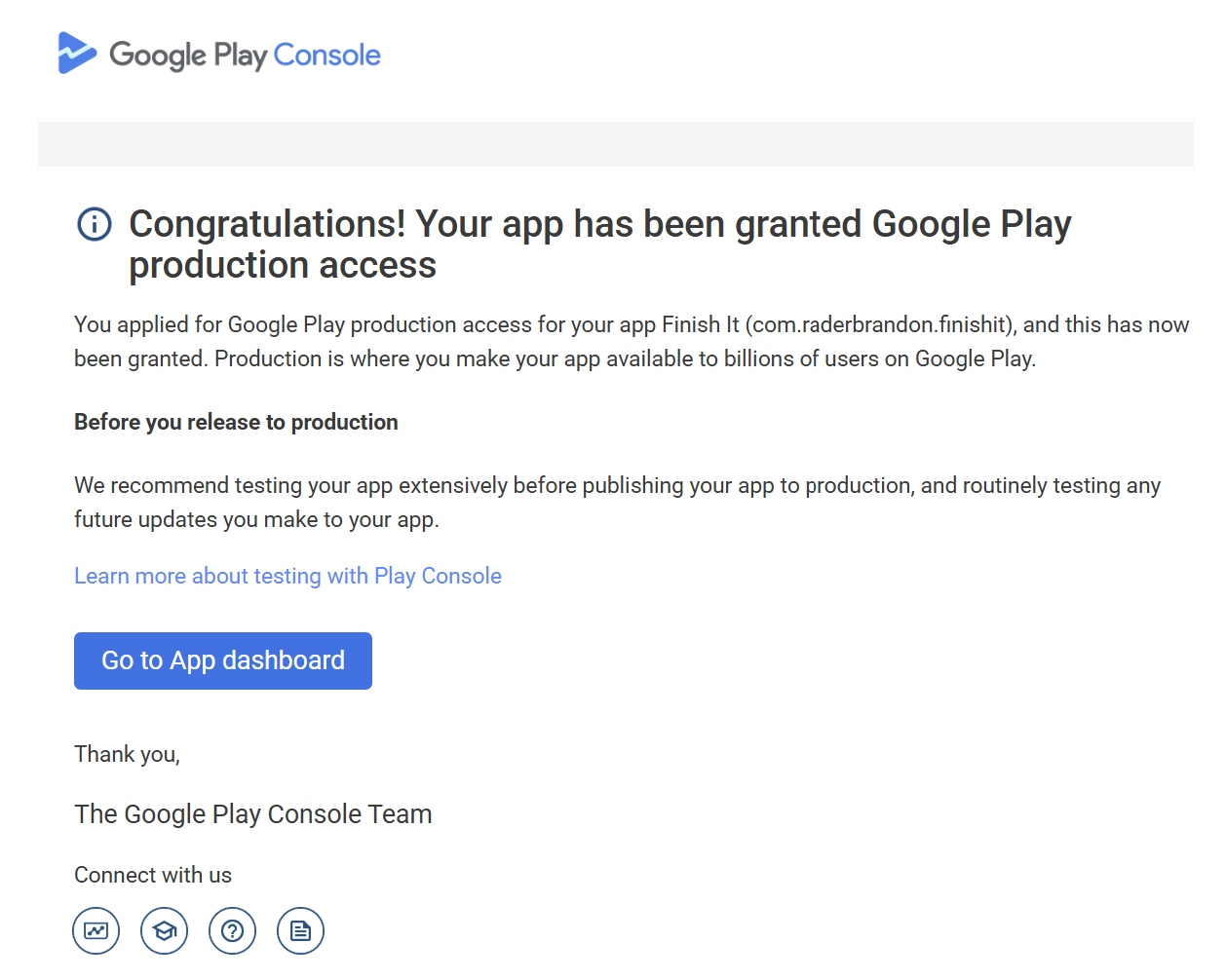
Quality QA Testing Reports
Clear, actionable reports with screenshots and evidence for every important issue found during testing.
Real Device Testing & Diagnostics
Real human testers use physical Android devices to test your app, verify real user flows, and provide clear testing evidence and professional QA reports.
Compliance Audit Passed
Our structured 14-day closed testing process is designed to meet Google Play's production requirements for your Android release.
Simple Closed Testing Pricing
Select the plan that fits your Android app complexity.
Loading Packages
Please wait while we fetch the best options for your region...
Frequently Asked Questions
Everything you need to know about passing your closed testing requirements.