12 Play Console app testers for Android app testing in Kyrgyzstan
Hire 12 Play Console app testers in Kyrgyzstan. Pass Google Play closed testing in 14 days with real Android testers and unlock Play Store production access.
Understanding the 12 Testers for 14 Days Closed Testing Rule
Google Play enforces a mandatory closed testing requirement for all personal developer accounts established after November 2023. Under this framework, solo creators and indie software teams cannot publish directly to the public Google Play Store without first completing a closed track evaluation. You must recruit at least 12 distinct human testers who opt into your test track and keep the application installed on their physical Android devices for a continuous period of 14 consecutive days.
This testing phase represents a crucial quality hurdle designed to reduce crashes, improve user experience, and filter out low-effort submissions. The Play Console backend tracks deep telemetry, monitoring real installation states, active sessions, and organic user engagement throughout the full two-week window. If opted-in tester participation drops below the 12-user threshold or activity stops, Google can pause or reset the 14-day timer, delaying your production access application.
Real Human Testing vs. Automated Bots and Emulator Rings
To bypass the logistical difficulty of organizing a reliable testing group, some creators turn to automated scripts, farm emulators, or low-cost bot networks. However, Google Play Protect and Console analytical systems flag artificial interaction signatures immediately. Emulators lack authentic hardware fingerprints, and bots fail to simulate organic human touch gestures, resulting in immediate application rejection or permanent developer account termination.
Real Human Testers (ACL Guaranteed)
- Physical Mobile Hardware: Authentic Android smartphones from Xiaomi, Samsung, Redmi, Realme, POCO, and Google Pixel running Android 10 through Android 15.
- Natural Usage Telemetry: Genuine touch inputs, natural screen dwell times, deep session navigation, and authentic network requests across real carrier networks.
- Verified Play Console Analytics: Legitimate opt-in records via official Play Store URLs, clean Android Vitals telemetry, and active install status.
- Actionable Feedback Reports: Detailed bug captures, user interface feedback, screen density notes, and concrete logs to answer Google's production questionnaire.
Bot Networks & Scripted Emulators
- Virtual Machines & Emulators: Reused virtual IMEI signatures, headless emulators, and rooted virtual environments detected instantly by Play Protect.
- Synthetic Interaction Scripts: Scripted automated clicks, static screen transitions, zero accelerometer data, and instant process kills that trigger fraud flags.
- Severe Account Risks: Production access denial, complete 14-day clock resets, policy strikes, and irreversible developer account termination.
- Zero Meaningful Data: Automated placeholder logs that fail to uncover real-world crashes, memory leaks, or device-specific UI layout clipping.
Mobile Market Dynamics and Testing Realities in Kyrgyzstan
Kyrgyzstan's mobile app ecosystem is experiencing vibrant growth. With initiatives centered around the High Technology Park (HTP) in Bishkek, expanding IT academies, and growing regional demand for mobile commerce, fintech, agricultural software, and delivery services, local developers are building increasingly sophisticated Android products. However, conducting a successful Google Play closed test within Kyrgyzstan presents distinct local challenges:
- Hardware Fragmentation Across the Market: The consumer smartphone market in Kyrgyzstan is dominated by diverse budget and mid-range devices. While tech professionals in Bishkek and Osh may use the newest Samsung Galaxy or Google Pixel devices, a huge portion of everyday users rely on popular models from Xiaomi, Redmi, Realme, POCO, Infinix, and Tecno running custom vendor Android skins like MIUI, HyperOS, and HiOS. Testing your app solely with a handful of colleagues or family members leaves your build vulnerable to severe memory leaks, background task kills, and UI rendering glitches on resource-constrained devices.
- Network Variations Across Regional Carriers: Mobile users across Kyrgyzstan access digital services through cellular providers such as MegaCom (MEGA), Beeline KG, and O! (Nur Telecom) spanning 4G LTE corridors, rural 3G bands, and mixed public Wi-Fi. Genuine closed testing verifies how your software handles intermittent connectivity, fluctuating packet latency, seamless network handoffs, and background offline synchronization when users move between urban and mountainous regional zones.
- Tester Retention and Community Fatigue: Sourcing 12 reliable participants locally who will actively test an unreleased build every single day for 14 straight days is notoriously hard. Friends, relatives, and casual peer groups frequently lose interest after 48 hours or accidentally uninstall the app to free up storage space. When opt-in counts drop or engagement becomes stagnant, the Play Console timer stalls, forcing developers back to square one.
Strategic Comparison: Testing Options for Kyrgyzstani Developers
Choosing the right testing approach early saves dozens of development hours and protects your Play Console developer standing. Here is how professional managed testing compares to peer swapping and bot networks:
| Feature | Managed Testing (ACL) | DIY Peer Swapping | Bot / Emulator Networks |
|---|---|---|---|
| Physical Hardware | 100% Real Android Smartphones | Inconsistent, limited devices | Virtual Machines / Rooted Emulators |
| 14-Day Continuous Retention | Guaranteed daily engagement | High drop-off after 2 to 3 days | Synthetic, flagged by algorithms |
| Google Play Compliance | Fully compliant with Play rules | Compliant only if peers stay active | High risk of permanent ban |
| Bug Reports & Feedback | Structured logs and UX insights | Superficial or missing comments | Automated strings or empty logs |
| Production Access Approval | High first-attempt pass rate | Frequently rejected or reset | Immediate rejection or account flag |
| Developer Effort | Zero hassle, fully managed setup | 25+ hours chasing participants | Quick setup, disastrous outcome |
Struggling with the 14-Day Testing Requirement?
Skip the hassle of recruiting unreliable testers. Our professional fleet of real Android devices guarantees Google Play compliance in exactly 14 days. Zero bots. Zero emulators. 100% production approval guarantee.
Complete Pre-Launch Checklist for Play Console Compliance
Before distributing your build to your closed testing track and inviting your 12 testers, ensure your application package and Play Console configuration satisfy all mandatory Google Play guidelines. Neglecting core technical details can lead to build rejection or delays during the final production access review.
1. Technical Architecture & Build Requirements
Adopt Android App Bundle (AAB): Package and upload a signed release .aab binary rather than a legacy .apk to minimize download size and utilize Google Play dynamic feature delivery.
Comply with Target API Mandates: Verify that your targetSdkVersion in build.gradle is updated to the latest required Android API level (Android 14 / API level 34 or newer) for modern platform compatibility.
Configure R8 and ProGuard Rules: Validate that code shrinking, optimization, and obfuscation rules do not strip crucial data models, serialization schemas, native JNI bridges, or third-party SDK dependencies.
Implement Robust Crash Diagnostics: Embed Firebase Crashlytics, Bugsnag, or Sentry SDKs to monitor native crashes, ANR (Application Not Responding) rates, and unhandled exceptions in real time during the 14-day test.
2. Store Listing, Policies & App Access
Valid HTTPS Privacy Policy: Provide an active, publicly accessible web URL hosting a comprehensive privacy policy detailing user data handling, analytics collection, and third-party SDK disclosures.
Accurate Data Safety Questionnaire: Complete the Data Safety form in Play Console meticulously, listing all categories of collected, shared, and encrypted data (including device IDs, location, and contact information).
Functional Test Credentials: If your application contains authentication screens, paywalled tiers, or gated sections, supply valid demo login credentials in the App Access tab of Google Play Console.
Complete Store Listing Assets: Upload high-resolution graphic assets, including an official 512x512 app icon, a 1024x500 feature graphic, and localized screenshots for both standard mobile and tablet viewports.
The 5-Step Roadmap from Closed Testing to Production Release
Securing full production track access on Google Play Console requires methodical execution through each testing milestone. Follow this step-by-step roadmap to navigate the process smoothly from closed track creation to public launch:
Step 1: Track Configuration and Tester List Setup
Navigate to the Closed Testing section in Google Play Console and create a dedicated closed release track. Choose Google Groups as your tester management method, configure your feedback destination email or URL, and link the email addresses of your 12+ designated testers.
Step 2: AAB Upload and Pre-Launch Inspection
Sign your Android App Bundle using your release keystore or Play App Signing and upload the binary to your closed track. Review the automated Pre-Launch Report generated by Firebase Test Lab Robo test crawlers to identify immediate layout rendering bugs, accessibility warnings, or startup crashes before distribution.
Step 3: Tester Invitation and Real-Device Opt-In
Share the generated Google Play opt-in web link or direct Play Store testing link with your testers. Ensure that each participant accepts the closed testing invitation through their personal Google Play account and installs the app directly onto their physical Android device.
Step 4: Active 14-Day Testing and Engagement Cycle
Maintain active application usage across the full 14-day evaluation window. Testers explore navigation paths, trigger real-world interactive features, test push notifications, and report usability anomalies. Developers track Android Vitals to ensure crash and ANR rates stay well below Google's bad behavior thresholds.
Step 5: Production Access Questionnaire Submission
Once the 14-day testing milestone is reached with at least 12 active opted-in testers, the 'Apply for Production' button activates in your Play Console dashboard. Complete Google's review questionnaire with comprehensive, detailed records of your recruitment strategy, tester feedback, and iterative updates.
How to Answer Google Play's Production Access Questionnaire
When your 14 days of closed testing conclude with 12 active testers, you will gain access to the formal production application form in Google Play Console. Play Store human reviewers assess your responses alongside your console engagement metrics to approve or reject your release. Here is how to provide compelling, truthful answers:
1. How did you recruit your testers?
Explain your recruitment methodology with professionalism and technical specificity. State that you assembled a dedicated group of real Android device owners across various popular smartphone models (including Xiaomi, Samsung, Realme, and Pixel devices) running Android versions 10 through 14+. Highlight that your tester cohort matches your intended target demographic and carried out organic testing in realistic network environments without virtual machines or automation scripts.
2. What feedback did you receive during testing?
Never write generic non-answers like "no bugs found" or "everything was fine." Reviewers view this as an indicator of artificial or unmonitored testing. Provide authentic examples of feedback received during the two-week test. Mention user experience feedback on navigation ergonomics, font scaling adjustments on compact screens, feedback regarding Kyrgyz and Russian localization phrasing, or network timeout behavior under weak cellular coverage.
3. What changes and improvements did you make?
Describe the precise technical updates, bug fixes, and user interface enhancements implemented during the testing period. Reference specific build version releases (such as updating from version code 1 to version code 3 on your closed track) to demonstrate continuous integration, proactive bug resolution, and responsive development driven by direct tester input.
Frequently Asked Questions (FAQs)
Why does Google Play enforce the 12 testers for 14 days requirement for developers in Kyrgyzstan?
This rule applies globally to all personal developer accounts created after November 13, 2023, regardless of geographic location. Google introduced this policy to ensure that solo developers and small engineering teams thoroughly test their software on physical hardware, resolve critical runtime bugs, verify security and data privacy practices, and deliver polished experiences before opening their apps to the general public.
Can I complete closed testing using Android emulators or virtual machine devices?
No. Google Play Console utilizes advanced device fingerprinting and telemetry analytics to evaluate hardware sensor states, touch coordinate distributions, battery usage profiles, and network interfaces. Emulators produce synthetic signatures that are easily detected by Google Play Protect algorithms. Attempting to use emulators or automated bot farms frequently leads to rejected production applications, timer resets, or permanent developer account suspensions.
What happens if a tester uninstalls my app before the 14 days are completed?
If your count of active opted-in testers drops below the mandatory minimum of 12 at any moment during the testing window, Google's system can pause or reset the 14-day countdown clock. Our managed testing service eliminates this risk by assigning a safety buffer of additional testers (providing 15 to 20 verified human testers), ensuring your active tester count stays comfortably above the threshold every single day.
Am I allowed to push new updates or bug fixes to the closed track while testing is active?
Yes. Deploying new builds and bug fixes to your closed testing track during the 14-day period is not only permitted but strongly recommended by Google. Releasing updated versions shows Google's review team that you are actively responding to feedback and improving your software quality. Just upload your new App Bundle directly to the existing closed track without altering or resetting your tester lists.
How does the ACL managed testing service ensure production approval?
ACL provides a dedicated team of real human testers utilizing physical Android smartphones across diverse screen resolutions, hardware specifications, and Android OS versions. Our testers opt in through official Play Store links, engage authentically with your app throughout the full 14 days, and provide actionable bug reports and feedback. We also assist you in formulating clear, compliant responses for the final Google Play production access questionnaire.
Can developers in Kyrgyzstan use this testing service without payment or region restrictions?
Yes. Our testing network works seamlessly for developers situated anywhere across Kyrgyzstan, including Bishkek, Osh, Jalal-Abad, Karakol, and international remote setups. You only need to add our dedicated tester group email to your Google Play Console closed testing track, distribute the opt-in link, and our team handles all installation, daily engagement, and feedback collection smoothly.
Our QA Process
How we deploy real devices and guarantee compliance for your release.
Choose Package
Sign in with Google to configure the closed testing environment for your Android build.
Submit Link
Submit your Google Play Console testing link, and our team will assign qualified testers from our testing network to join your Android closed testing release.
Active Testing
A QA supervisor monitors daily check-ins, ensuring 12 unique Android users engage with your Android build every single day.
Get Approved
We guarantee 14 consecutive days of active user check-ins to satisfy Google's compliance policies, delivering an audit-ready PDF feedback report.
The Premium QA Advantage
Experience a next-generation testing infrastructure built for Google Play compliance for your Android release.
The 14-Day Production Guarantee
We complete the required 14-day closed testing process with real human testers and physical Android devices, while providing clear testing evidence and documentation throughout the process.
If Google specifically rejects production access due to insufficient testing engagement, you are covered by our free re-run or 100% refund guarantee, subject to our Refund Policy.
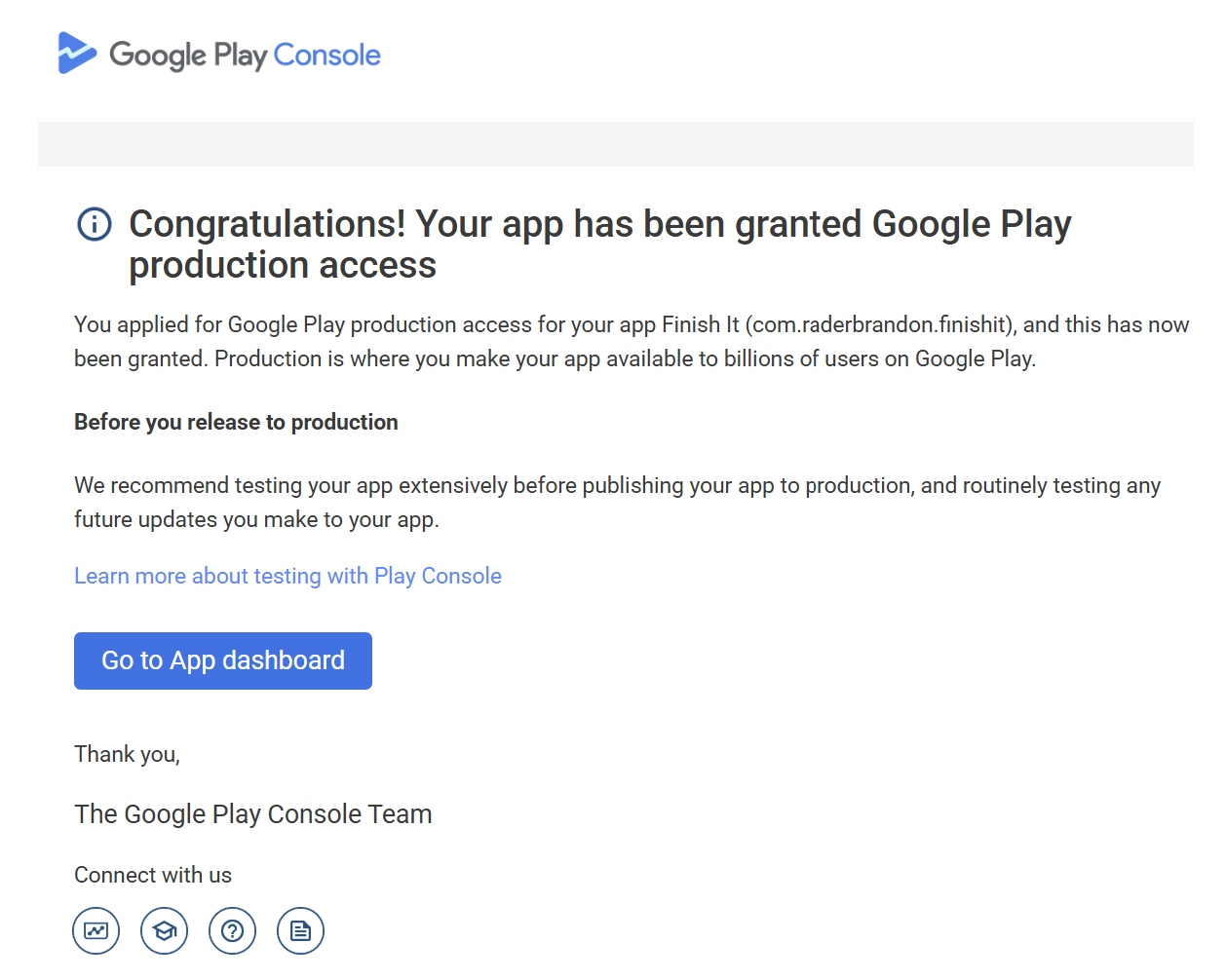
Verified Production Access
Quality QA Testing Reports
Clear, actionable reports with screenshots and evidence for every important issue found during testing.
Real Device Testing & Diagnostics
Real human testers use physical Android devices to test your app, verify real user flows, and provide clear testing evidence and professional QA reports.
Production Access Secured
Get your Android build approved on the first try. We create an audit-ready compliance profile that proves thorough quality assurance.
Affordable Compliance Cycles
Transparent plans built to satisfy Google Play Console guidelines for your Android build.
Loading Packages
Please wait while we fetch the best options for your region...
Frequently Asked Questions
Everything you need to know about passing your closed testing requirements.