12 Play Console app testers for Android app testing in Malta
Hire 12 Play Console app testers in Malta. Pass Google Play closed testing in 14 days with real Android testers and unlock Play Store production access.
Why 12 Active Testers Are Mandatory on Google Play Console
Google introduced the 12-tester policy to weed out broken apps, frequent crashes, and unfinished software from flooding the store. The Play Console backend tracks whether testers genuinely open your app, explore its screens, and generate normal touch events across different Android versions and screen resolutions.
For mobile teams based in or targeting Malta, fulfilling the 12 Play Console app testers for Android app testing in Malta rule with real human testers builds trust with Google's evaluation systems. It proves your application is stable on local carriers like Epic, GO, and Melita, while providing authentic telemetry that automated emulators simply cannot reproduce.
The Real Struggle with DIY Tester Recruitment
Many creators first attempt to organize 12 testers on their own using family members, friends, or random social media message boards. This approach almost always runs into serious friction. People start with good intentions, but within four or five days, daily app opens drop off sharply as daily routines take over.
When your active tester count dips below the required threshold during the continuous 14-day window, Google Play Console can reset your progress or reject your final production access application. Constantly chasing volunteers to open the app distracts you from fixing real code bugs and polishing your user interface.
Technical Metrics Google Play Console Evaluates During Closed Testing
Passing the Google Play Closed Testing phase requires understanding what Google actually monitors under the hood. The Play Console does not just count email addresses on an access list. Google runs deep algorithmic analysis on user behavior and crash logs across every single testing day.
1. Daily Active Engagement and Retention
Google measures whether testers keep the application installed on their physical devices for the entire 14-day streak. If testers uninstall the APK or Android App Bundle (AAB) after one day, your retention curve drops to zero, raising immediate red flags in the Play Console review algorithms. Genuine user sessions with regular app launches show healthy retention.
2. Android Vitals and Crash Resilience
Every unhandled runtime exception, Application Not Responding (ANR) error, and native memory leak is logged in your Android Vitals report. Google compares your stability metrics against strict performance thresholds:
- Maximum acceptable user-perceived crash rate: below 1.09% across all supported Android OS versions.
- Maximum acceptable ANR rate: below 0.47% during typical app interaction cycles.
- Background battery drain and excessive wake locks: monitored to protect device health.
3. Device Diversity and OS Distribution
Google checks the hardware fingerprint of every opted-in tester. A compliant testing group includes a healthy spread of device manufacturers such as Samsung Galaxy, Xiaomi, Google Pixel, OnePlus, and Motorola running Android 10, 11, 12, 13, 14, 15, and Android 16 previews. Testing exclusively on a single device model or identical chipsets can look artificial to automated screening bots.
4. Interactive Session Depth
Automated audit systems evaluate touch coordinates, scrolling speeds, page transitions, and session lengths. Real human testers spend time reading onboarding text, adjusting in-app settings, granting required runtime permissions, and triggering core features. This natural interaction proves your app provides real user utility.
The Hidden Dangers of Fake Testers and Bot Scripts
Some developers fall into the trap of buying cheap testing packages from suspicious websites that use bot scripts, modified emulators, or click farms. While these services promise instant results, they put your entire Google Play Developer account in extreme danger.
Google uses sophisticated machine learning models to detect artificial traffic patterns. These systems identify identical IP subnets, synthetic touch events with zero natural human jitter, cloned Android device IDs, and headless emulator instances. When Google flags synthetic testing activity, the penalties are severe:
- Immediate cancellation of your active closed testing track.
- Rejection of your production access request with boilerplate policy warnings.
- Permanent termination of your Google Play Developer account under the deceptive behavior and spam policy.
- Blacklisting of your developer legal name, credit card details, physical address, and associated merchant accounts.
Real human testing is the only secure, policy-compliant path to getting your app approved on the Google Play Store.
Why a Managed Testing Service Gives You Total Peace of Mind
Using a professional closed testing partner turns a stressful compliance chore into a reliable, streamlined launchpad. Instead of managing disorganized volunteer groups or risking account bans with bots, you get a fully managed team of verified human testers on real Android smartphones.
Our managed testing solution guarantees continuous compliance throughout the entire testing cycle:
- Surplus Tester Allocation: We assign extra active testers to your closed track, creating a reliable safety buffer so your active tester count never drops below the required threshold.
- Real Hardware in Genuine Environments: Every tester installs your app through an official Google Play opt-in link on their personal daily-driver Android device.
- Daily Organic Engagement: Testers open, navigate, and interact with your app features each day, generating authentic session telemetry that satisfies Google's review criteria.
- Actionable QA Feedback: You receive constructive bug reports, layout anomaly captures, and usability feedback directly in your private Play Console dashboard.
- Production Questionnaire Assistance: We supply detailed, custom-written answers for Google's mandatory 14-day production access evaluation form, clearly documenting your testing methodologies and bug fixes.
| Testing Dimension | Professional Managed Testers | DIY Friends & Family | Low-Cost Bot Farms |
|---|---|---|---|
| Policy Compliance | 100% Guaranteed Google Play Compliant | High Risk of Invalidation | Severe Risk of Permanent Ban |
| Tester Retention | Full 14-day continuous daily engagement | Declines sharply after 3 - 4 days | Simulated, immediately flagged by Google |
| Hardware Diversity | 20+ real physical phone models & brands | Limited to personal network devices | Virtual emulators & shared cloud servers |
| OS Coverage | Android 8.0 up to Android 16 | Mixed, often skewed to a single OS | Cloned ROM images with identical fingerprints |
| Actionable Feedback | Structured bug logs, UI feedback, & crash data | Casual comments like "looks nice" | Zero feedback or gibberish text |
| Developer Time Spent | Zero management effort needed | Hours spent sending daily reminders | Zero effort, catastrophic account loss |
| Production Approval Rate | Extremely high first-time approval rate | Low due to inconsistent telemetry | 0% approval rate (triggers automated bans) |
Managed Real Human Testing
Real Android users across Malta and global regions install your application directly through Google Play closed testing opt-in links. They use your software on physical Samsung, Xiaomi, Pixel, and Motorola devices. Daily natural usage patterns generate authentic Android Vitals, clean crash reports, and positive interaction signals that help you secure production access smoothly.
Bot Scripts and Emulators
Automated tools run fake app instances in cloud servers, mimicking clicks with repetitive coordinates and identical timing. Google Play algorithms easily detect synthetic touch patterns, missing hardware sensor data, and proxy IP clusters. This triggers automated rejection and risks permanent developer account termination.
Struggling with the 14-Day Testing Requirement?
Skip the hassle of recruiting unreliable testers. Our professional fleet of real Android devices guarantees Google Play compliance in exactly 14 days. Zero bots. Zero emulators. 100% production approval guarantee.
Step-by-Step Closed Testing Setup Guide for Malta Developers
Setting up your closed testing track correctly inside Google Play Console is essential for a smooth 14-day testing period. Follow this step-by-step technical checklist before inviting testers.
1. Account and Store Listing Preparation
Complete all legal personal identity verifications, tax details, and D-U-N-S or personal contact information required by Google Play Console.
Upload high-resolution app icons (512x512 PNG), feature graphics (1024x500 JPG/PNG), and at least 4 clear phone screenshots showcasing genuine in-app workflows.
Host a valid, publicly accessible HTTPS privacy policy covering data collection, third-party SDKs, user data retention, and account deletion procedures.
Fill out the Data Safety section, Target Audience questionnaire, Financial Features declarations, and Content Rating survey with total accuracy.
2. Technical Build and Track Configuration
Generate a signed production-ready Android App Bundle (.aab) targeting the latest Android SDK API level with optimized ProGuard or R8 shrinking rules.
Navigate to Play Console > Testing > Closed testing, create a dedicated track, and upload your signed release AAB.
Select 'Google Groups' or 'Email lists' within track settings, add the designated tester group emails, and save your changes.
Submit the new release for review so Google's automated policy systems approve the build for closed testing distribution.
Copy the generated 'Join on Android' and 'Join on the web' URLs to share with your verified tester cohort to initiate the 14-day clock.
Your 5-Step Roadmap to Google Play Production Approval
Our structured workflow guides you through every milestone from initial build upload to public store launch.
Step 1: Onboarding and Track Setup
You create your closed testing track in Google Play Console, add our dedicated tester list, and share the official opt-in link with our coordination team.
Step 2: Official Opt-In & App Installation
Our vetted human testers accept your closed testing invitation through Google Play and install your app directly on their physical Android smartphones.
Step 3: 14 Consecutive Days of Active Testing
Testers launch the application every day, explore various screens, test user input fields, and maintain active daily engagement throughout the mandatory two-week period.
Step 4: Real-Time Diagnostic and QA Monitoring
We monitor session health, log edge-case bugs, track device-specific anomalies, and provide feedback directly in your Play Console dashboard so you can push bug-fix updates if necessary.
Step 5: Apply for Production Access
Once the 14-day milestone completes, you unlock the 'Apply for Production' button in Play Console. We provide custom, data-backed answers for Google's review questionnaire to help ensure prompt approval.
Best Practices for Maintaining High Tester Retention During Closed Testing
To maximize your chances of getting approved on your first application, follow these technical best practices during your 14-day closed testing window:
Release Periodic Maintenance Updates
Pushing one or two minor bug-fix updates during the 14-day cycle shows Google's review team that you actively maintain the app and listen to tester feedback. Even small improvements to UI padding, localization strings, or error handling messages prove proactive development.
Monitor Android Vitals Daily
Check your Google Play Console dashboard every morning. Look specifically at crash clusters, ANR spikes, and slow rendering frame rates. If a bug affects a specific Android OS version or processor architecture, resolve it immediately by deploying an updated AAB to the closed track.
Keep Test Accounts and Demo Credentials Active
If your application requires a user login or backend subscription, make sure your test authentication endpoints remain active and accessible. If Google's review engineers attempt to audit your app and run into a non-functional login screen, your production request can be delayed or rejected.
Gather Structured Feedback in Play Console
Encourage private feedback through Google Play. When real testers submit feedback through the Play Store app page, it populates the 'Ratings & Reviews > Testing feedback' tab inside Play Console. Having real, documented feedback gives you strong, concrete evidence when filling out Google's final production access questions.
Frequently Asked Questions
Why does Google Play require 12 testers for 14 continuous days?
Google introduced this rule for all personal developer accounts registered after November 13, 2023. The requirement ensures that new developers thoroughly test their mobile applications on physical Android devices before opening them to the global public. This policy significantly reduces security flaws, broken layouts, misleading interfaces, and frequent crashes across the Play Store ecosystem.
Can developers in Malta use testers located in other countries?
Yes. Google Play allows closed testers from any country where your closed testing track is made available. However, having testers who understand European connectivity standards, multi-language localization, and diverse regional networks ensures that your software performs reliably for local users as well as international audiences.
What happens if a tester uninstalls the app during the 14-day cycle?
If an individual tester uninstalls your app or stops opening it, your active tester count may fall below Google's required threshold of 12 active participants. If this happens, your 14-day compliance counter can freeze or reset entirely. Our managed testing service solves this by assigning extra backup testers, ensuring your active count always stays safely above the required minimum every single day.
Will private closed testing reviews harm my public Google Play rating?
No. All ratings, star scores, and written comments submitted during the closed testing track are completely private. They are visible only to you inside your Google Play Console dashboard under the testing feedback section. When your application eventually launches on the public production track, your public star rating starts fresh with a clean slate.
What specific Android devices and OS versions are used during testing?
Our human testing network uses a wide array of physical smartphones from major manufacturers including Samsung Galaxy, Xiaomi, Google Pixel, Motorola, OnePlus, and Oppo. These devices run a diverse range of operating system versions from Android 8.0 Oreo up to Android 15 and 16 developer builds, giving your build thorough hardware and OS coverage.
How do I successfully answer Google's questions when applying for production access?
At the end of your 14 days of closed testing, Google requires you to complete an application form explaining how you recruited testers, what feedback you collected, and what changes you made to improve app stability. We provide comprehensive, customized guidance based on the actual telemetry and bug reports generated during your testing cycle, giving you the best opportunity for rapid approval.
The Testing Pipeline
Your journey to Google Play production access, simplified and automated.
Sign In
Authenticate your account to initialize the 14-day QA fleet for your Android release.
Opt-In URL
Upload your testing link. We assign 12 verified users with real Android devices to download and test your Android release.
Testing Begins
A dedicated testing supervisor is assigned to monitor progress while testers engage with your Android app and provide feedback throughout the testing period.
Compliance Complete
Our lab maintains active installations for two weeks straight, ensuring a clean track record and providing a QA compliance log for your release.
Why Developers Trust Us
Satisfy your Play Store Console testing obligations with our managed physical device fleet tailored for Android builds.
The 14-Day Production Guarantee
We complete the required 14-day closed testing process with real human testers and physical Android devices, while providing clear testing evidence and documentation throughout the process.
If Google specifically rejects production access due to insufficient testing engagement, you are covered by our free re-run or 100% refund guarantee, subject to our Refund Policy.
Verified Production Access
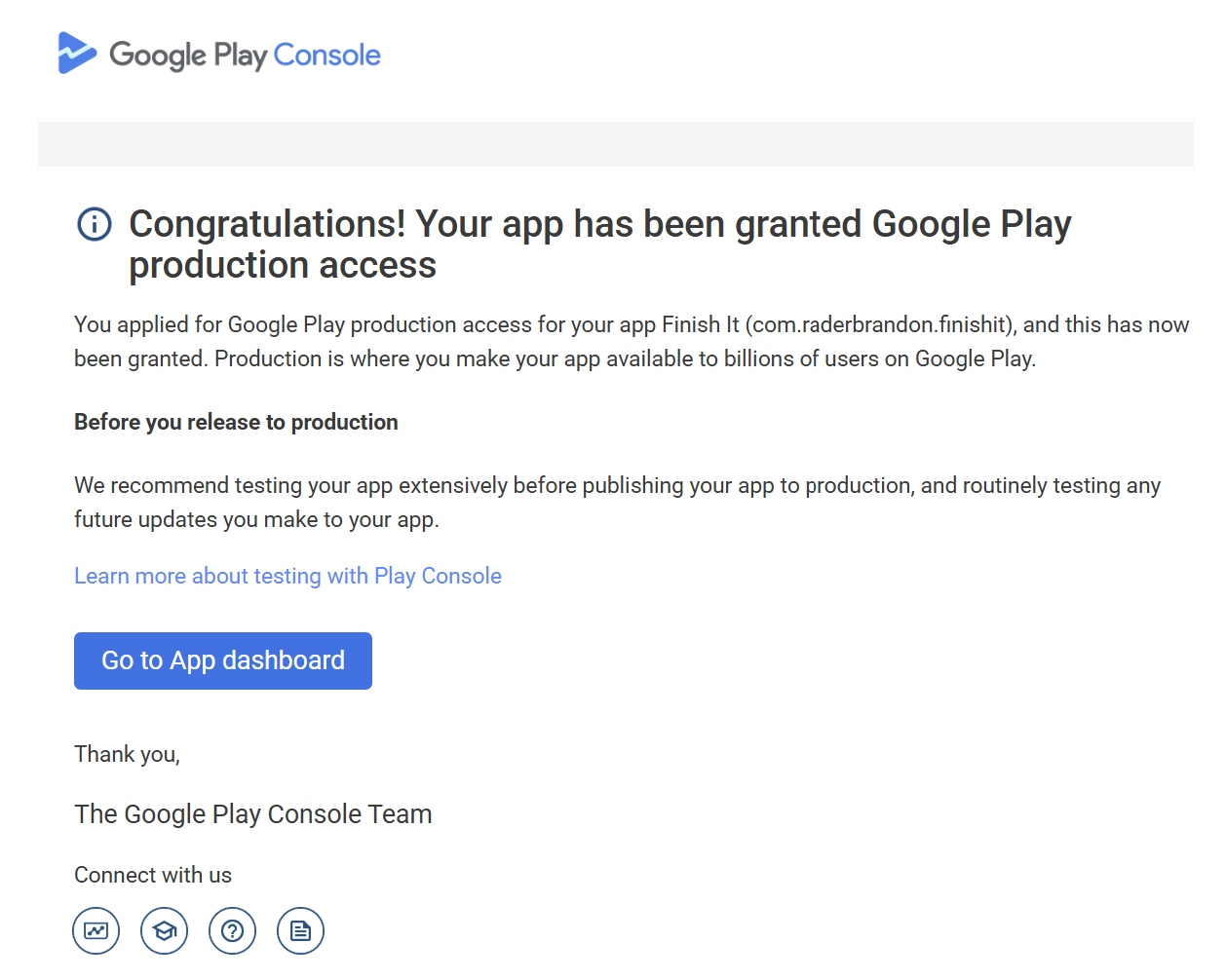
Quality QA Testing Reports
Clear, actionable reports with screenshots and evidence for every important issue found during testing.
Real Device Testing & Diagnostics
Real human testers use physical Android devices to test your app, verify real user flows, and provide clear testing evidence and professional QA reports.
Guaranteed App Approval
Our structured 14-day closed testing process is designed to meet Google Play's production requirements for your Android release.
Simple Closed Testing Pricing
Select the plan that fits your Android app complexity.
Loading Packages
Please wait while we fetch the best options for your region...
Frequently Asked Questions
Everything you need to know about passing your closed testing requirements.