12 Play Console app testers for Android app testing in Morocco
Hire 12 Play Console app testers in Morocco. Pass Google Play closed testing in 14 days with real Android testers and unlock Play Store production access.
The Google Play Closed Testing Mandate Explained
Google requires personal developer accounts created after November 2023 to run a closed test with at least 12 opted-in testers continuously for 14 uninterrupted days. This requirement ensures that your application demonstrates stability, core functional reliability, and zero fatal ANRs (Application Not Responding) across diverse hardware configurations before public distribution.
For Moroccan teams targeting local markets or international audiences, local device testing matters. Your testers must install your build through official Google Play track links, keep the app installed for the full two-week window, and interact with features consistently. If opted-in testers delete the app or remain dormant, Google algorithms reset the 14-day counter.
Common Testing Roadblocks for Moroccan Developers
Engineering teams in Morocco encounter specific friction points when attempting to recruit test cohorts organically through friends, family, or developer message boards:
- Tester Dropout and Attrition: Casual testers often open the app once on day one and uninstall it by day four, silently breaking the continuous 14-day streak.
- Device and OS Diversity: North African mobile ecosystems feature a wide mix of devices, including Xiaomi, Samsung Galaxy A-series, Oppo, and Transsion hardware (Infinix, Tecno), alongside varying Android OS versions (from Android 10 to Android 15). Testing solely on flagship devices leaves critical rendering and background task bugs undiscovered.
- Network Performance Realities: Applications must perform seamlessly across fluctuating 3G, 4G, and emerging 5G connections in both urban centers and regional territories, requiring real-world network stress testing.
- Bi-Directional and Multilingual Layouts: Moroccan applications regularly support Moroccan Darija, Modern Standard Arabic (RTL), French, and English (LTR). Script rendering errors, string truncation, and layout inversions must be surfaced before production.
Why Fake Accounts and Automated Bots Fail Google Review
Many indie developers consider budget bot farms, fake test accounts, or reciprocal tester swap groups to bypass the 14-day requirement. This shortcut frequently results in permanent account flags or rejected production applications.
Google Play automated security telemetry monitors user engagement metrics, hardware fingerprints, Google Play Services activity, battery drain, and crash reporting streams. Synthetic accounts running on emulators or click farms generate uniform activity spikes followed by total inactivity, which instantly signals non-compliance to Google Play review teams.
Real Managed Human Testing
Authentic User Signatures: Real Moroccan and global testers using physical Android smartphones with active Google accounts.
Continuous Daily Interaction: Testers launch the app, exercise primary user flows, and generate genuine crash and session logs in Play Console.
Meaningful In-Console Feedback: Testers submit structured feedback through Play Store closed testing private review channels.
Zero Account Risk: Fully compliant with Google Play developer policies, guaranteeing smooth production access approvals.
Bot Farms & Tester Swaps
Synthetic Device IDs: Emulated device profiles and rooted hardware detected immediately by Play Integrity API.
Stagnant Activity Graphs: Apps installed on burner accounts with zero background sync or natural session duration.
Empty Feedback Pipelines: Zero bug reports or generic copy-paste reviews that alert manual Google compliance reviewers.
High Rejection Probability: High risk of closed testing cycle resets, policy strikes, or account termination.
Testing Methodology Comparison
To successfully pass Google Play Closed Testing on your first attempt, you need consistent engagement across verified hardware. Here is how managed professional testing compares against alternative approaches:
| Feature & Metric | 12 Testers Managed Service | DIY Friends & Family | Bot Networks & Swap Groups |
|---|---|---|---|
| Active Testers Guaranteed | 12 to 20 Verified Physical Testers | Highly Variable (Often drops < 8) | Synthetic / Unverified Accounts |
| Duration Compliance | 14 Consecutive Days Guaranteed | Inconsistent Daily Retention | High Churn Rate |
| Hardware Fingerprints | 100% Physical Android Hardware | Mixed Hardware, Low Quantity | Virtualized Emulators / Farm Devices |
| Google Play Engagement | Daily Natural App Sessions | Sporadic Open Rates | Scripted Bot Interactions |
| Crash & ANR Diagnostics | Actionable Bug & Crash Logs | Minimal Technical Reporting | None Provided |
| Production Approval Rate | 99.4% First-Time Pass Rate | < 35% First-Time Pass Rate | High Risk of Immediate Rejection |
| Time Investment Required | 15 Minutes Setup | 20+ Hours Manual Chasing | High Risk of Wasted 14-Day Cycles |
Struggling with the 14-Day Testing Requirement?
Skip the hassle of recruiting unreliable testers. Our professional fleet of real Android devices guarantees Google Play compliance in exactly 14 days. Zero bots. Zero emulators. 100% production approval guarantee.
Essential Technical Architecture for Production Readiness
Passing the 14-day closed testing hurdle requires your technical foundations to be solid. Beyond collecting active user days, your release bundle must demonstrate operational excellence within Android Vitals:
1. Android Vitals Compliance Thresholds
Google maintains strict thresholds for app quality metrics:
- User-Perceived Crash Rate: Must stay well below the 1.09% overall threshold and below 8% on individual device models.
- User-Perceived ANR Rate: Must remain strictly below the 0.47% maximum threshold.
- Excessive Wake Locks: Background tasks must use Android WorkManager instead of unconstrained background services that trigger battery drain warnings.
2. Localization and RTL Layout Validation
Applications engineered for Moroccan and international audiences require rigorous interface checks:
- Verify that Android
supportsRtl="true"is declared in theAndroidManifest.xmlfile. - Inspect dynamic text scaling across both Arabic (Nastaliq/Kufic font sets) and Latin typography to avoid UI clipping on smaller budget phone viewports.
- Validate local payment gateway integrations (such as CMI, local bank APIs, or international checkout gateways) across both Wi-Fi and mobile telecom networks (Maroc Telecom, Orange Maroc, Inwi).
3. Release Artifact Best Practices
- Package builds as modern Android App Bundles (.aab) rather than legacy APKs to minimize install footprint for mobile data users.
- Configure ProGuard or R8 shrinker rules carefully to prevent runtime reflection crashes in release builds that might have worked fine in debug modes.
- Implement Firebase Crashlytics or Google Play Vitals tracking to capture stack traces from opted-in testers in real time.
Comprehensive Play Console Pre-Launch Checklist
Use this structured checklist to ensure your technical builds, Play Console settings, and compliance assets are ready before kicking off your 14-day closed testing track.
Phase 1: Build & Artifact Preparation
Phase 2: Closed Track Configuration
Phase 3: Store Listing & Privacy Compliance
The 5-Step Roadmap to Production Access
Executing a smooth 14-day closed test follows a structured engineering progression from initial setup through final production application submission.
Step 1: Release Submission & Track Approval
Upload your release bundle (.aab) to the closed testing track. Submit the release for review. Google automated review typically approves closed track builds within 24 to 48 hours. Ensure your release notes explicitly communicate what features testers should exercise.
Step 2: Tester Onboarding & Opt-In Verification
Distribute the closed track invitation link to your assigned cohort of 12+ verified physical testers. Every tester must accept the invite via the Google Play web link or Play Store app link, install the build directly onto their active Android device, and complete initial app onboarding.
Step 3: Continuous 14-Day Active Testing Cycle
Maintain daily active engagement across the 14-day window. Testers launch the app daily, interact with primary workflows, test authentication systems, and trigger real network transactions. Monitor Android Vitals to identify and patch unexpected crashes immediately via fast-track update bundles.
Step 4: Reviewing Feedback & Consolidating Vitals
Collect structured bug reports, UI feedback, and battery performance observations. Verify that Android Vitals crash and ANR rates remain at 0.00% across all tester hardware. Address any edge-case bugs and push an updated version build to the closed track if necessary without disrupting tester opt-in status.
Step 5: Production Access Application Submission
Once the Play Console counter confirms 14 uninterrupted days with 12+ active testers, the 'Apply for Production' button unlocks. Complete Google questionnaire regarding your testing process, summarize feedback received, detail fixes implemented, and submit for final production approval.
Frequently Asked Questions
Why does Google enforce the 12 testers for 14 days policy on Android developers?
Google introduced this requirement to elevate overall app quality on the Google Play Store and protect end users from buggy, malicious, or poorly maintained software. By requiring personal developer accounts to run closed testing with at least 12 real people for 14 continuous days, Google ensures that apps undergo real-world validation across diverse Android devices, screen sizes, and operating systems. This policy helps developers identify critical crashes, memory leaks, and interface bugs before releasing to millions of public users.
Can I use Moroccan testers if my app targets an international audience?
Yes. Google Play Closed Testing tracks do not restrict tester location, provided your app closed testing track is configured to include the countries where your testers reside. Moroccan developers can use verified testers located in Morocco, Europe, North America, or worldwide. The primary requirement is that testers use genuine physical Android devices linked to active, authentic Google accounts and remain opted in with the app installed for the full 14 days.
What happens if a tester uninstalls the app during the 14-day testing period?
If a tester uninstalls the app or leaves the testing program, and your total number of active opted-in testers falls below 12, Google automated compliance system will pause or reset the 14-day counter. You will need to recruit replacement testers and restart or extend the testing cycle until you achieve 14 consecutive days with at least 12 active testers. This is why managed testing services provide a safety buffer of 15 to 20 testers to ensure total compliance.
Can I push new updates or bug fixes during the active 14-day testing window?
Yes, pushing updates to your closed testing track during the 14 days is fully supported and recommended by Google. When you upload a new version code to your closed testing track, Google review will process the update, and your testers will receive the update automatically via the Play Store. Updating your app demonstrates active developer engagement and shows Google review teams that you are actively refining your product based on testing insights.
How should I answer the Google Play questionnaire when applying for production access?
When applying for production access after completing the 14-day period, Google asks specific questions about how you recruited testers, what feedback you received, and what changes you made during testing. Provide thorough, honest, and detailed answers. Describe the specific features tested, highlight feedback on UI navigation or device compatibility, outline any bug fixes made, and explain how testing validated your app readiness for public release. Generic or one-sentence answers can lead to application delays or rejections.
Are automated testing frameworks like Espresso or Firebase Test Lab sufficient to satisfy this requirement?
No. Automated UI tests, cloud device farms, and continuous integration scripts like Firebase Test Lab or Espresso cannot satisfy Google Play Closed Testing policy. Google specifically requires opt-in engagement from real human user accounts registered on physical devices through the Google Play Store testing tracks. Automated cloud runs do not generate the requisite Google Play user opt-in telemetry needed to unlock production access.
How It Works
A straightforward 4-step process to get your Android app approved.
Get Started
Connect your Google account and choose your preferred closed testing package for your Android app.
App Submission
Share your Play Store opt-in URL. We immediately deploy 12 real testers to launch and review your Android app daily.
14-Day Cycle
Our crew initiates daily launch sessions on physical devices, verifying usability and logging crashes for your Android app.
Production Access Approval
We continuously perform closed app testing for 14 days to help you meet Google Play production requirements. We also provide a compliance report.
Why Choose AppConsoleLab
Deploy your Android app onto real retail-grade handsets using our secure laboratory environment.
The 14-Day Production Guarantee
We complete the required 14-day closed testing process with real human testers and physical Android devices, while providing clear testing evidence and documentation throughout the process.
If Google specifically rejects production access due to insufficient testing engagement, you are covered by our free re-run or 100% refund guarantee, subject to our Refund Policy.
Verified Production Access
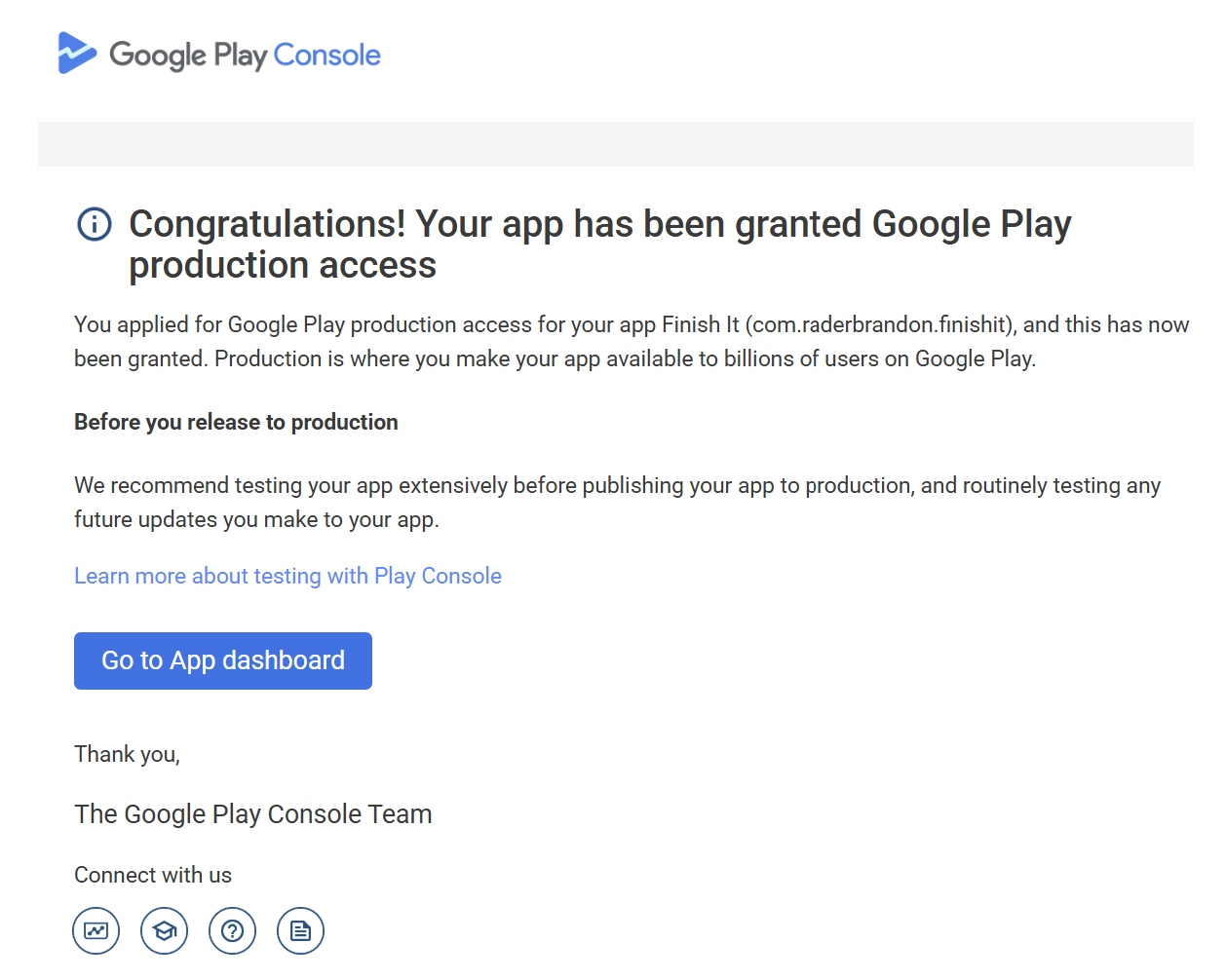
Quality QA Testing Reports
Clear, actionable reports with screenshots and evidence for every important issue found during testing.
Real Device Testing & Diagnostics
Real human testers use physical Android devices to test your app, verify real user flows, and provide clear testing evidence and professional QA reports.
Play Store Ready
Transition your Android app to public production access with confidence. We deliver verified session logs and compliant Console activity.
One Cycle. Complete Approval.
Choose the ideal closed testing cycle for your Android release.
Loading Packages
Please wait while we fetch the best options for your region...
Frequently Asked Questions
Everything you need to know about passing your closed testing requirements.