12 Play Console app testers for Android app testing in Norway
Get 12 Play Console app testers in Norway. Fulfill Google Play closed testing with our 12 testers for 14 days service and launch on the Play Store.
Imagine spending months pouring your heart, soul, and coffee into building the perfect Android app. You have mapped out the user interface, squashed countless bugs, and tailored the experience specifically for the Norwegian market. Norway boasts one of the most tech-savvy populations on the planet. People here expect sleek design, lightning-fast load times, and absolute privacy. But just when you are ready to hit publish, you slam into a massive brick wall built by Google. The tech giant now demands that you run a rigorous Closed Testing phase before your app can ever see the light of day on the Google Play Store.
If you are a solo developer or a small indie team, finding real people to test your app is a massive headache. You might have managed to get your cousin, your best friend, and maybe a few coworkers to install your app. But what happens when you run out of personal favors? Many developers find themselves in a situation where they already have a handful of people but desperately need exactly 12 Play Console app testers to meet the requirements or to run a very specific secondary test. When you need those final 12 testers for 14 days, the panic can really set in. You do not just need any random clicks. You need legitimate, engaged users who can provide real feedback, especially if you are targeting a specialized market like Norway.
Navigating the landscape of Google Play Closed Testing can feel like trying to solve a complicated puzzle in the dark. The rules are strict, the timeline is unyielding, and the consequences of messing up are severe. If you try to game the system with bots, Google will catch you. Your app will get rejected, and your developer account might even face a ban. That is why understanding exactly how to secure real, human testers for your Android app testing in Norway is the most critical step of your entire development journey.
Understanding the New Google Play Testing Rules
Let us break down exactly what Google expects from you. In an effort to clean up the Play Store and ensure only high-quality apps make it to the public, Google introduced mandatory testing requirements for personal developer accounts created after November 2023. The golden rule is that you need a continuous testing pool for at least two weeks. While the standard requirement is often 20 testers, many developers run into situations where they are piecing together their testing pool. If you have managed to scrape together eight loyal friends, you are still going to need 12 testers for 14 days to cross the finish line or to run targeted split tests.
During this two-week period, your testers cannot just install the app and forget about it. They need to open it, navigate through the menus, test the core features, and ideally, find the hidden bugs that you missed. This is what Play Store Closed Testing is all about. It is not a vanity metric. It is a rigorous quality assurance process designed to protect end users from crashing apps and frustrating experiences.
For developers in Norway, this presents a unique challenge. The population is relatively small, and convincing strangers to download an unreleased app requires building a lot of trust. You need people who understand the local context. If your app involves local Norwegian payment systems like Vipps, or relies on location data for public transit in Oslo, a tester sitting halfway across the world is not going to give you the feedback you actually need.
The Norwegian Mobile Landscape
Why is Android app testing in Norway so specific? Norway has an incredibly high smartphone penetration rate. Almost everyone has a smartphone, and the split between iOS and Android is quite balanced, meaning there is a massive audience for your Google Play app. However, this audience is exceptionally demanding. They are used to digital public services, seamless mobile banking, and apps that just work flawlessly.
If your app crashes during checkout, or if the Norwegian translation feels clunky and unnatural, users will uninstall it within seconds. They have zero tolerance for poor performance. This is why having real testers from your target demographic is non-negotiable. When you run your Google Play Closed Testing phase, you are not just ticking a box for Google. You are essentially running a dress rehearsal for your big opening night.
Think about the localization aspect alone. The Norwegian language has distinct dialects and two official written forms: Bokmål and Nynorsk. If your app relies heavily on text, your testers need to catch any weird phrasing or context errors. A bot farm cannot do that. A cheap automated testing service cannot do that. You need actual human eyes on your screens to make sure the app feels native to the region.
The Danger of Fake Testing Services
When faced with the daunting task of finding testers, many developers panic and turn to the dark side of the internet. A quick search will reveal dozens of services promising instant testers for pennies. These services use automated bots, click farms, and emulators to artificially inflate your tester numbers. It might seem like a quick fix, but it is actually a fast track to disaster.
Real Human Testers
Real testers use actual Android devices. They have standard Google accounts with a history of regular activity. They open your app at different times of the day, swipe through screens at a natural pace, and genuinely try to understand what your app does. If they find a bug, they might actually tell you about it. When the Google algorithm reviews your testing phase, it sees a diverse, organic pattern of usage that perfectly matches the profile of a successful app launch.
Bot Farms and Fake Accounts
Bots use emulators running on massive server racks. They log in simultaneously, perform the exact same mechanical clicks, and stay open for precisely the same amount of time. The security systems at Google are incredibly sophisticated. They can easily detect when an app is being artificially manipulated. If you use bots to get your 12 Play Console app testers, you run a massive risk of your app being rejected for policy violations.
Google tracks a huge variety of metrics during your Closed Testing phase. They look at battery drain, screen rendering times, and crash reports. But they also look at user engagement. If your testers install the app and never open it again, or if they all open it at exactly 3:00 AM and close it exactly 30 seconds later, red flags will fly. You need organic, genuine human interaction.
How to Organize Your Testing Campaign
So, how do you actually go about running a successful test? It requires planning, communication, and a solid strategy. You cannot just throw your app link into a random forum and hope for the best. You need a structured approach to ensure you get the data you need and satisfy the strict requirements at the same time.
Prepare Your Store Listing
Before you invite a single tester, your Google Play Console setup needs to be pristine. Ensure your app icon, screenshots, and descriptions are localized properly. Your privacy policy must be clearly linked and compliant with both platform rules and European data standards.
Assemble Your Testing Team
Whether you are pulling from your own network or using a professional service, gather your testers. If you are filling a gap, this is where you secure those final 12 testers for 14 days. Make sure you collect their correct Google account email addresses so you can add them to your approved list.
Launch the Closed Track
Upload your App Bundle to the testing track in the Play Console. Add your testers to the approved email list. Google will take a little time to review your app before the track goes live. Once approved, send the official opt-in link to your testers.
Monitor and Engage
For the next two weeks, you need to be actively involved. Check your technical dashboard daily. Look for crash reports or application errors. Encourage your testers to leave private feedback through the store interface so you can gather valuable insights.
Struggling with the 14-Day Testing Requirement?
Skip the hassle of recruiting unreliable testers. Our professional fleet of real Android devices guarantees Google Play compliance in exactly 14 days. Zero bots. Zero emulators. 100% production approval guarantee.
The Technical Side of Android App Testing in Norway
When you are testing an Android app, you have to account for the immense fragmentation of the hardware ecosystem. Unlike iOS, where everyone is using a relatively similar device, Android users in Norway have a massive variety of phones. You have people on the latest Samsung foldable devices, budget Motorola phones, older Sony Xperia models, and everything in between. Each device has a different screen size, different processing power, and sometimes even customized versions of the operating system.
Your 12 Play Console app testers need to represent a diverse slice of this hardware pie. If your app works perfectly on a brand-new high-end phone but crashes on a three-year-old budget model, you have a major problem. This is where the 14-day window becomes crucial. It gives your testers enough time to use the app in various real-world scenarios. They might try to use it while connected to a spotty cellular network on a train ride to Bergen, or while connected to a super-fast fiber network in downtown Oslo. These different environmental factors can expose bugs that you would never find in a controlled laboratory setting.
Furthermore, battery optimization on mobile devices is notoriously aggressive. Many device manufacturers implement custom battery-saving software that will ruthlessly kill apps running in the background. If your app relies on background location tracking or pushes time-sensitive notifications, you need your testers to verify that the app does not get put to sleep unexpectedly.
Pre-Launch Prep: Are You Really Ready?
Before you officially kick off your testing phase, you need to make sure your app is actually ready to be tested. If you send a completely broken app to your testers, they will get frustrated and stop opening it, which will ruin your engagement metrics and potentially fail your test.
Core Functionality
Norwegian Market Readiness
If you cannot check off every single item on this list, you are not ready for Play Store Closed Testing. Take the extra time to polish your app. It is much better to delay your test by a few days than to waste your precious testing window on a broken build that no one wants to use.
Comparing Your Testing Options
When it comes down to actually getting the people you need, you have a few different paths you can take. You can try to do it all yourself, you can fall for the trap of cheap bot services, or you can invest in a professional testing service that provides real, verified human users. Let us compare these options directly.
| Feature | Professional Service | DIY Approach | Bot Farms |
|---|---|---|---|
| User Authenticity | 100% Real Humans | Real Humans | Automated Scripts |
| Reliability | Guaranteed daily activity | Highly unpredictable | Predictable but fake |
| Feedback Quality | Constructive and actionable | Varies greatly | Non-existent |
| Google Compliance | Fully compliant and safe | Compliant | High risk of account ban |
| Time Investment | Minimal effort required | Extremely time-consuming | Minimal effort required |
| Market Relevance | Can target specific regions | Limited to your social circle | No geographic relevance |
As you can see, trying to manage a manual test is incredibly stressful. You have to constantly badger your friends to remember to open the app. If three of them forget, you might fail the requirements entirely. Using a professional service to secure those 12 testers for 14 days takes the weight off your shoulders. You get the peace of mind knowing that real people are engaging with your app, providing the necessary signals to the platform, and keeping your developer account safe and compliant.
Maximizing the Value of Your 14-Day Window
The two weeks of Closed Testing should not be viewed as a passive waiting game. This is a critical period for iteration and improvement. When your testers start using the app, you need to be glued to your analytics and crash reporting tools.
If you see a spike in crash reports on day three, do not wait until the test is over to fix it. Pushing an update during the Closed Testing phase is actually a very positive signal. It shows that you are actively monitoring your app, responding to issues, and maintaining the software. This is the exact behavior the platform wants to see from responsible developers.
Encourage your testers to break your app. Tell them to try entering weird characters into text fields, to rapidly tap buttons before screens can load, and to switch between Wi-Fi and mobile data in the middle of a process. You want to uncover every possible edge case before you launch to the wider Norwegian public. A minor bug discovered by one of your 12 Play Console app testers is a quick fix. That same bug discovered by thousands of users on launch day is a reputation-destroying disaster that can take weeks to recover from.
The Final Sprint to Production
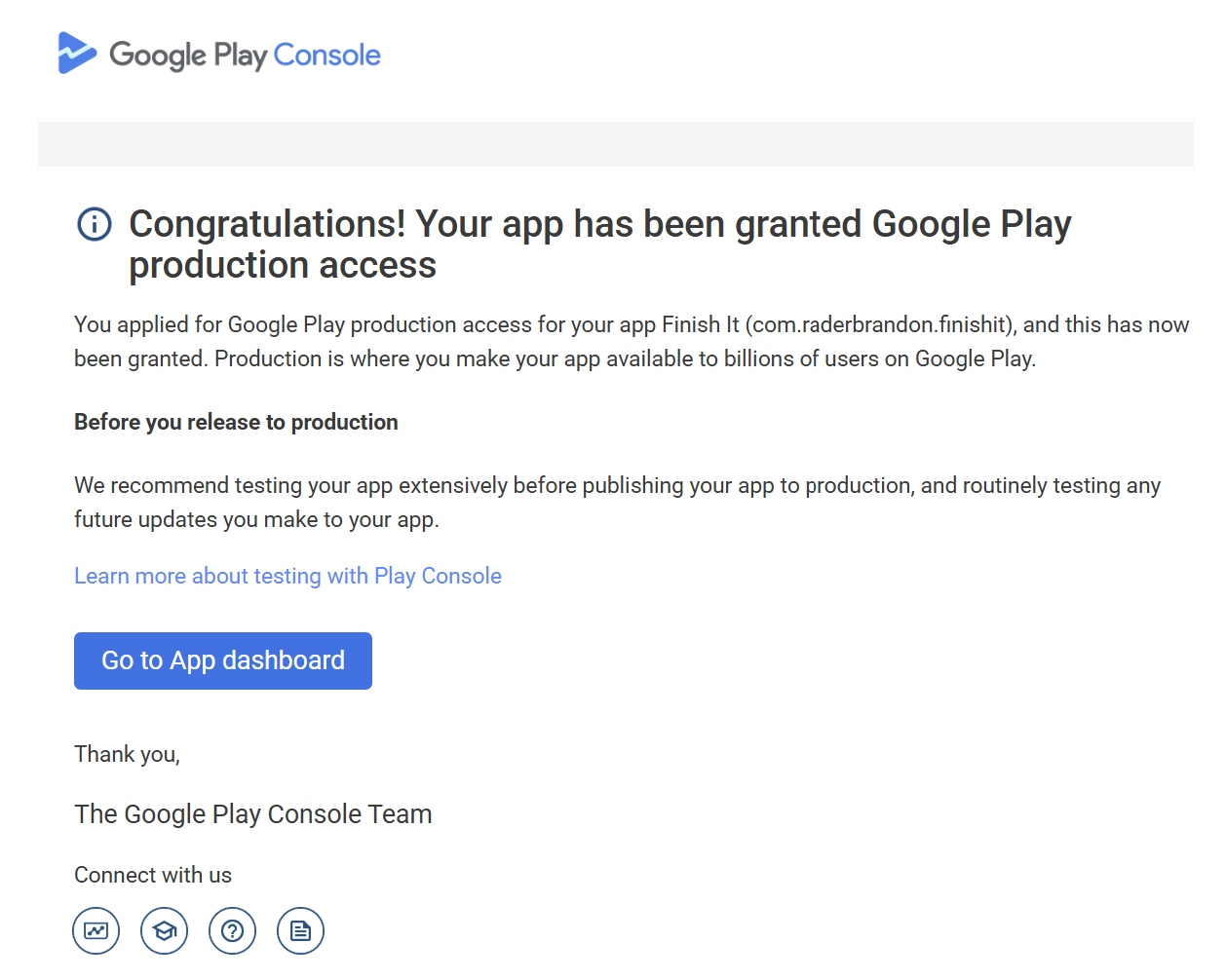
Once your 14 days are up, and you have met all the engagement criteria, the console will finally unlock the ability to apply for Production access. This is a massive milestone in your development journey. You will need to fill out a final questionnaire asking about the feedback you received and the changes you made during the testing phase.
Because you used real testers and actively engaged with the process, you will have plenty of legitimate answers to provide. You can detail exactly how you improved the user interface based on comments, or how you fixed a critical bug that only occurred on older Android devices. This detailed, honest reporting significantly increases your chances of sailing through the final review process without any delays.
Launching an app in Norway is a fantastic opportunity for ambitious developers. The market is lucrative, users are eager for new digital tools, and the digital infrastructure is world-class. By taking your Google Play Closed Testing seriously, and ensuring you have the right real human testers backing you up, you set a remarkably strong foundation for long-term success.
Frequently Asked Questions
Why do I specifically need 12 testers for 14 days?
The standard requirement for new personal accounts is 20 testers. However, many developers already have a small team or a few friends testing the app. In these cases, they often seek exactly 12 Play Console app testers to supplement their existing pool and comfortably meet the strict requirements for the mandatory two-week testing period.
Can I use testers from outside of Norway for a Norwegian app?
Technically, the platform allows testers from any region where your app is available on the testing track. However, if your app is specifically designed for the Norwegian market, using local testers is highly recommended. They can verify language localizations, test local integrations, and provide feedback that foreign testers simply cannot offer.
What happens if a tester misses a day of testing?
The algorithm expects continuous engagement over the 14 days. While a single missed day by one tester might not immediately fail your test, a pattern of inactivity will absolutely cause issues. This is why using a dedicated professional testing service is much safer than relying on forgetful friends or family members.
How does the system know if I am using bots for my Play Store Closed Testing?
The security algorithms are incredibly advanced. They track device hardware profiles, network addresses, engagement patterns, touch event timing, and account history. Bot farms cannot accurately simulate the chaotic and organic behavior of real human users. Getting caught using bots often results in severe penalties, including the permanent termination of your developer account.
Should I update my app during the Closed Testing phase?
Yes, absolutely. Pushing updates to fix bugs discovered during testing is a strong signal that you are an active, responsible developer. It demonstrates that you are actually utilizing the Closed Testing phase for its intended purpose of improving app quality and user experience.
Our QA Process
A straightforward 4-step process to get your Android app approved.
Choose Package
Connect your Google account and choose your preferred closed testing package for your Android app.
Submit Link
Share your Play Store opt-in URL. We immediately deploy 12 real testers to launch and review your Android app daily.
Active Testing
Our crew initiates daily launch sessions on physical devices, verifying usability and logging crashes for your Android app.
Get Approved
We continuously perform closed app testing for 14 days to help you meet Google Play production requirements. We also provide a compliance report.
The Premium QA Advantage
Deploy your Android app onto real retail-grade handsets using our secure laboratory environment.
The 14-Day Production Guarantee
We complete the required 14-day closed testing process with real human testers and physical Android devices, while providing clear testing evidence and documentation throughout the process.
If Google specifically rejects production access due to insufficient testing engagement, you are covered by our free re-run or 100% refund guarantee, subject to our Refund Policy.
Verified Production Access
Quality QA Testing Reports
Clear, actionable reports with screenshots and evidence for every important issue found during testing.
Real Device Testing & Diagnostics
Real human testers use physical Android devices to test your app, verify real user flows, and provide clear testing evidence and professional QA reports.
Production Access Secured
Transition your Android app to public production access with confidence. We deliver verified session logs and compliant Console activity.
One Cycle. Complete Approval.
Choose the ideal closed testing cycle for your Android release.
Loading Packages
Please wait while we fetch the best options for your region...
Frequently Asked Questions
Everything you need to know about passing your closed testing requirements.