12 Play Console app testers for Android app testing in Sweden
Hire 12 Play Console app testers in Sweden. Pass Google Play closed testing with 12 testers for 14 days and publish your Android app on the Play Store.
Imagine pouring months of your life into coding the perfect Android app, debugging until your eyes burn, and meticulously designing every user interface element, only to have your creation rejected by Google right at the finish line. If you are specifically targeting the Swedish market, the stakes are incredibly high. Sweden is widely recognized as one of the most advanced tech hubs in the world. Cities like Stockholm and Gothenburg are home to highly sophisticated smartphone users who expect flawless performance, intuitive design, and seamless integration with local services. But before your application can even reach the hands of eager users in this lucrative market, you have to pass the notorious Google Play Closed Testing phase. This is not just a simple administrative formality. It is a strict, algorithmic, and manual review requirement designed to keep low quality, buggy, and spammy applications out of the Android ecosystem. If you do not meet this standard, your app will sit in developer limbo forever, entirely invisible to the public.
The core rule is simple on paper but daunting in reality: you need a minimum of 20 individual testers opted in for 14 straight days before you can even apply for production access. While you might be searching for a quick fix like 12 Testers for 14 Days, the actual Google policy mandates 20. And no, you cannot just use your friends, family, or a handful of fake accounts you created over the weekend. Google is watching your app's testing phase very closely. They analyze intricate user behavior patterns, active session times, crash reports, and daily engagement metrics. If their automated systems detect a network of bots, server farm IP addresses, or completely inactive testers who just downloaded the app and never opened it, your developer account risks being permanently flagged. This is why securing real, active users for your Play Store Closed Testing is the single most important step in your entire app launch strategy.
When you are launching an application, especially one tailored for a discerning and sophisticated audience like the Swedish public, having localized, authentic feedback is absolute gold. However, finding reliable individuals who will actually open your app, explore its features, and remain engaged for two full weeks is a massive headache for independent developers and small startup teams. The clock is constantly ticking, your projected launch date is slipping further away, and the pressure from investors or your own expectations is mounting. You need a reliable solution that guarantees compliance without forcing you to become a full time recruiter.
The Evolution of Google Play Developer Policies
To understand why this testing phase is so rigorous, you have to look at the history of the Google Play Store. For years, the platform was criticized for being too lenient. Anyone could upload an app, leading to a storefront cluttered with clone apps, malicious software, and broken games that crashed immediately upon opening. This severely damaged user trust. People became hesitant to download new, unknown apps because the quality was so unpredictable.
In response to this growing problem, Google drastically overhauled their developer requirements for personal accounts created after November 2023. They introduced the mandatory Closed Testing requirement to force developers to treat quality assurance seriously. By mandating that 20 real users keep the app installed for 14 days, Google is essentially crowd sourcing the initial quality check. They want to see empirical proof that human beings can install your software, navigate its interface, and find enough value in it to keep it on their personal devices.
This shift completely changed the game for independent developers. In the past, you could finish writing your code on a Friday and have your app live on the store by Monday. Today, the launch process is a deliberate, multi week endeavor. You have to plan your testing phase just as carefully as you plan your marketing strategy or your monetization model.
Deep Dive into the Testing Requirements
Let us break down the exact mechanics of what Google expects during this phase. Understanding the fine print is crucial to avoiding frustrating delays. First, the 20 users must be opted into your testing track. This means they must accept your invitation via an email link or a Google Group, and they must actively download the application to a compatible Android device.
The 14 day timer does not start when you invite the testers; it starts when the 20th tester actually installs the app. This is a common point of confusion that trips up many developers. Furthermore, those 14 days must be continuous. The testers must keep the application installed on their device for the entire duration. If a tester decides to clean up their phone storage and uninstalls your app on day 12, your active tester count drops to 19. If you do not quickly replace that tester and ensure the new user completes their own testing period, your eventual application for production access could be heavily scrutinized or outright rejected.
Google also expects to see reasonable engagement. While they do not explicitly publish the exact number of sessions required, common sense and developer community experience dictate that testers should open the app a few times during the two weeks. An app that is installed 20 times and never opened once looks highly suspicious to Google's review algorithms.
Authentic Swedish Testing
- Real humans downloading your app on personal, registered mobile devices.
- Genuine interaction patterns, varied session lengths, and natural usage.
- Authentic feedback that can help improve localization and user experience.
- A completely safe, compliant process that leads directly to production access.
- Peace of mind knowing your developer account is secure and your app is ready.
Fake Bot Networks
- Automated scripts running on server racks simulating fake app downloads.
- Zero actual user engagement, no natural screen touches, and no varied sessions.
- Extremely high risk of your developer account being terminated for policy violations.
- Wasted financial resources on fraudulent services that do not deliver real results.
- Immense frustration when Google inevitably rejects your production application.
The Dangers of Cutting Corners
Because the 20 tester requirement is so burdensome, many desperate developers turn to the dark web of app promotion. They search for cheap services offering instant testers or guaranteed approvals. These services almost exclusively rely on bot farms.
Using a bot farm is the fastest way to get your Google Developer account banned. Google's fraud detection algorithms are built by some of the smartest engineers in the world. They track everything. They know if 20 devices share the same IP subnet. They know if the devices are physical phones or cheap emulators running on a virtual machine. They monitor the Google accounts associated with the testers, and if the accounts were all created yesterday and have no history of downloading other apps, watching YouTube, or using Gmail, they are immediately flagged as fake.
When you submit your application for production access after using a bot farm, Google will likely deny it based on lack of genuine testing activity. Worse, they may issue a strike against your account. If you lose your developer account, you lose the ability to publish any future apps under your name. It is a catastrophic risk that is simply not worth taking, especially when legitimate solutions exist.
Why Finding Testers in Sweden is Uniquely Challenging
So, how do you find 20 reliable individuals in Sweden who are willing to commit to this process? It is notoriously difficult. Swedish culture highly values privacy and personal time. Cold messaging people on platforms like LinkedIn or local Facebook groups asking them to download an unverified app is usually met with silence or suspicion.
People are incredibly busy. They use their phones for banking, communication, and entertainment. Asking them to dedicate space on their device and time out of their day to test software from an unknown developer is a massive favor. Even if you manage to convince friends or family members to help, getting them to actually follow through for 14 days is another story. You will find yourself constantly sending awkward reminder text messages checking if they have opened the app.
This turns the testing phase into a stressful, full time administrative job. Instead of focusing on fixing the minor bugs your testers find or polishing your final release features, you are stuck playing a frantic game of follow up just to maintain your minimum numbers.
This is precisely why a professional testing service is not a luxury; for many indie developers, it is a strict necessity.
Struggling with the 14-Day Testing Requirement?
Skip the hassle of recruiting unreliable testers. Our professional fleet of real Android devices guarantees Google Play compliance in exactly 14 days. Zero bots. Zero emulators. 100% production approval guarantee.
How Professional Testing Services Guarantee Success
When you choose to invest in a legitimate, professional testing service, you are completely removing the administrative burden from your shoulders. You are buying a streamlined, policy compliant process designed specifically to help you pass the Google Play Closed Testing phase on your very first attempt.
A highly reputable service maintains a curated network of real, verified human users with their own personal Android devices. These are not bots; they are actual people who are compensated for their time and feedback. The service handles the entire complex logistics chain. They recruit the users, manage the onboarding process, ensure the app is successfully downloaded, and monitor daily engagement.
They ensure that all testers keep the application on their devices for the full 14 days and interact with it in a natural, organic way that satisfies Google's internal metrics.
Let us look at a detailed comparison of your options when it comes to fulfilling this mandatory testing requirement.
| Feature | Professional Service | DIY Sourcing | Fraudulent Bot Networks |
|---|---|---|---|
| Real Human Users | Yes, verified individuals | Yes, if you can convince them | No, automated scripts |
| 14 Day Commitment | Guaranteed by contract | Highly unlikely to follow through | Automated but easily detected |
| Compliance Risk | Zero risk of account bans | Low risk | Extremely High risk of termination |
| Time Investment | Minimal setup time | Massive daily effort required | Minimal setup time |
| Approval Success | Very High probability | Variable, depends on your effort | Very Low probability |
Choosing the right path is a critical business decision. A professional service not only guarantees that you hit the required numbers, but it also provides the necessary engagement metrics and textual feedback that Google specifically looks for when human reviewers assess your application for production access.
Preparing Your Android App for the Testing Phase
Before you even think about inviting your first tester, your application needs to be in a state of near completion. You cannot just throw a buggy, crashing, half finished prototype into the Closed Testing track and expect positive results. Your app needs to be highly polished, fully functional, and offer a clear, understandable value proposition to the user.
If your app crashes immediately upon opening, your testers will not be able to engage with it, and Google will see the crash reports in the Play Console. Here is a comprehensive checklist to ensure you are fully prepared for a successful testing phase.
Pre-Testing Code Fundamentals
Store Listing and Presence
Technical and Policy Requirements
By meticulously checking off these boxes, you ensure that your testers have a smooth, frustration free experience. This naturally leads to better engagement metrics, more constructive feedback, and a significantly higher chance of swift approval from Google's review team.
The Journey to Production Access
Navigating the Google Play Console can sometimes feel like walking through a complex maze, but the testing process follows a very logical, structured progression. Understanding this journey ahead of time is key to managing your expectations and planning your marketing launch effectively.
Step 1: Upload and Configure Your Release
Upload your finalized App Bundle to the specific Closed Testing track within the Play Console. You must fill out all required store listing details, complete the content ratings, and ensure your privacy policy is linked. This foundational step sets the stage for everything that follows.
Step 2: Recruit and Assign Testers
Gather your mandatory 20 testers. If you are utilizing a professional service, you will provide them with an opt in link or add their specific Google email addresses to your authorized testing list in the Play Console.
Step 3: The Critical 14 Day Test Period
This is the most crucial phase. All 20 of your testers must officially opt in, successfully download the app to their device, and keep it installed for 14 continuous days. Regular, varied engagement during this entire period is highly recommended to build a strong profile for your app.
Step 4: Gather and Analyze Feedback
Collect meaningful, actionable feedback from your testing group. What features worked flawlessly? What navigation elements were confusing? Use this valuable information to make any final, necessary tweaks to your application code.
Step 5: Apply for Production Access
Once the 14 day timer expires and the installation requirement is met, the dashboard will allow you to apply for production access. You will be required to answer detailed questions about your specific testing methods and explain exactly how you improved the app based on user feedback.
Following these steps diligently, without attempting to find loopholes, is the absolute best way to ensure your application makes it to the final stage which is being publicly available to millions of potential users on the Google Play Store.
Maximizing Your Success in the Swedish Market
Targeting a specific demographic like Sweden requires a bit of extra thought and preparation. If your application is designed specifically for Swedish consumers, the testing phase is your absolute best opportunity to validate your localized content before spending money on marketing.
Are your Swedish translations natural and conversational, or do they sound stiff like they were run through a basic machine translator? Does your user interface respect local Scandinavian design preferences, which tend to favor minimalism and clarity? Are your payment gateways correctly set up to handle the Swedish Krona and incredibly popular local payment methods like Swish or Klarna?
Using a professional service to handle the heavy lifting of securing compliant testers means you can focus all of your energy on answering these critical product questions. You will not have to lose sleep worrying about whether your testers are actually opening the app; you can just dive into the analytics, read the feedback reports, and make your application the absolute best it can be.
Do not let the strict, intimidating requirements of Google Play Closed Testing derail your carefully planned launch. It is certainly a significant hurdle, but it is one you can easily and safely clear with the right professional strategy. By prioritizing real user engagement over shady, dangerous shortcuts, you protect your valuable developer account, ensure a high quality product, and set your app up for long term, sustainable success in the competitive app marketplace.
Why do I need 20 testers instead of just 12 Testers for 14 Days for my app?
While you might see older information or confusing advice online suggesting smaller numbers, Google's official developer policy strictly requires a minimum of 20 opted in testers for all personal developer accounts created after November 2023. A group of 12 testers is simply insufficient to meet the platform requirements, and your production application will not unlock.
Can I use an Android emulator on my PC to fake the 14 day testing period?
Absolutely not. Google employs highly sophisticated tracking mechanisms that easily detect device hardware IDs, IP addresses, and unnatural user behavior patterns. Using emulators, virtual machines, or bot networks is considered a severe direct violation of their developer policy and will almost certainly result in your app being permanently rejected and your entire developer account being terminated.
What exactly happens if a tester uninstalls the app on day 10 of the 14 days?
If your total number of actively opted in testers with the app installed drops below 20 at any point during the mandated 14 day continuous period, the requirement is officially broken. You will likely need to recruit a new replacement tester, and the 14 day testing period for that specific new user will reset from day one, which can significantly delay your final production application.
How long does Google typically take to review the final production application?
Once you successfully complete the 14 day testing phase and submit your detailed application for production access, Google typically takes anywhere from a few days to a full week to manually review your submission. The exact timeline can vary heavily depending on their current review queue volume and the complexity of your application.
Is it completely safe and policy compliant to use a professional testing service?
Yes, provided you carefully select a highly reputable service that explicitly guarantees the use of real, human testers operating on actual, physical mobile devices. Professional services that utilize real people who genuinely install and interact with your application are fully compliant with Google's policies and represent the smartest, safest way to ensure you pass the stringent requirements without risking your account.
How We Deliver 12 Testers
A straightforward 4-step process to get your Android app approved.
Connect Account
Connect your Google account and choose your preferred closed testing package for your Android app.
Assign Testers
Share your Play Store opt-in URL. We immediately deploy 12 real testers to launch and review your Android app daily.
Daily QA Runs
Our crew initiates daily launch sessions on physical devices, verifying usability and logging crashes for your Android app.
Launch Ready
We continuously perform closed app testing for 14 days to help you meet Google Play production requirements. We also provide a compliance report.
Our Testing Infrastructure
Deploy your Android app onto real retail-grade handsets using our secure laboratory environment.
The 14-Day Production Guarantee
We complete the required 14-day closed testing process with real human testers and physical Android devices, while providing clear testing evidence and documentation throughout the process.
If Google specifically rejects production access due to insufficient testing engagement, you are covered by our free re-run or 100% refund guarantee, subject to our Refund Policy.
Verified Production Access
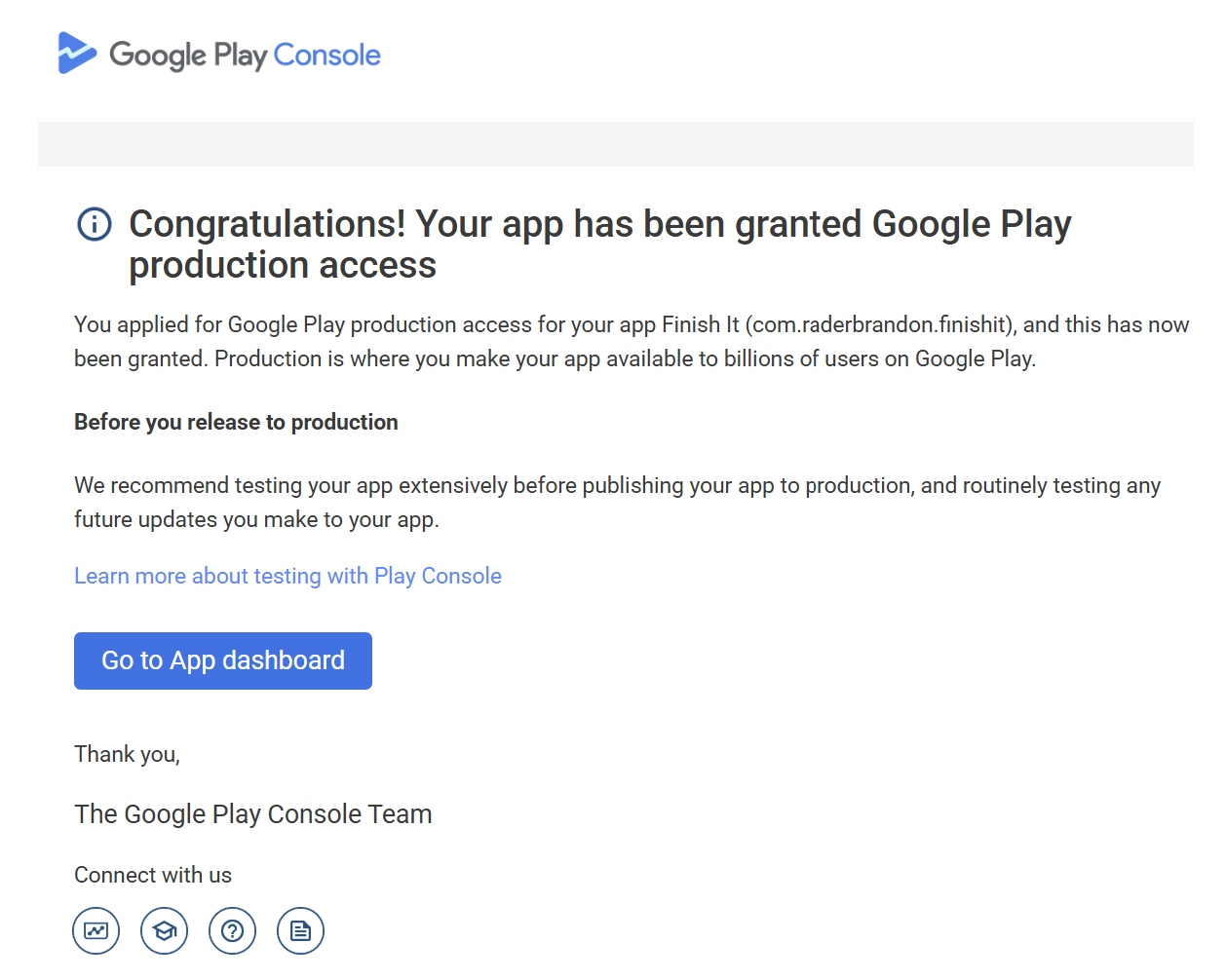
Quality QA Testing Reports
Clear, actionable reports with screenshots and evidence for every important issue found during testing.
Real Device Testing & Diagnostics
Real human testers use physical Android devices to test your app, verify real user flows, and provide clear testing evidence and professional QA reports.
Compliance Audit Passed
Transition your Android app to public production access with confidence. We deliver verified session logs and compliant Console activity.
One Cycle. Complete Approval.
Choose the ideal closed testing cycle for your Android release.
Loading Packages
Please wait while we fetch the best options for your region...
Frequently Asked Questions
Everything you need to know about passing your closed testing requirements.