12 Play Console app testers for Android app testing in Uganda
Hire 12 Play Console app testers in Uganda. Pass Google Play closed testing in 14 days with real Android testers and unlock Play Store production access.
Understanding Google Play Closed Testing for Ugandan Developers
Google established rigorous testing policies to protect store quality and keep broken or deceptive apps off user devices. For personal developer accounts created after late 2023, you cannot publish directly to production without completing a structured testing phase.
This benchmark is known as the 12 Testers for 14 Days requirement. You must recruit real opted-in testers who install your app and maintain active engagement across two continuous weeks.
For developers in Uganda, Google Play Closed Testing is not a formality or a box to tick. Google tracks telemetry including daily opens, session length, crash frequency, and tester feedback. Play Store Closed Testing serves as your official audit before production approval.
Why Fake Accounts and Bot Farms Cause Instant Rejections
When launch deadlines approach, some developers attempt shortcuts by paying for automated bot downloads or creating duplicate personal Google accounts. These tactics trigger automated abuse flags within Google's review pipeline and risk your developer profile.
Real Testers in Uganda
Genuine testers download your build directly from the Play Store using authenticated Google accounts. They open the app naturally, navigate real UI flows, test on physical Android hardware across Kampala and regional hubs, and generate realistic session telemetry. This authentic activity satisfies Google's review algorithms and gives you meaningful crash logs to improve software stability before release.
Bot Scripts and Emulated Devices
Bot farms rely on scripted emulators or stale accounts operating behind proxy IPs. Google easily detects static device identifiers, missing biometric telemetry, unnatural zero-latency interactions, and sudden spikes in inactive installs. Using fake installs risks instant production rejection, extended testing penalties, or permanent developer account termination.
Preparing Your Android App for Play Store Closed Testing in Uganda
Before you invite external testers to your closed track, your release must meet critical technical and regulatory standards. Proper preparation prevents high crash rates and negative feedback during the evaluation window.
Technical and Network Optimization
Store Listing and Compliance Assets
Tester Management and Feedback Loops
Struggling with the 14-Day Testing Requirement?
Skip the hassle of recruiting unreliable testers. Our professional fleet of real Android devices guarantees Google Play compliance in exactly 14 days. Zero bots. Zero emulators. 100% production approval guarantee.
Step-by-Step Roadmap to Production Approval
Navigating the closed testing track requires a structured process from internal builds to your final production application.
Internal Validation and Sanity Checks
Upload your initial signed Android App Bundle (AAB) to the Internal Testing track. Distribute it to your core engineering team to verify basic authentication, database migrations, and essential API integrations before any external users see the app.
Configuring the Closed Testing Track
Create a new Closed Testing track in your Google Play Console dashboard. Define your target countries, paste your authorized tester email list or Google Group link, and submit your build for initial Google automated policy review.
Onboarding Real Testers
Distribute the Play Store opt-in URL to your verified human testers. Ensure each tester accepts the invitation via the web link, downloads the build directly from the Play Store on their personal Android device, and completes their first session.
Executing the 14-Day Testing Window
Monitor user engagement throughout the continuous 14-day cycle. Encourage daily app usage, monitor Android Vitals for ANRs or crashes, push patch updates when defects arise, and document all user-submitted feedback systematically.
Production Application and Questionnaire
Once the 14 continuous days finish with active tester engagement, complete Google's production access questionnaire. Summarize your tester recruitment method, provide concrete examples of feedback received, highlight patches deployed, and submit for final approval.
Comparing Testing Methods for Google Play Compliance
Choosing the right testing approach impacts your timeline, release reliability, and account safety. Here is how professional managed testing compares to informal outreach and risky automated shortcuts.
| Evaluation Metric | Managed Testing Service | DIY Friends and Family | Bot and Click Farms |
|---|---|---|---|
| Tester Authenticity | 100% verified human testers on physical Android devices | Real people, but often busy or distracted | Automated emulators and scripted bot profiles |
| Daily Engagement | Guaranteed continuous daily interactions across all 14 days | Inconsistent sessions requiring constant reminders | Simulated pings easily caught by Play Console telemetry |
| Hardware Diversity | Broad spectrum of Android OS versions and device models | Limited to whatever personal phones friends own | Virtualized headless environments without real sensors |
| Feedback Quality | Actionable bug reports, UX notes, and reproduction steps | Generic compliments or vague verbal comments | Zero usable feedback or bug reporting |
| Production Pass Rate | Consistently high pass rate on first questionnaire review | Moderate risk of rejection due to inactive dropouts | High probability of instant rejection or account ban |
| Management Effort | Completely hands-off; dashboard handles tracking | High overhead chasing people for daily app opens | Constant worry of policy flags and account penalties |
Frequently Asked Questions About Closed Testing in Uganda
Why does Google Play enforce the 12 testers for 14 days closed testing rule?
Google introduced this requirement to elevate the overall quality and security of apps distributed on the Play Store. In earlier years, developers could upload unverified APKs straight to production, resulting in numerous broken, unstable, or spammy applications reaching consumers. By requiring personal developer accounts to maintain active testing with opted-in users over two consecutive weeks, Google ensures that software is thoroughly tested on diverse physical devices before reaching global audiences. This process confirms that you are an active, responsible developer who listens to real user feedback, monitors crash metrics, and resolves critical bugs before opening your app to the public.
What specific engagement metrics does Google monitor during the 14-day test?
Google Play does not merely count whether twelve accounts downloaded your app. The Play Console tracks continuous background telemetry through Google Play Services. This includes daily active users, total session durations, screen transitions, cold start times, crash rates, and Application Not Responding (ANR) occurrences. If all testers install the app on day one and never open it again, the algorithm treats the test as dormant and unverified. Successful compliance requires consistent, natural user activity spread across the entire 14-day testing period.
Can I recruit testers outside Uganda if my app is built for the Ugandan market?
Yes, Google Play allows testers from any country where your closed testing track is made available. However, if your application relies on localized features such as mobile money payment gateways, Ugandan phone number formatting, or regional mapping, testing with individuals who understand local workflows provides far more meaningful feedback. Having a blend of local and international testers is completely acceptable as long as every tester uses a legitimate personal Google account and interacts with your build on a genuine physical Android smartphone.
What happens if a tester uninstalls the app or stops opening it during the test?
If a tester opts out, deletes your application, or remains inactive for multiple consecutive days, your active tester count in Google Play Console drops. If your active count falls below the required threshold, your 14-day compliance counter may pause or reset entirely. When relying on informal groups of friends or colleagues, dropouts are very common because individuals forget to open the app or uninstall it to free up storage space. To safeguard your timeline, it is best practice to recruit a buffer of 15 to 20 testers so that casual dropouts do not interrupt your compliance streak.
How should I answer Google's production access questionnaire after completing the test?
After finishing the 14 days, Google requires you to complete a mandatory questionnaire in the Play Console before granting production access. You must provide detailed, concrete answers rather than generic one-sentence summaries. Clearly describe how you recruited your testing cohort, the primary feedback trends received regarding design, performance, and usability, and the specific updates or patches you published during the testing window. Showing an active feedback loop with tangible improvements gives Google's human review team confidence that your app is stable and ready for public launch.
Can I release updates and bug fixes while the 14-day closed test is running?
Yes, releasing updates during your active closed testing window is highly encouraged. When you upload a new version to your closed track, Google reviews the update and pushes it to your opted-in testers through the Play Store. Pushing updates demonstrates that you are actively analyzing crash reports, listening to user feedback, and refining your application. As long as your updates maintain stability and do not prevent testers from launching the app, deploying bug fixes actively supports your production access request.
How We Deliver 12 Testers
Your journey to Google Play production access, simplified and automated.
Connect Account
Authenticate your account to initialize the 14-day QA fleet for your Android release.
Assign Testers
Upload your testing link. We assign 12 verified users with real Android devices to download and test your Android release.
Daily QA Runs
A dedicated testing supervisor is assigned to monitor progress while testers engage with your Android app and provide feedback throughout the testing period.
Launch Ready
Our lab maintains active installations for two weeks straight, ensuring a clean track record and providing a QA compliance log for your release.
Our Testing Infrastructure
Satisfy your Play Store Console testing obligations with our managed physical device fleet tailored for Android builds.
The 14-Day Production Guarantee
We complete the required 14-day closed testing process with real human testers and physical Android devices, while providing clear testing evidence and documentation throughout the process.
If Google specifically rejects production access due to insufficient testing engagement, you are covered by our free re-run or 100% refund guarantee, subject to our Refund Policy.
Verified Production Access
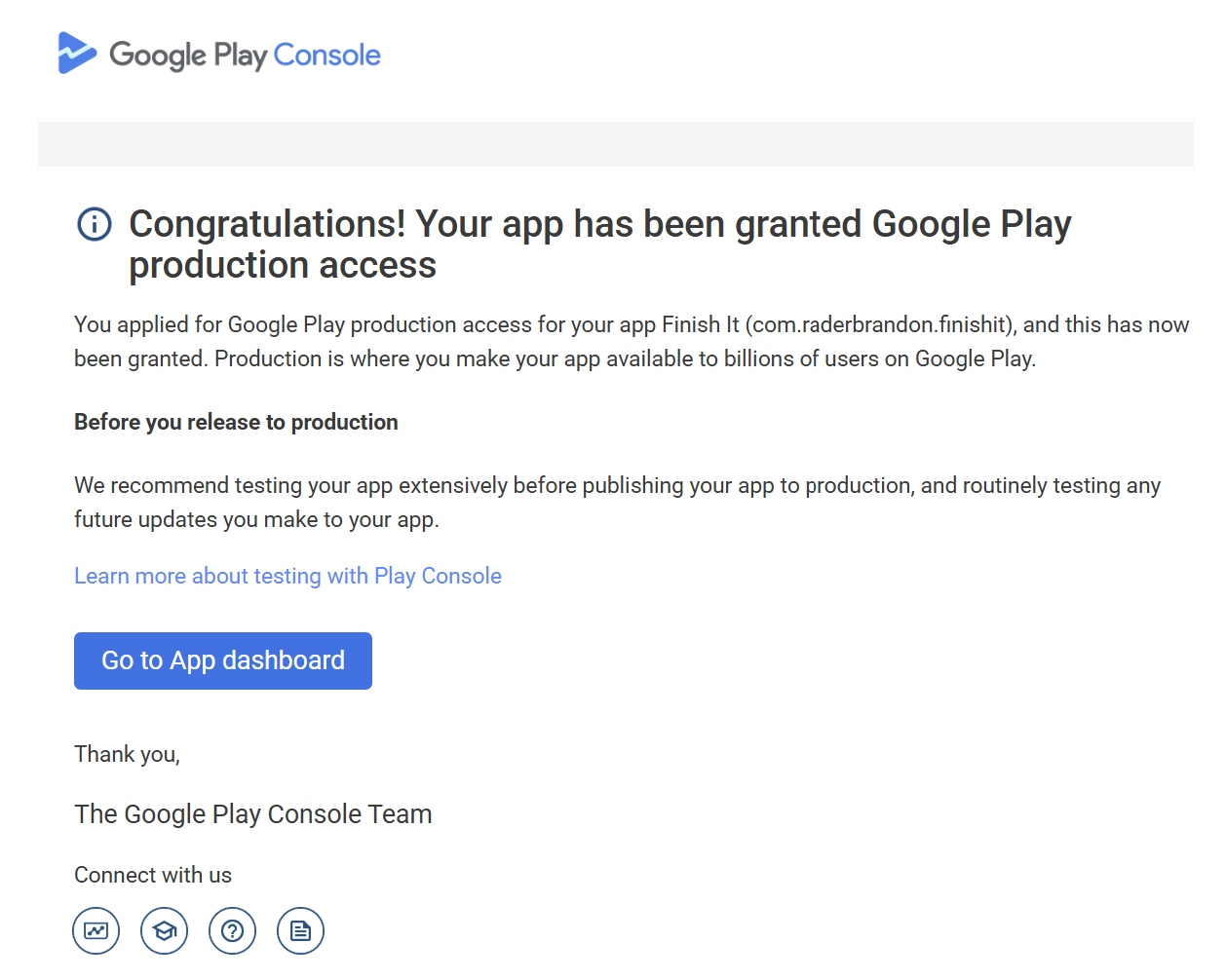
Quality QA Testing Reports
Clear, actionable reports with screenshots and evidence for every important issue found during testing.
Real Device Testing & Diagnostics
Real human testers use physical Android devices to test your app, verify real user flows, and provide clear testing evidence and professional QA reports.
Compliance Audit Passed
Our structured 14-day closed testing process is designed to meet Google Play's production requirements for your Android release.
Simple Closed Testing Pricing
Select the plan that fits your Android app complexity.
Loading Packages
Please wait while we fetch the best options for your region...
Frequently Asked Questions
Everything you need to know about passing your closed testing requirements.