12 Play Console app testers for Android app testing in Ukraine
Hire 12 Play Console app testers in Ukraine. Complete Google Play closed testing in 14 days with real human testers and get your Android app approved.
Launching an Android app in Ukraine right now feels a bit like navigating a bustling tech hub with a map that keeps changing. You have brilliant developers in Kyiv, Lviv, and beyond, pushing out innovative code despite unimaginable challenges. But before your app can reach the vibrant local market, it hits a very specific, rigid wall built by Google. Google Play Closed Testing requires you to find real people to poke and prod your app for two straight weeks. It is not just about finding any users; it is about finding genuine testers who match the profile of a typical smartphone user in Ukraine, ensuring your app actually works on local networks and devices before it goes live.
The Reality of the 14-Day Challenge
Getting 12 testers for 14 days sounds simple on paper. You might think about asking your friends or your development team. But Google is watching closely. They want to see consistent, natural engagement, not just a dozen people opening the app once and forgetting about it.
If you try to shortcut the Play Store Closed Testing process with automated scripts or fake accounts, Google's algorithms will catch on. The result? A rejected app, wasted time, and a delayed launch. You need real humans in Ukraine testing your app in real-world conditions.
Real vs. Bot Testing
Genuine Testing
Real users in Ukraine provide authentic data. They encounter actual network fluctuations, use diverse Android devices, and interact with your app just like your future customers will. This satisfies Google's requirements perfectly.
Bot Services
Bots use predictable patterns and spoofed locations. Google Play's security systems easily detect this artificial behavior. Using bots for your Closed Testing is the fastest way to get your app permanently banned.
Why Ukraine's Market Demands Real Testers
Ukraine has a unique digital ecosystem. The mobile networks, the popular devices, and the way people interact with apps are specific to the region. When you need 12 Play Console app testers for Android app testing in Ukraine, you are not just ticking a box for Google. You are making sure your app survives the real world.
Think about localization. A tester sitting in Kyiv might notice that your Ukrainian translation breaks a button layout, or that your app struggles on a spotty 3G connection during a commute. These are insights bots can never provide. Google Play Closed Testing is actually your best opportunity to catch these critical UX issues before they cause 1-star reviews from real users. The diversity of the local market means you need actual humans handling your software. If your app relies on local payment gateways, mapping services, or specific regional APIs, you absolutely need testers who are physically located in the country to verify that these integrations function without a hitch.
Furthermore, the hardware landscape in Ukraine is incredibly varied. While some users have the latest flagship devices, a massive portion of the population relies on mid-range or older budget smartphones. Your 12 testers for 14 days need to represent this reality. If you only test on high-end emulators, you will miss out on performance bottlenecks, memory leaks, and battery drain issues that plague users on older hardware. Real testers will quickly point out if your app makes their phone run hot or drains their battery before lunchtime. This kind of authentic feedback is the cornerstone of a successful app launch and the exact reason Google insists on this rigorous testing phase.
The True Cost of Cutting Corners
Many developers get tempted by cheap services promising instant approval. Let us look at what actually happens when you compare DIY methods, cheap bot services, and professional testing.
| Feature | Professional Service | DIY (Friends/Family) | Bot Farms |
|---|---|---|---|
| Real Devices | Yes | Yes | No |
| Consistent Daily Usage | Yes | Rarely | Fake |
| Google Approval Rate | Near 100% | Around 40% | 0% |
| Actionable Feedback | Yes | Minimal | None |
| Time Investment | Low | Very High | Low |
When you opt for genuine testing, you are buying peace of mind. The Google Play Closed Testing requirements are strict for a reason. They want quality apps on their platform. By providing exactly what they ask for, which is real engagement over 14 days, you glide through the review process.
Struggling with the 14-Day Testing Requirement?
Skip the hassle of recruiting unreliable testers. Our professional fleet of real Android devices guarantees Google Play compliance in exactly 14 days. Zero bots. Zero emulators. 100% production approval guarantee.
The hidden costs of a rejected app are staggering. You are not just losing the days you spent waiting for the review; you are losing momentum. Your marketing plans get put on hold, your stakeholders get nervous, and your developers have to pivot back to a project they thought was finished. In the worst-case scenario, repeated failed attempts to bypass the Play Store Closed Testing requirements can lead to your developer account being flagged or terminated. Rebuilding that trust with Google is a nightmare you want to avoid at all costs. Investing in a proper testing process upfront is the most cost-effective decision you can make for your app's lifecycle.
Essential Preparation Checklist
Before you invite a single tester, your app needs to be fully prepared. Skipping these steps will guarantee a rejection, no matter how good your testers are. Google expects a polished product even in the testing phase. If your app looks like an incomplete prototype, the reviewers will simply tell you to finish your work before applying again.
App Console Setup
Tester Management
Technical Readiness
If your app is not ready for testing, even the best 12 testers for 14 days will not save you. Google checks the stability of your app just as closely as they check tester activity. High crash rates during the testing period are a massive red flag.
The Testing Journey
Understanding the roadmap helps you set realistic expectations for your launch timeline. Here is exactly how the process should unfold when you do it correctly.
Onboarding and Opt-In
We assign 12 real testers based in Ukraine to your Closed Testing track. They must click your specific opt-in link, accept the invitation, and physically install the application onto their personal Android devices via the Google Play Store interface. This initial handshake is critical.
Active, Daily Engagement
For the next 14 days, these testers do not just open the app and close it. They navigate through your core features, create accounts, test the UI, and generate authentic usage data. This organic behavior is exactly what the Play Console monitors to ensure compliance.
Iterative Bug Fixing
As testers discover issues, they report them back to you. You can push updates to the Closed Testing track to fix these bugs. As long as testers update and continue using the app, pushing fixes demonstrates active development and does not restart your two-week timer.
Data Collection and Analysis
Google's algorithms silently analyze the session lengths, crash logs, Application Not Responding errors, and overall interaction patterns to verify that genuine humans are testing the software. They look for varied session lengths and diverse navigation paths.
Applying for Production
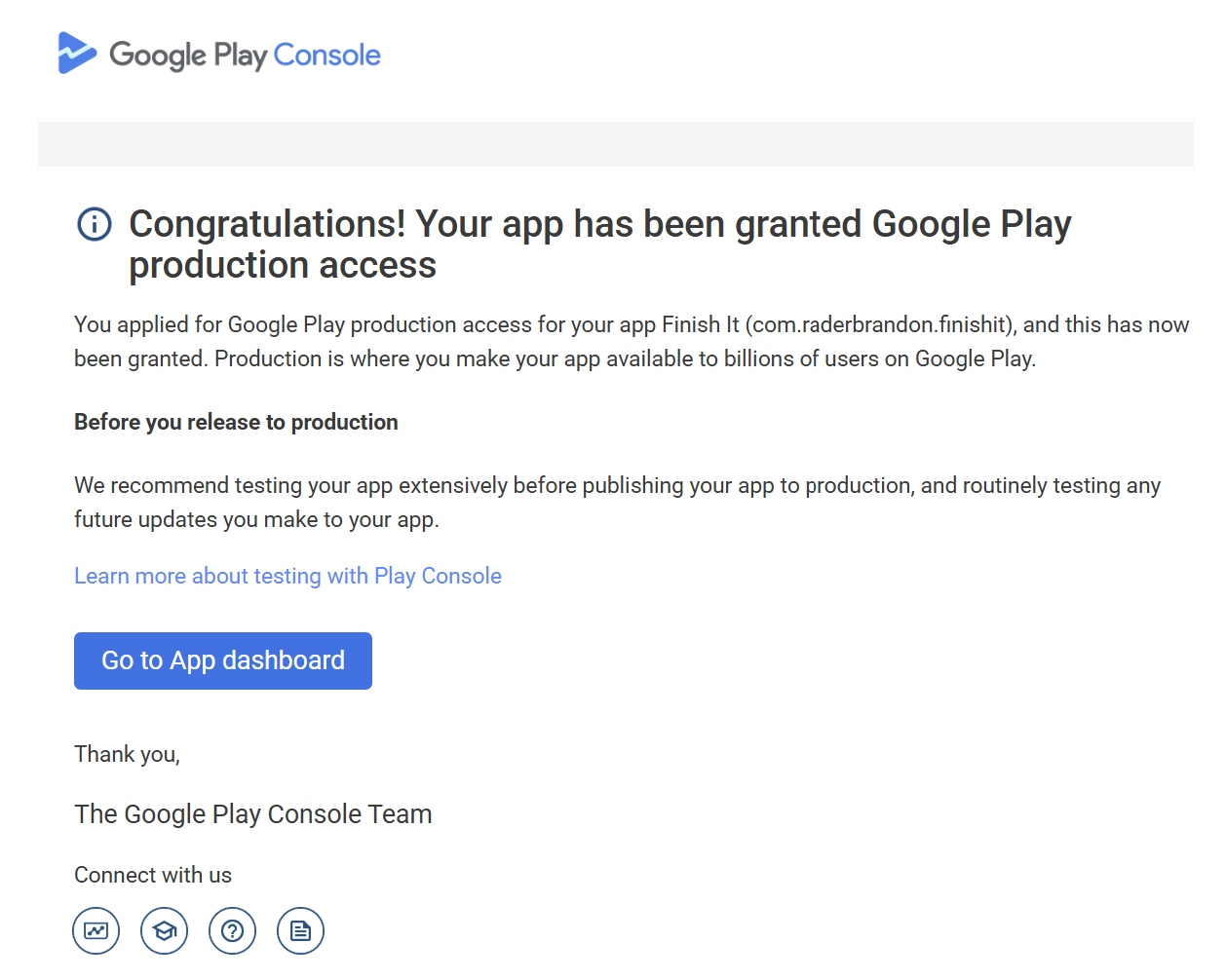
Once the dashboard confirms the 14-day requirement is met and 12 testers have been active, the production application button unlocks. We provide you with the necessary usage summaries and feedback points so you can confidently answer Google's mandatory questionnaire.
Addressing Common Developer Mistakes
Many developers underestimate the strictness of the Google Play Closed Testing policy. One of the most frequent mistakes is assuming that reaching out to random forums or social media groups will yield reliable testers. The reality is that unvetted individuals rarely commit to the full two-week cycle. They might download the app on day one out of curiosity, but by day three, they have completely forgotten about it. This sporadic, unreliable activity pattern is immediately flagged by Google's systems as a failure to meet the core requirement of sustained engagement. You end up wasting time managing people who are not actually helping your launch.
Another major misstep is treating the testing phase solely as a compliance hurdle rather than a valuable QA opportunity. Developers who merely want to tick the box often ignore the crash logs and ANR reports generated during this period. They rush to apply for production access the moment the 14 days are over, without addressing the underlying stability issues that the testers inadvertently uncovered. When Google reviews the final submission, they see a highly unstable app and reject it, forcing the developer back to square one. A proactive approach to monitoring and resolving issues during the 14 days is essential for a smooth approval.
Making the Most of Your 14 Days
The Play Store Closed Testing phase is not a dead period where you just sit back and wait. It is a highly active phase of development and refinement. While your testers are interacting with the app, you should be glued to the vital signs in your Google Play Console. Look closely for ANR (Application Not Responding) errors. Watch the crash logs like a hawk. These metrics tell you a story that even your testers might not be able to articulate.
If a tester in Ukraine experiences a crash on a specific popular device model, such as a mid-range phone from a prominent brand, you have a golden opportunity to fix it before the general public ever sees it. You have 14 days to push an update to the Closed Testing track. Pushing updates does not reset the 14-day clock, as long as the testers keep engaging with the new version. This iterative process is exactly what Google wants to see. It proves you are a responsible developer actively improving your app based on real-world feedback.
Furthermore, use this time to test your server infrastructure. Even with just 12 users, you can monitor how your backend handles the requests. Are images loading quickly? Is the database responding efficiently? If you notice latency issues with just a dozen people, imagine what will happen when you have thousands of users upon launch. This two-week window is your safety net, allowing you to optimize your architecture without the pressure of negative public reviews. You should also be looking at retention metrics. Are testers abandoning the app halfway through a workflow? Identifying these friction points now saves you immense trouble later.
Understanding Google's Post-Testing Questionnaire
When you finally submit your application for production access after the 14 days, Google will ask you specific, pointed questions about your testing process. They want to know what kind of feedback you received and how you acted upon it. If you used fake testers, you will have absolutely nothing of substance to say, and your application will likely be rejected for being overly vague.
Real 12 Play Console app testers for Android app testing in Ukraine will provide you with a wealth of tangible information. They might point out that a certain swipe gesture does not work well for users holding the phone with one hand, or that a specific text color lacks contrast against the background in bright outdoor sunlight. They might find typos in your localized Ukrainian text or suggest that a particular checkout workflow takes entirely too many taps.
When you can detail these exact pieces of feedback in your final application and clearly explain how you patched the app to address them, Google sees a mature, professional development cycle. You can say, for instance, that testers found a bug on the login screen, and you released version 1.0.2 on day six to resolve it. This level of detail drastically increases your chances of a swift and successful approval for the public store, because it proves the 14 days were actually used for their intended purpose.
Why Location Authenticity Matters
Google knows exactly where your testers are located. They track IP addresses, device language settings, network carriers, and even timezone data. If your app is designed specifically for the Ukrainian market, but all your testers are mysteriously logging in from servers located in North America or Southeast Asia, massive red flags will be raised internally at Google. The location data needs to make absolute sense for your target audience.
When you use authentic testers situated in Ukraine, you align perfectly with Google's stringent expectations. The usage data looks natural because it is entirely natural. There are no VPNs masking locations, no automated scripts trying to simulate human scrolling patterns, and no emulator signatures hidden in the device logs. You just have real people holding real phones, connected to local networks, making sure your app is genuinely ready for prime time. This level of authenticity is impossible to fake and is the ultimate key to unlocking your production release without delays or complications.
Frequently Asked Questions
What exactly does Google Play Closed Testing require?
Google explicitly requires you to have a minimum of 12 distinct testers opted into your Closed Testing track. These individuals must continuously have your application installed and actively engage with it over a minimum period of 14 consecutive days. This process must be completed before the Play Console will even allow you to apply for production access to publish your app publicly.
Can I use emulators, VPNs, or automated bots to pass this requirement?
Absolutely not. Google's Play Console employs highly advanced, machine-learning-driven algorithms designed specifically to detect artificial usage, VPN routing, and emulator signatures. Attempting to circumvent the rules using these methods will almost certainly result in your app being permanently rejected, and your entire developer account could face severe penalties or termination. You absolutely need physical devices and genuine human behavior.
Do I need to update my application during the 14 days?
While it is not strictly a mandatory requirement to push an update, doing so when a valid bug is found shows Google's reviewers that you are actively maintaining the application and responding to tester feedback. Crucially, pushing an update to the Closed Testing track does not reset your 14-day timer, provided that your core group of testers update their app version and continue using it seamlessly.
What actually happens if one of my testers misses a day?
Google's systems look for continuous, natural engagement over the entire 14 days. If one or two testers miss a single day, it might not fail the test immediately, as humans occasionally forget things. However, consistent daily usage from the core group of 12 testers is heavily scrutinized. To protect your investment of time, it is always highly recommended to have a few backup testers in your pool to ensure the minimum threshold is always safely met.
How do I apply for production access after the 14 days are over?
Once the Play Console dashboard confirms that the 14-day continuous testing requirement has been fully met, a button to apply for production access will finally unlock. Clicking this button will present you with a detailed questionnaire. You will need to thoroughly explain your testing methodology, detail the specific feedback you received from your users, and outline exactly how you improved or modified the application based on that specific feedback.
Why is it so important to have testers specifically in Ukraine for a local app?
If your app is targeted at the Ukrainian market, Google expects the testing data to reflect that reality. Testers in Ukraine will use local internet service providers, interact with the app in the local language, and experience the app exactly as your target demographic will. Mismatched location data from foreign testers can trigger Google's fraud detection systems and delay your launch.
How long does Google take to review the app after the 14 days?
Once you submit your application for production after completing the 14 days of testing, Google typically takes between two to seven days to review your submission. The detail and quality of the answers you provide in the post-testing questionnaire heavily influence this timeline. Apps that clearly demonstrate they acted on real user feedback usually experience faster approval times.
What happens if my app is rejected after the 14-day period?
If your application for production is rejected, Google will typically provide a generic reason, often pointing to a lack of genuine tester engagement or an incomplete testing process. When this happens, you are required to restart the entire process. You will need to recruit a new batch of 12 testers, or re-engage the previous ones, and begin a brand new 14-day testing cycle from day one. This is why getting it right the first time is absolutely crucial.
Can testers simply open the app and immediately close it?
No, simply launching the app and immediately backgrounding or closing it will not satisfy Google's requirements for genuine engagement. The automated systems track session duration, screen navigation, and interactive taps. Testers need to spend a reasonable amount of time actually using the core functionalities of the application each day to generate the kind of usage footprint that Google considers acceptable.
Is it safe to pay friends to test the app?
While you can certainly ask friends and family to help, they are often the least reliable testers. They may agree to help but quickly forget to log in daily. They also rarely provide the critical, unbiased feedback needed to truly improve the app. Professional testing services provide a structured, guaranteed environment where the daily requirements are met with precision, removing the stress of constantly reminding your personal network.
How It Works
How we deploy real devices and guarantee compliance for your release.
Get Started
Sign in with Google to configure the closed testing environment for your Android build in the UK.
App Submission
Submit your Google Play Console testing link, and our team will assign qualified testers from our testing network to join your Android closed testing release.
14-Day Cycle
A QA supervisor monitors daily check-ins, ensuring 12 unique Android users engage with your Android build every single day.
Production Access Approval
We guarantee 14 consecutive days of active user check-ins to satisfy Google's compliance policies, delivering an audit-ready PDF feedback report.
Why Choose AppConsoleLab
Experience a next-generation testing infrastructure built for Google Play compliance for your Android release in the UK.
The 14-Day Production Guarantee
We complete the required 14-day closed testing process with real human testers and physical Android devices, while providing clear testing evidence and documentation throughout the process.
If Google specifically rejects production access due to insufficient testing engagement, you are covered by our free re-run or 100% refund guarantee, subject to our Refund Policy.
Verified Production Access
Quality QA Testing Reports
Clear, actionable reports with screenshots and evidence for every important issue found during testing.
Real Device Testing & Diagnostics
Real human testers use physical Android devices to test your app, verify real user flows, and provide clear testing evidence and professional QA reports.
Play Store Ready
Get your Android build approved on the first try. We create an audit-ready compliance profile that proves thorough quality assurance.
Affordable Compliance Cycles
Transparent plans built to satisfy Google Play Console guidelines for your Android build.
Loading Packages
Please wait while we fetch the best options for your region...
Frequently Asked Questions
Everything you need to know about passing your closed testing requirements.