12 Play Console testers for Android app testing in Malaysia
Hire 12 Play Console testers in Malaysia. Complete Google Play closed testing requirements confidently with 12 testers for 14 days for Play Store.
Malaysia's digital landscape is moving at breakneck speed, from the bustling tech hubs in Kuala Lumpur to the growing startup ecosystems in Penang. If you are launching an Android application in this incredibly vibrant market, you already know that capturing local attention requires more than just a great idea. It requires a flawless user experience that resonates with Malaysian smartphone users. However, before your app can even reach the local digital storefront, you have to navigate the strict compliance rules set by Google. Specifically, you need to conquer the Google Play Closed Testing requirements. This mandatory step forces developers to secure a specific number of real human users to test their application for a set period. It is not just a simple checklist item, it is a critical hurdle that determines whether your digital product sees the light of day. For many local and international developers targeting this region, finding reliable individuals to test an unreleased app is surprisingly difficult, time-consuming, and often frustrating. You cannot afford to cut corners here, as Google's automated systems and human reviewers are incredibly adept at catching fake engagement and automated bots.
Why the Local Mobile Ecosystem Demands Real Engagement
The mobile ecosystem in Malaysia is highly competitive and diverse. Users here expect seamless performance, localized content, and absolute stability from the moment they open an application. If your application crashes or stutters during the crucial first few minutes of usage, it will be uninstalled and forgotten immediately. This is exactly why Google enforces strict testing protocols on the Play Console. They want to ensure that only polished, stable, and secure applications are published on their platform. By requiring you to find 12 Testers for 14 Days, Google is essentially forcing you to simulate a mini-launch in a controlled environment. You have to gather real feedback, monitor crash reports, and prove that your application is ready for a broader audience.
The Trap of Fake Testing Services
Many developers, eager to push their app to production, fall into the trap of using cheap, automated testing services. These farms promise to fulfill the Google Play Closed Testing requirements overnight, but they represent a massive risk to your entire project. Google's sophisticated algorithms constantly analyze testing behavior, device variations, and IP addresses to ensure compliance. If they detect that your Play Store Closed Testing phase was completed by a bot farm or emulators, they will flag your developer account. This can result in delayed reviews, rejected applications, or even a permanent ban from the platform. It is simply not worth the risk to your business. You need genuine engagement from real devices, especially when targeting a specific regional market.
Authentic Human Testing
Real smartphone users interacting with your app from diverse locations and network conditions. Genuine engagement sessions that reflect actual human usage patterns and reading speeds. Valuable qualitative feedback for user interface and user experience improvements. Full compliance with all of Google's stringent developer policies and testing rules. Significantly higher chance of passing the final production review on your first attempt.
Bot Farms & Fake Services
Automated scripts that generate robotic, predictable patterns with zero real engagement. Identical IP addresses or easily detectable commercial VPNs that trigger security flags. Extremely high risk of developer account suspension and permanent app rejection. Absolutely no qualitative feedback on app performance, layout issues, or confusing menus. Wasted time and money on a failed compliance process that forces you to start over.
The Core Mechanics of the Testing Phase
To move your digital product from the testing track to the production environment, you must fulfill specific criteria laid out in the Play Console. Google does not leave any room for interpretation or guesswork here. The rules for Closed Testing are clearly defined, and failing to meet them will halt your launch progress entirely. You need a dedicated group of individuals who have formally opted into your testing track, downloaded the application to their primary devices, and kept it installed for a continuous two-week period. During this time, they need to actually open the app, navigate through its features, and generate real usage data that Google can monitor. This data acts as a proof of life for your application. It shows the review team that your app functions as intended in the real world, outside of your development environment. This is why securing 12 Testers for 14 Days is the absolute minimum requirement to demonstrate that your app is stable enough for public consumption.
Struggling with the 14-Day Testing Requirement?
Skip the hassle of recruiting unreliable testers. Our professional fleet of real Android devices guarantees Google Play compliance in exactly 14 days. Zero bots. Zero emulators. 100% production approval guarantee.
Comprehensive Pre-Launch Checklist
Before you invite your testers to evaluate your app, you must ensure that everything is perfectly prepared. A poorly configured testing environment will lead to confusion, frustration, and ultimately, failed compliance. This extensive checklist will guide you through the necessary steps to set up your Google Play Closed Testing track correctly and professionally.
Initial Play Console Setup
Verify that your Google Play Developer account is fully verified, with all identity and payment information up to date and approved.
Complete all mandatory app content declarations, including the privacy policy, data safety form, and content rating questionnaire.
Ensure your app's store listing is polished, featuring high-quality screenshots, an engaging description, and a localized title for the market.
Upload a stable, release-ready Android App Bundle to the closed testing track, ensuring all debug code has been stripped out.
Tester Management and Onboarding
Create a dedicated email list in the Play Console containing the exact Google account addresses of your chosen participants.
Draft a clear, concise instruction manual for your testers, explaining how to join the testing program via the web link and download the app.
Set up a reliable communication channel, such as a dedicated email address or a secure messaging group, for testers to report bugs and share feedback.
Double-check that the opt-in link is active and properly routing users to the correct testing page on the Play Store.
Monitoring and Compliance Tracking
Familiarize yourself with the Play Console dashboard to track daily active installations and ensure nobody uninstalls the app prematurely.
Integrate robust crash reporting tools like Firebase Crashlytics to monitor for any technical failures during the evaluation period.
Schedule daily check-ins to review the testing statistics and address any sudden drop-offs in user engagement or active installs.
Prepare a standardized feedback form to collect structured data from your users regarding the app's usability, performance, and overall design.
The Strategic Roadmap to Production Release
Navigating the path from a compiled application bundle to a live, searchable product on the Play Store requires a strategic approach. This roadmap outlines the journey you will take during your Google Play Closed Testing phase, highlighting the critical milestones you must hit to achieve success in the competitive app market.
Phase 1: Environment Preparation and Configuration
The first step in your journey involves setting up a pristine testing environment. This means ensuring that your application is fully compliant with all Google Developer Policies before you even invite a single tester. You must finalize your store listing, complete the exhaustive data safety forms, and ensure that your privacy policy is accessible and legally sound. This foundational work is crucial because the reviewers will scrutinize these elements just as closely as the app itself. Taking the time to perfect your configuration now will save you from frustrating rejections later in the process.
Phase 2: Securing and Onboarding Participants
Once your environment is ready, the next monumental task is securing your testing cohort. This involves reaching out to your network, engaging with professional testing communities, or utilizing trusted services to find reliable individuals. When you have your cohort, you must carefully onboard them. Provide them with the correct opt-in links, clear instructions on how to navigate the Play Store Closed Testing process to find your hidden app, and guidelines on what specific features you need them to evaluate. Effective communication during this phase sets the tone for the entire testing period.
Phase 3: The Evaluation Crucible
This is the most critical phase of the journey. For two uninterrupted weeks, your testers must keep the application installed on their primary Android devices and engage with it naturally. Your role shifts from setup to active monitoring. You will spend this time analyzing crash reports, reviewing analytics data, and reading through the initial wave of user feedback. It is essential that you do not push any massive, core-altering updates during this period unless it is to fix a critical, app-breaking bug, as significant changes can disrupt the testing continuity and reset your progress.
Phase 4: Data Synthesis and Final Polishing
As the testing period concludes, you will have gathered a wealth of raw data and qualitative feedback. Now, you must synthesize this information into actionable development tasks. Identify recurring usability issues, patch any minor bugs that were discovered, and refine the user interface based on the authentic feedback from your testers. This phase is about polishing your product until it shines. You must compile a comprehensive release notes document that details the improvements made during the testing phase, demonstrating to Google that you actively used the period to enhance your app.
Phase 5: The Production Application Application
With a polished app and a completed testing requirement, you are finally ready to apply for production access. This involves navigating back to the Play Console dashboard, completing the final questionnaire regarding your testing process, and submitting your app for its ultimate review. You will need to summarize how you gathered your testers, what feedback you received, and how you implemented changes based on that feedback. If you have followed the rules diligently and utilized real human testers, this final review process should be smooth, culminating in your app going live for millions of potential users.
In-Depth Knowledge Base and Frequently Asked Questions
The process of launching an Android application and satisfying the Play Store Closed Testing requirements can be incredibly confusing, especially for new developers. Below, we have compiled a comprehensive list of the most frequently asked questions regarding the testing phase, compliance rules, and best practices for securing a successful launch.
What exactly is the Google Play Closed Testing requirement, and why is it mandatory?
The Google Play Closed Testing requirement is a mandatory policy introduced by Google to improve the overall quality of applications available on the platform. It specifically demands that developers of newly created personal accounts secure a designated number of individual users to test their application for a continuous, uninterrupted period before they are allowed to publish the app to the public production track. This rule was implemented to crack down on low-effort, spammy, or unstable applications that previously flooded the marketplace. By forcing developers to gather real feedback and demonstrate active engagement over a set period, Google ensures that only committed developers with functional, polished products can reach the wider audience. It acts as a quality control filter that ultimately benefits both the consumers who download the apps and the developers who want to operate in a healthy, trusted digital ecosystem.
How strictly does Google enforce the testing duration and participant count rules?
Google enforces these testing rules with absolute strictness. There are no exceptions, waivers, or shortcuts available for new personal developer accounts. The Play Console infrastructure is equipped with highly sophisticated, automated tracking systems that monitor the exact number of active installations and the duration those installations remain on the devices. If your tester count drops below the required minimum at any point during the evaluation window, the clock will often pause or, in some cases, reset entirely, forcing you to start the process over. Furthermore, human reviewers also evaluate your submission at the end of the period, checking for suspicious patterns that might indicate the use of fake accounts or bots. Attempting to bypass or minimally satisfy this rule with subpar methods is highly likely to result in a swift rejection.
Can I use automated bot services or device emulators to complete the testing phase quickly?
No, you absolutely cannot use automated bot services, scripts, or device emulators to complete the Play Store Closed Testing phase. This is a direct violation of Google's developer policies and is considered a severe offense. Google's security systems are incredibly advanced and can easily detect non-human behavior, such as predictable tap patterns, identical IP address clusters, and a lack of genuine device identifiers. If the system flags your testing phase as fraudulent, the consequences are severe. Your application will be immediately rejected, your production rollout will be blocked, and your developer account will likely receive a strike or a permanent suspension. Losing your developer account means losing your ability to publish any apps on the Play Store in the future, making the risk of using fake testing services completely unjustifiable.
What happens if a tester uninstalls my application before the mandatory evaluation period is complete?
If a tester uninstalls your application before the full testing timeline has passed, that specific user will no longer be counted towards your active tester requirement. If this drop causes your total active tester count to fall below the mandatory threshold, you will immediately lose compliance. The Play Console dashboard will reflect this drop, and you will not be able to apply for production access until you recruit a replacement tester and maintain the minimum count for the required duration again. This is precisely why it is absolutely critical to recruit more than the minimum required number of testers to act as a buffer. By starting with extra participants, you protect your progress against inevitable, accidental uninstalls or hardware issues that your testers might experience during the evaluation window.
Does the geographic location of my testers matter when I am targeting a specific regional market?
While Google's baseline policy does not strictly mandate that your testers must reside in the exact country you are targeting, having a significant portion of your testers located in your target region is highly advantageous. Local testers provide culturally relevant feedback, test the application on regional cellular networks, and ensure that localized content, such as language translations or currency formats, displays correctly. If your app is designed specifically for Malaysian users, having a testing base entirely composed of users from other continents might raise questions during the manual review process, as it does not align with your intended demographic. Securing authentic local engagement demonstrates to Google that your app is genuinely prepared for its intended audience, making the final review process much smoother and building stronger trust.
How should I communicate with my testing cohort during the evaluation period?
Effective communication with your testing cohort is essential for a successful evaluation phase. You should establish a clear, centralized channel for feedback, such as a dedicated support email address, a private messaging server, or a structured web form. It is important to guide your testers on what specific areas of the application you want them to focus on. Do not just ask them to use the app, ask them to complete specific user journeys, test the checkout process, or try out new features. You should also encourage them to be brutally honest about bugs, crashes, and confusing user interface elements. The more qualitative feedback you can extract from your communication channels, the stronger your final application for production access will be, as you can demonstrably show Google how the testing phase actively improved your digital product.
The Testing Pipeline
Your journey to Google Play production access, simplified and automated.
Sign In
Authenticate your account to initialize the 14-day QA fleet for your Android release.
Opt-In URL
Upload your testing link. We assign 12 verified users with real Android devices to download and test your Android release.
Testing Begins
A dedicated testing supervisor is assigned to monitor progress while testers engage with your Android app and provide feedback throughout the testing period.
Compliance Complete
Our lab maintains active installations for two weeks straight, ensuring a clean track record and providing a QA compliance log for your release.
Why Developers Trust Us
Satisfy your Play Store Console testing obligations with our managed physical device fleet tailored for Android builds.
The 14-Day Production Guarantee
We complete the required 14-day closed testing process with real human testers and physical Android devices, while providing clear testing evidence and documentation throughout the process.
If Google specifically rejects production access due to insufficient testing engagement, you are covered by our free re-run or 100% refund guarantee, subject to our Refund Policy.
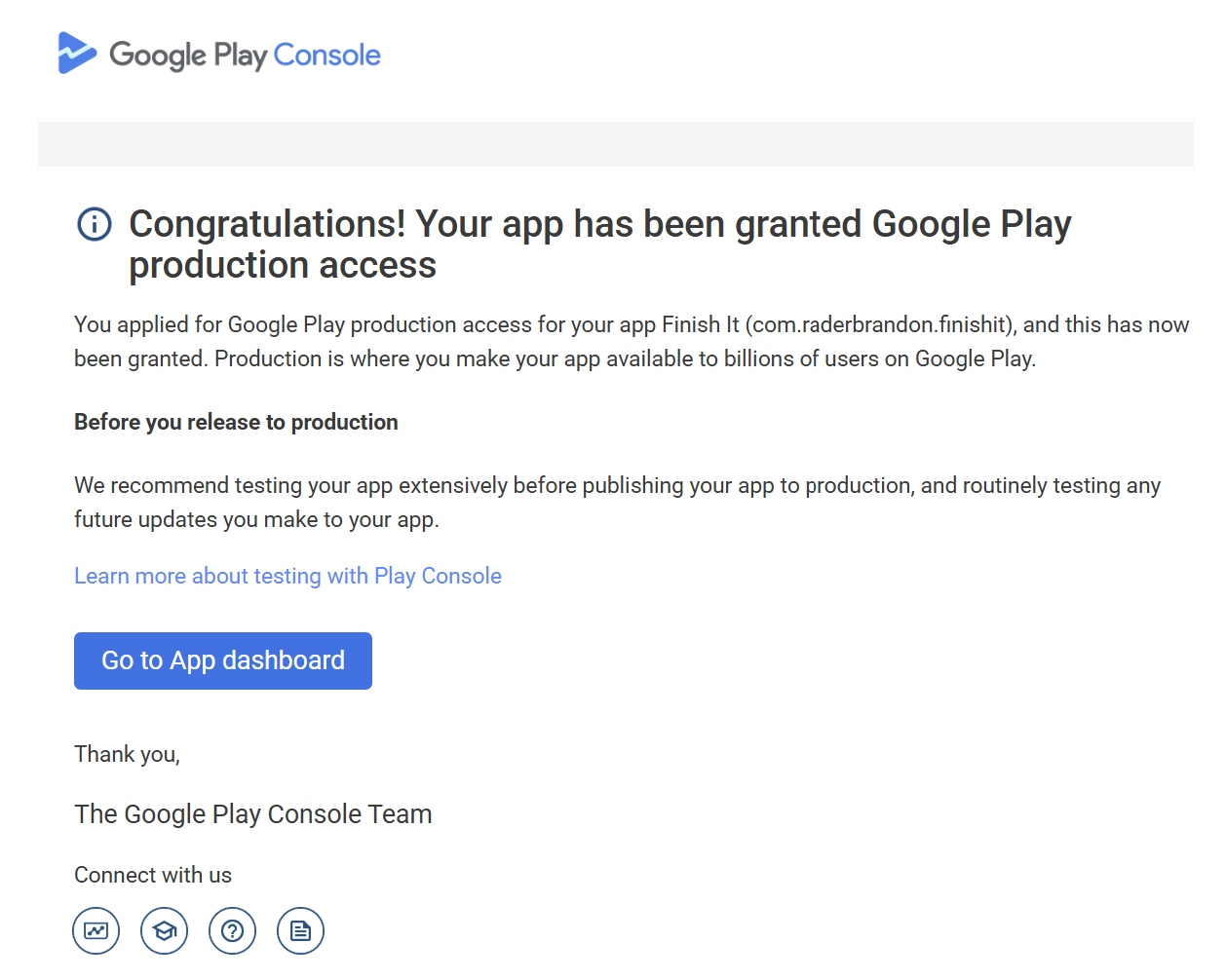
Verified Production Access
Quality QA Testing Reports
Clear, actionable reports with screenshots and evidence for every important issue found during testing.
Real Device Testing & Diagnostics
Real human testers use physical Android devices to test your app, verify real user flows, and provide clear testing evidence and professional QA reports.
Guaranteed App Approval
Our structured 14-day closed testing process is designed to meet Google Play's production requirements for your Android release.
Simple Closed Testing Pricing
Select the plan that fits your Android app complexity.
Loading Packages
Please wait while we fetch the best options for your region...
Frequently Asked Questions
Everything you need to know about passing your closed testing requirements.