Dedicated 12 Testers for 14 Days in Europe
Meet Play Console closed testing publishing requirements for your Adalo app in Europe with 12 verified testers performing active daily interactions on real Android hardware and verified 14 day engagement for production access approval.
Closed testing google play: A complete guide for Adalo
Google Play requires developers with new personal accounts to run a closed test before they can publish an app. The rule is simple on the surface: you need a minimum number of testers to be opted-in to your test for at least 14 consecutive days. While Google's official number is 12, many developers find that a dedicated group of 12 to 15 active testers is a safe and effective target to meet the requirement.
This isn't just a box to check. It's Google's way of making sure real people have at least seen your app before it goes live. They want to filter out low-quality or harmful apps to protect users. For you, it’s the final hurdle before launching.
Getting this wrong can delay your launch by weeks. Getting it right means you can move forward with confidence. This guide breaks down exactly how to get your dedicated 12 testers for 14 days, avoid common pitfalls, and get your app ready for production.
Why This Rule Exists (And Why You Can't Ignore It)
Google's goal is to improve the quality of the Play Store. In the past, anyone could upload an app with little to no oversight. This led to a lot of spam and malware. The 14-day testing period serves two main purposes:
- It builds trust. It shows Google you're a serious developer who has put their app in front of real users. It proves you aren't just trying to quickly publish a broken or malicious app.
- It encourages early feedback. While the primary goal is to meet the requirement, this is also a chance to catch major bugs or get initial user reactions before a public release.
Ignoring the spirit of the rule by using bots or fake testers is a big risk. Google's systems are designed to detect this kind of activity. If caught, you could face a delayed launch or even a suspension of your developer account. It's not worth the risk.
Understanding the "12 Testers, 14 Days" Mandate
Let's break down the components of this requirement. It's more than just numbers.
- Dedicated Testers: You need real people. These individuals must actively accept your testing invitation through a unique opt-in link. The key word is "dedicated." This implies they need to remain opted-in for the entire duration. A tester who opts in on day 1 and opts out on day 5 doesn't count for the full period.
- 14 Consecutive Days: The clock starts once your testers have opted in. This must be an unbroken 14-day period. If the number of active testers drops below the threshold, you might have to restart the clock. This is the most common reason for delays.
- The Opt-In is Everything: The entire process hinges on testers clicking your opt-in link and confirming their participation. You'll add their email addresses to a list in your Google Play Console, which then allows them to access the test.
The challenge isn't just finding people; it's finding people who will reliably follow through and stay opted-in for two full weeks. Friends and family might forget. Random strangers from a forum might lose interest. This is where the process can become a major headache.
The Dangers of Cutting Corners
The pressure to launch can make cheap, fast solutions seem tempting. But these shortcuts often lead to bigger problems.
- Using Bots or Fake Accounts: Many cheap services on platforms like Fiverr use bots or fake Google accounts to "test" your app. Google is very good at identifying these. Their algorithms look at device profiles, IP addresses, and user behavior. Using bots is one of the fastest ways to get your app flagged and your account in trouble.
- Unreliable Testers: You might gather a group of 12 people from social media. But what happens when three of them forget to opt-in? Or when four of them opt-out after a week because they need space on their phone? You're back to square one, and your launch is delayed again.
- Wasted Time: The time you spend chasing down testers, sending reminders, and worrying about the 14-day clock is time you could be spending on improving your app or planning your launch marketing. Your time as a developer is valuable.
The most painful outcome is thinking you've completed the test, only to find out Google hasn't recognized it. To learn how to confirm your status, check out our guide on How to Check Whether Your 14-Day Testing Requirement Is Complete.
Comparing Your Options: The Smart vs. The Hard Way
You have three main paths to secure your testers. Each has clear pros and cons.
| Feature | AppConsoleLab's Service | Finding Testers Yourself (DIY) | Fiverr Bots |
|---|---|---|---|
| Tester Quality | Vetted, real people with active Google accounts. | Mixed. Friends are reliable, but strangers are not. | Fake accounts or bots. Extremely low quality. |
| Reliability | Guaranteed to stay opted-in for the full 14 days. | Very low. People forget or lose interest. | Will likely be detected and removed by Google. |
| Management Effort | Zero. It's a fully managed, hands-off process for you. | Extremely high. You have to find, invite, and remind. | Low effort, but high risk. |
| Google Policy Safety | 100% compliant with Google's terms of service. | Safe, but only if you manage it correctly. | High risk of account suspension. Direct violation. |
| Feedback Value | Optional real feedback available. | Can be good from friends, but often biased. | None. Bots can't give you useful feedback. |
| Success Guarantee | Guaranteed to meet the 14-day requirement. | No guarantee. Depends entirely on your network. | Almost guaranteed to fail or get you flagged. |
| Cost | A fixed, predictable investment. | "Free," but costs you a lot of time and stress. | Cheap, but could cost you your developer account. |
Struggling with the 14-Day Testing Requirement?
Skip the hassle of recruiting unreliable testers. Our professional fleet of real Android devices guarantees Google Play compliance in exactly 14 days. Zero bots. Zero emulators. 100% production approval guarantee.
As the table shows, while the DIY approach seems free, the hidden cost is your time and the uncertainty. A professional service is an investment in peace of mind and a predictable launch schedule. For a deeper look at different providers, our Best Google Play Closed Testing Services Compared (2026) offers a comprehensive overview.
The Step-by-Step Process for a Flawless Test
So, how do you get this done correctly? Here is a simple checklist for setting up and running your test, whether you do it yourself or use a service.
Phase 1: Getting Your App Ready
Phase 2: Executing the 14-Day Test
This process highlights the need for active management. You can't just send the link and hope for the best. Daily monitoring is key to ensuring you don't waste a two-week cycle.
Why Managed Testing is Different
It’s important to understand the difference between simply getting people to click a link and ensuring the test is seen as legitimate by Google.
Passive Opt-in
Active Engagement
A managed service essentially de-risks the entire process. It replaces uncertainty with a clear, predictable path to meeting Google's requirements.
Your 14-Day Journey to Production
Here’s what the timeline looks like when you use a dedicated service like AppConsoleLab to handle your closed testing.
Day 0: Kickoff
Day 1: Tester Assignment
Day 1-2: Opt-In Process
Day 2-16: The 14-Day Test
Day 16: Final Verification
Day 17: Ready to Publish
This structured approach removes all the manual work and anxiety. You can focus on your app, knowing that the testing requirement is being handled professionally in the background. It's the most efficient way to get from 'in review' to 'published.'
Don't let the 14-day testing rule be a roadblock. By understanding the requirements and choosing the right path, you can navigate it smoothly and get your app into the hands of users faster.
Do I really need 12 testers, or is 12 enough?
What happens if one of my testers drops out during the 14 days?
Do the testers need to provide feedback on my app?
Can I update my app during the 14-day testing period?
How soon after the 14 days can I apply to publish my app?
Does using a testing service guarantee my app will be approved?
How We Deliver 12 Testers
How we deploy real devices and guarantee compliance for your release.
Connect Account
Sign in with Google to configure the closed testing environment for your Adalo build in Europe.
Assign Testers
Submit your Google Play Console testing link, and our team will assign qualified testers from our testing network to join your Adalo closed testing release.
Daily QA Runs
A QA supervisor monitors daily check-ins, ensuring 12 unique Android users engage with your Adalo build every single day.
Launch Ready
We guarantee 14 consecutive days of active user check-ins to satisfy Google's compliance policies, delivering an audit-ready PDF feedback report.
Our Testing Infrastructure
Experience a next-generation testing infrastructure built for Google Play compliance for your Adalo release in Europe.
The 14-Day Production Guarantee
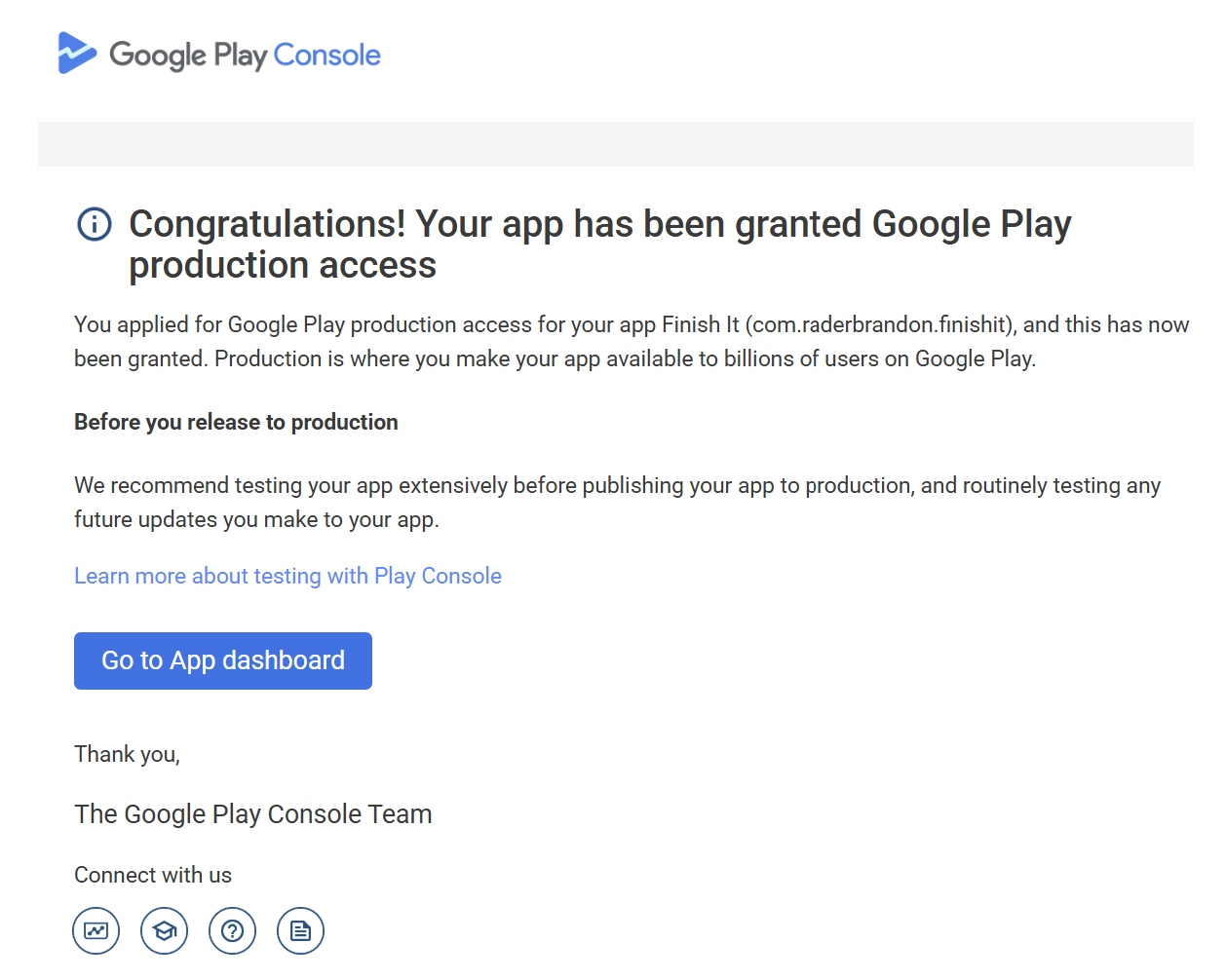
We complete the required 14-day closed testing process with real human testers and physical Android devices, while providing clear testing evidence and documentation throughout the process.
If Google specifically rejects production access due to insufficient testing engagement, you are covered by our free re-run or 100% refund guarantee, subject to our Refund Policy.
Verified Production Access
Quality QA Testing Reports
Clear, actionable reports with screenshots and evidence for every important issue found during testing.
Real Device Testing & Diagnostics
Real human testers use physical Android devices to test your app, verify real user flows, and provide clear testing evidence and professional QA reports.
Compliance Audit Passed
Get your Adalo build approved on the first try. We create an audit-ready compliance profile that proves thorough quality assurance.
Affordable Compliance Cycles
Transparent plans built to satisfy Google Play Console guidelines for your Adalo build.
Loading Packages
Please wait while we fetch the best options for your region...
Frequently Asked Questions
Everything you need to know about passing your closed testing requirements.