Trusted 12 Testers for 14 Days in Australia
Fulfill Google Play Console’s closed testing approval standards for your Cordova app in Australia using 12 unique testers for authentic daily engagement on actual Android smartphones and authentic 14 day testing activity to secure production access approval.
12 testers google play console: How to pass with Cordova
Google now requires developers with new personal accounts to run a closed test with testers for 14 continuous days. Only after this period can you apply to publish your app for everyone. This rule is designed to improve the quality of apps on the Play Store and prevent bad actors.
It sounds simple, but managing it can be a real challenge. You need to find people, get them to join your test, and—most importantly—make sure they stay opted-in for two full weeks. If a tester leaves on day 10, the clock can reset for that spot. It's a process that demands time and coordination you might not have.
This guide breaks down exactly what you need to do. We'll cover the requirements, the common pitfalls, and the easiest way to get it done so you can focus on what you do best: building great apps.
Understanding the "12 Testers for 14 Days" Requirement
Let's get the details straight. While Google's official documentation mentions needing "at least 12 testers," the core of the requirement is about sustained testing activity over a period of time. The magic isn't in the number 12, 15, or 12. The real goal is proving to Google that your app has been tested by a group of real people continuously.
Here are the key points:
- Who it affects: Developers with personal accounts created after November 13, 2023.
- The Goal: To run a closed test for your app.
- The Testers: You need a group of people to join your test.
- The Timeline: They must remain opted-in to your test for 14 consecutive days.
The "consecutive" part is what trips up most developers. It's not enough for 12 or 12 people to just download your app once. They must stay enrolled in the testing program for the entire two-week period. If people start dropping out, you risk not meeting the requirement, delaying your launch.
The Three Ways to Get Your Testers
You have a few options to meet this requirement. Each comes with its own set of pros and cons.
- Do It Yourself (DIY): You can ask friends, family, or find people in online communities. This seems free, but it costs you a lot of time. You have to personally invite everyone, follow up to make sure they joined, and then remind them to stay in the test. It's a lot of administrative work.
- Use Risky Gig Sites: You might see cheap offers on sites like Fiverr promising "12 testers instantly." Be very careful. Many of these services use bots or fake accounts. Google's systems are smart and can easily detect this kind of activity. Using bots puts your app and your entire developer account at risk of being banned.
- Use a Managed Service: A professional service, like ours at AppConsoleLab, handles the entire process for you. We provide a team of real, verified testers who understand the 14-day requirement. We manage them and ensure they stay opted-in, so you can be confident the job is done right.
To make the choice clearer, let's compare these options side-by-side.
| Feature | AppConsoleLab's Service | Finding Testers Yourself (DIY) | Fiverr Bots |
|---|---|---|---|
| Tester Quality | ✅ Real, verified humans | 🤔 Varies (friends, strangers) | ❌ High chance of bots |
| Reliability | ✅ Guaranteed 14-day opt-in | 📉 High drop-out rate | ❌ Unreliable, no guarantee |
| Time Investment | ⚡️ Minimal (5-minute setup) | ⏳ Very high (hours of work) | ⚡️ Fast, but risky |
| Account Safety | ✅ 100% Safe and compliant | ✅ Safe | 🚨 High risk of account suspension |
| Management | 🧑💼 Fully managed by us | 🧑💻 You manage everything | 🤖 No real management |
| Cost | 💰 Fixed, affordable price | 💸 Free (but costs your time) | 💸 Cheap (but could cost your account) |
| Peace of Mind | ✅ Complete confidence | 😟 Stressful and uncertain | 😟 Constant worry about being caught |
As you can see, trying to save a few dollars with bots can lead to a huge disaster. The DIY route is safe, but it's a major time drain that takes you away from improving your app. For many developers, a managed service is the perfect balance of safety, speed, and convenience.
Struggling with the 14-Day Testing Requirement?
Skip the hassle of recruiting unreliable testers. Our professional fleet of real Android devices guarantees Google Play compliance in exactly 14 days. Zero bots. Zero emulators. 100% production approval guarantee.
How a Managed Testing Service Works
Using a service to handle your 14-day test is straightforward. The goal is to take all the management work off your plate. Here’s a look at the process from start to finish.
Step 1: You Submit Your App
Step 2: We Prepare for Onboarding
Step 3: Our Testers Are Invited
Step 4: Testers Join & Stay Active
Step 5: Daily Status Monitoring
Step 6: Requirement Complete
This entire process is designed to be hands-off for you. You submit your app, and two weeks later, you're ready to launch.
Real Testers vs. Bot Testers: Why It Matters
Google's review process is not just a simple checkbox. It uses sophisticated systems to analyze tester behavior. This is why using real people is so important.
Real Human Behavior
Suspicious Bot Behavior
The risk is just not worth it. A developer account is a valuable asset. Protecting it should be your top priority. For a deeper dive into different service types, check out our comparison of the Best Google Play Closed Testing Services Compared (2026).
Your Pre-Launch Checklist
Before you even start looking for testers, make sure you have everything in order. Following these steps will make the process much smoother.
Phase 1: App & Store Listing Prep
Phase 2: Starting the Test
Once your test is running, you'll want to keep an eye on your progress. It can sometimes be tricky to know if you've officially met the criteria. We've created a separate guide on How to Check Whether Your 14-Day Testing Requirement Is Complete that walks you through where to look in the Play Console.
Getting your app to the finish line is a big achievement. Don't let the final step become a roadblock. By understanding the 14-day testing rule and choosing a reliable method to get your testers, you can launch your app with confidence and peace of mind.
Do I really need 12 testers, or is 12 enough?
While Google's documentation mentions 'at least 12 testers,' the system is more focused on the continuous 14-day opt-in than a specific number. The goal is to show genuine testing activity. A stable group of 12-15 real, engaged testers who stay for the full 14 days is often more effective than 12 unreliable ones who might drop out. The key is consistency.
What happens if a tester leaves before the 14 days are up?
If a tester opts out, their 14-day clock resets. You will need to find a new tester to replace them, and that new tester's 14-day period will start from the day they join. This is why managing testers yourself is so difficult and why using a managed service that guarantees continuity is so valuable.
Do the testers need to use my app every day?
No, testers do not need to open and use your app every single day. The primary requirement from Google is that they remain opted-in to the closed test for 14 consecutive days. As long as they have joined the test and not left, their participation counts towards meeting the requirement.
How will I know when the 14-day testing requirement is complete?
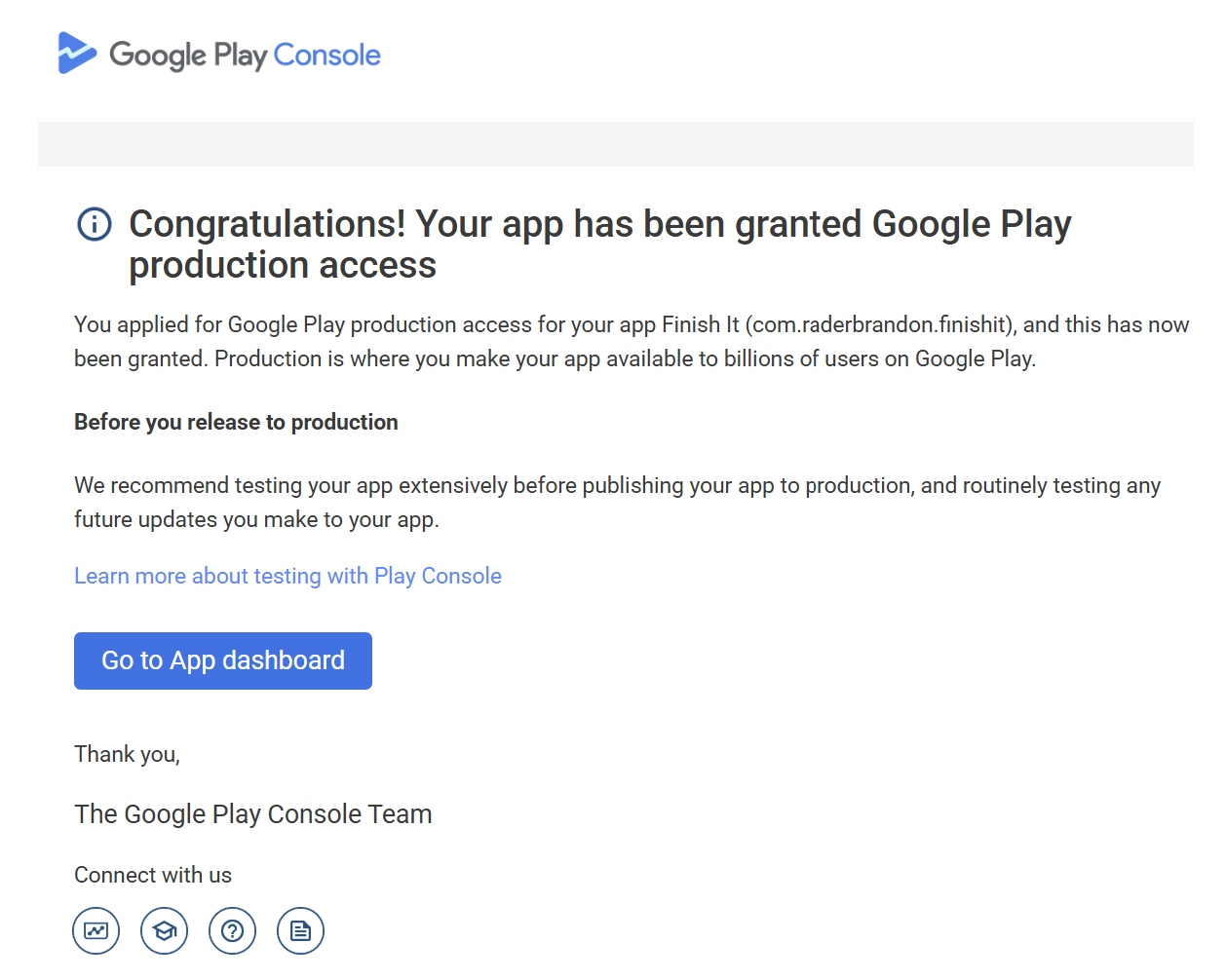
Inside your Google Play Console, on the Dashboard, there is a section for 'Publish your app on Google Play.' It will show the status of your testing requirement. Once it's met, the task will be marked as complete, and you will be able to click the button to 'Apply for production.'
Can I use a testing service if my app is paid or has in-app purchases?
Yes, you can. A professional testing service will not make any purchases. Testers will simply install the app and keep it on their device to fulfill the 14-day opt-in rule. The service is designed to be compatible with all app monetization models.
Is this a one-time requirement, or do I have to do it for every new app?
This 14-day testing requirement currently applies to new personal developer accounts. Once you have successfully published your first app after meeting this requirement, you typically do not have to go through the same mandatory 14-day test for subsequent apps. However, Google's policies can change, so it's always good practice to test all your apps.
How It Works
Your journey to Google Play production access, simplified and automated.
Get Started
Authenticate your account to initialize the 14-day QA fleet for your Cordova release.
App Submission
Upload your testing link. We assign 12 verified users with real Android devices to download and test your Cordova release.
14-Day Cycle
A dedicated testing supervisor is assigned to monitor progress while testers engage with your Cordova app and provide feedback throughout the testing period.
Production Access Approval
Our lab maintains active installations for two weeks straight, ensuring a clean track record and providing a QA compliance log for your release.
Why Choose AppConsoleLab
Satisfy your Play Store Console testing obligations with our managed physical device fleet tailored for Cordova builds.
The 14-Day Production Guarantee
We complete the required 14-day closed testing process with real human testers and physical Android devices, while providing clear testing evidence and documentation throughout the process.
If Google specifically rejects production access due to insufficient testing engagement, you are covered by our free re-run or 100% refund guarantee, subject to our Refund Policy.
Verified Production Access
Quality QA Testing Reports
Clear, actionable reports with screenshots and evidence for every important issue found during testing.
Real Device Testing & Diagnostics
Real human testers use physical Android devices to test your app, verify real user flows, and provide clear testing evidence and professional QA reports.
Play Store Ready
Our structured 14-day closed testing process is designed to meet Google Play's production requirements for your Cordova release in Australia.
Simple Closed Testing Pricing
Select the plan that fits your Cordova app complexity.
Loading Packages
Please wait while we fetch the best options for your region...
Frequently Asked Questions
Everything you need to know about passing your closed testing requirements.