Verified 12 Testers for 14 Days for Android Apps
Comply with Google Play Console’s closed testing approval standards with 12 testers providing real diagnostic sessions from real Android devices and compliant 14-day testing activity for full production access approval.
12 testers for google play on Hypercasual applications
If you have a new personal developer account, Google Play requires you to run a closed test before you can publish your app. You need a group of people to test your app for 14 consecutive days. This rule is in place to help stop bad apps from flooding the store. It's a new step for many developers, but it's completely manageable.
Let's be clear on the numbers. Google's official policy asks for a minimum of 12 testers. Many developers search for "12 testers for 14 days" because it sounds a bit easier. The process is the same no matter the number, but to be safe and avoid delays, you should always aim to meet Google's official 12-tester target. This guide will show you exactly how to do it right.
The core of the requirement is simple: testers must opt-in and keep your app installed for 14 days in a row. The clock starts the moment your first tester joins.
Why This Testing Rule Exists
Google introduced this policy to improve the quality of apps on the Play Store. Before, anyone could create an account and publish an app almost instantly. This led to a lot of spam, low-effort apps, and even malicious software.
By making developers go through a real testing phase with real people, Google ensures a few things:
- Developer Commitment: It shows you're serious about your app.
- App Stability: It forces a basic level of quality control. An app that crashes constantly won't pass a real test.
- Reduces Spam: It creates a barrier that stops spammers who rely on publishing hundreds of apps quickly.
It might feel like an extra hoop to jump through, but it ultimately helps protect users and makes the Play Store a better place for legitimate developers like you.
The Three Ways to Find Your Testers
You have a few options for finding people to test your app. Each comes with its own set of pros and cons. Let's break them down.
1. The DIY Method: Friends, Family, and Social Media
This is usually the first thought for most developers. You can ask people you know or post in developer communities to find volunteers.
- The Good: It's free. You have a direct line of communication with your testers.
- The Bad: This is harder than it sounds. It's a logistical challenge to find 12 reliable people who will agree to install your app and keep it on their phone for two full weeks. People are busy. They forget. They might agree but never actually opt-in. You'll spend a lot of time chasing them down, sending reminders, and walking them through the process. It can strain relationships and delay your launch significantly.
2. The Risky Gamble: Fiverr Gigs and Shady Websites
You'll find many cheap offers on platforms like Fiverr promising "12 Android testers instantly." These services are tempting because they seem fast and affordable.
- The Good: It looks like a quick, cheap fix.
- The Bad: This is the most dangerous option. The vast majority of these gigs use bots or fake accounts. Google's systems are very good at detecting this kind of activity. When they do, your app can be flagged, your developer account could be suspended, and you'll have to start the entire 14-day process over again. These "testers" don't keep the app installed; they install and uninstall immediately. This doesn't fulfill the "14 consecutive days" requirement and is a complete waste of money and time.
3. The Professional Service: A Managed Testing Solution
The third option is to use a service specifically designed for this purpose, like AppConsoleLab. These companies have a network of real, verified people ready to test your app according to Google's exact rules.
- The Good: It's guaranteed and stress-free. The service manages the entire process, from inviting testers to ensuring they stay opted-in for the full 14 days. It's the fastest and most reliable way to meet the requirement. You can focus on your app, not on managing people.
- The Bad: It has a cost. But when you compare that cost to the risk of getting your account flagged or the weeks of time you'd waste with the DIY method, it's a small price to pay for peace of mind and a successful launch.
Comparing Your Options: A Clear Breakdown
To make the choice easier, here is a direct comparison of the three methods.
| Feature | AppConsoleLab's Service | Finding Testers Yourself (DIY) | Fiverr Bots |
|---|---|---|---|
| Tester Quality | Real, verified humans | Mixed (friends, strangers) | Bots or temporary accounts |
| Google Compliance | 100% Compliant | Risky, depends on follow-through | Very High Risk of Rejection/Ban |
| Reliability | Guaranteed to meet rule | Low, people are unreliable | Extremely low, no real testing |
| Time Investment | 5 minutes to set up | Many hours of management | A few minutes (but for zero result) |
| Stress Level | Zero | High | High (worrying about being caught) |
| Success Rate | Very High | Low to Medium | Almost Zero |
Struggling with the 14-Day Testing Requirement?
Skip the hassle of recruiting unreliable testers. Our professional fleet of real Android devices guarantees Google Play compliance in exactly 14 days. Zero bots. Zero emulators. 100% production approval guarantee.
Understanding How Google Tracks the 14-Day Test
It's important to understand what's happening behind the scenes. Google isn't just counting how many people install your app. The system is designed to track a specific user journey to verify the test is legitimate.
The key is the opt-in link.
When you create a closed test in your Google Play Console, you'll generate a unique link. This is the link you must share with your testers. Here’s the process Google tracks:
- A user clicks your special opt-in link.
- They are taken to a web page where they must click a button to "Become a Tester." This action registers their Google account as a tester for your app.
- After opting in, they are directed to your app's page on the Google Play Store.
- They download and install the app from the Play Store.
Only when a user completes all these steps does Google's 14-day clock start for them. If someone just installs an APK file you send them, it does not count. The entire process must happen through the official Play Store channel.
Active Opt-In (The Right Way)
Passive Installation (The Wrong Way)
Your Pre-Launch Checklist for a Flawless Test
Before you even think about finding testers, make sure your app and your Play Console are ready. A little preparation saves a lot of headaches.
Phase 1: Getting Your App Ready
Phase 2: Setting Up the Play Console
The 14-Day Journey: From Setup to Approval
Here is a simple timeline of what the entire process looks like when done correctly.
Day 0: App & Test Setup
Day 0: Create Tester List
Day 1: Testers Are Invited
Day 1-14: The Waiting Period
Day 15: The Test Completes
Day 16+: Apply for Production
What to Do After the Test is Over
Once the 14 days are up, you need to check your Google Play Console to confirm the requirement has been met. You can find more details on where to look in this guide: How to Check Whether Your 14-Day Testing Requirement Is Complete.
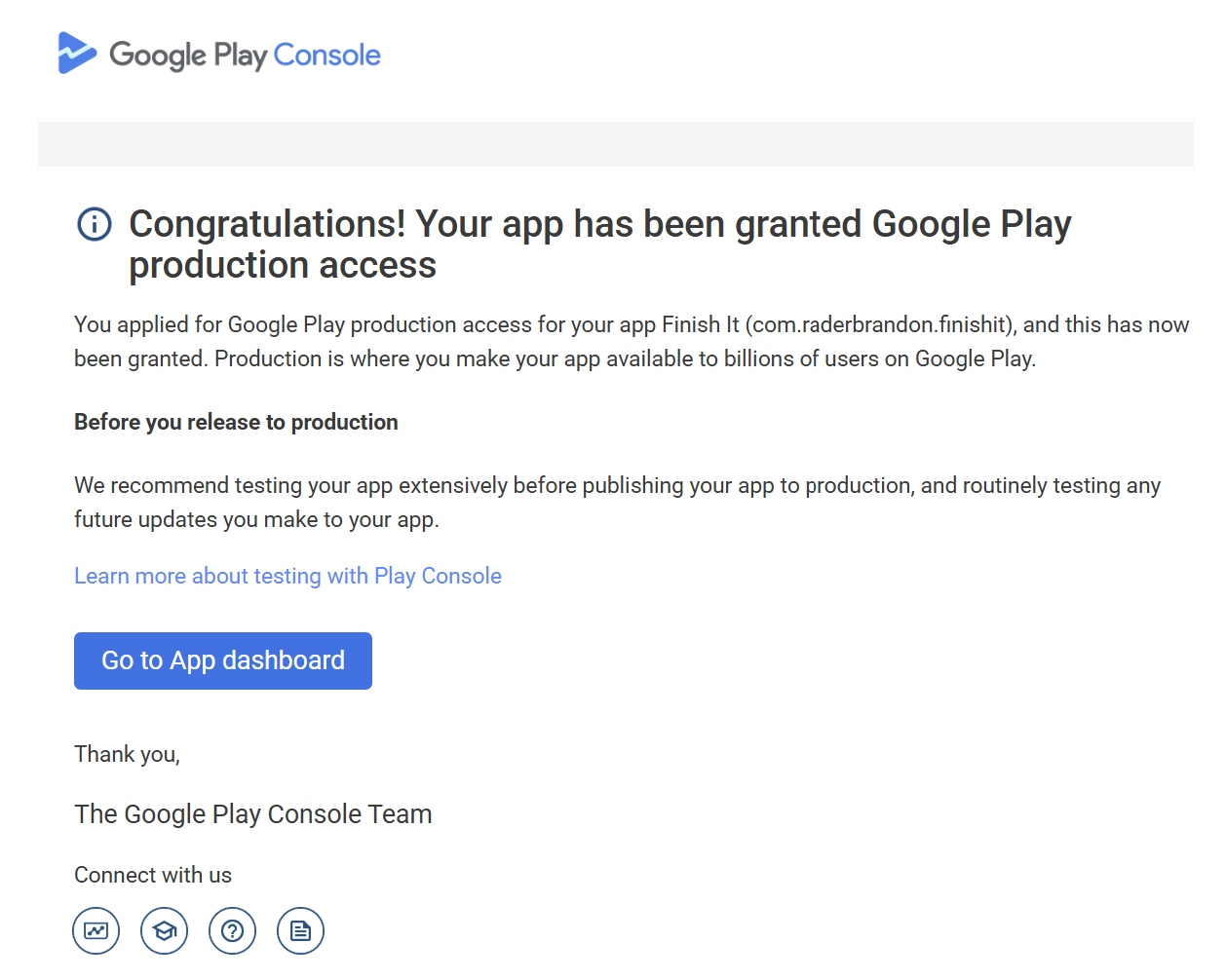
If everything looks good, you'll see a section on your dashboard that allows you to 'Apply for production.' This sends your app to Google for a final review. This review process can take anywhere from a day to over a week, depending on your app's complexity and function.
Navigating the new Google Play rules doesn't have to be a blocker for your launch. While the 14-day testing requirement adds an extra step, it's a straightforward process when you use the right method. Trying to cut corners with bots or struggling to manage testers yourself often leads to delays and frustration. Using a dedicated, professional service is the cleanest, safest, and most efficient path to getting your app published. If you want to explore more options, check out this comparison of the Best Google Play Closed Testing Services Compared (2026).
Do I really need 12 testers? What if I only get 12?
Google's official documentation states you need a minimum of 12 testers who have been opted-in continuously for the last 14 days. While some developers have reported success with slightly fewer, it is a risk. To guarantee you pass the requirement without any issues or delays, you should always aim for at least 12 testers.
What happens if a tester uninstalls the app before 14 days?
If a tester uninstalls the app, they no longer count toward your 'continuously opted-in' total. If this causes your number of active testers to drop below the threshold (ideally 12), you may not fulfill the requirement. This is a major reason why managing testers yourself is difficult and why a professional service is more reliable.
Can I use the same group of testers for multiple apps?
Yes, you can. As long as the testers go through the official opt-in process for each individual app and keep each one installed for the 14-day period, you can use the same people. However, you must create a separate closed test and email list for each app within your Play Console.
How long does it take to get production access after the test ends?
After the 14-day testing requirement is met, you must 'Apply for production.' This triggers a final review by Google. The review time varies but typically takes between 1 to 7 days. Once approved, you can publish your app to the store.
Does Google notify me when the 14-day requirement is met?
No, Google does not send a direct notification or email. You must manually check your Google Play Console dashboard. Under the 'Publish your app on Google Play' section, you will see the task 'Test your app with at least 12 testers for 14 days' marked as complete.
Can I update my app during the 14-day testing period?
Yes, you can and you should. Pushing updates to your closed testing track during the 14-day period is a good practice. It doesn't reset the 14-day clock and shows Google that you are actively developing and improving your app based on potential feedback. Your testers will receive the update through the Play Store just like a normal app.
Our QA Process
Your journey to Google Play production access, simplified and automated.
Choose Package
Authenticate your account to initialize the 14-day QA fleet for your Android release.
Submit Link
Upload your testing link. We assign 12 verified users with real Android devices to download and test your Android release.
Active Testing
A dedicated testing supervisor is assigned to monitor progress while testers engage with your Android app and provide feedback throughout the testing period.
Get Approved
Our lab maintains active installations for two weeks straight, ensuring a clean track record and providing a QA compliance log for your release.
The Premium QA Advantage
Satisfy your Play Store Console testing obligations with our managed physical device fleet tailored for Android builds.
The 14-Day Production Guarantee
We complete the required 14-day closed testing process with real human testers and physical Android devices, while providing clear testing evidence and documentation throughout the process.
If Google specifically rejects production access due to insufficient testing engagement, you are covered by our free re-run or 100% refund guarantee, subject to our Refund Policy.
Verified Production Access
Quality QA Testing Reports
Clear, actionable reports with screenshots and evidence for every important issue found during testing.
Real Device Testing & Diagnostics
Real human testers use physical Android devices to test your app, verify real user flows, and provide clear testing evidence and professional QA reports.
Production Access Secured
Our structured 14-day closed testing process is designed to meet Google Play's production requirements for your Android release.
Simple Closed Testing Pricing
Select the plan that fits your Android Hypercasual app complexity.
Loading Packages
Please wait while we fetch the best options for your region...
Frequently Asked Questions
Everything you need to know about passing your closed testing requirements.