Qualified 12 Testers for 14 Days for Android Apps
Satisfy Google Play closed testing compliance requirements with 12 verified testers performing active daily interactions on real Android hardware and verified 14 day engagement for production access approval.
12 testers google play console: How to pass with Offline games
To publish a new app on Google Play, developers with personal accounts must meet a specific testing requirement. Your app needs to be tested by at least 12 people who have opted-in to your test for 14 consecutive days. This isn't a suggestion; it's a mandatory step to get your app reviewed and published.
The entire process is designed to make sure real people test new apps before they go live. It helps Google filter out low-quality or spammy apps, improving the overall quality of the Play Store. Think of it as a final quality check before you open your doors to the world.
What Makes a Tester "Qualified"?
This is where many developers get stuck. A "qualified" tester isn't just someone you send a link to. Here’s what it means in practice:
- They Must Opt-In: The tester has to click your specific closed testing link and agree to become a tester. Just adding their email to a list isn't enough.
- They Must Stay Opted-In: This is the big one. They need to remain on your tester list for 14 days in a row. If a tester opts out on day 5, the clock resets for that tester slot. You need a consistent group.
- They Must Be Real: Using bots or fake accounts is a fast track to getting your developer account flagged or even banned. Google's systems are smart enough to detect this kind of activity.
Finding a dozen people is one thing. Finding a dozen reliable people who will follow the instructions and stay committed for two full weeks is a completely different challenge.
The Big "12 vs. 12 testers" Question
You might see different numbers floating around. Google's official documentation mentions "12 testers". However, the requirement that appears in the Google Play Console dashboard for most developers specifically says you need to have your app tested by at least 12 testers for 14 days.
So which is it?
The dashboard requirement of 12 is the one that directly gates your ability to apply for production access. The "12 testers" is more of a guideline for best practices. However, because people can drop out, aiming for more than 12 is a very smart strategy. If you start with 15 testers and three drop out, you're still safe. If you start with exactly 12 and one drops out, your 14-day clock could be in trouble. We always recommend starting with 15-12 testers to build a buffer and ensure a smooth process.
How to Get Your 12 Qualified Testers
You have a few paths you can take. Each has its own pros and cons, from time commitment to risk.
Path 1: The DIY Method (Friends, Family, Forums)
The most obvious first step is asking people you know. You can also post on forums like Reddit or developer communities.
- Pros: It can be free if you have a large, tech-savvy network. You have direct communication with your testers.
- Cons: It's incredibly time-consuming. You have to personally manage every single person, answer their questions, and constantly check if they are still opted-in. People get busy, forget, or lose interest. It's very common for DIY tests to fail several times before succeeding.
Path 2: The Risky Method (Fiverr Bots & Cheap Gigs)
Some platforms offer to get you testers for suspiciously low prices, like $5 or $10.
- Pros: It seems cheap and fast.
- Cons: You are almost certainly paying for bots or low-quality, unreliable accounts. These accounts often get flagged by Google. Using them puts your app and your entire developer account at risk. If Google detects suspicious activity, they can reject your app or ban your account permanently. The risk is not worth the small savings.
Path 3: The Smart Method (A Managed Testing Service)
A dedicated service, like AppConsoleLab, handles the entire process for you. We recruit, manage, and guarantee a pool of real, reliable testers who understand the 14-day requirement.
- Pros: It's completely hands-off. You get a guaranteed result without the stress and time sink. The testers are real people, so there's no risk to your account. The process is fast and efficient.
- Cons: It costs more than asking your friends for free. But, you're paying for a guaranteed result and saving dozens of hours of your own time.
Here’s a quick breakdown of how these options stack up.
| Feature | AppConsoleLab's Service | Finding Testers Yourself (DIY) | Fiverr Bots |
|---|---|---|---|
| Success Rate | Guaranteed | Low to Medium | Very Low (High Risk) |
| Time Investment | ~5 minutes | 12+ hours | ~15 minutes |
| Risk to Account | Zero | Zero | Extremely High |
| Tester Reliability | High (Managed & Vetted) | Low (Volunteers) | None (Bots or Fake Accounts) |
| Stress Level | Low | High | High (Risk of Ban) |
| Total Cost | Fixed, predictable price | "Free" (but costs your time) | Cheap (but could cost your account) |
Managed Testing
With a managed service, you're buying peace of mind. A team of experts finds and manages real human testers for you. They monitor the 14-day period daily to ensure everyone stays opted-in. If someone drops out, they are instantly replaced from a backup pool. It's a 'set it and forget it' solution that guarantees you pass the requirement without any risk or time wasted.
Self-Managed Testing
Going the DIY route means you are the project manager. You have to find people, explain the technical steps, persuade them to stay active for two weeks, and manually check their status. It requires constant follow-up via email or messaging. While it can be free, the time and effort you spend managing people could be better spent improving your app.
Struggling with the 14-Day Testing Requirement?
Skip the hassle of recruiting unreliable testers. Our professional fleet of real Android devices guarantees Google Play compliance in exactly 14 days. Zero bots. Zero emulators. 100% production approval guarantee.
A Clear Path to Passing the Test
When you use a managed service, the process becomes simple and predictable. You don't have to worry about the day-to-day management; you can just focus on your app. Here's what that looks like.
Submit Your App Details
We Assemble Your Tester Group
Testers Opt-In
The 14-Day Countdown Begins
Daily Monitoring
Requirement Met & Production Access
Your Pre-Flight Checklist for a Smooth Test
Before you even start looking for testers, make sure your app and your Google Play Console are ready. Following these steps will prevent common delays and ensure the process goes smoothly from day one.
Phase 1: Getting Your App Ready
Phase 2: Running the 14-Day Test
How to Know When You're Done
The Google Play Console makes it easy to track your progress. On your main Dashboard, there's a section titled 'Test your app before release'. Inside, you'll see the task 'Get testers and run a closed test'. It will show you exactly how many consecutive days you have completed.
Once you hit 14 days with the required number of testers, that task will be marked as complete. It's a great feeling! For a more detailed walkthrough, check out our guide on How to Check Whether Your 14-Day Testing Requirement Is Complete.
Choosing the Right Partner
If you decide a managed service is the right path, it's important to choose a reputable one. Look for services that promise real testers, offer guarantees, and provide clear communication. Avoid any service that seems too cheap to be true—it usually is. Saving a few dollars isn't worth risking your entire developer account.
A good testing service is a partner in your launch. They handle the tedious parts so you can focus on building a great app. To see how different services stack up, take a look at our detailed breakdown of the Best Google Play Closed Testing Services Compared (2026).
Navigating the 14-day testing rule doesn't have to be a roadblock. By understanding the requirements and choosing the right method, you can get it done efficiently and safely, moving you one step closer to a successful app launch.
Do my testers need to download or use the app?
No, Google's requirement is based purely on the tester opting in and remaining opted-in for 14 consecutive days. They do not need to download, install, or use the app for the counter to advance.
What happens if a tester opts out during the 14 days?
If a tester opts out, the 'consecutive days' count for that tester slot resets. If this drops you below the minimum number of testers (usually 12), your overall 14-day clock for the requirement will pause or reset until you get a new tester to fill that spot. This is why it's wise to start with more than 12 testers.
Can I use the same testers for multiple apps?
Yes, you can. There is no rule against using the same group of people to test different applications you develop. As long as they are real individuals and opt-in to each test separately, it is perfectly acceptable.
How long after the 14-day test can I apply for production?
As soon as the requirement is marked as complete on your Google Play Console dashboard, you can apply for production access immediately. There is no additional waiting period.
Does updating my app with a new build reset the 14-day clock?
No, uploading a new AAB (Android App Bundle) to your closed test track will not reset the 14-day progress. In fact, it's a good practice to update your app if you find bugs. The clock is tied to the testers remaining opted-in, not the app version.
Why did Google introduce this 12 testers for 14 days rule?
Google implemented this policy on November 13, 2023, for new personal developer accounts. The goal was to curb the large number of low-quality, copycat, or malicious apps being submitted. By requiring a real-world testing phase, they ensure developers put more effort into their apps and get early feedback, which improves the overall quality and safety of the Google Play Store ecosystem.
How We Deliver 12 Testers
A straightforward 4-step process to get your Android game approved.
Connect Account
Connect your Google account and choose your preferred closed testing package for your Android game.
Assign Testers
Share your Play Store opt-in URL. We immediately deploy 12 real testers to launch and review your Android game daily.
Daily QA Runs
Our crew initiates daily launch sessions on physical devices, verifying usability and logging crashes for your Android app.
Launch Ready
We continuously perform closed app testing for 14 days to help you meet Google Play production requirements. We also provide a compliance report.
Our Testing Infrastructure
Deploy your Android game onto real retail-grade handsets using our secure laboratory environment.
The 14-Day Production Guarantee
We complete the required 14-day closed testing process with real human testers and physical Android devices, while providing clear testing evidence and documentation throughout the process.
If Google specifically rejects production access due to insufficient testing engagement, you are covered by our free re-run or 100% refund guarantee, subject to our Refund Policy.
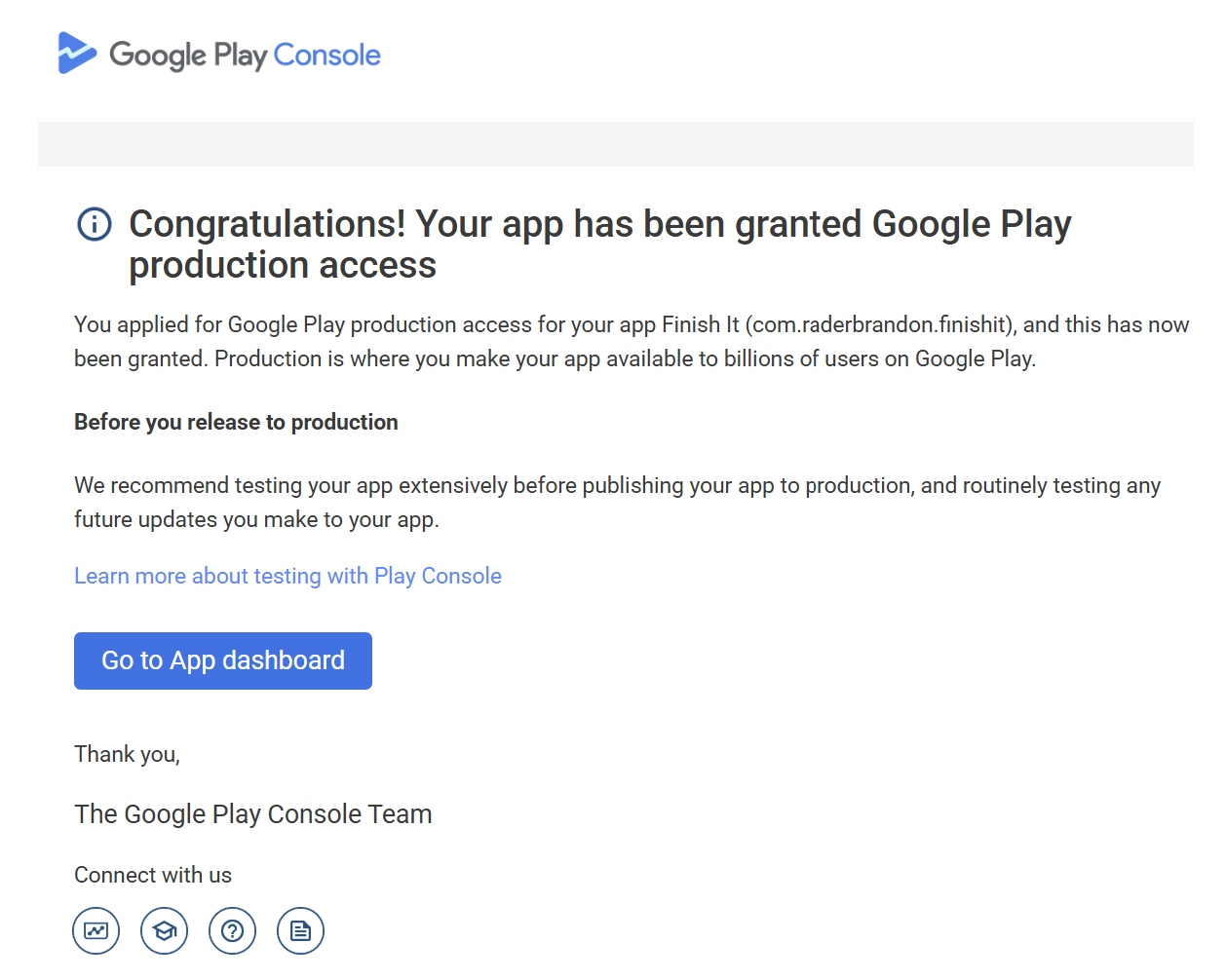
Verified Production Access
Quality QA Testing Reports
Clear, actionable reports with screenshots and evidence for every important issue found during testing.
Real Device Testing & Diagnostics
Real human testers use physical Android devices to test your app, verify real user flows, and provide clear testing evidence and professional QA reports.
Compliance Audit Passed
Transition your Android game to public production access with confidence. We deliver verified session logs and compliant Console activity.
One Cycle. Complete Approval.
Choose the ideal closed testing cycle for your Android release.
Loading Packages
Please wait while we fetch the best options for your region...
Frequently Asked Questions
Everything you need to know about passing your closed testing requirements.