Qualified 12 Testers for Closed Testing in Australia
Satisfy Google Play closed testing compliance requirements for your Adalo app in Australia with 12 verified testers performing active daily interactions on real Android hardware and verified 14 day engagement for production access approval.
12 testers google play: Approval guide for Adalo
Google Play now requires developers with new personal accounts to have at least 12 people test their app for 14 straight days. Only after this can you apply to publish your app for everyone. This rule is a big hurdle for many new developers. It’s meant to stop low-quality and harmful apps from flooding the store, which is a good thing. But it leaves you with a big question: where do you find 12 reliable people to test your app?
This guide breaks down the entire process. We'll cover what Google expects from "qualified testers," the tricky 14-day rule, and your best options for meeting this requirement without losing your mind.
What Does Google Mean by "Qualified Testers"?
Google doesn't give a public checklist for what makes a "qualified tester." But based on developer experiences and Google's goals, we can piece it together. A qualified tester isn't just an email address you add to a list.
They are looking for signs of real, genuine activity. This means:
- Real People, Real Accounts: The testers must have active, legitimate Google accounts. They can't be brand-new accounts created just for testing. Google's systems are smart enough to spot fake or bot activity.
- Opt-In is a Must: Each tester must click your specific opt-in link and agree to become a tester. Just adding them to a list isn’t enough.
- Actual Engagement: The tester needs to download, install, and open your app. They should also keep it installed for the entire 14-day period. Just installing and deleting it a minute later won't count.
- Geographic Diversity (Bonus): While not a strict rule, having testers from different locations can look more natural to Google's review system than having 12 testers all using the same Wi-Fi network.
Finding 12 people who meet these criteria and are willing to follow through for two full weeks is the real challenge.
The 14-Day Continuous Testing Rule Explained
This is where most developers get stuck. The rule says you need your testers to "continuously" test for 14 days. What does that mean?
It means the 14-day clock starts only after you have at least 12 testers who have all opted in. If you have 19 testers for a week and the 12th joins on day 8, your 14-day clock might reset or start from that point.
More importantly, "continuous" implies the testers need to remain active. If several testers uninstall the app halfway through, you could fail the requirement. You need a group of people who are committed to seeing the process through. This is why asking random strangers on the internet can be risky. They might agree to help but forget about it a day later, leaving you back at square one. For a deeper dive, check out our guide on how to check whether your 14-day testing requirement is complete.
Your Options for Finding 12 testers
You have a few paths you can take. Each has its own pros and cons.
1. Friends, Family, and Co-workers
This is the first thought for many developers.
- Pros: It's free. You trust them, and they are likely to help you out.
- Cons: It's a surprisingly small pool. You might struggle to find 12 people who are available and have an Android phone. They might not give you honest, critical feedback because they don't want to hurt your feelings. It can also be awkward to keep reminding them to stay in the test.
2. Online Communities (Reddit, Facebook, Discord)
You can post in developer or beta testing groups asking for volunteers.
- Pros: You can reach a lot of people for free.
- Cons: This is a huge time sink. You'll spend hours posting, messaging, and managing people. The quality is a lottery; many will say "yes" and then disappear. You are also competing with hundreds of other developers doing the same thing. Managing 12 strangers in a spreadsheet is a headache.
3. Freelance Sites (Fiverr, Upwork)
You'll see many gigs offering "12 Android testers for $50." Be very careful here.
- Pros: It seems cheap and fast.
- Cons: The vast majority of these gigs use bots or fake accounts. Google will detect this immediately. Using these services is the fastest way to get your developer account flagged or even banned. You risk losing your $25 registration fee and the ability to publish on Google Play forever. It’s simply not worth the risk.
4. A Professional Closed Testing Service
Services like ours exist specifically to solve this problem. We provide a managed group of real, verified testers to get you through the 14-day requirement.
- Pros: It's guaranteed. You get 12+ real, reliable testers who understand the process. The entire 14-day period is managed for you. It saves you dozens of hours and eliminates the risk of using bots.
- Cons: It costs money. But you have to weigh that against the time and risk of the other options.
Comparison: Which Testing Method is Best?
Let's break it down visually.
| Feature | AppConsoleLab's Service | Finding Testers Yourself | Fiverr Bots |
|---|---|---|---|
| Success Guarantee | ✅ High (Managed Process) | ৫০/৫০ Low (Unpredictable) | ❌ Very Low (High Ban Risk) |
| Time Investment | ⏱️ Low (About 30 minutes) | ⏱️⏱️⏱️ High (10-12 hours) | ⏱️ Low (About 1 hour) |
| Risk of Ban | ✅ None | ✅ None | ☠️ Extremely High |
| Tester Quality | ⭐⭐⭐⭐⭐ Real & Reliable | ⭐⭐ Mixed Bag | ⭐ Bot-driven, Fake |
| Management Effort | None (It's all done for you) | High (Constant follow-ups) | Low (But ineffective) |
| Cost | $$ (Fixed Price) | $ (Free, but costs time) | $ (Cheap, but risky) |
Struggling with the 14-Day Testing Requirement?
Skip the hassle of recruiting unreliable testers. Our professional fleet of real Android devices guarantees Google Play compliance in exactly 14 days. Zero bots. Zero emulators. 100% production approval guarantee.
A Step-by-Step Guide to Setting Up Your Test
Whether you find testers yourself or use a service, you'll need to set up the closed test in your Google Play Console. Here’s how.
Step 1: Prepare Your App Bundle (AAB)
Before anything else, you need a release-ready version of your app. Compile your app in Android Studio and generate a signed App Bundle (.aab file). This is the file you'll upload to Google. Make sure it's stable and doesn't crash on startup.
Step 2: Create Your Closed Test in Play Console
- Go to your Google Play Console.
- Select your app.
- In the left menu, go to Release > Testing > Closed testing.
- Click Create track. Give it a name if you want (the default is fine).
- Upload your AAB file. Wait for it to process.
- Once it's uploaded, go to the Testers tab.
Step 3: Create Your Tester List
Here, you have two choices: upload an email list or use a Google Group.
- Email List: This is the most direct method. You create a
.csvfile with one email address per line or just paste the emails into the box. This is what we use to make the process simple. - Google Group: You can create a Google Group and add all your testers to it. Then, you just add the group's email address to the tester list. This can be easier to manage if you plan on running multiple tests with the same people.
After adding the emails, a shareable opt-in link will be generated at the bottom of the page. This is the link you need to send to all your testers.
Phase 1: Pre-Launch Preparations
Phase 2: Test Execution & Management
Understanding the Difference: Opt-In vs. Engagement
Many developers think the job is done once 12 people click the opt-in link. But that's only half the story. Understanding the difference between a simple opt-in and true engagement is key.
Tester Opt-In
Tester Engagement
This distinction is why using a managed service is often more effective. A professional service ensures testers not only opt-in but also stay engaged for the full two weeks, fulfilling the true spirit of the rule. If you're looking for a reliable solution, explore some of the Best Google Play Closed Testing Services Compared (2026).
Your Roadmap From Testing to Launch
Visualizing the process can make it feel less daunting. Here is the entire journey, step by step.
App Finalization
Play Console Setup
Tester Onboarding
The 14-Day Test
Requirement Met
Publish Your App
Meeting Google's 12-tester, 14-day requirement is a serious step. It's the first gate you must pass to launch your app. While you can certainly try to manage it yourself, it requires significant time, organization, and a bit of luck.
For developers who want to focus on building great apps, not on chasing down testers, a professional service is the most direct and stress-free path to getting your app published. It removes the guesswork and protects you from the risks of low-quality testers, ensuring you pass the requirement the first time.
What happens if some of my 12 testers drop out before 14 days?
Does Google check if the testers are real people?
Can I use a Google Group to manage my testers?
Do I have to pay the testers myself?
How do I know what continuous testing really means?
Is it safe to give my apps test link to a testing service?
How We Deliver 12 Testers
A straightforward 4-step process to get your Adalo app approved.
Connect Account
Connect your Google account and choose your preferred closed testing package for your Adalo app.
Assign Testers
Share your Play Store opt-in URL. We immediately deploy 12 real testers to launch and review your Adalo app daily.
Daily QA Runs
Our crew initiates daily launch sessions on physical devices, verifying usability and logging crashes for your Adalo app.
Launch Ready
We continuously perform closed app testing for 14 days to help you meet Google Play production requirements. We also provide a compliance report.
Our Testing Infrastructure
Deploy your Adalo app onto real retail-grade handsets using our secure laboratory environment.
The 14-Day Production Guarantee
We complete the required 14-day closed testing process with real human testers and physical Android devices, while providing clear testing evidence and documentation throughout the process.
If Google specifically rejects production access due to insufficient testing engagement, you are covered by our free re-run or 100% refund guarantee, subject to our Refund Policy.
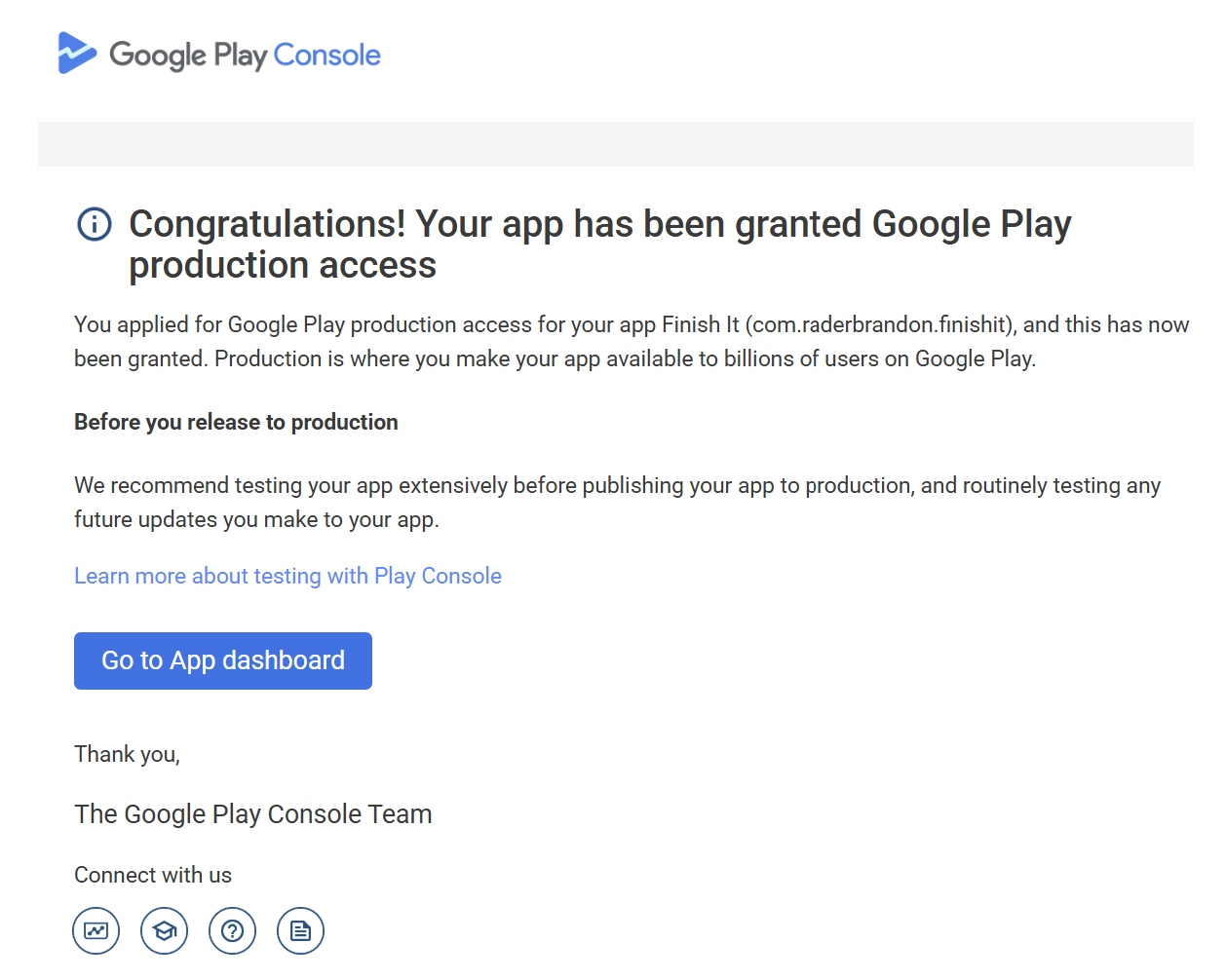
Verified Production Access
Quality QA Testing Reports
Clear, actionable reports with screenshots and evidence for every important issue found during testing.
Real Device Testing & Diagnostics
Real human testers use physical Android devices to test your app, verify real user flows, and provide clear testing evidence and professional QA reports.
Compliance Audit Passed
Transition your Adalo app to public production access with confidence. We deliver verified session logs and compliant Console activity.
One Cycle. Complete Approval.
Choose the ideal closed testing cycle for your Adalo release in Australia.
Loading Packages
Please wait while we fetch the best options for your region...
Frequently Asked Questions
Everything you need to know about passing your closed testing requirements.