Verified 12 Testers for Closed Testing for Android Apps
Fulfill Google Play Console’s closed testing approval standards using 12 testers to generate genuine daily activity on physical Android handsets and genuine 14-day QA activity to guarantee production access clearance.
Google Play now requires developers with new personal accounts to run a closed test before they can publish an app. This test needs at least 12 testers who have opted-in and been active for 14 continuous days. This rule is designed to improve the quality of apps on the Play Store, but it can be a major hurdle if you don't know how to approach it. This guide breaks down the requirement and shows you the most efficient way to get it done.
Google Play closed testing 12 testers: Guide for AI Image Generator
Before you can find a solution, you need to understand the problem. Google's policy isn't just a box to check; it has specific requirements that, if missed, can keep your app unpublished indefinitely.
Why Did Google Implement This?
Google introduced this policy to fight against the flood of low-quality or malicious apps. In the past, anyone could create an account and publish an app in a day. This led to a lot of spam, malware, and broken applications that created a poor experience for users.
By requiring a 14-day testing period with 12 real people, Google ensures developers are more committed to their projects. It also creates a "cooling off" period where the app's behavior can be observed. It’s a quality control measure that helps protect users and increase the overall trust in the Play Store ecosystem.
The Core Requirements: Breaking It Down
Let's look at the exact rules you need to follow. It's not as simple as just getting 12 friends to download your app.
- 12 testers Minimum: You must have at least 12 individual testers enrolled in your closed test.
- Opt-In is Mandatory: Each of these 12 testers must explicitly opt-in to your test. Sending them an APK file directly does not count. They have to accept the testing invitation through a special link generated by the Google Play Console.
- 14 Continuous Days: The 14-day clock starts after you have all 12 testers opted-in. If a tester leaves on day 5 and you drop to 19 testers, the clock may reset or pause until you get a new one. The testing period must be continuous.
Failing to meet any of these specific points means you won't be able to apply for production access. Many developers get stuck here, waiting for weeks, because they misunderstood one of these simple rules.
What Does "Continuous Testing" Actually Mean?
This is the most common point of confusion. "Continuous testing" does not mean your 12 testers need to open and use your app every single day for 14 days. That would be nearly impossible to coordinate.
Instead, "continuous" refers to the state of their opt-in. The 12 testers must remain opted-in to your closed testing track for the entire 14-day duration. The clock is ticking based on their enrollment, not their daily activity. Once the 14 days of enrollment are complete, and you've met the other criteria, the Play Console will unlock the ability to apply for production access.
The Challenge: Finding 12 real, Reliable Testers
Knowing the rules is one thing. Finding 12 people to follow them is another. For solo developers or small teams, this can be a surprisingly difficult task.
The Problem with Friends and Family
Your first thought might be to ask friends and family. This works for the first 5 or 6 people, but it quickly becomes a problem. People are busy. They might agree to help but forget to click the opt-in link. They might lose the link in their email. Chasing down 12 different relatives and acquaintances to complete a technical process is exhausting and often doesn't work. You need a reliable group, not a casual one.
The Dangers of Public Forums
The next logical step for many is posting on Reddit, Facebook groups, or other developer forums. You might get a few volunteers, but this approach is risky.
- Reliability: People who volunteer for free often don't follow through. You might get 15 people to opt-in, but 5 of them drop out a few days later, resetting your progress.
- Scammers: Some forums are filled with people who will promise to test in exchange for you testing their app. These arrangements are flaky and can waste a lot of your time.
- Security: You are sharing a link to an unreleased version of your app with complete strangers. This can expose your hard work to potential theft or reverse engineering.
The Risk of Bot Services
You'll see cheap services on platforms like Fiverr promising "12 Google Play testers" for a very low price. Be extremely careful. The vast majority of these services use bots or fake accounts. Google's systems are very sophisticated and can easily detect this kind of activity. If you get caught using bots, your developer account could be suspended or even terminated. The short-term savings are not worth the risk of losing your ability to publish on Google Play forever.
How a Verified Tester Service Solves Everything
The simplest, safest, and fastest way to meet Google's requirement is to use a professional service that provides real, verified testers. These services maintain a community of actual people who are ready to test your app.
A managed service handles the entire process for you. They recruit the testers, ensure they all opt-in correctly, and make sure they stay enrolled for the full 14 days. You get the peace of mind of knowing the job is being done right, allowing you to focus on improving your app instead of chasing down testers.
Here’s a quick comparison of your options:
| Feature | AppConsoleLab's Service | Finding Testers Yourself | Fiverr Bots |
|---|---|---|---|
| Reliability | Guaranteed 12+ testers for 14 days | Very low; people drop out | Extremely low; often bots |
| Time Investment | 5 minutes to set up | 10-12 hours of coordination | 10 minutes, but high risk |
| Compliance Risk | Zero. Uses real people. | Low, but hard to manage | Very High. Risk of account ban. |
| Speed | Starts within hours | Can take weeks to organize | Fast, but ineffective |
| Feedback Quality | Optional real feedback | Varies, often low-effort | None |
| Cost | Fixed, predictable price | "Free", but costs a lot of time | Cheap, but you get what you pay for |
Struggling with the 14-Day Testing Requirement?
Skip the hassle of recruiting unreliable testers. Our professional fleet of real Android devices guarantees Google Play compliance in exactly 14 days. Zero bots. Zero emulators. 100% production approval guarantee.
Step-by-Step Guide to Setting Up Your Closed Test
Getting your closed test running is a straightforward process when you know the steps. Following this timeline ensures you don't miss anything important and your 14-day clock starts as soon as possible.
Prepare Your App Bundle
Create a Closed Test Release
Onboard Your Testers
The 14-Day Clock Starts
Monitor & Gather Feedback
Apply for Production Access
Managing Your Testers: Opt-In Links vs. Google Groups
Google gives you two ways to add testers to your closed test. Each has its pros and cons, but for meeting the 12-tester requirement, one is clearly better than the other.
Using an Email List / Google Group
Using a Public Opt-In Link
For the purpose of meeting the 12 tester requirement, always use the public opt-in link. It saves you an enormous amount of administrative headache.
The 14-Day Wait: What to Do and How to Monitor Progress
Once your 12 testers are in and the clock is ticking, your job isn't over. This is a valuable time to ensure your app is ready for launch.
Phase 1: Initial Setup & Verification
Phase 2: The 14-Day Monitoring Period
This period is your final chance to catch a show-stopping bug before real users see your app. Use the time wisely.
Choosing the Right Path for Your App
You have a few choices for tackling the closed testing requirement. You can spend your valuable time trying to organize testers yourself, take a big risk with cheap bot services, or you can use a professional service to handle it for you.
For most developers, a managed service is the clear winner. It's a small investment that saves you time, eliminates risk, and lets you focus on what you do best: building great apps. If you're trying to decide which service to use, this comparison can help: Best Google Play Closed Testing Services Compared (2026).
Meeting Google's testing requirement is the final gatekeeper between you and your app launch. By understanding the rules and using a reliable solution, you can pass through it smoothly and get your app into the hands of users.
Do my testers need to have a Gmail account?
What happens if one of my 12 testers leaves the test early?
Can I update my app during the 14-day testing period?
Does the 14-day testing rule apply to updates for an already published app?
How long does it take for Google to approve my app after the 14-day test is complete?
Do I need to pay the testers?
The Testing Pipeline
Your journey to Google Play production access, simplified and automated.
Sign In
Authenticate your account to initialize the 14-day QA fleet for your Android release.
Opt-In URL
Upload your testing link. We assign 12 verified users with real Android devices to download and test your Android release.
Testing Begins
A dedicated testing supervisor is assigned to monitor progress while testers engage with your Android app and provide feedback throughout the testing period.
Compliance Complete
Our lab maintains active installations for two weeks straight, ensuring a clean track record and providing a QA compliance log for your release.
Why Developers Trust Us
Satisfy your Play Store Console testing obligations with our managed physical device fleet tailored for Android builds.
The 14-Day Production Guarantee
We complete the required 14-day closed testing process with real human testers and physical Android devices, while providing clear testing evidence and documentation throughout the process.
If Google specifically rejects production access due to insufficient testing engagement, you are covered by our free re-run or 100% refund guarantee, subject to our Refund Policy.
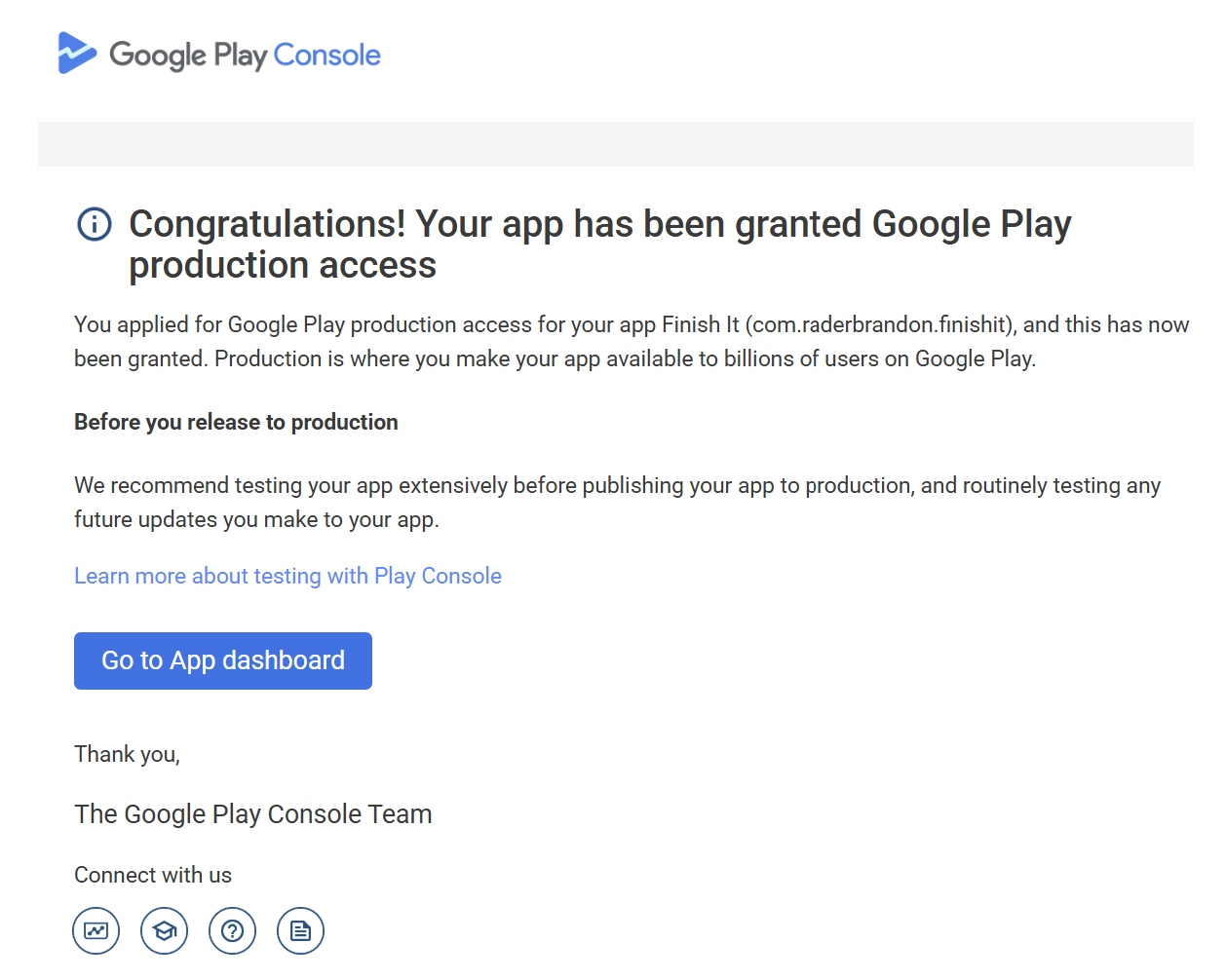
Verified Production Access
Quality QA Testing Reports
Clear, actionable reports with screenshots and evidence for every important issue found during testing.
Real Device Testing & Diagnostics
Real human testers use physical Android devices to test your app, verify real user flows, and provide clear testing evidence and professional QA reports.
Guaranteed App Approval
Our structured 14-day closed testing process is designed to meet Google Play's production requirements for your Android release.
Simple Closed Testing Pricing
Select the plan that fits your Android AI Image Generator app complexity.
Loading Packages
Please wait while we fetch the best options for your region...
Frequently Asked Questions
Everything you need to know about passing your closed testing requirements.