Dedicated 12 Testers for Closed Testing in the USA
Meet Play Console closed testing publishing requirements for your Capacitor app in the USA with 12 verified testers performing active daily interactions on real Android hardware and verified 14 day engagement for production access approval.
14 day closed testing rules for Capacitor creators
Google Play Console's requirement for new personal developer accounts is clear: you need at least 12 testers to be opted-in to your closed test for 14 continuous days. Only after this period can you apply for production access and publish your app. This rule is designed to improve app quality on the Play Store, but for many developers, it's a major hurdle.
Finding 12 reliable people is tough. Getting them to stay active for two full weeks is even harder. This is where a service providing dedicated testers can save you time and frustration. Let's break down exactly what you need to do and how to get it done efficiently.
Understanding the 14-Day Testing Rule
Google's policy isn't just about getting 12 email addresses. It's about a sustained testing period. Here’s what "14 continuous days" really means.
- The Clock Starts Individually: The 14-day timer begins for each tester the moment they accept your testing invitation, not when you start the test.
- Continuous Means Unbroken: A tester must remain opted-in for the entire 14-day period. If they leave the test on day 10 and rejoin on day 11, their clock resets to zero.
- You Need a Group: You need to have at least 12 testers who have all completed their individual 14-day continuous opt-in. If you have 19 testers who have finished and one who is on day 5, you still have to wait.
This is why managing it yourself is so difficult. People get busy, lose interest, or forget. A single person dropping out can delay your entire launch schedule.
The Challenge of Finding Testers on Your Own
At first, asking friends and family seems like a good idea. But the reality is often very different.
- Coordination is a Nightmare: You become a project manager overnight. You're constantly sending reminders, checking in, and answering questions. It's a full-time job on top of developing your app.
- Low Reliability: Friends might agree to help but then forget to install the app or open it. Life gets in the way. You can't force them to participate, and it can be awkward to keep chasing them.
- Poor Feedback: Often, friends and family will just say "it looks great!" to be nice. They might not provide the honest, critical feedback you need to find bugs and improve your user experience. They aren't professional testers.
The DIY approach seems free, but you pay for it with your time, stress, and potentially delayed launch dates.
Manual Tester Management
Managed Testing Service
Why Cheap Fiverr Gigs and Bots Are a Terrible Idea
You'll see cheap offers online promising '12 testers in 24 hours.' These are almost always using bots or low-quality accounts. Using them is one of the fastest ways to get your developer account flagged or even banned.
Google is smart. Their systems can easily detect suspicious activity, such as:
- Testers all joining from the same IP address range.
- Testers using identical or emulated devices.
- Testers who install the app, open it for 10 seconds, and never touch it again.
- Accounts with no real history or activity on the Play Store.
A flag on your account can lead to much stricter reviews in the future or an outright ban. The small amount of money you save is not worth the risk of losing your ability to publish apps on Google Play. You need real people using real devices.
Struggling with the 14-Day Testing Requirement?
Skip the hassle of recruiting unreliable testers. Our professional fleet of real Android devices guarantees Google Play compliance in exactly 14 days. Zero bots. Zero emulators. 100% production approval guarantee.
Comparing Your Options: The Smart Way to Get Testers
When you need to meet the closed testing requirement, you have three main paths. Each has its own benefits and drawbacks. Here’s how they stack up.
| Feature | AppConsoleLab's Service | Finding Testers Yourself | Fiverr Bots |
|---|---|---|---|
| Reliability | High (Managed, vetted testers) | Low (Depends on friends/family) | Very Low (Bots, fake accounts) |
| Time Investment | Low (Submit and forget) | Very High (Constant management) | Low (But high risk) |
| Google Policy Risk | Very Low (Real users, real devices) | Low (If done properly) | Extremely High (Risk of account ban) |
| Feedback Quality | Good (Structured, actionable feedback) | Variable (Often biased or unhelpful) | None (Bots don't give feedback) |
| Speed to Publish | Fast (Predictable 14-day timeline) | Slow (Unpredictable, delays are common) | Fast, then Banned |
| Cost | Fixed Price | 'Free' (But costs you time/stress) | Cheap (But costs your account) |
As you can see, using a dedicated service like AppConsoleLab provides the best balance of reliability, speed, and safety. While there is a cost, it buys you peace of mind and a predictable path to publishing. If you're serious about your app, it's a worthwhile investment. You can find more details in our complete guide on the Best Google Play Closed Testing Services Compared (2026).
Your Step-by-Step Plan for a Successful Closed Test
Getting through the 14-day requirement is a process. Here is the exact roadmap we use to guide developers from submission to approval.
Step 1: Final App Polish
Step 2: Configure Your Closed Test
Step 3: Invite Your Testers
Step 4: The 14-Day Wait
Step 5: Gather Initial Feedback
Step 6: Apply for Production
Knowing when you've met the criteria can be confusing. For a detailed walkthrough of the Play Console dashboard, check out our guide on How to Check Whether Your 14-Day Testing Requirement Is Complete.
Preparing for a Smooth Testing Process
Before you even think about finding testers, make sure your app and your Play Console listing are ready. A little preparation goes a long way.
Phase 1: App Readiness Checklist
Phase 2: Play Console Setup Checklist
Getting through Google's closed testing requirement is a mandatory step for new developers. While it may seem like a roadblock, it's a valuable process that ensures only quality apps reach the market. By understanding the rules and choosing the right method to find testers, you can navigate this process smoothly and get your app published without unnecessary delays.
Do I really need 12 testers? Can I get by with fewer?
Yes, the requirement from Google is firm: a minimum of 12 testers must be opted-in for 14 continuous days. There is no way around this for new personal developer accounts. Attempting to use fewer will simply mean you cannot apply for production access.
What happens if one of my testers drops out during the 14 days?
If a tester opts out, their 14-day clock resets to zero. You will need to either convince them to rejoin or find a new tester. The new tester will have to start their own 14-day period from the beginning, which can delay your entire launch. This is a primary reason why managed testing services are so helpful.
Can I use my friends and family as testers?
You absolutely can, and it's a good way to supplement a core group of dedicated testers. However, relying solely on them can be risky due to lower reliability and potentially biased feedback. It's best to mix them with a professional service to ensure you meet the 12-tester threshold without any issues.
How does Google know if testers are real people?
Google uses many signals to verify tester authenticity. This includes their device ID, IP address, Google account history, and usage patterns within your app. Bot-like behavior (e.g., instant install/uninstall, no in-app activity, shared IPs) is easily flagged by their systems, putting your developer account at risk.
Do I need to pay testers if I find them myself?
You are not required to pay them, but offering a small incentive (like a gift card) can greatly increase their reliability and commitment to completing the 14-day test. When you factor in the cost of incentives and your own time managing them, a fixed-price testing service often becomes more cost-effective.
Does the app need to be updated during the 14-day test?
No, you are not required to push updates during the testing period. The main requirement is that the testers remain opted-in to the testing track for 14 continuous days. However, if your testers find a critical bug, you can certainly push an update to the closed testing track for them to try.
How We Deliver 12 Testers
How we deploy real devices and guarantee compliance for your release.
Connect Account
Sign in with Google to configure the closed testing environment for your Capacitor build in the USA.
Assign Testers
Submit your Google Play Console testing link, and our team will assign qualified testers from our testing network to join your Capacitor closed testing release.
Daily QA Runs
A QA supervisor monitors daily check-ins, ensuring 12 unique Android users engage with your Capacitor build every single day.
Launch Ready
We guarantee 14 consecutive days of active user check-ins to satisfy Google's compliance policies, delivering an audit-ready PDF feedback report.
Our Testing Infrastructure
Experience a next-generation testing infrastructure built for Google Play compliance for your Capacitor release in the USA.
The 14-Day Production Guarantee
We complete the required 14-day closed testing process with real human testers and physical Android devices, while providing clear testing evidence and documentation throughout the process.
If Google specifically rejects production access due to insufficient testing engagement, you are covered by our free re-run or 100% refund guarantee, subject to our Refund Policy.
Verified Production Access
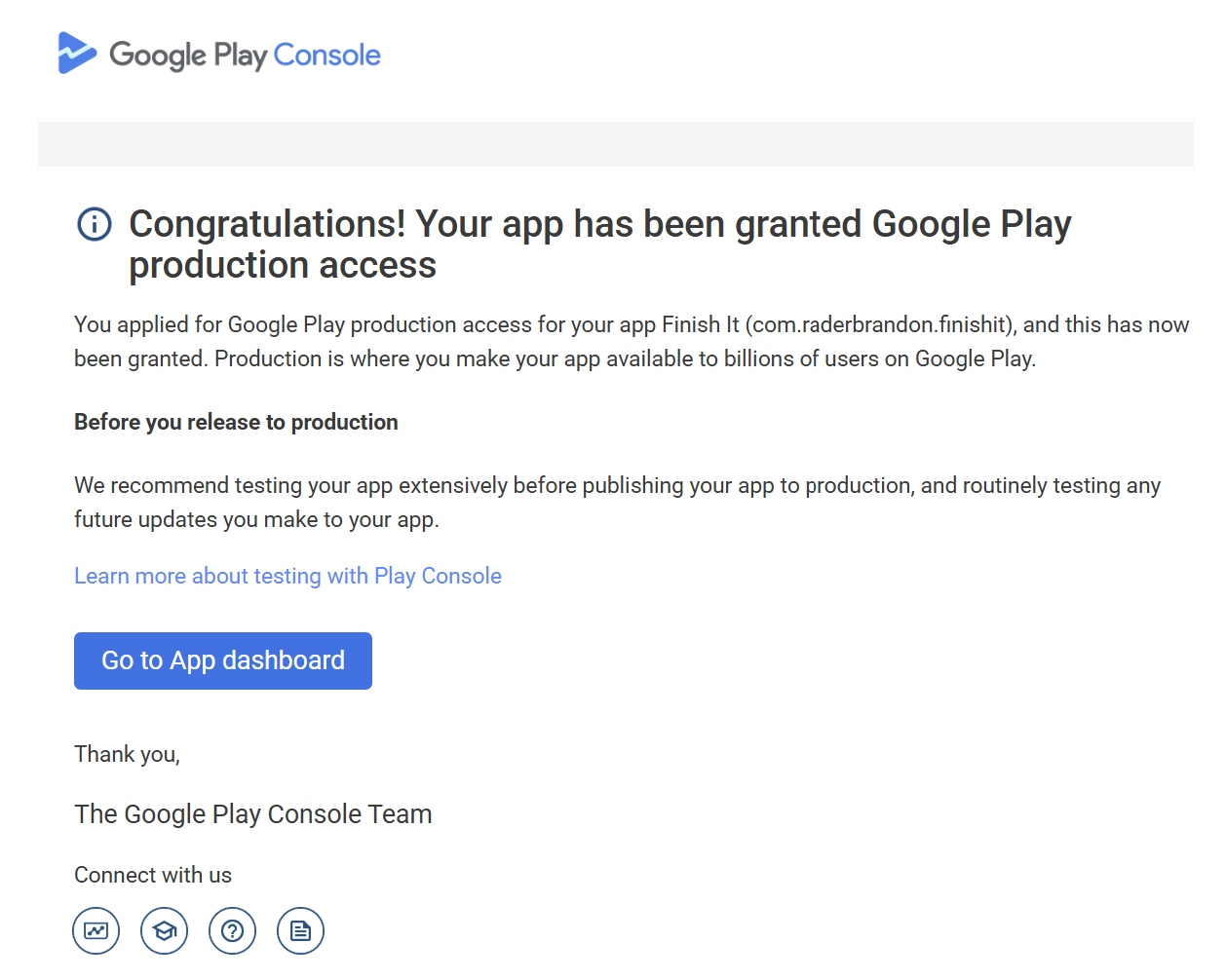
Quality QA Testing Reports
Clear, actionable reports with screenshots and evidence for every important issue found during testing.
Real Device Testing & Diagnostics
Real human testers use physical Android devices to test your app, verify real user flows, and provide clear testing evidence and professional QA reports.
Compliance Audit Passed
Get your Capacitor build approved on the first try. We create an audit-ready compliance profile that proves thorough quality assurance.
Affordable Compliance Cycles
Transparent plans built to satisfy Google Play Console guidelines for your Capacitor build.
Loading Packages
Please wait while we fetch the best options for your region...
Frequently Asked Questions
Everything you need to know about passing your closed testing requirements.