Reliable 12 Testers for Closed Testing in Canada
Clear Play Console closed testing eligibility for your Cordova app in Canada using 12 testers to generate genuine daily activity on physical Android handsets and genuine 14-day QA activity to guarantee production access clearance.
Google Play requires developers with new personal accounts to run a closed test with at least 12 testers for 14 continuous days. This is a mandatory step before you can apply for production access and publish your app. The goal is to ensure apps are stable and provide a good user experience before they reach a wider audience. Finding reliable people to fulfill this requirement can be a major challenge, but it is manageable with the right approach.
Why Is Finding 12 testers So Difficult?
This rule sounds simple on paper. Just get 12 people to test your app. But developers quickly find it's a huge headache. The problem isn't just finding people; it's finding the right kind of people who will follow the specific rules Google has set.
Here are the common roadblocks:
- The 14-Day Continuous Opt-in: This is the biggest hurdle. A tester can't just install the app and then leave. They must remain opted into your test for 14 consecutive days. If even one person drops out early, it can reset your progress or cause issues. People are busy. They forget. They lose interest. Keeping 12 people committed for two full weeks is a tough task.
- Finding Real, Unique Users: You can't just use 12 accounts you created yourself. Google's systems are smart. They look for signs of real, distributed users. Using friends and family is an option, but getting 12 of them to agree and follow through is often harder than it sounds.
- The Risk of Low-Quality Testers: Many developers turn to cheap online gigs. The danger here is that these providers often use bots or a small pool of recycled tester accounts. These accounts participate in hundreds of tests. Google can easily spot this pattern, which puts your developer account at risk of being flagged or even terminated. A flagged account can haunt you for years.
- It's a Distraction from Development: Your job is to build a great app. Managing a group of 12 testers, answering their questions, and constantly checking if they are still opted-in takes you away from coding, fixing bugs, and planning your launch. It becomes a full-time job in itself.
The requirement is not just a box to tick. It's a process designed to filter out low-effort or potentially harmful apps. That’s why doing it correctly is so important for the long-term health of your developer account.
Breaking Down the 14-Day Testing Rule
Let's get specific about what Google expects. Understanding the rules helps you avoid simple mistakes that could delay your app launch for weeks.
The Core Requirements:
- At Least 12 testers: You must have a minimum of 12 testers who have opted into your closed test.
- 14 Continuous Days: These 12+ testers must remain opted-in for at least 14 days in a row. The clock starts when you have enough testers.
- Active Engagement is Not Required: This is a common point of confusion. Testers do not need to open your app every day. They just need to accept the testing invitation and stay enrolled in the test for the full 14-day period. Their "job" is to be on the list.
If a tester opts out on day 5, you need to find a replacement quickly. While Google doesn't explicitly state that your count can't drop below 12, it's widely understood that you need to maintain that number to be safe. The system is looking for a sustained period of testing by a sufficient number of users. For a deeper dive into the different options available, you can read our guide on the Best Google Play Closed Testing Services Compared (2026).
This is why reliability is everything. You need a group of testers you can count on to not disappear halfway through the process.
Phase 1: Pre-Launch App Prep
Phase 2: Managing the 14-Day Test
The Three Paths to Finding Testers
You have three main options for sourcing your 12 testers. Each comes with its own set of benefits and serious drawbacks.
1. The DIY Method: Friends, Family, and Social Media
This is usually the first thing developers try. You ask friends, family, or post in developer communities on Facebook, Reddit, or Discord, looking for volunteers.
- Pros: It can be free. You might get some genuine feedback from people you know.
- Cons: It's incredibly time-consuming and unreliable. People will promise to help but forget to opt-in. Or they'll join and then leave a few days later, breaking your 14-day streak. You'll spend more time chasing people down than working on your app. It can also be awkward to repeatedly ask people for a favor.
2. The Gamble: Fiverr and Cheap Freelance Gigs
When the DIY method fails, many developers search for 'Android app testers' on freelance sites. You'll find dozens of gigs promising 12 testers for a very low price.
- Pros: It seems cheap and fast.
- Cons: This is the riskiest option. Many of these sellers use bots, virtual machines, or the same small group of professional 'testers' for every client. Google's algorithms are designed to detect this type of low-quality, unnatural activity. If your app is associated with these accounts, your developer account could be flagged. A red flag on a new account is the last thing you want. You might save a few dollars but risk your entire business on the Play Store.
3. The Professional Solution: A Dedicated Testing Service
The safest and most efficient option is to use a service that specializes in providing reliable testers for Google's closed testing requirement. These services maintain a community of real, verified users who understand the 14-day rule.
- Pros: High reliability. The service guarantees that 12+ testers will join and remain for the full 14 days. It saves you an enormous amount of time and stress. It's safe, as they use real users with unique device profiles, eliminating the risk associated with bots.
- Cons: It costs more than the other options. However, when you factor in the value of your time and the security of your developer account, it's a small price to pay.
Comparison: Choosing Your Testing Strategy
| Feature | AppConsoleLab's Service | Finding Testers Yourself (DIY) | Fiverr Bots |
|---|---|---|---|
| Reliability | ✅ Very High. Testers are managed and guaranteed to stay for 14 days. | ❌ Very Low. People are forgetful and unreliable. | ❌ Extremely Low. High risk of bots and account flagging. |
| Speed | ✅ Fast. Testers can be ready to start within 24-48 hours. | ❌ Slow. Can take weeks to find and coordinate 12 people. | ⚠️ Deceptively Fast. The speed comes from using bots, which is dangerous. |
| Time Investment | ✅ Minimal. You provide the link; the service handles the rest. | ❌ Huge. Requires constant chasing, reminding, and managing. | ✅ Minimal. But the risk isn't worth the time saved. |
| Account Safety | ✅ Safe. Uses real, unique users, which complies with Google's policies. | ✅ Safe. As long as your friends are real people. | ❌ Very Risky. High chance of getting your developer account flagged or terminated. |
| Cost | Paid Service. An investment in security and peace of mind. | Free. But costs you a lot of time and stress. | Cheap. You get what you pay for: high risk and low quality. |
Struggling with the 14-Day Testing Requirement?
Skip the hassle of recruiting unreliable testers. Our professional fleet of real Android devices guarantees Google Play compliance in exactly 14 days. Zero bots. Zero emulators. 100% production approval guarantee.
Understanding the Type of Testing You Need
It's important to know the difference between simply meeting Google's requirement and getting actual user feedback. Both are valid goals, but they require different approaches.
Passive Opt-in
Active Engagement
For most new developers, the immediate goal is the passive opt-in. You need to get past this gate to launch your app. Once your app is live, you can focus more on gathering active feedback from real users.
Your Step-by-Step Roadmap to Publishing
Navigating the process can feel confusing. Here is a clear timeline of what to expect, from preparing your app to going live.
App Preparation
Set Up Closed Testing
Gather Your Testers
Send the Opt-in Link
The 14-Day Wait
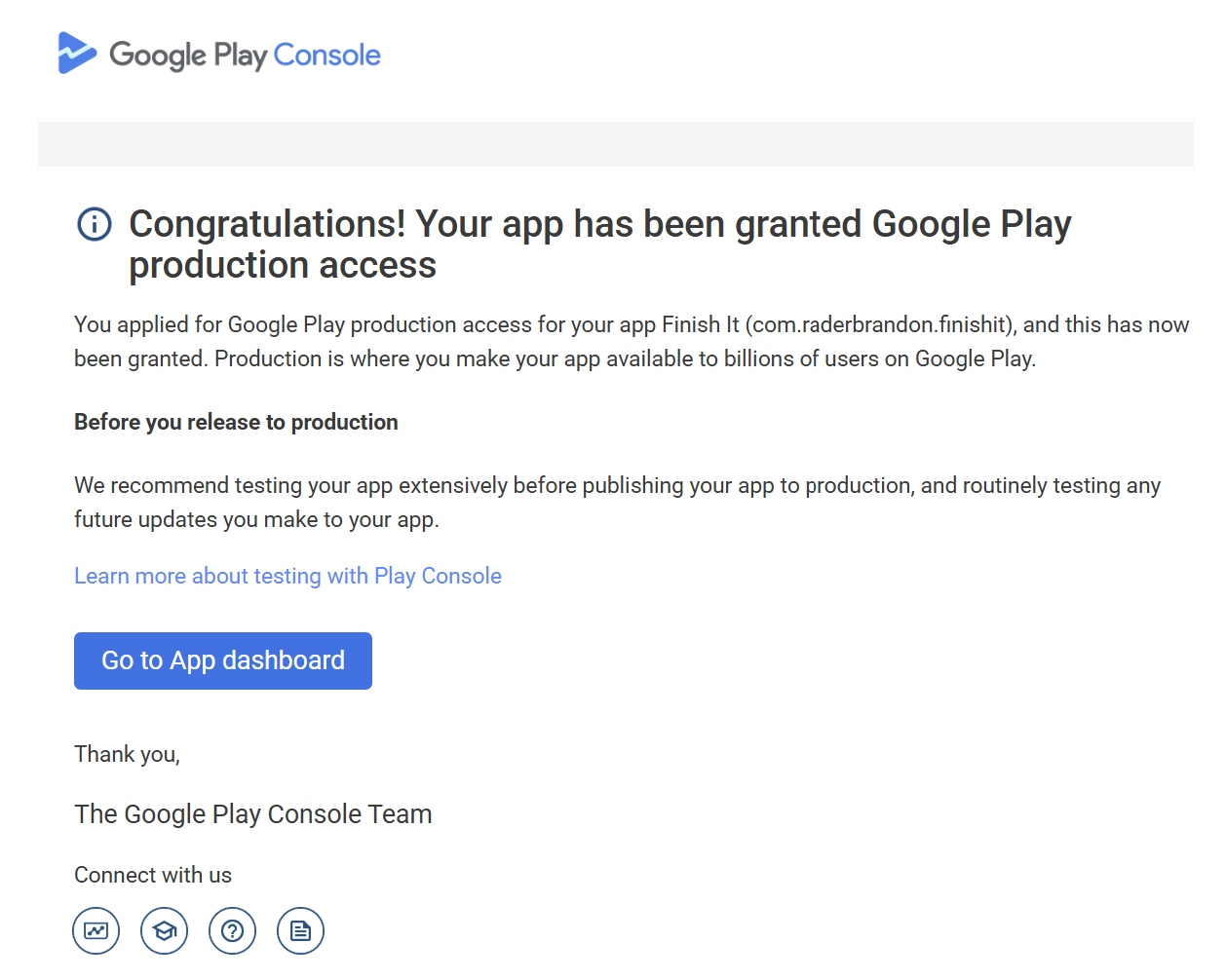
Apply for Production
Trying to rush this process or cut corners is the surest way to cause delays. By using a reliable method and following the steps, you can get through the closed testing requirement smoothly and focus on what matters most: growing your app. Don't let a simple compliance step become a months-long nightmare. Choose the safe, reliable path to get your app published.
Do I really need 12 testers? I heard the old rule was 12 or 14.
What happens if one of my testers leaves before the 14 days are up?
Do testers need to download and use my app every day?
Can I use a testing service from another country?
How does Google know if Im using bots or fake testers?
How much does a reliable testing service typically cost?
The Testing Pipeline
How we deploy real devices and guarantee compliance for your release.
Sign In
Sign in with Google to configure the closed testing environment for your Cordova build in Canada.
Opt-In URL
Submit your Google Play Console testing link, and our team will assign qualified testers from our testing network to join your Cordova closed testing release.
Testing Begins
A QA supervisor monitors daily check-ins, ensuring 12 unique Android users engage with your Cordova build every single day.
Compliance Complete
We guarantee 14 consecutive days of active user check-ins to satisfy Google's compliance policies, delivering an audit-ready PDF feedback report.
Why Developers Trust Us
Experience a next-generation testing infrastructure built for Google Play compliance for your Cordova release in Canada.
The 14-Day Production Guarantee
We complete the required 14-day closed testing process with real human testers and physical Android devices, while providing clear testing evidence and documentation throughout the process.
If Google specifically rejects production access due to insufficient testing engagement, you are covered by our free re-run or 100% refund guarantee, subject to our Refund Policy.
Verified Production Access
Quality QA Testing Reports
Clear, actionable reports with screenshots and evidence for every important issue found during testing.
Real Device Testing & Diagnostics
Real human testers use physical Android devices to test your app, verify real user flows, and provide clear testing evidence and professional QA reports.
Guaranteed App Approval
Get your Cordova build approved on the first try. We create an audit-ready compliance profile that proves thorough quality assurance.
Affordable Compliance Cycles
Transparent plans built to satisfy Google Play Console guidelines for your Cordova build.
Loading Packages
Please wait while we fetch the best options for your region...
Frequently Asked Questions
Everything you need to know about passing your closed testing requirements.