Qualified 12 Testers for Closed Testing for Android Apps
Pass Google Play closed testing compliance requirements using 12 testers to generate genuine daily activity on physical Android handsets and genuine 14-day QA activity to guarantee production access clearance.
Google Play now requires new personal developer accounts to run a closed test with at least 12 testers for 14 continuous days. This is a mandatory step before you can apply for production access and publish your app. Let's break down exactly what this means and how you can get it done without the headache.
Google play closed testing 12 testers for Finance apps projects
Google wants to improve the quality of apps on the Play Store. In the past, anyone could upload an app, and many were low-quality or even malicious. This new rule acts as a filter. It forces developers to get real feedback and prove their app is stable before it reaches a wider audience.
Think of it as a quality check. By having 12 people test your app for two weeks, you're more likely to find bugs, get suggestions, and understand how real users interact with your creation. It shows Google you're serious about your app and its users. It also helps them trust that you're not just a spammer trying to flood the store.
The Two Big Hurdles You'll Face
- Finding 12 people: This is the most obvious challenge. Where do you find 12 reliable people who are willing to download your app, use it, and keep it installed for 14 days? Friends and family can help, but coordinating 12 of them is tough.
- The 14-Day "Continuous" Rule: This is the tricky part. The testers must be opted-in for 14 straight days. If someone leaves the test on day 5, you might need to find a replacement, and it can get messy. Google tracks this activity, so you can't just have people sign up and then disappear.
Understanding the 14-Day Testing Period Rules
Google is very specific about how this test must be run. Getting it wrong means you'll have to start over. Here are the core requirements you absolutely must follow.
What "Opted-In" Really Means
A tester is considered "opted-in" when they accept your testing invitation and become part of your closed test track in the Google Play Console. This is usually done through a unique link you send them. They need to accept the invite and download the app through the Play Store. Sideloading the APK doesn't count.
The "Continuous" Part is Key
The 14-day clock starts ticking for your app, not for each individual tester. However, you need to maintain a group of at least 12 testers who are opted-in for that entire 14-day period. Google's system checks this. While a tester joining late or leaving early might not immediately reset the clock, having a consistent group of 12+ is the safest way to ensure you meet the requirement. Your goal is to have at least 12 people in the tester list for 14 consecutive days.
What Do Testers Need to Do?
Google doesn't publicly state that testers need to open the app every single day. The main requirement is that they remain opted-in to the test. However, it's good practice to encourage them to use the app. This provides you with valuable feedback and crash reports. More importantly, it shows Google that this is a legitimate test with active participants, not just a list of names. To be safe, ask your testers to open and use the app at least a few times during the 14 days.
How to Get Your 12 testers: The Options
You have a few paths you can take to gather your testing team. Each has its pros and cons, and one is definitely riskier than the others.
Phase 1: Preparing Your App for Testing
Phase 2: Executing the 14-Day Test
Option 1: Find Testers Yourself (The Hard Way)
You can try to rally support from friends, family, online communities, or social media.
- Pros: It's free. You get feedback from people you might know and trust.
- Cons: It's incredibly time-consuming. It's hard to find 12 reliable people. Friends and family might not give honest, critical feedback. People from online forums might lose interest and drop out, forcing you to find replacements. Managing 12 people, answering their questions, and making sure they stay opted-in is a full-time job.
Option 2: Use Fiverr Bots or Shady Services (The Risky Way)
Some sellers on platforms like Fiverr offer 12 'testers' for a very low price. Be careful.
- Pros: It seems cheap and fast.
- Cons: These are almost always bots or virtual devices, not real people. Google's systems are smart and can easily detect this kind of activity. Using bots can get your app flagged and your developer account suspended. You get zero real feedback, defeating the purpose of the test. It's a huge risk that can end your app's journey before it even begins.
Option 3: Use a Professional Service (The Smart Way)
Companies like AppConsoleLab specialize in providing real, verified testers for this exact purpose.
- Pros: It's fast and guaranteed. You get 12+ real people on real devices who know what to do. The service manages the entire process, ensuring everyone stays opted-in for the full 14 days. You save a massive amount of time and stress. This is the safest and most reliable way to meet Google's requirement.
- Cons: It costs money. But when you compare the cost to the time you save and the risk you avoid, it's a small price to pay for peace of mind and a successful launch.
For a detailed breakdown of different providers, check out our guide on the Best Google Play Closed Testing Services Compared (2026).
Comparison: DIY vs. Bots vs. Professional Service
Let's put these options side-by-side to make the choice clear.
| Feature | AppConsoleLab's Service | Finding Testers Yourself | Fiverr Bots |
|---|---|---|---|
| Tester Quality | Real, verified people on unique devices | Mixed bag; friends, family, strangers | Bots, emulators, or single-user farms |
| Reliability | Guaranteed to meet the 14-day rule | Low; testers often drop out | Very low; high risk of detection |
| Time & Effort | Minimal; we handle everything | Extremely high; a lot of management | Low effort, but high-risk monitoring |
| Risk of Suspension | Zero risk | Low risk | Extremely high risk |
| Real Feedback | Yes, you get genuine user feedback | Yes, but might not be objective | None whatsoever |
| Cost | Fixed, transparent price | Free (but costs you a lot of time) | Cheap (but could cost you your account) |
| Peace of Mind | Complete; it just works | None; constant worry and follow-up | High anxiety; waiting to get caught |
Struggling with the 14-Day Testing Requirement?
Skip the hassle of recruiting unreliable testers. Our professional fleet of real Android devices guarantees Google Play compliance in exactly 14 days. Zero bots. Zero emulators. 100% production approval guarantee.
The Step-by-Step Process for a Successful Closed Test
Whether you use a service or do it yourself, the technical steps in the Google Play Console are the same. Here’s a simple roadmap to guide you.
Prepare Your App
Set Up Closed Testing
Create Your Tester List
Share the Opt-In Link
Monitor for 14 Days
Apply for Production
The Difference Between Active Testing and Just Being on a List
It's important to understand what Google is looking for. They don't just want a list of 12 emails. They want a genuine test.
Passive Testers
Active Testers
Getting active testers is the goal. It satisfies Google's requirements more robustly and, more importantly, it helps you build a better app. When you use a managed service, you're getting people who understand their role is to actively test, not just fill a spot on a list. This makes your test more legitimate and valuable.
Don't let this 12-tester requirement stop you from launching your app. It might seem like a big hurdle, but with the right approach, it's just a simple step on your path to publishing. By understanding the rules and choosing the right method to find testers, you can pass this requirement smoothly and confidently move toward your launch.
What happens if one of my 12 testers leaves the test early?
Do the testers need to be from different countries?
Can I use the same 12 testers for my next app?
How does Google know if the testers are real?
Do I have to pay the testers?
Can I update my app during the 14-day testing period?
The Testing Pipeline
A straightforward 4-step process to get your Android app approved.
Sign In
Connect your Google account and choose your preferred closed testing package for your Android app.
Opt-In URL
Share your Play Store opt-in URL. We immediately deploy 12 real testers to launch and review your Android app daily.
Testing Begins
Our crew initiates daily launch sessions on physical devices, verifying usability and logging crashes for your Android app.
Compliance Complete
We continuously perform closed app testing for 14 days to help you meet Google Play production requirements. We also provide a compliance report.
Why Developers Trust Us
Deploy your Android app onto real retail-grade handsets using our secure laboratory environment.
The 14-Day Production Guarantee
We complete the required 14-day closed testing process with real human testers and physical Android devices, while providing clear testing evidence and documentation throughout the process.
If Google specifically rejects production access due to insufficient testing engagement, you are covered by our free re-run or 100% refund guarantee, subject to our Refund Policy.
Verified Production Access
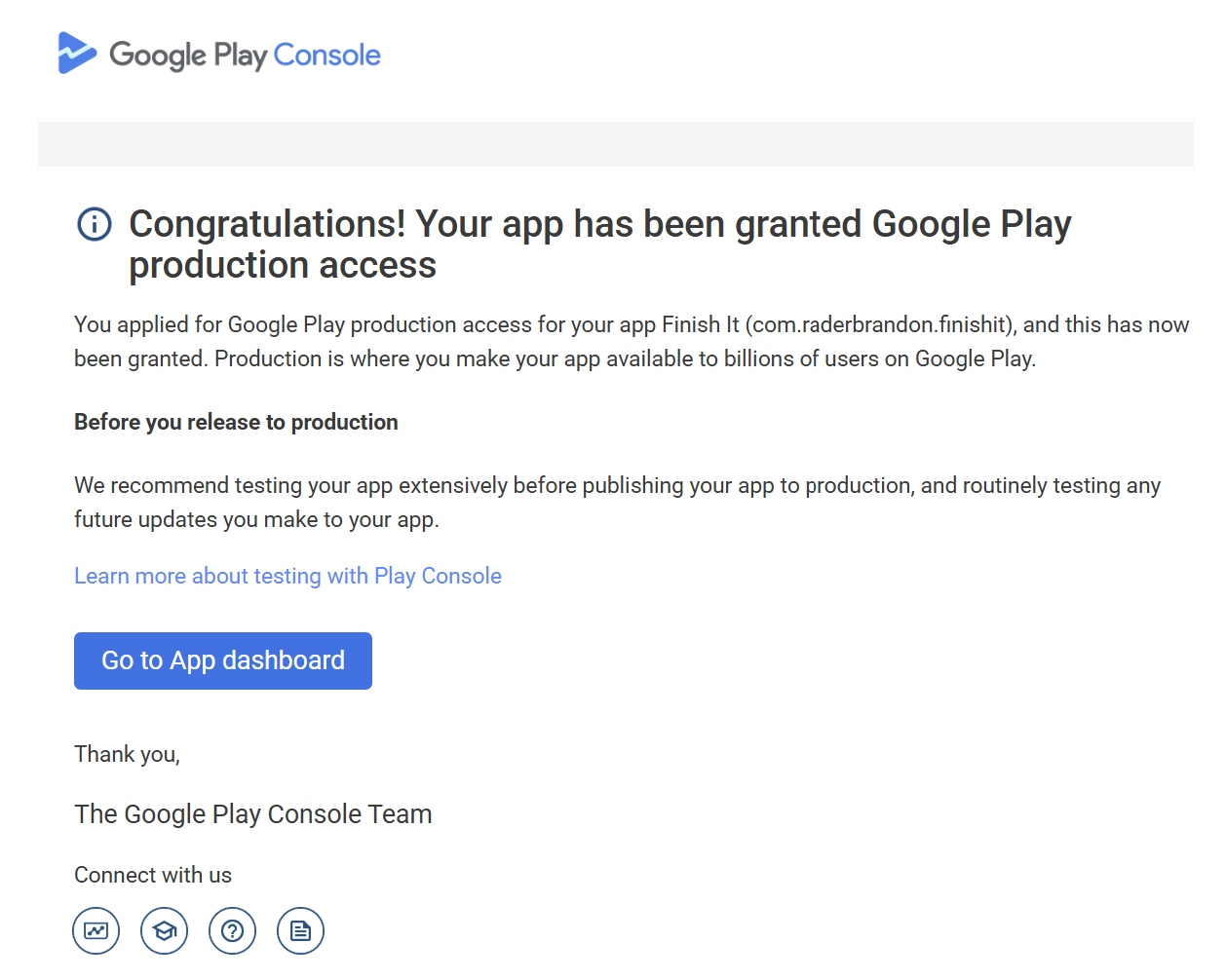
Quality QA Testing Reports
Clear, actionable reports with screenshots and evidence for every important issue found during testing.
Real Device Testing & Diagnostics
Real human testers use physical Android devices to test your app, verify real user flows, and provide clear testing evidence and professional QA reports.
Guaranteed App Approval
Transition your Android app to public production access with confidence. We deliver verified session logs and compliant Console activity.
One Cycle. Complete Approval.
Choose the ideal closed testing cycle for your Android release.
Loading Packages
Please wait while we fetch the best options for your region...
Frequently Asked Questions
Everything you need to know about passing your closed testing requirements.