Reliable 12 Testers for Closed Testing in the UK
Meet Play Console closed testing eligibility for your Native Android app in the UK with 12 verified testers performing active daily interactions on real Android hardware and verified 14 day engagement for production access approval.
Closed testing services for Native Android apps
Google Play requires new personal developer accounts to run a closed test with 12 testers for 14 continuous days before they can publish an app. This rule is a major hurdle for many developers. While you might be searching for "12 testers," the requirement was updated. You now need a solid group of 12 people who will opt-in and stay active for two full weeks.
This isn't just about finding people. It's about finding reliable people who will follow through. If they drop out, your 14-day clock can reset, causing massive delays. This guide breaks down exactly how to meet this requirement without losing your mind, wasting time, or risking your developer account.
Why Is This 14-Day Test So Difficult?
On the surface, it sounds simple. Just get 12 people to test your app. But the reality is much more complicated. Google has specific, unwritten rules about how this test must be conducted, and failure to comply means you can't apply for production access.
The 12 testers, 14 Days Rule in Detail
Let's get specific. To satisfy Google, you need:
- 12 testers Minimum: You must have at least 12 unique Google accounts opt-in to your closed test.
- 14 Continuous Days: These 12 testers must remain opted-in for 14 days in a row. The clock starts when the 12th tester joins. If anyone leaves before the 14 days are up and your count drops to 19, the clock stops. You'll have to find a new tester, and the 14-day timer will restart from day 1.
- Real People, Real Devices: Google's systems are smart. They can detect if you are using bots, virtual machines, or low-quality "tester farms." Using these can get your app rejected or, in worse cases, your entire developer account terminated.
This process is a huge time sink. You have to find people, invite them, explain the process, make sure they accept the invite, and then constantly check that they haven't left the test. For an indie developer, this is a full-time job on its own.
The Problem with Using Friends and Family
Your first thought might be to ask friends and family. It's a good idea in theory, but it rarely works out.
- They Forget: Life gets in the way. They might agree to help but forget to click the opt-in link. Or they might join but then leave the test a few days later without telling you, resetting your progress.
- Technical Hurdles: Not everyone is tech-savvy. You might spend hours walking your aunt through the process of accepting a test invitation, only for her to get confused.
- It's Awkward: Constantly nagging your friends to stay in a test for two weeks is uncomfortable. It can strain relationships, and you feel bad for asking.
You need a solution that is dependable and doesn't rely on favors from people who aren't invested in your app's success.
The Best Solution: A Managed Closed Testing Service
Instead of struggling to find testers on your own, you can use a professional service. A managed closed testing service provides a pool of real, verified testers who understand the 14-day requirement. They handle the entire process for you.
A good service guarantees that 12 testers will join your app's test and remain opted-in for the full 14 days. They manage the invites, track the testers, and replace anyone who might drop out, ensuring your 14-day clock never resets. This removes all the stress and uncertainty from the process, letting you focus on what you do best: building your app.
Here's a quick comparison of your options.
| Feature | AppConsoleLab's Service | Finding Testers Yourself | Fiverr Bots |
|---|---|---|---|
| Reliability | Guaranteed: 12 testers stay for 14 days. | Low: People forget or leave. | Very Low: Often flagged by Google. |
| Time Investment | Minimal: 5-10 minutes to set up. | High: Days or weeks of management. | Moderate: Risky and requires setup. |
| Risk of Account Ban | Extremely Low: Uses real people and devices. | Low: No risk if they are real friends. | Extremely High: A common reason for account termination. |
| Process Management | Fully Managed: We handle invites & replacements. | Fully Manual: You do everything. | Self-Managed: You send invites to bots. |
| Cost | Fixed Price: One-time payment for a guaranteed result. | Free (in money): Costs a lot of your time. | Cheap: You get what you pay for (a potential ban). |
| Success Rate | ~99% | ~12% | <0% |
As you can see, a managed service is the most efficient and safest path to getting your app published. While you might be tempted by cheap gigs on Fiverr, these almost always use bots that will get your app flagged by Google's review team. It's simply not worth the risk.
Phase 1: Preparing Your App for Testing
Phase 2: Executing the 14-Day Test Period
Struggling with the 14-Day Testing Requirement?
Skip the hassle of recruiting unreliable testers. Our professional fleet of real Android devices guarantees Google Play compliance in exactly 14 days. Zero bots. Zero emulators. 100% production approval guarantee.
A Step-by-Step Guide to a Flawless Closed Test
Navigating the Google Play Console can be confusing. Let's walk through the exact process from start to finish. Following these steps will ensure your test runs smoothly and you meet Google's requirements without any hitches. This is the timeline we use to help hundreds of developers get their apps live.
Finalize Your App Build
Configure Your Play Console
Onboard Your Testers
Start the 14-Day Clock
Monitor Progress Daily
Apply for Production
Understanding the Difference: Real vs. Fake Testers
It's easy to get tricked by services offering 'fast' or 'cheap' testers. But the quality of your testers is the single most important factor for passing Google's review. Let's break down the difference.
Real, Managed Testers
Opt-in Only Bots
What Happens After the 14 Days Are Over?
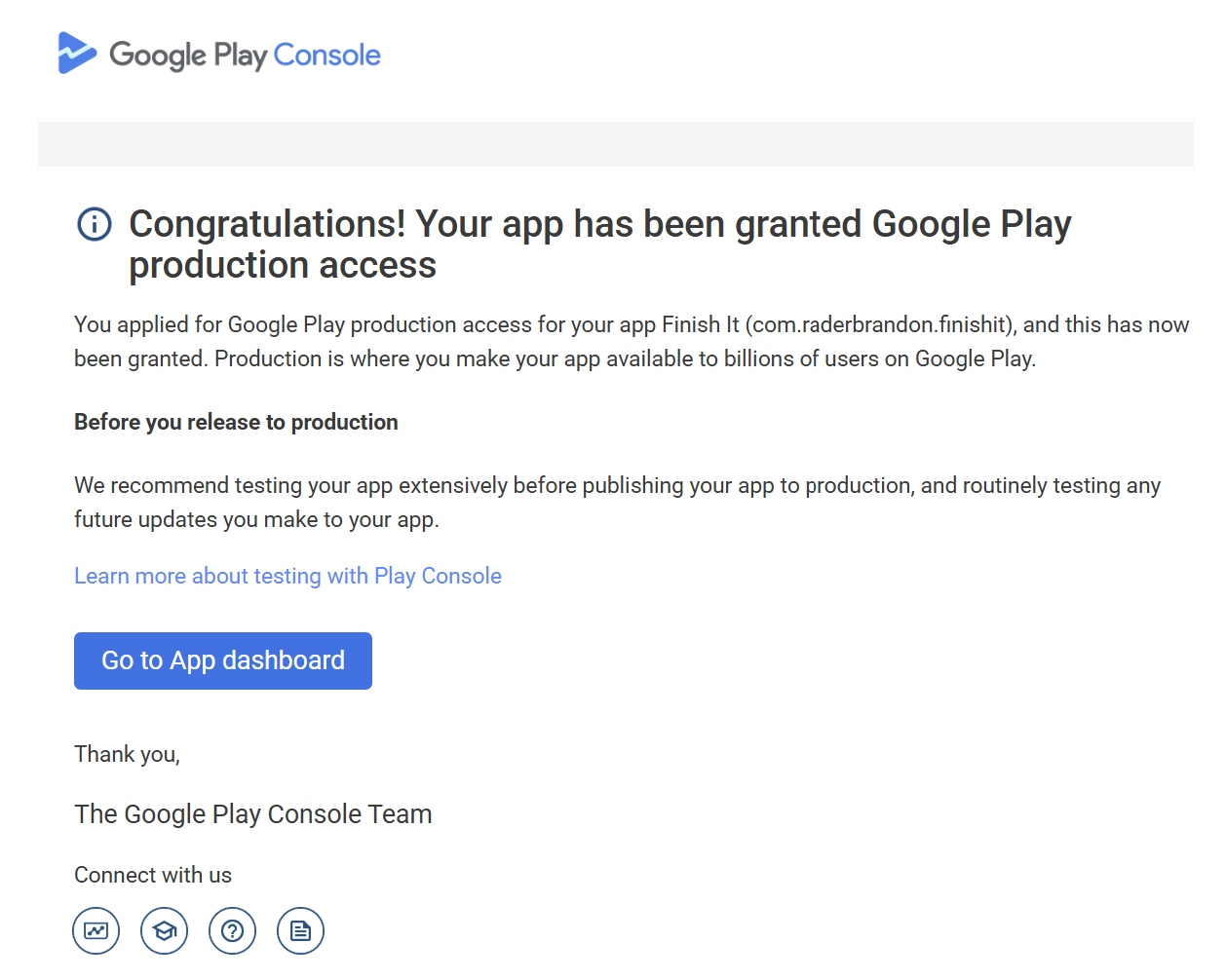
After 14 continuous days with 12 active testers, the requirement is met. In your Google Play Console, you'll see a notification on your dashboard, often under the 'Release your app' section. It will indicate that you can now apply for production access.
The message usually says something like: 'You're now eligible to apply for production access. Before you can publish your app on Google Play, we need to verify your developer account and app.'
At this point, you can promote your build from the closed testing track to the production track and submit it for review. Because you've completed the testing requirement properly, the review process is typically much smoother.
If you're unsure where to find a trustworthy service, it's a good idea to research your options. There are several providers out there, each with different strengths. For a detailed breakdown, check out our comparison of the Best Google Play Closed Testing Services Compared (2026). Making an informed choice here can save you weeks of delays and a lot of headaches. Don't let the 12-tester rule stop you from launching your app. With the right approach, it's just a small, manageable step on your journey to success.
Why do people search for 12 testers if the rule is 12?
Can I use testers from different countries?
What if a tester leaves during the 14-day period?
Do the testers actually need to use my app every day?
How much does a reliable closed testing service cost?
How long does the whole process take, from start to finish?
How We Deliver 12 Testers
How we deploy real devices and guarantee compliance for your release.
Connect Account
Sign in with Google to configure the closed testing environment for your Native Android build in the UK.
Assign Testers
Submit your Google Play Console testing link, and our team will assign qualified testers from our testing network to join your Native Android closed testing release.
Daily QA Runs
A QA supervisor monitors daily check-ins, ensuring 12 unique Android users engage with your Native Android build every single day.
Launch Ready
We guarantee 14 consecutive days of active user check-ins to satisfy Google's compliance policies, delivering an audit-ready PDF feedback report.
Our Testing Infrastructure
Experience a next-generation testing infrastructure built for Google Play compliance for your Native Android release in the UK.
The 14-Day Production Guarantee
We complete the required 14-day closed testing process with real human testers and physical Android devices, while providing clear testing evidence and documentation throughout the process.
If Google specifically rejects production access due to insufficient testing engagement, you are covered by our free re-run or 100% refund guarantee, subject to our Refund Policy.
Verified Production Access
Quality QA Testing Reports
Clear, actionable reports with screenshots and evidence for every important issue found during testing.
Real Device Testing & Diagnostics
Real human testers use physical Android devices to test your app, verify real user flows, and provide clear testing evidence and professional QA reports.
Compliance Audit Passed
Get your Native Android build approved on the first try. We create an audit-ready compliance profile that proves thorough quality assurance.
Affordable Compliance Cycles
Transparent plans built to satisfy Google Play Console guidelines for your Native Android build.
Loading Packages
Please wait while we fetch the best options for your region...
Frequently Asked Questions
Everything you need to know about passing your closed testing requirements.