Verified 12 Testers for Closed Testing for Android Apps
Comply with Google Play Console’s closed testing approval standards with 12 verified testers performing active daily interactions on real Android hardware and verified 14 day engagement for production access approval.
Google play 12 testers requirement for VPN apps developers
If you have a new personal Google Play Developer account, you need to run a closed test before you can publish your app. The rule is simple: you must have at least 12 people opt-in to test your app, and they must stay opted-in for 14 days straight.
You might have searched for "12 testers" or "14 testers". That's a common point of confusion, maybe based on older rules or forum chatter. But as of late 2023, the official number from Google is 12 testers.
This isn't just about getting a few downloads. It’s a hard requirement. If you don't meet it, you can't apply to get your app reviewed for public release. It’s a new step in the publishing process that affects every new developer. The goal is to make sure your app is stable and ready for real users before it goes live.
Why This Rule Exists (And Why It's a Good Thing)
Google introduced this policy to improve the quality of apps on the Play Store. For years, the store was flooded with low-quality, broken, or even malicious apps. This new testing period acts as a filter. It forces developers to prove their app works and that they are serious about their project.
Think of it this way:
- It stops spam: It's much harder for spammers to launch hundreds of fake apps if each one needs 12 real testers for two weeks.
- It encourages quality: A 14-day test gives you a chance to find bugs, get feedback, and fix problems before you launch to thousands of users. A good test leads to better reviews later.
- It builds trust: When users download an app, they can have more confidence that it has been through a basic quality check.
This process helps everyone. It protects users from bad apps and helps serious developers like you stand out.
The Wrong Ways to Find Your 12 testers
Getting 12 people to commit to anything for 14 days is tough. Many developers try a few common methods that often end in frustration.
The "Friends and Family" Method
Your first thought might be to ask your friends, family, or coworkers. It seems easy enough. You send out a few messages and hope for the best.
The problem is, their lives are busy. They might agree to help but forget to opt-in. Or they might opt-in for a few days and then leave the test, breaking the "14 consecutive days" rule for that person. Then you're back to square one, awkwardly asking them to join again. Chasing people down becomes a part-time job, and it can strain relationships. It's an unreliable method that rarely works smoothly.
The "Public Forum" Gamble
The next stop is often Reddit, Facebook groups, or Discord channels. You might find "tester swap" threads where developers agree to test each other's apps.
This sounds good in theory, but it’s a huge gamble. You have no idea who these people are. Are they using real devices? Will they actually stay in the test for the full 14 days? Many will join, download the app, and leave the test a day later. Managing 12 strangers from a forum, tracking who is still active, and replacing those who drop out is a massive headache. You spend more time managing testers than working on your app.
The "Cheap Bot" Trap
Some developers turn to cheap services on sites like Fiverr that promise 12 testers for a very low price. Be extremely careful with these.
Many of these services use bots or virtual machines, not real phones. Google's systems are very good at detecting this kind of activity. If they find you are using fake testers to game the system, they can suspend your app or even terminate your entire developer account. The low price isn't worth the risk of losing everything you've worked on.
Choosing Your Path: A Head-to-Head Comparison
When you're deciding how to get your testers, you have three main choices. Each has its own benefits and serious drawbacks.
| Feature | AppConsoleLab's Service | Finding Testers Yourself (DIY) | Fiverr Bots |
|---|---|---|---|
| Reliability | Very High. Guaranteed 12+ testers stay for the full 14 days. | Very Low. People drop out constantly. | Low. Often use fake accounts that get flagged. |
| Risk Level | Extremely Low. Uses real people on real devices. | Low. No risk of suspension, just failure. | Extremely High. High chance of app/account suspension. |
| Time & Effort | Minimal. Takes about 5 minutes to set up. | Huge. Many hours spent finding and managing people. | Low. Quick to order, but you deal with the fallout. |
| Success Rate | 99.9% | Less than 10% | Varies. Even if it "works," it's a huge risk. |
| Cost | Fixed Price. A clear investment for a guaranteed result. | Free (in money). Very expensive in time and stress. | Cheap. You get what you pay for: risk and bots. |
| Peace of Mind | Total. The process is managed for you. | None. Constant worry about testers dropping out. | None. Constant worry about getting caught by Google. |
Struggling with the 14-Day Testing Requirement?
Skip the hassle of recruiting unreliable testers. Our professional fleet of real Android devices guarantees Google Play compliance in exactly 14 days. Zero bots. Zero emulators. 100% production approval guarantee.
The Smart Way: Using a Verified Closed Testing Service
The most efficient and stress-free way to meet the 12-tester requirement is to use a professional service built for this exact purpose. Companies that specialize in closed testing take the entire burden off your shoulders.
Instead of you hunting for testers, these services maintain a large, managed community of real people who are ready to test apps. They understand Google's rules inside and out.
Here's how it generally works:
- You provide the opt-in link for your closed test.
- The service distributes this link to their network of verified testers.
- They ensure that at least 12 people join and, more importantly, remain opted-in for the entire 14-day period.
- They handle replacing any testers who might drop off for any reason, so your test is never interrupted.
This approach saves you an incredible amount of time and anxiety. You can focus on improving your app based on real feedback instead of worrying about tester logistics. For a clear breakdown of reliable options, check out this guide on the Best Google Play Closed Testing Services Compared (2026).
Your Step-by-Step Guide to a Successful Closed Test
Using a service makes the process straightforward. Here is what your journey looks like from start to finish.
Prepare Your App
Create a Tester List
Submit Your App to a Service
Testers Opt-In
The 14-Day Wait
Apply for Production
Active Testing vs. Continuous Opt-in: What Really Matters?
There's a lot of confusion about what testers actually need to do during the 14-day period. Do they need to open the app every day? Do they need to submit feedback? Let's clear that up.
Continuous Opt-in (What Google Requires)
Active Usage (A Bonus, Not a Requirement)
Your Pre-Flight Checklist for Closed Testing
Before you even start looking for testers, make sure you have everything in order. A little preparation can prevent major delays.
Phase 1: App & Console Setup
Phase 2: Final Checks & Readiness
How to Monitor Your Progress
You don’t have to guess if your test is working. The Google Play Console gives you the information you need, but it can be a little hard to find.
Once your testers start joining, you can track their status. Go to your Dashboard in the Google Play Console. Here, you'll see a section for the new developer requirements. It will show you a count like 'X of 12 testers have been opted-in continuously.'
This number will build over the first day or two as testers join. Then, you need to watch it for 14 days. If the number ever drops, a good testing service will automatically replace the tester to get you back on track. For a detailed walkthrough with screenshots, you can read this guide on How to Check Whether Your 14-Day Testing Requirement Is Complete.
What Happens After 14 Days?
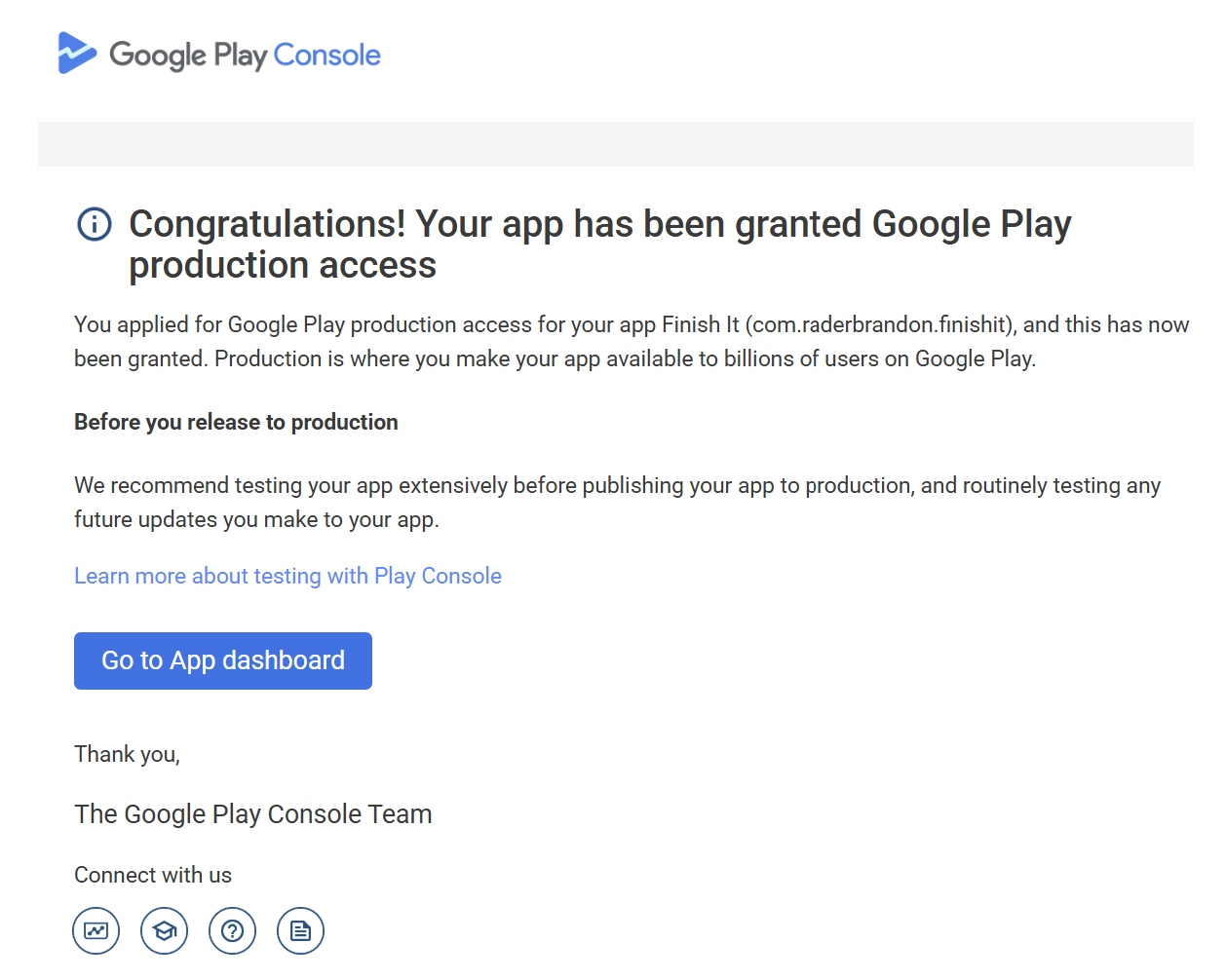
Once you have successfully had 12+ testers opted-in for 14 straight days, the magic happens. A new section will appear on your Play Console Dashboard. It will say that you have met the testing requirements and will present a button to 'Apply for production'.
When you click this, you are officially asking Google to review your app for release on the Play Store. This is a separate review process that can take several days. They will check your app against their policies. If everything is in order, your app will be approved, and you can finally hit that 'Publish' button and go live to the world.
What happens if a tester opts out before the 14 days are over?
If a tester leaves the test early, the 14-day clock for that specific tester resets. You will need to find a new tester to take their place. This is the main reason the DIY method is so difficult. A professional testing service will automatically manage this and replace any dropouts to ensure your test completes on time.
Is the 14-day period for each tester individual, or does it start for everyone at once?
The 14-day clock is individual for each tester and starts the moment they opt-in. However, the final requirement is met when at least 12 testers have all completed their 14 consecutive days. Most testing services onboard all 12 testers within a 24-48 hour window, so their clocks are all running roughly in parallel.
Do I need to provide feedback or crash reports to Google during the test?
No, you do not need to submit any specific reports to Google. The system automatically tracks the opt-in status of your testers. While collecting feedback and fixing bugs is highly recommended for improving your app, it is not a formal part of meeting the 12-tester, 14-day requirement.
Can I update my app with new versions during the 14-day test?
Yes, you can and you should! You are allowed to push new updates to your closed testing track at any time during the 14-day period. This is a great opportunity to fix bugs that your initial testers might have found. It does not reset the 14-day clock.
Does Google check the location or device quality of the testers?
Google's main check is for real, unique Google accounts on real Android devices. They are very good at flagging bots, emulators, or accounts that show suspicious behavior. The geographic location of testers does not seem to be a factor. The key is that they are genuine users.
Why does the keyword say 12 testers if the requirement is 12?
This is a common point of confusion. The official requirement from Google for new personal developer accounts is 12 testers. The search term '12 testers" likely comes from outdated information, forum rumors, or a misunderstanding of the policy. Always refer to the latest guidelines in your Google Play Console, which clearly state the 12-tester rule.
How We Deliver 12 Testers
Your journey to Google Play production access, simplified and automated.
Connect Account
Authenticate your account to initialize the 14-day QA fleet for your Android release.
Assign Testers
Upload your testing link. We assign 12 verified users with real Android devices to download and test your Android release.
Daily QA Runs
A dedicated testing supervisor is assigned to monitor progress while testers engage with your Android app and provide feedback throughout the testing period.
Launch Ready
Our lab maintains active installations for two weeks straight, ensuring a clean track record and providing a QA compliance log for your release.
Our Testing Infrastructure
Satisfy your Play Store Console testing obligations with our managed physical device fleet tailored for Android builds.
The 14-Day Production Guarantee
We complete the required 14-day closed testing process with real human testers and physical Android devices, while providing clear testing evidence and documentation throughout the process.
If Google specifically rejects production access due to insufficient testing engagement, you are covered by our free re-run or 100% refund guarantee, subject to our Refund Policy.
Verified Production Access
Quality QA Testing Reports
Clear, actionable reports with screenshots and evidence for every important issue found during testing.
Real Device Testing & Diagnostics
Real human testers use physical Android devices to test your app, verify real user flows, and provide clear testing evidence and professional QA reports.
Compliance Audit Passed
Our structured 14-day closed testing process is designed to meet Google Play's production requirements for your Android release.
Simple Closed Testing Pricing
Select the plan that fits your Android VPN app complexity.
Loading Packages
Please wait while we fetch the best options for your region...
Frequently Asked Questions
Everything you need to know about passing your closed testing requirements.