Trusted 12 Testers for Google Play in Canada
Meet Play Console closed testing production requirements for your Capacitor app in Canada with 12 verified testers performing active daily interactions on real Android hardware and verified 14 day engagement for production access approval.
Closed testing services for Capacitor apps
Google Play's new policy for personal developer accounts requires a closed test with at least 12 testers who are opted-in for 14 straight days before you can publish your app. This rule is a major hurdle for new developers. It's designed to improve app quality on the Play Store, but it creates a lot of work for you. The solution is to understand the requirement fully and find a reliable way to meet it without wasting time.
This guide breaks down exactly what you need to do, your options for finding testers, and how to avoid common pitfalls that keep your app stuck in review.
Why Google's 12 Tester, 14-Day Rule Exists
Google introduced this policy to cut down on the number of low-quality, spammy, or malicious apps. By forcing a testing period with real people, they want to ensure that developers are serious about their apps and that the apps themselves have been seen by human eyes before going live. It's a quality control measure for the entire Android ecosystem.
The 12-Tester Hurdle
Finding 12 people to test your app sounds simple at first. You might think of asking friends, family, or posting on social media. But it gets complicated fast. People are busy. They might agree to help but forget to opt-in. They might download the app once and then ignore it. Managing 12 individuals, chasing them to join the test, and making sure they stay in is a huge time-drain that takes you away from what you should be doing: building your app.
The 14-Day Continuous Testing Challenge
The most difficult part of this rule is the "14 continuous days" requirement. This means you must have at least 12 testers opted-in to your closed test for the entire two-week period without interruption.
If your tester count drops to 19 on day 12, the clock might reset, or you'll have to scramble to find a new person immediately. This is where most developers get stuck. A friend who decides they don't want to be a tester anymore can delay your launch by weeks. It's a fragile process that is hard to manage on your own.
Your Options for Finding 12 testers
You have three main paths to find your group of 12 testers. Each comes with its own set of benefits and risks.
- The DIY Method: You can try to recruit testers yourself from your personal network or online communities like Reddit or Facebook groups.
- Cheap Gig Sites: You can hire people from platforms like Fiverr who offer app testing services for very low prices.
- Professional Testing Services: You can use a dedicated service, like AppConsoleLab, that specializes in providing real, reliable testers to meet Google's requirement.
Let's compare these options side-by-side.
| Feature | AppConsoleLab's Service | Finding Testers Yourself | Fiverr Bots |
|---|---|---|---|
| Tester Quality | Verified, real Android users | Mixed bag; friends & family | Mostly bots or fake accounts |
| Reliability (14-Day Opt-in) | Guaranteed to stay for 14+ days | Very low; people drop out | Extremely low; opt-out in hours |
| Time Investment | Low; set it and forget it | Very high; constant management | Medium; you still have to manage gigs |
| Risk of Google Rejection | Extremely low | Medium; depends on your group | Very high; Google can detect bots |
| Cost | Fixed, upfront price | Free (but costs you time) | Appears cheap, but risky |
| Management Effort | None; it's all handled for you | High; you are the project manager | High; dealing with unreliable sellers |
As you can see, while the DIY approach is free, it costs you a lot in time and stress. The risk with cheap gig sites is even greater, as using bots can get your developer account flagged, putting your future apps at risk. A professional service is a predictable, safe, and efficient investment to get your app published.
Getting Your Test Ready: A Quick Checklist
Before you invite a single tester, you need to have your Google Play Console set up correctly. Follow these steps to make sure you're ready.
Phase 1: Pre-Test Setup in Google Play Console
Phase 2: Assembling Your Tester List
The Step-by-Step Path to Passing Your Test
Meeting the 14-day requirement is a clear, sequential process. Here is a timeline of what to expect from start to finish when using a reliable testing service.
App Preparation & APK Upload
Configure Closed Test
Onboard 12+ Testers
The 14-Day Countdown
Gather Initial Feedback
Apply for Production
Knowing exactly when your test is complete can be confusing. For a detailed walkthrough, check our guide on How to Check Whether Your 14-Day Testing Requirement Is Complete.
Struggling with the 14-Day Testing Requirement?
Skip the hassle of recruiting unreliable testers. Our professional fleet of real Android devices guarantees Google Play compliance in exactly 14 days. Zero bots. Zero emulators. 100% production approval guarantee.
Understanding Key Testing Concepts
It's important to know what Google is actually looking for during this process. Many developers get confused by the terminology, leading to mistakes that delay their launch.
Active Opt-In vs. Passive Install
Real Feedback vs. Just Meeting a Quota
Common Mistakes That Get Your App Stuck in Testing
Navigating the closed testing process can be tricky. Here are some of the most common errors developers make that prevent them from moving to production.
Using a Public Google Group
Some developers think they can create a public Google Group and link it to their tester list. This is a mistake. Google may interpret this as an open test, not a closed one, which does not satisfy the requirement. You must use a specific, controlled list of individual emails to ensure you are running a proper closed test.
Testers Opting Out Early
This is the number one reason for delays. If you're managing testers yourself, it's very likely that someone will lose interest, have a technical issue, or simply forget and leave the test. When your tester count dips below 12, you risk having to start the 14-day clock all over again. This is the strongest argument for using a professional service that guarantees its testers will remain opted-in for the full duration.
Not Having a Ready-to-Test App
Your app doesn't need to be 100% finished, but it must be functional. If you invite testers to an app that crashes immediately upon opening, they are likely to leave the test. Even paid testers can become frustrated with a completely broken build. Make sure your app is stable enough to be opened and explored before you start your 14-day countdown.
Misunderstanding the 'Continuous' Part
The word 'continuous' is key. It means 14 days in a row, without interruption. Having 12 testers for 5 days, then 19 testers for one day, and then 21 testers for the next 9 days does not work. You need a solid block of two weeks with at least 12 testers opted-in the entire time. Any dip below that number can jeopardize your timeline.
Choosing the Right Testing Service
If you decide that a professional testing service is the right path for you, it's important to choose a good one. Look for providers that offer a guarantee that testers will remain for the full 14 days. Check for reviews and ensure they use real users, not bots. The goal is to make your app launch smoother, not to add more risk. If you're exploring different providers, our detailed breakdown of the Best Google Play Closed Testing Services Compared (2026) can help you make an informed choice.
Passing Google's testing requirement is the final gate between you and your users. By understanding the rules, avoiding common mistakes, and using a reliable method to find testers, you can get through the process quickly and confidently, allowing you to focus on what truly matters: making your app a success.
Do the 12 testers need to download and use my app every day?
What happens if a tester leaves before the 14 days are up?
Can I use testers from any country?
Is it safe to give my app to a testing service?
How do I know for sure when the 14-day period is complete?
Will using a testing service guarantee my app gets approved?
How We Deliver 12 Testers
How we deploy real devices and guarantee compliance for your release.
Connect Account
Sign in with Google to configure the closed testing environment for your Capacitor build in Canada.
Assign Testers
Submit your Google Play Console testing link, and our team will assign qualified testers from our testing network to join your Capacitor closed testing release.
Daily QA Runs
A QA supervisor monitors daily check-ins, ensuring 12 unique Android users engage with your Capacitor build every single day.
Launch Ready
We guarantee 14 consecutive days of active user check-ins to satisfy Google's compliance policies, delivering an audit-ready PDF feedback report.
Our Testing Infrastructure
Experience a next-generation testing infrastructure built for Google Play compliance for your Capacitor release in Canada.
The 14-Day Production Guarantee
We complete the required 14-day closed testing process with real human testers and physical Android devices, while providing clear testing evidence and documentation throughout the process.
If Google specifically rejects production access due to insufficient testing engagement, you are covered by our free re-run or 100% refund guarantee, subject to our Refund Policy.
Verified Production Access
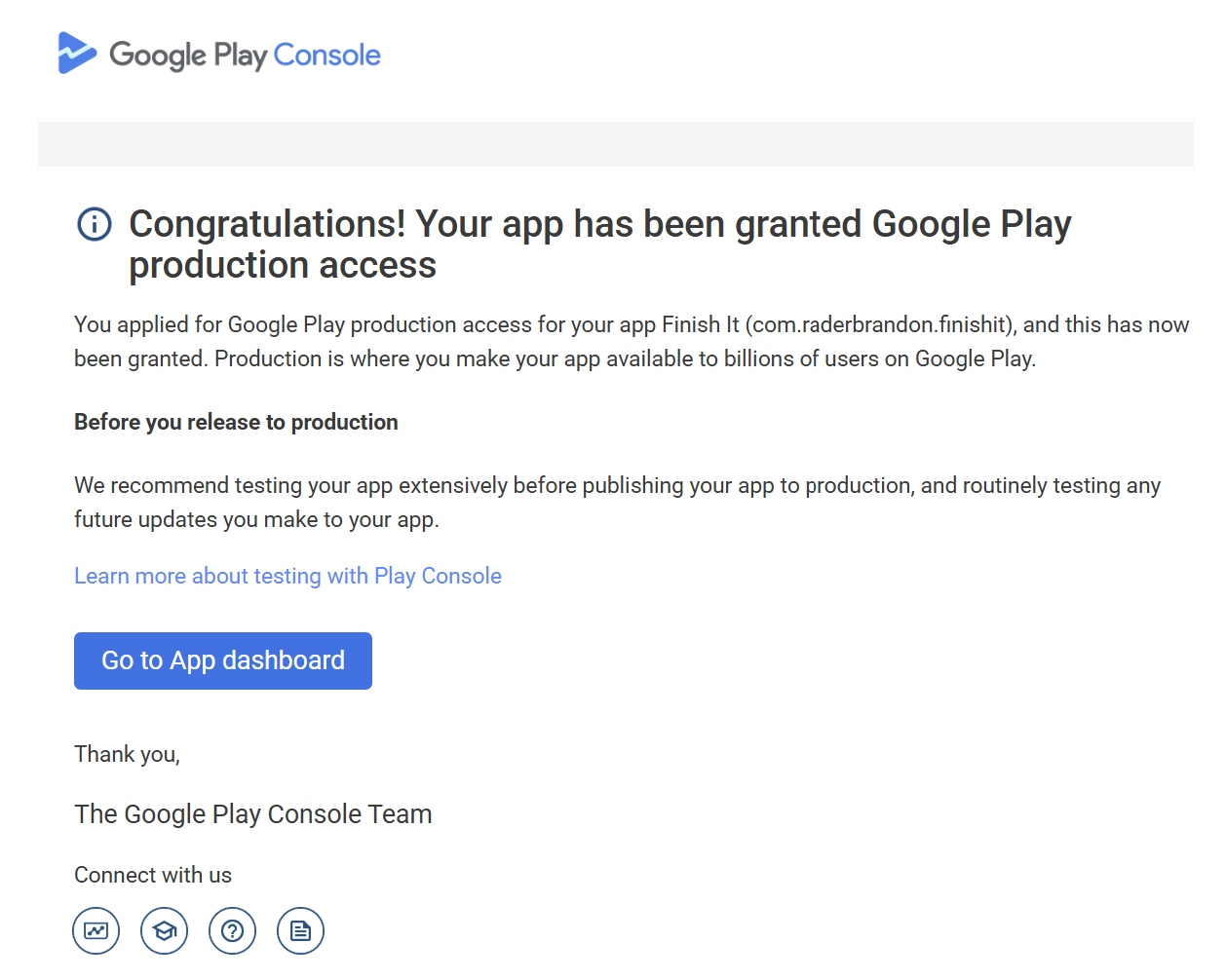
Quality QA Testing Reports
Clear, actionable reports with screenshots and evidence for every important issue found during testing.
Real Device Testing & Diagnostics
Real human testers use physical Android devices to test your app, verify real user flows, and provide clear testing evidence and professional QA reports.
Compliance Audit Passed
Get your Capacitor build approved on the first try. We create an audit-ready compliance profile that proves thorough quality assurance.
Affordable Compliance Cycles
Transparent plans built to satisfy Google Play Console guidelines for your Capacitor build.
Loading Packages
Please wait while we fetch the best options for your region...
Frequently Asked Questions
Everything you need to know about passing your closed testing requirements.