Guaranteed 12 Testers for Google Play in Australia
Fulfill Google Play Console’s closed testing rules for your Native Android app in Australia using 12 unique testers for authentic daily engagement on actual Android smartphones and authentic 14 day testing activity to secure production access approval.
12 testers google play console: How to pass with Native Android
Google now requires developers with new personal accounts to run a closed test with at least 12 testers for 14 consecutive days. This isn't just a suggestion; it's a hard requirement before you can apply for production access and publish your app. This rule is designed to stop low-quality and malicious apps from flooding the Play Store.
For you, the developer, it means you need to find a group of people who will opt-in to your test and stay opted-in for two full weeks. It sounds simple, but it can quickly become a major headache. People forget. They lose interest. They leave the test. Suddenly, your 14-day clock resets.
This guide breaks down exactly what you need to do. We'll cover the official rules, the common pitfalls, and the most reliable way to get your app tested and ready for launch. You need a solid group of testers to satisfy the requirement, and ensuring you have at least 12-15 active and engaged people is a good safety net to meet the 12-person, 14-day mandate.
Understanding the 14-Day Testing Mandate
Let's get specific about what Google expects. It’s not enough to just have 12 people say "yes." The system is automated and very strict.
Here are the core rules you must follow:
- 12 testers Minimum: You must have at least 12 individual users opt-in to your closed test.
- 14 Consecutive Days: These 12+ testers must remain opted-in for 14 days in a row. The clock starts the day the first tester joins. If the number of opted-in testers drops below 12 at any point, your 14-day counter might reset or pause, delaying your launch.
- Real Engagement: While Google doesn't specify exactly how they measure this, it's widely believed they look for signs of actual app usage. Testers should open the app, interact with it, and not just be dormant accounts. This is why using bots or fake accounts is a recipe for disaster.
- Closed Testing Track: This entire process must happen on a single Closed Testing track within your Google Play Console. You can't use the Internal Testing track for this requirement.
The biggest challenge is the "consecutive days" part. If you gather 12 friends and family, what happens when three of them forget or leave the test on day 10? Your progress is gone. You have to get your count back up to 12 and potentially start the 14-day wait all over again. This is why many developers seek a guaranteed service. It removes the uncertainty.
The Three Paths to Finding Testers
You have three main options for finding your 12 testers. Each has very different outcomes, costs, and levels of risk.
1. The DIY Method (Friends, Family, and Forums)
This is the first thing most developers try. You make a list of friends, family, and colleagues. You post on Reddit forums like r/androiddev or r/TestMyApp. You ask for help in developer communities on Discord or Slack.
The Pros:
- It's free (mostly).
- You might get some honest, direct feedback from people you trust.
The Cons:
- It's a huge time sink. You become a project manager, constantly chasing people.
- High drop-off rate. Friends are happy to help, but they aren't professional testers. They have jobs and lives. They will forget to stay opted-in.
- Awkwardness. It can be uncomfortable to keep reminding your friends and family to stay in a test they might not be interested in.
- Forum fatigue. Getting 12 reliable people from public forums is extremely difficult. Many who volunteer will flake out.
2. The Risky Gamble (Fiverr Bots and Shady Gigs)
You'll see gigs on platforms like Fiverr promising "12 Google Play testers for $50." It sounds too good to be true, and it is. These services almost always use bots or a pool of fake Google accounts.
The Pros:
- It's cheap and seems fast.
The Cons:
- High risk of account suspension. Google's algorithms are very good at detecting fraudulent activity, like dozens of accounts logging in from the same IP address or using emulators. Getting caught can lead to your app being rejected or your entire developer account being banned.
- No real testing. Bots don't use your app. They don't find bugs. They don't give feedback. They are just empty accounts designed to trick the system.
- They often fail the 14-day rule. These bot accounts are often shut down by Google partway through the test, causing your tester count to drop and resetting your clock.
3. The Professional Service (Guaranteed Testers)
The third option is to use a dedicated service that specializes in providing real, verified testers for the Google Play Console. These services maintain a community of real people who understand the 14-day requirement and are paid to see it through.
The Pros:
- Guaranteed compliance. They guarantee you will have 12+ testers who remain opted-in for the full 14 days.
- Saves you time and stress. You don't have to manage anyone. You submit your app and they handle the rest.
- Real users on real devices. This means you get genuine engagement signals and avoid any risk with Google.
- Optional feedback. Many services also offer plans where testers provide structured feedback, helping you find bugs before launch.
Comparison: Which Testing Method is Right for You?
| Feature | AppConsoleLab's Service | Finding Testers Yourself | Fiverr Bots |
|---|---|---|---|
| Tester Quality | Real people, verified devices | Mixed bag (friends, strangers) | Fake accounts, bots, emulators |
| Reliability | Guaranteed 14-day opt-in | Very low, high drop-off rate | Extremely low, accounts get banned |
| Speed | Fast setup, predictable timeline | Very slow, requires constant chasing | Looks fast, but often fails |
| Cost | Fixed, upfront price | "Free" but costs you a lot of time | Cheap, but you get what you pay for |
| Risk of Ban | Zero risk | Zero risk | Extremely high risk |
| Google Compliance | ✅ Guaranteed | ❌ Unreliable | ❌ Dangerous |
Struggling with the 14-Day Testing Requirement?
Skip the hassle of recruiting unreliable testers. Our professional fleet of real Android devices guarantees Google Play compliance in exactly 14 days. Zero bots. Zero emulators. 100% production approval guarantee.
How the Guaranteed Testing Process Works
When you use a professional service, you're not just buying testers. You're buying a managed process that ensures you meet Google's requirements without the headache. Here’s what that looks like.
Submit Your App Details
Service Pre-Checks
Testers Are Invited
The 14-Day Countdown Begins
Optional Feedback Is Gathered
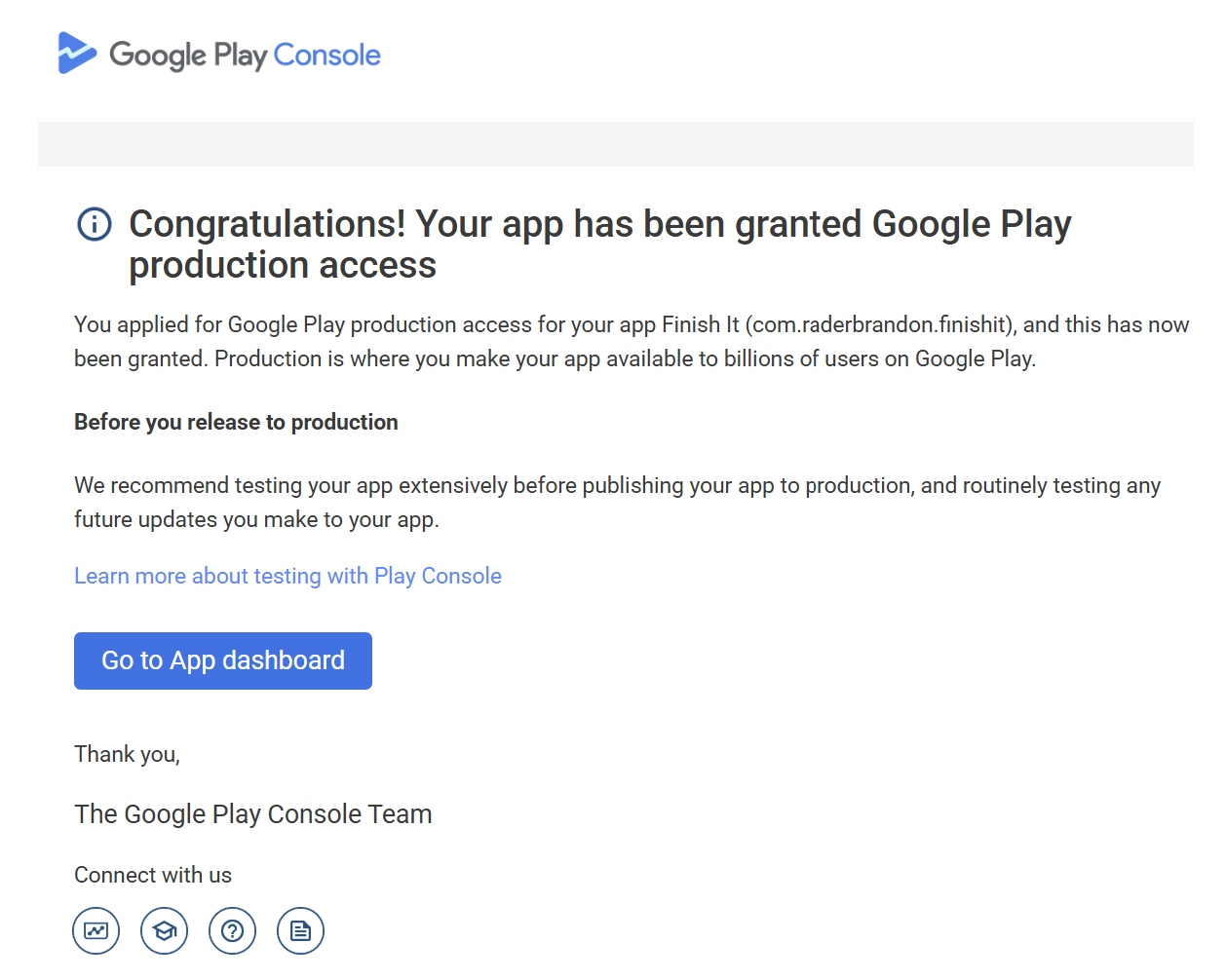
Test Completion & Approval
This managed process is the key difference. It turns a frustrating, unpredictable requirement into a simple, predictable step in your launch plan.
Compliance vs. Real-World Feedback
Meeting Google's 14-day rule is one thing. But this testing period is also your first chance to get real feedback from unbiased users. You can approach it in two different ways.
Compliance-Only Testing
Feedback-Driven Testing
Many developers start with a compliance-only service to get their first app published. Then, for future updates, they invest more in feedback-driven testing. The best approach depends on your budget, timeline, and confidence in your app. If you're looking for a service, our updated comparison of the best Google Play closed testing services compared (2026) can help you decide.
Your Final Checklist for a Successful Closed Test
Follow these steps to ensure your testing period goes smoothly from start to finish.
Phase 1: Pre-Launch Preparation
Phase 2: Executing the 14-Day Test
The new testing requirement can feel like a roadblock, but it doesn't have to be. By understanding the rules and choosing the right method, you can turn it into a straightforward part of your launch. Using a guaranteed service removes the risk and stress, letting you focus on what you do best: building a great app.
What happens if one of my 12 testers leaves on day 10?
Can I use the same 12 testers for multiple apps?
Do the testers need to be in a specific country?
Does Google check if the testers actually use the app?
Why do services offer more than 12 testers?
Can I switch from internal testing to closed testing to meet the requirement?
How It Works
Your journey to Google Play production access, simplified and automated.
Get Started
Authenticate your account to initialize the 14-day QA fleet for your Native Android release.
App Submission
Upload your testing link. We assign 12 verified users with real Android devices to download and test your Native Android release.
14-Day Cycle
A dedicated testing supervisor is assigned to monitor progress while testers engage with your Native Android app and provide feedback throughout the testing period.
Production Access Approval
Our lab maintains active installations for two weeks straight, ensuring a clean track record and providing a QA compliance log for your release.
Why Choose AppConsoleLab
Satisfy your Play Store Console testing obligations with our managed physical device fleet tailored for Native Android builds.
The 14-Day Production Guarantee
We complete the required 14-day closed testing process with real human testers and physical Android devices, while providing clear testing evidence and documentation throughout the process.
If Google specifically rejects production access due to insufficient testing engagement, you are covered by our free re-run or 100% refund guarantee, subject to our Refund Policy.
Verified Production Access
Quality QA Testing Reports
Clear, actionable reports with screenshots and evidence for every important issue found during testing.
Real Device Testing & Diagnostics
Real human testers use physical Android devices to test your app, verify real user flows, and provide clear testing evidence and professional QA reports.
Play Store Ready
Our structured 14-day closed testing process is designed to meet Google Play's production requirements for your Native Android release in Australia.
Simple Closed Testing Pricing
Select the plan that fits your Native Android app complexity.
Loading Packages
Please wait while we fetch the best options for your region...
Frequently Asked Questions
Everything you need to know about passing your closed testing requirements.