Qualified 12 Testers for Google Play for Android Apps
Pass Google Play closed testing compliance requirements using 12 unique testers for authentic daily engagement on actual Android smartphones and authentic 14 day testing activity to secure production access approval.
Closed testing google play: A complete guide for VPN apps
Google's requirement for new developer accounts is clear: you must run a closed test with at least 12 testers for 14 consecutive days before you can publish your app. This rule is a big change, but it's not impossible to overcome. This guide breaks down exactly what you need to do, why Google made this rule, and the easiest way to get it done without the headache.
Why Did Google Add This 12-Tester Rule?
Google introduced this policy to improve the quality and safety of the Play Store. In the past, anyone could create an account and publish an app almost immediately. This led to a lot of low-quality, spammy, or even harmful apps flooding the store.
By requiring a closed test, Google is essentially creating a quality checkpoint. It ensures that:
- Developers are serious: Committing to a two-week test shows you're invested in your app.
- Apps get real-world feedback: Testing with real people on real devices helps you find bugs and usability issues before you launch to millions of users.
- It filters out bad actors: Scammers and malware creators are less likely to go through this detailed process.
Think of it as a pre-flight check. It’s an extra step, but it makes the entire ecosystem safer and more reliable for both users and legitimate developers like you.
The Exact Rules for Google Play's 14-Day Test
Getting this wrong can delay your launch for weeks. It's important to understand the specific requirements. Google is very particular about how this test is run.
Here’s what you absolutely must do:
- Get 12 Testers (Minimum): You need at least 12 individual people. We recommend getting a few extra, maybe 15, just in case someone drops out.
- They Must Opt-In: This is the most common point of failure. Simply adding 12 email addresses to a list does nothing. Each person must receive your testing link, click on it, and formally agree to become a tester. Only after they opt-in does Google count them.
- Test for 14 Continuous Days: The 14-day clock starts after you have enough testers who have opted in. They must remain opted-in for the entire 14-day period. If too many people leave and you drop below the minimum number of testers, your clock might reset.
- Use Real People and Devices: Google's systems are smart. Using bots, virtual machines, or fake accounts is a fast way to get your app rejected and your developer account flagged or even terminated. The testers must be genuine.
Phase 1: Setting Up Your Closed Test
Phase 2: Managing the 14-Day Period
The Hard Part: Finding 12 Qualified Testers
This is where most developers get stuck. It sounds easy to find 12 people, but in reality, it's a huge challenge.
The Friends and Family Method
You start by asking friends, family, and coworkers. They all say 'yes,' but then life gets in the way.
- They forget to click the opt-in link.
- They use the wrong email address.
- They don't understand the 14-day rule and leave the test early.
- It becomes awkward to constantly remind them.
You end up spending more time managing people than working on your app.
The Social Media Method
Next, you try posting on Reddit, Facebook groups, or developer forums. This is a mixed bag. You might find a few good people, but you'll also deal with:
- Time Wasters: People who promise to test but disappear after you send the link.
- Scammers: People who demand payment or try to get free access to your app's features.
- Low-Quality Feedback: The feedback you get is often unhelpful, like 'it's good' or 'it crashed.'
This approach is unreliable and can waste a lot of your valuable development time.
Comparing Your Options for Getting 12 Testers
You have three main paths. One is reliable, one is difficult, and one is dangerous. Let's compare them.
| Feature | AppConsoleLab's Service | Finding Testers Yourself | Fiverr / Shady Bots |
|---|---|---|---|
| Reliability | Very High | Low | Very Low |
| Google Compliance | 100% Guaranteed | High (if done right) | Extremely Risky |
| Speed | Fast (24-48 hours) | Slow (Days or Weeks) | Fast (but dangerous) |
| Effort Required | Minimal | Very High | Low |
| Tester Quality | Vetted & Trained | Inconsistent | Bots or Fake Accounts |
| Risk of Ban | Zero | Low | Very High |
| Cost | Fixed, affordable price | 'Free' (but costs time) | Cheap (but can cost you your account) |
As you can see, managing the process yourself is a huge time sink with no guarantee of success. And using cheap bot services from places like Fiverr is the fastest way to get your developer account terminated before you even launch. Using a professional service like AppConsoleLab is the most efficient and safest way to meet Google's requirements. If you're exploring options, our guide on the Best Google Play Closed Testing Services Compared (2026) offers a detailed breakdown.
Struggling with the 14-Day Testing Requirement?
Skip the hassle of recruiting unreliable testers. Our professional fleet of real Android devices guarantees Google Play compliance in exactly 14 days. Zero bots. Zero emulators. 100% production approval guarantee.
Step-by-Step: The Full Timeline to Get Published
Meeting the testing requirement is a multi-step process. Here is a clear timeline of what to expect, from preparing your app to finally applying for production.
Prepare Your App
Configure Closed Test
Onboard Your 12+ Testers
Start the 14-Day Test
Gather Feedback & Iterate
Apply for Production Access
Understanding the Two Biggest Sticking Points
Most developers get tripped up by two simple-sounding terms: 'opt-in' and 'continuous.' Understanding the difference is everything.
What Opt-In Actually Means
What Continuous Testing Means
What Happens After the 14 Days Are Over?
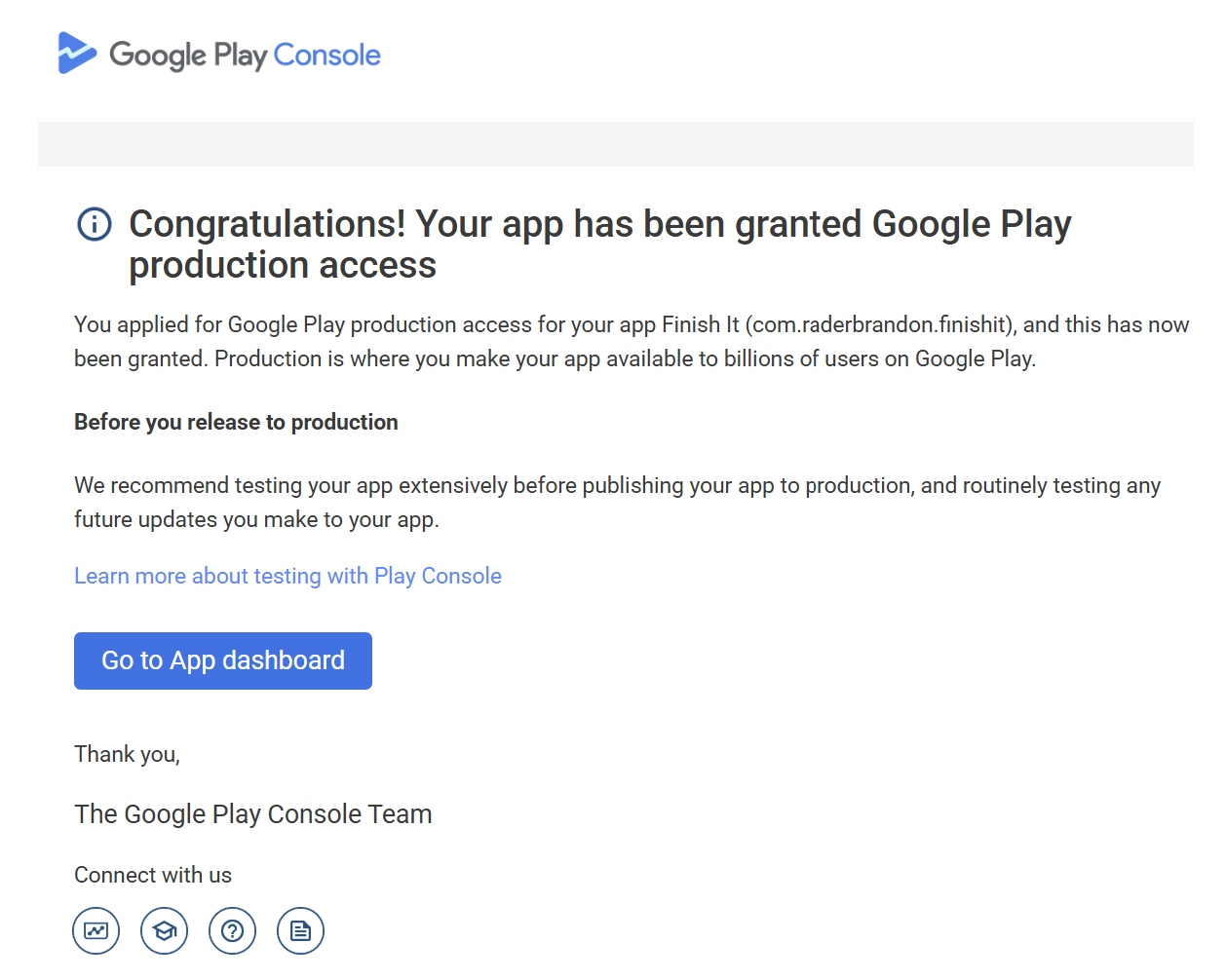
Once you've successfully completed the 14-day testing period, you're in the home stretch. The Google Play Console will update, and you'll see a new section on your Dashboard, usually with a heading like 'Apply to go live.'
You'll need to answer a series of questions about your app's functionality, its target audience, and how you've tested it. This is your chance to show Google you've done your due diligence. Be honest and thorough in your answers.
After you submit your application, your app goes into a final review by the Google Play team. This review is separate from the 14-day test. The test is just the ticket that lets you get in line for the final review.
To see if you're ready, check out our guide on How to Check Whether Your 14-Day Testing Requirement Is Complete. It shows you exactly where to look in the Play Console to confirm your status.
Meeting Google's 12-tester requirement doesn't have to be a blocker for your launch. While it adds an extra step, it's a straightforward process when you have a clear plan. Trying to manage it yourself with unreliable testers can lead to weeks of delays and frustration. Using a dedicated service ensures you meet the requirements correctly and quickly, so you can focus on what you do best: building a great app.
Do the 12 testers need to use my app every single day for 14 days?
Can I use the same 12 testers for multiple apps?
What happens if one of my testers drops out during the 14 days?
Does Google provide the testers for me?
Is it okay if my testers are all from the same country?
Can I run an open test instead of a closed test to meet this requirement?
How It Works
A straightforward 4-step process to get your Android app approved.
Get Started
Connect your Google account and choose your preferred closed testing package for your Android app.
App Submission
Share your Play Store opt-in URL. We immediately deploy 12 real testers to launch and review your Android app daily.
14-Day Cycle
Our crew initiates daily launch sessions on physical devices, verifying usability and logging crashes for your Android app.
Production Access Approval
We continuously perform closed app testing for 14 days to help you meet Google Play production requirements. We also provide a compliance report.
Why Choose AppConsoleLab
Deploy your Android app onto real retail-grade handsets using our secure laboratory environment.
The 14-Day Production Guarantee
We complete the required 14-day closed testing process with real human testers and physical Android devices, while providing clear testing evidence and documentation throughout the process.
If Google specifically rejects production access due to insufficient testing engagement, you are covered by our free re-run or 100% refund guarantee, subject to our Refund Policy.
Verified Production Access
Quality QA Testing Reports
Clear, actionable reports with screenshots and evidence for every important issue found during testing.
Real Device Testing & Diagnostics
Real human testers use physical Android devices to test your app, verify real user flows, and provide clear testing evidence and professional QA reports.
Play Store Ready
Transition your Android app to public production access with confidence. We deliver verified session logs and compliant Console activity.
One Cycle. Complete Approval.
Choose the ideal closed testing cycle for your Android release.
Loading Packages
Please wait while we fetch the best options for your region...
Frequently Asked Questions
Everything you need to know about passing your closed testing requirements.