Reliable 12 Testers Google Play Console for Android Apps
Comply with Google Play Console’s closed testing rules with 12 testers providing real diagnostic sessions from real Android devices and compliant 14-day testing activity for full production access approval.
Google play 12 testers requirement for AI tools developers
Google has a requirement for new personal developer accounts. Before you can publish your app for the world to see, you need to run a closed test. This test involves getting at least 12 people to test your app for 14 days straight. This rule helps Google make sure new apps are high-quality and not just spam. It's a good idea, but it can be a huge headache for developers.
Finding and managing a dozen reliable testers is tough. People are busy. They might forget to use your app, or they might not even sign up in the first place. This can delay your launch by weeks or even months.
This guide breaks down everything you need to know. We’ll cover why this rule exists, the exact steps to follow, and the best way to find reliable testers so you can get your app published fast.
Why Does Google Make You Do This?
A few years ago, the Play Store had a problem with low-quality and copycat apps. To fix this, Google introduced the closed testing requirement. It acts as a filter.
Think of it as a quality check. If a developer is serious enough to organize a proper test with real people, they are probably serious about their app. This process helps weed out spammy apps and ensures that apps hitting the market have been tested by real humans. It’s all about protecting users and improving the overall quality of the Play Store. It shows Google you're a legitimate developer who cares about your product.
The 14-Day Testing Rules: A Simple Breakdown
The rules sound simple on the surface, but the details matter. Getting any part wrong can mean you have to start the 14-day clock all over again.
- You Need 12+ Testers: The magic number is twelve. You need at least twelve people to join your test. Having a few extra, maybe 15, is a good idea in case someone drops out.
- They Must Opt-In: You can't just add people. You have to invite them via email, and they must click a link to accept the invitation and "opt-in" to your test.
- The 14-Day Clock: The two-week countdown begins only after all your testers have opted in. If your 12th tester joins on day 5, the 14-day period starts from day 5.
- Continuous Testing: This is the trickiest part. Testers need to be active in your app for 14 consecutive days. Google doesn't say exactly what "active" means, but it's safe to assume they need to open and use the app regularly. If a tester goes inactive, it could reset your progress.
Managing this yourself is a lot of work. You have to find people, convince them to join, and then gently remind them every day to use your app. It’s like herding cats.
How to Get Your App Ready for Testing
Before you can even invite testers, you need to set up your closed test correctly in the Google Play Console. It’s a straightforward process if you follow the steps.
Prepare Your App Bundle
Create a Closed Test Track
Upload Your App
Create a Tester Email List
Generate the Opt-In Link
Send the Invitations
The Three Paths to Finding Testers
So, you need 12 reliable people. Where do you find them? You basically have three options, each with its own pros and cons.
1. The DIY Method (Friends, Family, Social Media)
This is the first thing most developers think of. You can ask friends, family, or post in developer communities on Reddit or Facebook.
- Pros: It's free. You might get some genuinely helpful feedback from people you trust.
- Cons: It's incredibly unreliable. Friends and family have their own lives. They might agree to help but forget after a day or two. Chasing them down with daily reminders can be awkward and strain relationships. It's a huge time sink.
2. The Freelancer Marketplace (Fiverr, Upwork)
You can go to sites like Fiverr and find people offering 'app testing' services. It seems like a quick fix, but it's very risky.
- Pros: It seems cheap and fast. You can find someone in minutes.
- Cons: The risk is massive. Many of these 'testers' are just bots or use fake accounts. Google's systems are smart and can easily detect this kind of activity. If you get caught, your developer account could be suspended or even terminated. The risk is not worth the small cost savings.
3. A Professional Testing Service (Like AppConsoleLab)
This is the safest and most efficient option. A dedicated service provides a pool of real, verified human testers who understand the process.
- Pros: It's completely hands-off and reliable. You get real people who are paid to be active for the full 14 days. It guarantees you will pass the requirement without any stress. It saves you an enormous amount of time and eliminates the risk of getting your account banned.
- Cons: It costs money. But when you compare the cost to the weeks of lost time and potential risk of a ban, it's a small price to pay.
To see a full breakdown of different options, check out our guide on the Best Google Play Closed Testing Services Compared (2026).
Struggling with the 14-Day Testing Requirement?
Skip the hassle of recruiting unreliable testers. Our professional fleet of real Android devices guarantees Google Play compliance in exactly 14 days. Zero bots. Zero emulators. 100% production approval guarantee.
Comparison: Which Testing Method is Right for You?
Let's break down the options visually. This table shows the real differences between using a professional service, doing it yourself, and hiring cheap freelancers.
| Feature | AppConsoleLab's Service | Finding Testers Yourself | Fiverr Bots |
|---|---|---|---|
| Reliability | ✅ Guaranteed 14-day activity | ❌ Very low, people forget | ❌ Extremely unreliable |
| Risk of Ban | ✅ None, uses real people | ✅ None (if they are real) | 🔥 Very High |
| Time Investment | 🤏 Minimal, just a few clicks | 😩 High, requires constant management | 🤏 Low initial effort, high risk |
| Speed | 🚀 Fastest path to publishing | 🐢 Slow and unpredictable | ⚠️ Appears fast, but can fail |
| Cost | $$ (Fixed, predictable) | Free (but costs you time) | $ (Cheap, but you get what you pay for) |
The choice becomes clear. If you value your time and your developer account, a professional service is the logical path forward.
Managed Testing: The Hands-Off Approach
DIY Testing: The High-Effort Gamble
Your Step-by-Step Checklist for a Successful Test
Feeling overwhelmed? Don't be. Here is a simple checklist to guide you through the entire process, from preparation to completion.
Phase 1: Groundwork and Setup
Phase 2: Launch and Monitor
Once the 14 days are over and Google has verified the activity, a new section will appear on your dashboard allowing you to apply for production access. It can be tricky to know exactly when you've met the criteria. For more details, read our guide on How to Check Whether Your 14-Day Testing Requirement Is Complete.
Getting your app to the finish line shouldn't be a game of chance. The Google Play testing requirement is a serious step, but it doesn't have to be a blocker. By understanding the rules and choosing a reliable method for finding testers, you can navigate the process smoothly. Using a dedicated service removes the guesswork, protects your account, and lets you focus on what you do best: building great apps.
Do I really need 12 testers or can I use fewer?
You need a minimum of 12 testers who opt-in and remain active. Google's requirement is firm on this number for new personal developer accounts. Attempting the process with fewer than 12 will prevent you from being able to apply for production access. It's wise to invite 13-15 testers to account for any potential drop-offs.
What happens if one of my testers stops using the app during the 14 days?
This is a common problem with the DIY approach. Google requires continuous testing. While they don't specify the exact penalty, significant inactivity from one or more testers could pause or reset your 14-day progress. This is why using a managed service with incentivized testers is much more reliable.
Can I use the same 12 people to test multiple apps?
Yes, you can. The requirement is per app. As long as the testers are real people who actively participate in the 14-day closed test for each new app you want to publish, you can use the same group. However, managing this for multiple apps can become very complicated.
How long does it take for Google to approve production access after the test is complete?
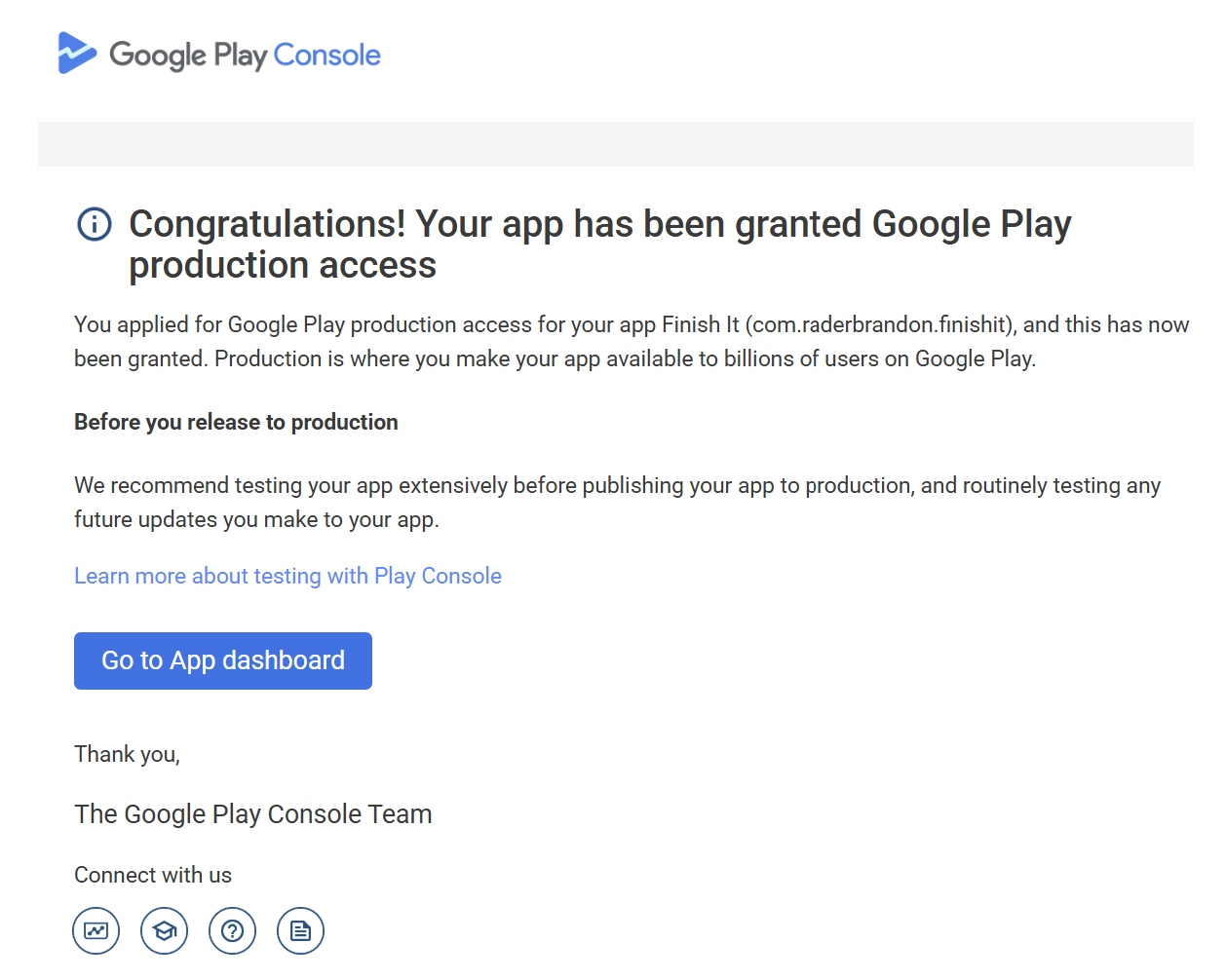
Once you have successfully completed the 14-day test, a banner will appear on your Play Console dashboard allowing you to apply for production access. After you submit your application and answer some questions about your app, the review process can take up to 7 days, though it's often faster.
Do testers need a specific type of Android device?
No, Google does not specify requirements for tester devices. As long as they are using a standard Android phone or tablet that can access the Google Play Store and run your app, it will count towards the test. A variety of devices and Android versions can even provide better testing feedback.
Is it safe to share my apps test link publicly?
You should only share the closed testing opt-in link with the specific people on your tester email list. It is a private link tied to that list. Sharing it publicly could lead to unknown users accessing your pre-release app and won't help you meet the requirement, as only users from your specified email list are counted.
Our QA Process
Your journey to Google Play production access, simplified and automated.
Choose Package
Authenticate your account to initialize the 14-day QA fleet for your Android release.
Submit Link
Upload your testing link. We assign 12 verified users with real Android devices to download and test your Android release.
Active Testing
A dedicated testing supervisor is assigned to monitor progress while testers engage with your Android app and provide feedback throughout the testing period.
Get Approved
Our lab maintains active installations for two weeks straight, ensuring a clean track record and providing a QA compliance log for your release.
The Premium QA Advantage
Satisfy your Play Store Console testing obligations with our managed physical device fleet tailored for Android builds.
The 14-Day Production Guarantee
We complete the required 14-day closed testing process with real human testers and physical Android devices, while providing clear testing evidence and documentation throughout the process.
If Google specifically rejects production access due to insufficient testing engagement, you are covered by our free re-run or 100% refund guarantee, subject to our Refund Policy.
Verified Production Access
Quality QA Testing Reports
Clear, actionable reports with screenshots and evidence for every important issue found during testing.
Real Device Testing & Diagnostics
Real human testers use physical Android devices to test your app, verify real user flows, and provide clear testing evidence and professional QA reports.
Production Access Secured
Our structured 14-day closed testing process is designed to meet Google Play's production requirements for your Android release.
Simple Closed Testing Pricing
Select the plan that fits your Android AI tools app complexity.
Loading Packages
Please wait while we fetch the best options for your region...
Frequently Asked Questions
Everything you need to know about passing your closed testing requirements.