Reliable 12 Testers Google Play Console for Android Apps
Clear Play Console closed testing eligibility using 12 testers to generate genuine daily activity on physical Android handsets and genuine 14-day QA activity to guarantee production access clearance.
Play console closed testing explained for Budget apps
Google Play now requires developers with new personal accounts to run a closed test with at least 12 testers for 14 continuous days before they can publish an app. This rule is designed to improve app quality on the store, but it's a big hurdle for many developers. Getting 12 real people to sign up and stay opted-in for two full weeks is harder than it sounds.
This guide breaks down exactly what you need to do, the common pitfalls to avoid, and how to get reliable testers so you can launch your app without the stress.
Why Did Google Add This 14-Day Rule?
Google's goal is to clean up the Play Store. For years, the store was flooded with low-quality apps, copycats, and even malware. This new testing requirement acts as a filter. It forces developers to prove they have a real, working app that has been seen by real people before it can be offered to the public.
By making you run a two-week test, Google can:
- Verify your identity: It shows you're a serious developer, not a spammer setting up a quick account.
- Check for app stability: It gives Google's systems time to analyze your app for crashes and policy violations before it goes live.
- Discourage spam: Creating 12 fake accounts and managing them for 14 days is a lot of work for someone trying to publish a junk app.
It’s a roadblock with a purpose. Understanding this helps you see it not just as a chore, but as the final checkpoint before your launch.
The Rules of the Game: What "12 testers for 14 Days" Really Means
The rules seem simple, but the details matter. Let's break them down.
- You need 12 testers. Not 19. Not 18. You need a minimum of 12 people to opt into your test.
- They must opt-in. You'll create a list of their Gmail addresses in the Play Console. Google then sends them an opt-in link. They must click this link to be counted.
- The 14-day clock is continuous. This is the most difficult part. The 14-day countdown only starts after you have 12 opted-in testers. If anyone leaves the test on day 5, your tester count drops to 19, and your 14-day progress might reset. You need a solid group of people who will stick around.
- Testers don't need to do much. A common misconception is that testers need to use your app every day and provide detailed feedback. For this specific requirement, they just need to remain opted-in to the test for the full 14 days. That's it.
The main challenge isn't coding your app; it's managing 12 people's schedules and commitments for two weeks straight.
The Problem with "Finding Testers Yourself"
Your first thought might be to ask friends, family, or people in online forums. This seems easy and free, but it often ends in frustration.
- Friends and Family Lose Interest: They mean well, but life gets in the way. They might forget to opt-in, use the wrong email address, or leave the test early without telling you, resetting your 14-day clock.
- Online Communities are a Mixed Bag: Subreddits or Facebook groups for testers can be unreliable. You might get a lot of initial interest, but many will drop off. You're also sharing your early-stage app with complete strangers.
- It's a Full-Time Job: Managing 12+ people is time-consuming. You'll be sending reminders, answering questions, and constantly checking your Play Console dashboard to make sure nobody has dropped out. This is time you could be spending on improving your app.
This DIY approach is a gamble. You might get lucky, but you're more likely to face delays and have to restart the process multiple times.
Comparing Your Options: Getting Your 12 testers
You have three main paths to fulfill this requirement. Each comes with its own pros and cons.
| Feature | AppConsoleLab's Service | Finding Testers Yourself | Fiverr Bots |
|---|---|---|---|
| Reliability | Guaranteed. We ensure 12+ testers stay opted-in for the full 14 days. | Low. People are unreliable and may drop out, resetting your progress. | Extremely Low. Accounts are often flagged and removed by Google. |
| Speed | Fast. The process starts within 24 hours. The 14-day clock begins ASAP. | Slow. Can take weeks to find and convince enough people to join. | Fast (Initially). But the test will likely fail or get your account banned. |
| Risk | Zero Risk. Our process is 100% compliant with Google's policies. | High Risk of Delays. One person leaving can cost you two weeks. | Account Suspension Risk. Using bots is a direct violation of Google's ToS. |
| Effort | Minimal. You submit your app, and we handle the entire testing process. | Very High. You become a project manager for 12 strangers or relatives. | Low Effort, High Stress. You're constantly worrying about being caught. |
| Cost | Fixed, upfront price. | "Free" (but costs you a lot of time and potential launch delays). | Cheap. But you get what you pay for: a likely app rejection or ban. |
Struggling with the 14-Day Testing Requirement?
Skip the hassle of recruiting unreliable testers. Our professional fleet of real Android devices guarantees Google Play compliance in exactly 14 days. Zero bots. Zero emulators. 100% production approval guarantee.
Your Step-by-Step Guide to a Successful Closed Test
Whether you use a service or go it alone, the process inside the Google Play Console is the same. Here’s how it works.
Phase 1: Pre-Launch Setup
Phase 2: Managing the 14-Day Countdown
This process requires attention to detail. A single missed step, like forgetting to save your tester list, can cause unnecessary delays.
Understanding What Google Requires from Testers
There's a lot of confusion about what testers actually need to do. Let's clear that up.
Passive Opt-in (What Google Requires)
For Google's 14-day policy, the only thing that matters is that a tester accepts the invitation and remains enrolled in the testing program for 14 consecutive days. They don't need to download the app, use it, or provide feedback. Their status as an 'opted-in tester' is what fulfills the requirement and keeps the clock ticking. This is the bare minimum for getting your app published.
Active QA Testing (What You Might Want)
Active testing is when you ask testers to actively use your app, hunt for bugs, test features, and provide detailed feedback. This is incredibly useful for improving your app's quality, but it is not required to pass Google's 14-day rule. You can (and should) do this separately, but don't confuse it with the simple 'opt-in' requirement for publishing.
For the purpose of launching, focus on getting 12 people who will reliably stay opted-in. You can worry about detailed feedback later.
The Journey from Test to Launch
Visualizing the process can make it feel less daunting. Here is the typical timeline you'll follow to get your app published.
App Preparation
Tester Acquisition
Google Console Setup
The 14-Day Test Begins
Requirement Complete
Go to Production!
Why a Managed Service is the Smart Choice
The biggest threat to your launch timeline is unreliability. If just one tester out of 12 decides to leave on day 13, you have to start the entire 14-day process over again. This is a massive, frustrating, and costly delay.
Using a professional service eliminates this risk. Companies that specialize in this provide a pool of vetted, reliable testers who understand their only job is to stay opted-in for the full duration. It turns a stressful, unpredictable process into a simple, hands-off transaction. You save weeks of time and a lot of headaches.
While there are many options, it's important to choose wisely. Check out our breakdown of the Best Google Play Closed Testing Services Compared (2026) to see how different providers stack up.
Ultimately, the goal is to get your app into the hands of users. Don't let the 12-tester requirement be the hurdle that stops you. By understanding the rules and choosing a reliable path, you can navigate this final step and launch with confidence.
What happens if one of my 12 testers leaves the test early?
If your tester count drops below 12 at any point during the 14-day period, your progress will likely be paused or reset. You will need to find a new tester to get back to 12, and the 14-day clock may start over from the beginning. This is the biggest risk of managing testers yourself.
Do the testers need to install or use my app every day?
No. To fulfill Google's requirement, testers only need to accept the testing invitation and remain opted-in for 14 continuous days. They are not required to download, install, or open the app.
Can I use the same 12 testers for multiple different apps?
Yes, you can. As long as they are real people with valid Google accounts, you can invite the same group to test different apps you develop. However, you must run a separate 14-day test for each new app you want to publish.
How do I know when the 14-day test is officially complete?
The Google Play Console has a dashboard that shows your progress. On the main dashboard page for new developers, there's a section that tracks the closed testing requirement. It will tell you how many testers you have and how many days you have completed. Once it's done, you'll see a confirmation message.
Are services that offer 12 testers safe and compliant with Googles rules?
Reputable services are safe. They use real people with real devices who willingly participate in testing. The danger comes from services that use bots or fake accounts, which violates Google's policies and can get your developer account banned. Always choose a service that guarantees real, human testers.
Why cant I just use 12 of my own Gmail accounts?
Google's systems are designed to detect this kind of activity. Using accounts that are all managed from the same device, IP address, or network will raise red flags. This can lead to the test being invalidated or, in worse cases, your developer account being suspended for fraudulent behavior.
The Testing Pipeline
How we deploy real devices and guarantee compliance for your release.
Sign In
Sign in with Google to configure the closed testing environment for your Android build.
Opt-In URL
Submit your Google Play Console testing link, and our team will assign qualified testers from our testing network to join your Android closed testing release.
Testing Begins
A QA supervisor monitors daily check-ins, ensuring 12 unique Android users engage with your Android build every single day.
Compliance Complete
We guarantee 14 consecutive days of active user check-ins to satisfy Google's compliance policies, delivering an audit-ready PDF feedback report.
Why Developers Trust Us
Experience a next-generation testing infrastructure built for Google Play compliance for your Android release.
The 14-Day Production Guarantee
We complete the required 14-day closed testing process with real human testers and physical Android devices, while providing clear testing evidence and documentation throughout the process.
If Google specifically rejects production access due to insufficient testing engagement, you are covered by our free re-run or 100% refund guarantee, subject to our Refund Policy.
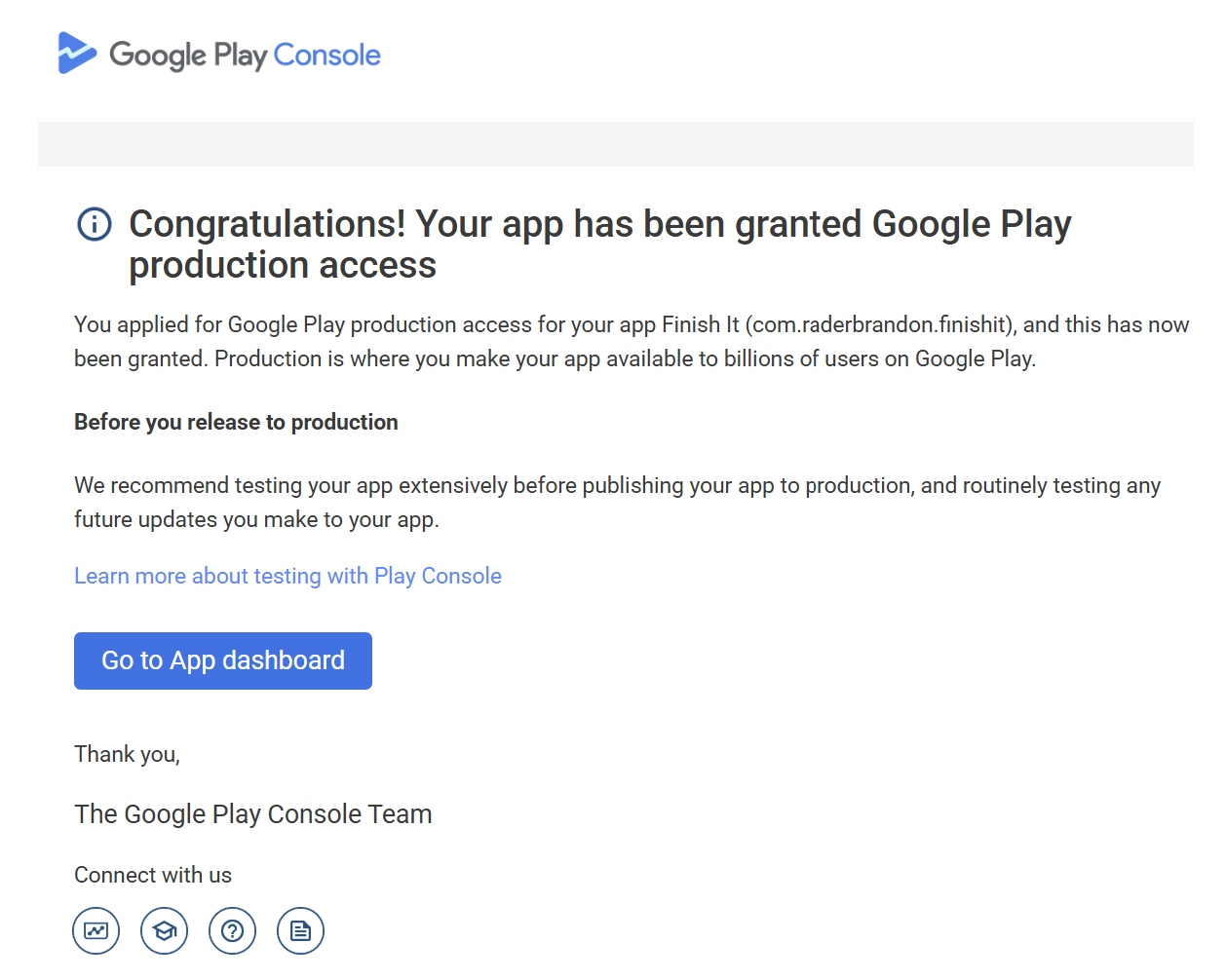
Verified Production Access
Quality QA Testing Reports
Clear, actionable reports with screenshots and evidence for every important issue found during testing.
Real Device Testing & Diagnostics
Real human testers use physical Android devices to test your app, verify real user flows, and provide clear testing evidence and professional QA reports.
Guaranteed App Approval
Get your Android build approved on the first try. We create an audit-ready compliance profile that proves thorough quality assurance.
Affordable Compliance Cycles
Transparent plans built to satisfy Google Play Console guidelines for your Android build.
Loading Packages
Please wait while we fetch the best options for your region...
Frequently Asked Questions
Everything you need to know about passing your closed testing requirements.