Authentic 12 Testers Google Play Console for Android Apps
Pass Google Play closed testing guidelines using 12 unique testers for authentic daily engagement on actual Android smartphones and authentic 14 day testing activity to secure production access approval.
12 testers google play console: How to pass with File Manager
Google now requires Android developers with new personal accounts to run a closed test before they can publish an app. You must have at least 12 testers opt-in and stay opted-in for 14 consecutive days.
Many developers search for "Authentic 12 testers Google Play Console" or similar numbers. It's important to know that the official requirement, as of late 2023, is 12 testers. This rule is not flexible. This guide will walk you through exactly how to meet this requirement without risking your app or your developer account. It’s a mandatory step to get your app live.
Why Did Google Create This 12 Tester Rule?
Google's main goal is to improve the quality of apps on the Play Store. For years, the store was flooded with low-effort, broken, or even malicious apps. This new testing requirement acts as a filter.
Here’s a simple breakdown of why it exists:
- Stop Spam: It makes it much harder for spammers to quickly upload hundreds of bad apps. Organizing 12 real testers for 14 days for every single app is a lot of work.
- Encourage Feedback: It forces you, the developer, to show your app to real people before it goes public. This early feedback can help you find bugs and improve your app's user experience.
- Build Trust: When users download an app, they expect it to work. By making sure new apps are tested, Google helps maintain the overall quality and trustworthiness of the Play Store.
Think of it as a quality check. It's a hurdle, but it's a hurdle designed to make the Android ecosystem better for both users and serious developers.
The Huge Risk of Using Fake Testers or Bots
When faced with this 14-day, 12-tester rule, it's tempting to look for shortcuts. You might see offers on freelance sites for cheap, instant testers. Be very careful. Most of these are bot farms, and using them is one of the fastest ways to get your app rejected or your entire developer account terminated.
Google's systems are smart. They can easily detect suspicious activity, such as:
- 12 testers joining at the exact same time.
- All testers using similar devices or Android versions.
- Testers coming from the same small range of IP addresses.
- Testers who install the app, open it once, and never touch it again.
- Testers who opt-in and then immediately opt-out after 14 days.
Using bots or fake testers is a gamble you don't want to take. You've spent weeks or months building your app. Don't risk it all to save a few dollars or a little bit of time. The only safe way forward is with authentic testers.
Here’s how the different methods for finding testers stack up against each other.
| Feature | AppConsoleLab's Service | Finding Testers Yourself | Fiverr Bots |
|---|---|---|---|
| Authenticity | ✅ 100% Real People | ✅ Real People (if you know them) | ❌ Automated Scripts |
| Google Compliance | ✅ Guaranteed to Pass | ⚠️ Risky & Hard to Manage | 🚨 High Risk of Ban |
| Speed | ⚡ Fast (Testers ready in 24h) | 🐢 Very Slow & Difficult | ⚡ Dangerously Fast |
| Time Investment | 🧘♂️ Minimal (5 minutes) | 😩 High (Hours of coordination) | 🤷♂️ Low (But high stress) |
| Reliability | 👍 Guaranteed 12 testers for 14 days | 👎 People forget or drop out | 👎 Bots can be detected and fail |
| Cost | 💲 Fixed, predictable price | 💲 "Free" but costs you time/favors | 💲 Cheap, but could cost you your account |
Your Options for Finding 12 Authentic Testers
So, if bots are out, what are your real options? You have a few paths, each with its own pros and cons.
Option 1: The DIY Method (Friends, Family, and Co-workers)
This is the first thing most developers think of. You can ask people you know to help you test your app.
- Pros: It's free. You are working with people you trust.
- Cons: Finding 12 reliable people is surprisingly difficult. It's even harder to make sure they all click the opt-in link and stay opted-in for two full weeks. People get busy, they forget, or they just don't want to be bothered. You'll spend a lot of time chasing them down and managing the list.
Option 2: Public Forums (Reddit, Facebook Groups, Discord)
You can post in communities for Android developers or beta testers and ask for volunteers.
- Pros: You might find people who are genuinely interested in testing new apps.
- Cons: This is very time-consuming. You have to vet people to make sure they're real. There's a risk of someone stealing your app idea or your APK. Managing 12 strangers from a forum is a headache, and many will lose interest and drop out.
Option 3: A Professional Closed Testing Service
This is the most reliable and stress-free option. Services like AppConsoleLab exist specifically to solve this problem. We provide a pool of real, verified people who are ready to test your app and fulfill Google's 14-day requirement.
- Pros: It's fast and guaranteed. You get 12+ real testers who understand the process. You don't have to worry about people dropping out. It saves you an enormous amount of time and lets you focus on your app. For a deeper dive into different providers, check out this comparison of the Best Google Play Closed Testing Services Compared (2026).
- Cons: It's a paid service. But when you consider the time you save and the risk you avoid, it's a small investment to get your app published safely.
The 14-Day Testing Period: Rules You MUST Follow
Google is very specific about how this test must be conducted. Understanding these rules is key to your success.
The most important rule is that you need at least 12 testers to be continuously opted-in for 14 consecutive days. If one of your testers opts out on day 5, you need to find a replacement quickly, and your 14-day clock might even reset.
It's also important to understand what counts as a "tester."
Real Opt-in Testers
Pre-launch Report Bots
The 14-day countdown begins only after your 12th tester has officially opted in. From that moment, the clock is ticking, and you need to maintain that number for two full weeks.
Struggling with the 14-Day Testing Requirement?
Skip the hassle of recruiting unreliable testers. Our professional fleet of real Android devices guarantees Google Play compliance in exactly 14 days. Zero bots. Zero emulators. 100% production approval guarantee.
Step-by-Step Guide to Setting Up Your Closed Test
Ready to get started? Here is the entire process, from preparing your app to applying for production. We've broken it down into a simple, easy-to-follow roadmap.
Understand the Requirement
Prepare Your App
Find Your 12 testers
Create Your Closed Test
Manage the 14-Day Period
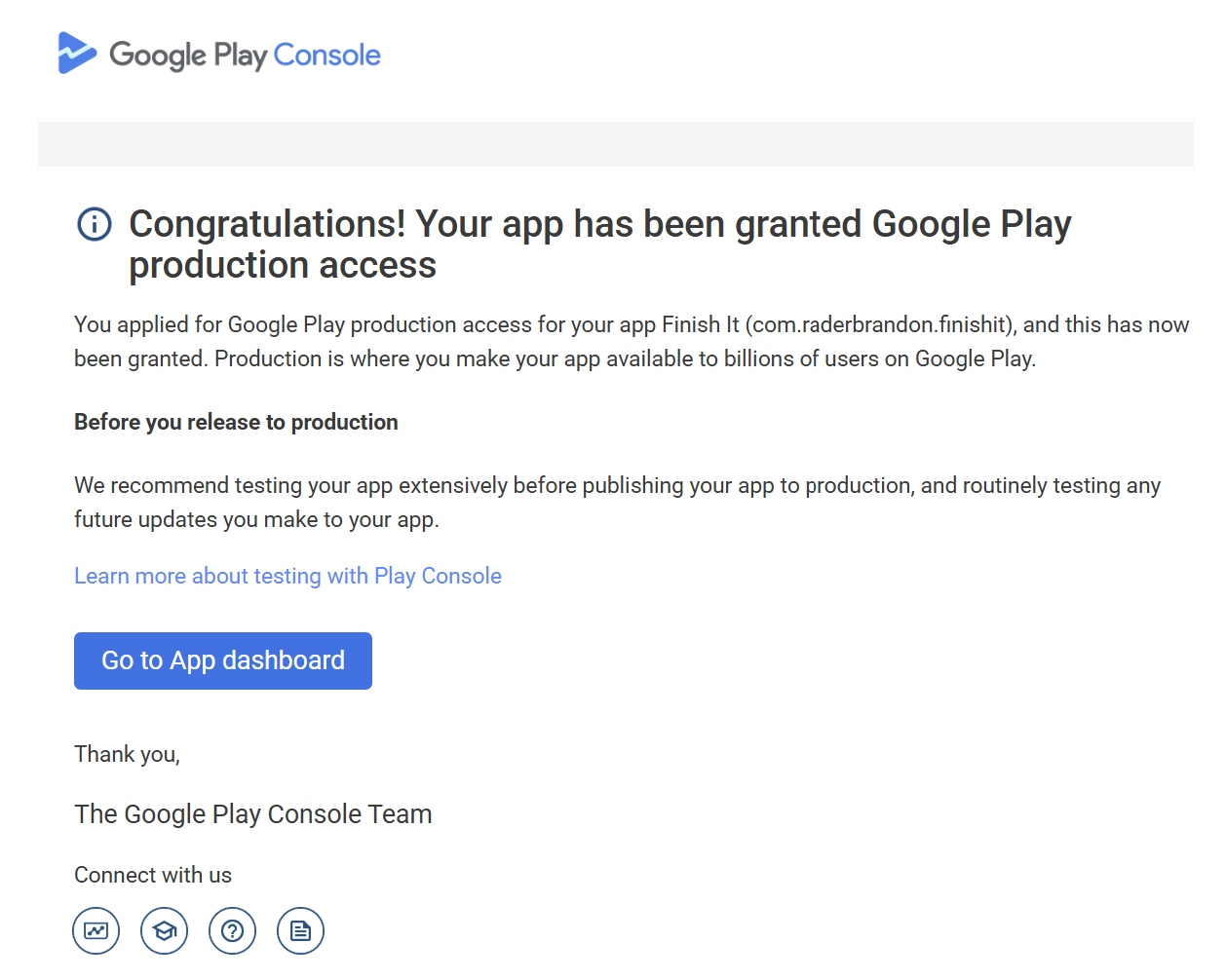
Apply for Production Access
Now, let's look at some of those steps in more detail.
H3: Preparing Your App and Google Play Console
Before you can even think about testers, you need to get your house in order.
- Finalize Your App Build: Compile a stable version of your app. It should be a release-signed AAB (recommended) or APK.
- Complete Store Listing: Fill out as much of your app's store listing as you can. This includes the app name, short description, long description, and screenshots. It doesn't need to be final, but the basic information should be there.
- Content Rating: Complete the content rating questionnaire. You can't start a test without it.
- App Content Section: Go through the 'App content' section in the Play Console and fill out all the required policy information, such as data safety, ads, and target audience.
H3: Creating the Closed Test and Inviting Testers
This is where the action happens in your Google Play Console.
- Navigate to Closed Testing: In the left-hand menu, go to
Testing>Closed testing. - Create a Track: Click the 'Create track' button. Give it a name if you wish (the default is fine).
- Upload Your App: Create a new release and upload your AAB or APK file.
- Create a Tester List: In the 'Testers' tab, you can create a new email list. Click 'Create email list,' give it a name (e.g., 'Initial Testers'), and add the Gmail addresses of your 12 testers, one per line.
- Get the Opt-in Link: After you save your list and add it to the track, the console will generate a unique opt-in link. This is the link you MUST share with your testers. They can't just find your app on the store; they have to use this link to become a tester first.
H3: Monitoring Your Progress for 14 Days
This is not a 'set it and forget it' process. You need to be active during the two-week period.
- Check Your Dashboard Daily: Log in to your Play Console every day and look at your 'Dashboard' or 'Closed testing' track. It will show you the number of testers who have opted in.
- Communicate with Testers: If you're managing testers yourself, keep in touch with them. Remind them to stay opted-in.
- Handle Dropouts: If your tester count falls below 12, your 14-day clock may pause or reset. You must add a new tester to your email list and have them opt-in as soon as possible.
Once the 14 days are over and you've met the criteria, you'll be able to move forward. If you're ever unsure about your status, you can follow this guide on How to Check Whether Your 14-Day Testing Requirement Is Complete.
Phase 1: Pre-Launch Setup
Phase 2: The 14-Day Test Execution
Meeting Google's 12-tester requirement is a mandatory step for new developers. While it may seem like a difficult challenge, it's entirely manageable when you use the right approach. Trying to cut corners with bots or fake users is a recipe for disaster.
The safest, fastest, and most efficient way to pass this requirement is to use a dedicated service that provides authentic testers. It removes all the stress and uncertainty from the process, allowing you to focus on what you do best: building great apps.
Do my testers need to open or use the app every day for 14 days?
What happens if one of my testers opts out during the 14-day period?
Can I use the same 12 testers for multiple different apps?
How long does it take for the Apply for production button to appear after the 14 days?
Do I have to release a new app update during the 14-day test?
Can testers use any email address, or does it have to be a Gmail address?
How It Works
A straightforward 4-step process to get your Android app approved.
Get Started
Connect your Google account and choose your preferred closed testing package for your Android app.
App Submission
Share your Play Store opt-in URL. We immediately deploy 12 real testers to launch and review your Android app daily.
14-Day Cycle
Our crew initiates daily launch sessions on physical devices, verifying usability and logging crashes for your Android app.
Production Access Approval
We continuously perform closed app testing for 14 days to help you meet Google Play production requirements. We also provide a compliance report.
Why Choose AppConsoleLab
Deploy your Android app onto real retail-grade handsets using our secure laboratory environment.
The 14-Day Production Guarantee
We complete the required 14-day closed testing process with real human testers and physical Android devices, while providing clear testing evidence and documentation throughout the process.
If Google specifically rejects production access due to insufficient testing engagement, you are covered by our free re-run or 100% refund guarantee, subject to our Refund Policy.
Verified Production Access
Quality QA Testing Reports
Clear, actionable reports with screenshots and evidence for every important issue found during testing.
Real Device Testing & Diagnostics
Real human testers use physical Android devices to test your app, verify real user flows, and provide clear testing evidence and professional QA reports.
Play Store Ready
Transition your Android app to public production access with confidence. We deliver verified session logs and compliant Console activity.
One Cycle. Complete Approval.
Choose the ideal closed testing cycle for your Android release.
Loading Packages
Please wait while we fetch the best options for your region...
Frequently Asked Questions
Everything you need to know about passing your closed testing requirements.