Professional 12 Testers Google Play Console for Android Apps
Satisfy Google Play closed testing tester requirements with 12 testers providing real diagnostic sessions from real Android devices and compliant 14-day testing activity for full production access approval.
Google Play closed testing 12 testers: Guide for Hypercasual
Google Play Console now requires developers with new personal accounts to have at least 12 people test their app for 14 consecutive days before they can apply for production access. This rule is designed to improve app quality, but it can be a major hurdle if you don't have a network of reliable testers.
This guide breaks down exactly what you need to do. We'll cover Google's specific rules, the common pitfalls to avoid, and the fastest way to get your app tested and ready for launch.
Why Google Added This 12-Tester Rule
Google wants to ensure that apps on the Play Store are stable, useful, and not malicious. Before this rule, anyone could upload an app and publish it almost immediately. This led to a lot of low-quality or broken apps flooding the store.
By forcing a closed testing period, Google makes developers slow down and get real feedback. The 14-day requirement proves that you are committed to your app and that it has been vetted by a small group of people.
The core requirements are simple but strict:
- A Minimum of 12 Testers: You need at least 12 unique Google accounts to join your test.
- Continuous Opt-In for 14 Days: Each of those testers must remain "opted-in" to your test for 14 days in a row. If someone leaves on day 10, their clock resets. You need a continuous 14-day period of participation.
- Closed Testing Track: This must be done through an official Closed Testing track in your Google Play Console. Open testing or internal testing does not count toward this requirement.
Meeting these requirements is not just about ticking a box. It's about showing Google that your app is ready for the public.
The Challenge: Finding 12 Reliable Testers is Hard
Your first thought might be to ask friends and family. This can work, but it often fails. People are busy. They might agree to help but forget to opt-in. They might accidentally leave the test. Managing 12+ people, chasing them down, and making sure they stay opted-in for two full weeks is a huge headache.
What about finding people online? You could post on forums or social media. But this comes with its own risks. Can you trust random strangers? Will they actually test the app or just click "install" and disappear? Worse, some might be using fake or bot accounts, which could get your developer account flagged by Google.
This is where a professional testing service becomes a lifesaver. It removes the guesswork and the stress, letting you focus on your app instead of managing testers.
Manual Tester Management
Professional Managed Service
Comparing Your Options: The Smart, The Hard, and The Risky
When you need to get your app tested, you have a few paths you can take. Each has clear pros and cons. Let's break them down.
| Feature | AppConsoleLab's Service | Finding Testers Yourself | Fiverr Bots |
|---|---|---|---|
| Reliability | Guaranteed: Testers are vetted and managed professionally. | Low: Friends forget, strangers are unreliable. High dropout rate. | Very Low: Often bots, not real users. High risk of being detected. |
| Time Investment | Minimal: 5-10 minutes to set up. We handle the rest. | Very High: Hours spent finding, chasing, and managing people. | Low: Quick to order, but the fallout can take weeks to fix. |
| Risk of Failure | Extremely Low: We guarantee the 14-day requirement is met. | High: One person leaving can reset the entire 2-week period. | Extremely High: Risk of app rejection or developer account suspension. |
| Google Policy Compliance | 100% Compliant: Uses real people on real devices, following all rules. | Compliant: As long as you use real people. | Non-Compliant: Google's systems are designed to detect bot activity. |
| Cost | Fixed Price: A clear, upfront cost for a guaranteed result. | 'Free' (in money): But costs you a lot in time, stress, and potential delays. | Cheap: But you get what you pay for. A rejected app costs more in the long run. |
| Feedback Quality | Optional: Can provide structured, real-world feedback if requested. | Inconsistent: Feedback can be biased, unhelpful, or nonexistent. | None: Bots don't provide useful feedback. |
As you can see, while the DIY approach seems free, the time and stress involved are significant costs. The bot approach is cheap but puts your entire developer account at risk. A professional service offers the best balance of reliability, speed, and peace of mind. For a deeper dive into different providers, check out our guide on the Best Google Play Closed Testing Services Compared (2026).
Struggling with the 14-Day Testing Requirement?
Skip the hassle of recruiting unreliable testers. Our professional fleet of real Android devices guarantees Google Play compliance in exactly 14 days. Zero bots. Zero emulators. 100% production approval guarantee.
The Step-by-Step Process for a Successful 14-Day Test
Whether you use a service or do it yourself, the technical steps in the Google Play Console are the same. Following them correctly is essential.
Phase 1: Setting Up Your Closed Test
Phase 2: Inviting Testers and Monitoring Progress
One of the most common questions we get is how to know when the test is actually complete. Google doesn't send a notification. You have to check your status in the Play Console. We've written a detailed guide on exactly where to look: How to Check Whether Your 14-Day Testing Requirement Is Complete.
Your Path to Publishing: A 14-Day Timeline
Here’s what the journey looks like from start to finish when using a professional service like AppConsoleLab. We've streamlined the entire process to be as simple as possible for you.
Day 0: App Submission
Day 0: Initial Review
Day 1: Tester Invitation
Day 1-2: Opt-In Confirmation
Day 2-15: Active Monitoring
Day 16: Test Completion
This managed process removes all the uncertainty. You don't have to worry about chasing people or wondering if you're compliant with Google's rules. You get a guaranteed result, allowing you to focus on your launch day. Don't let the 12-tester requirement slow you down.
Do the 12 testers need to be from a specific country?
What if my app is for a specific niche? Do the testers need to be in my target audience?
Can I use 6 of my own friends and 6 testers from a service?
Do testers need to open the app every day?
What happens if Google rejects my app for a different policy violation after the test is complete?
How soon after the 14-day test can I apply for production?
Our QA Process
A straightforward 4-step process to get your Android app approved.
Choose Package
Connect your Google account and choose your preferred closed testing package for your Android app.
Submit Link
Share your Play Store opt-in URL. We immediately deploy 12 real testers to launch and review your Android app daily.
Active Testing
Our crew initiates daily launch sessions on physical devices, verifying usability and logging crashes for your Android app.
Get Approved
We continuously perform closed app testing for 14 days to help you meet Google Play production requirements. We also provide a compliance report.
The Premium QA Advantage
Deploy your Android app onto real retail-grade handsets using our secure laboratory environment.
The 14-Day Production Guarantee
We complete the required 14-day closed testing process with real human testers and physical Android devices, while providing clear testing evidence and documentation throughout the process.
If Google specifically rejects production access due to insufficient testing engagement, you are covered by our free re-run or 100% refund guarantee, subject to our Refund Policy.
Verified Production Access
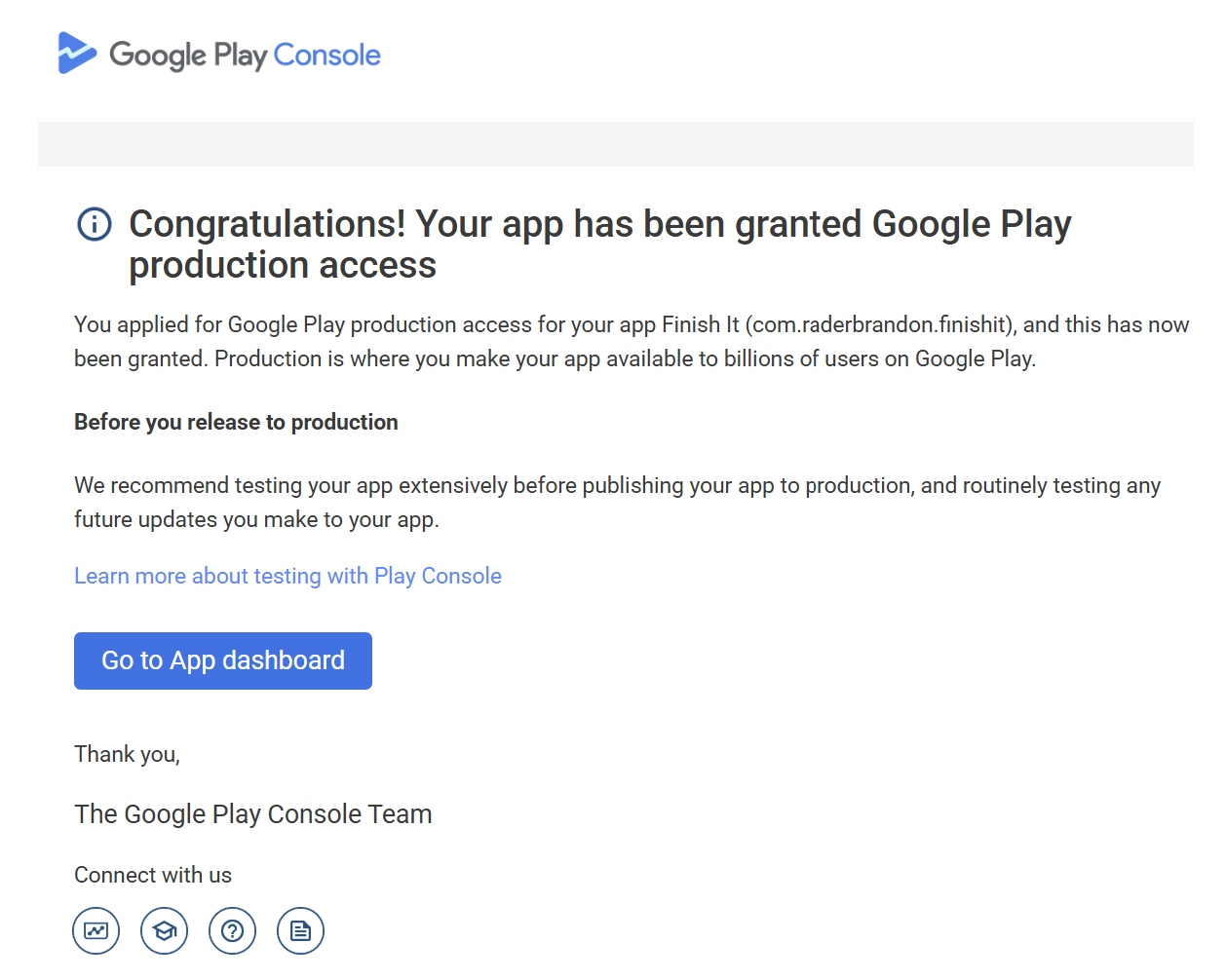
Quality QA Testing Reports
Clear, actionable reports with screenshots and evidence for every important issue found during testing.
Real Device Testing & Diagnostics
Real human testers use physical Android devices to test your app, verify real user flows, and provide clear testing evidence and professional QA reports.
Production Access Secured
Transition your Android app to public production access with confidence. We deliver verified session logs and compliant Console activity.
One Cycle. Complete Approval.
Choose the ideal closed testing cycle for your Android release.
Loading Packages
Please wait while we fetch the best options for your region...
Frequently Asked Questions
Everything you need to know about passing your closed testing requirements.