Authentic 12 Testers Google Play Console in the USA
Pass Google Play closed testing guidelines for your Kotlin Compose app in the USA using 12 testers to generate genuine daily activity on physical Android handsets and genuine 14-day QA activity to guarantee production access clearance.
Google play closed testing requirements for Kotlin Compose apps
Google Play now requires developers with new personal accounts to run a closed test with at least 12 people for 14 consecutive days. This rule is in place before you can apply for production access and publish your app. For many developers, this has become a major roadblock. The goal is to ensure apps are stable and provide a good user experience before they reach a wider audience.
You might see older articles mentioning 12 testers, but the official requirement has been updated. Google's aim is to filter out low-quality or malicious apps, which is good for the ecosystem. But it creates a real challenge for solo developers and small teams. Finding 12 reliable people who will download your app, keep it installed, and stay opted-in for two full weeks is harder than it sounds.
This guide breaks down exactly what you need to do, the common pitfalls to avoid, and how you can meet this requirement efficiently.
Why Google Cares So Much About Testing
This isn't just a random number Google picked. The 14-day, 12-tester rule serves a few important purposes.
First, it forces a basic level of quality control. If an app crashes constantly or doesn't work, it's unlikely 12 people will keep it on their phones for two weeks. This period helps surface major bugs and stability issues early.
Second, it acts as a barrier against spam and malware. People who build throwaway apps to run ads or steal data usually don't want to go through the trouble of organizing a two-week test with real people. This process helps verify that the developer behind the app is serious about their project.
Finally, it gathers initial feedback. Even if you don't ask for it, seeing if people continue to use your app after the first day gives you valuable, unspoken data. It's a small-scale check on your app's "stickiness" before you spend money on a big launch.
The Rules of the Game: What "14 Consecutive Days" Really Means
The rules are simple but strict. Getting any part of this wrong can reset your 14-day clock, which is incredibly frustrating.
- You Need 12 testers: Not 19. You must have at least 12 people who have accepted your test invitation and have your app installed.
- They Must Opt-In: You'll create a list of testers' Gmail addresses in your Play Console. Google then sends them an opt-in link. They must click this link to be counted.
- The Clock Starts After Opt-In: The 14-day countdown for a tester begins only after they have opted in and downloaded the app. The days are counted individually for each tester.
- "Consecutive" is Key: The most common point of failure is this. If a tester uninstalls the app, leaves the testing program, or is removed, their 14-day streak is broken. You need a group of 12 testers to maintain their status for the full 14 days. If your tester count drops to 19 on day 13, you might have to start over or find a replacement quickly.
Google's system is automated. It tracks these opt-ins and installations without you needing to do anything. But this also means you can't fudge the numbers.
The Challenge: Why Finding Testers is So Hard
If you have a huge network of tech-savvy friends who are all reliable, you might be okay. For everyone else, the do-it-yourself approach is filled with problems.
You could ask friends and family, but they often forget or lose interest. They might agree to help but uninstall the app a few days later to free up space, breaking your 14-day streak. Chasing them down with reminder messages gets old fast.
Posting on social media or forums like Reddit can work, but it's a huge time sink. You'll spend hours messaging strangers, hoping they'll follow through. Many will agree but never actually opt-in. Others are only looking for a quick swap ("you test my app, I'll test yours"), and their commitment is low.
Then there are the risky shortcuts, like using bots or cheap gigs on sites like Fiverr. This is the fastest way to get your developer account flagged or even banned. Google's systems are smart enough to detect suspicious, low-quality engagement. Fake testers don't interact with the app, often come from the same IP block, and create patterns that are easy to spot. It's a gamble that almost never pays off.
A Smarter Way: Comparing Your Options
Let's break down the three main ways to get your 12 testers.
| Feature | AppConsoleLab's Service | Finding Testers Yourself | Fiverr Bots |
|---|---|---|---|
| Reliability | High: Guaranteed 12+ testers for the full 14 days. | Low: People are flaky, forget, or lose interest. | Very Low: Often bots that get detected or drop off. |
| Time Investment | Minimal: 5-10 minutes to submit your app. | Very High: Days or weeks of searching and follow-up. | Low: Quick to order, but high risk. |
| Risk of Ban | None: Uses real people on real, unique devices. | None: Testers are genuine (if you can find them). | High: Google actively penalizes bot activity. |
| Cost | Fixed Price: A predictable investment for a guaranteed result. | Free (in money): Costs a lot of your time and energy. | Cheap: You get what you pay for – low quality and high risk. |
| Completion Rate | ~100%: We manage the process to ensure success. | Variable: Depends entirely on the quality of your network. | Low: Many orders fail to meet Google's requirements. |
For developers who want a predictable, safe, and fast path to publishing, a professional service is the clear winner. If you're considering your options, our complete analysis of the Best Google Play Closed Testing Services Compared (2026) offers an even deeper look.
Tester Opt-In
Tester Retention
Struggling with the 14-Day Testing Requirement?
Skip the hassle of recruiting unreliable testers. Our professional fleet of real Android devices guarantees Google Play compliance in exactly 14 days. Zero bots. Zero emulators. 100% production approval guarantee.
Your Step-by-Step Plan for a Successful Closed Test
Whether you decide to find testers yourself or use a service, your preparation process is the same. A little bit of work upfront can prevent major headaches later.
Phase 1: Pre-Test App Preparation
Phase 2: Managing the 14-Day Test
How a Managed Service Streamlines the Entire Process
Using a service like AppConsoleLab turns a complicated, stressful process into a simple, hands-off experience. You provide your app, and we handle the rest. Here’s what that looks like.
You Submit Your App
We Review Your Build
We Onboard 12+ Real Testers
The 14-Day Test Begins
Daily Monitoring & Management
Unlock Production Access
How to Check Your Testing Progress
The Google Play Console dashboard can be a little confusing, but checking your testing status is straightforward once you know where to look.
On your main dashboard, scroll down. You'll see a section that outlines the steps to release your app. One of these steps will be 'Test your app with at least 12 testers for 14 days.' As your testers join and the days pass, Google will update your progress here. It might show something like '7 of 14 days completed with 12 testers.'
This is the only number that matters. Don't worry about the 'Install on active devices' metric in other parts of the console, as it can be misleading. Stick to the progress bar on the main dashboard. For a detailed walkthrough with pictures, check out our guide on How to Check Whether Your 14-Day Testing Requirement Is Complete.
This testing requirement might seem like a burden, but it's a permanent part of the Google Play ecosystem now. Viewing it as a final quality check before your official launch is a healthy perspective. By using a reliable method to find authentic testers, you're not just checking a box; you're ensuring your app gets a smooth start and your developer account stays in good standing for years to come.
Why did Google change the rule from 12 or 14 testers to 12?
What happens if one of my 12 testers drops out on day 10?
Can I use testers from a different country than my apps target market?
Does Google know if I pay for a testing service? Is it allowed?
How long after the 14-day test can I apply for production?
My app is a very simple utility or game. Do I still need 12 testers?
The Testing Pipeline
A straightforward 4-step process to get your Kotlin Compose app approved.
Sign In
Connect your Google account and choose your preferred closed testing package for your Kotlin Compose app.
Opt-In URL
Share your Play Store opt-in URL. We immediately deploy 12 real testers to launch and review your Kotlin Compose app daily.
Testing Begins
Our crew initiates daily launch sessions on physical devices, verifying usability and logging crashes for your Kotlin Compose app.
Compliance Complete
We continuously perform closed app testing for 14 days to help you meet Google Play production requirements. We also provide a compliance report.
Why Developers Trust Us
Deploy your Kotlin Compose app onto real retail-grade handsets using our secure laboratory environment.
The 14-Day Production Guarantee
We complete the required 14-day closed testing process with real human testers and physical Android devices, while providing clear testing evidence and documentation throughout the process.
If Google specifically rejects production access due to insufficient testing engagement, you are covered by our free re-run or 100% refund guarantee, subject to our Refund Policy.
Verified Production Access
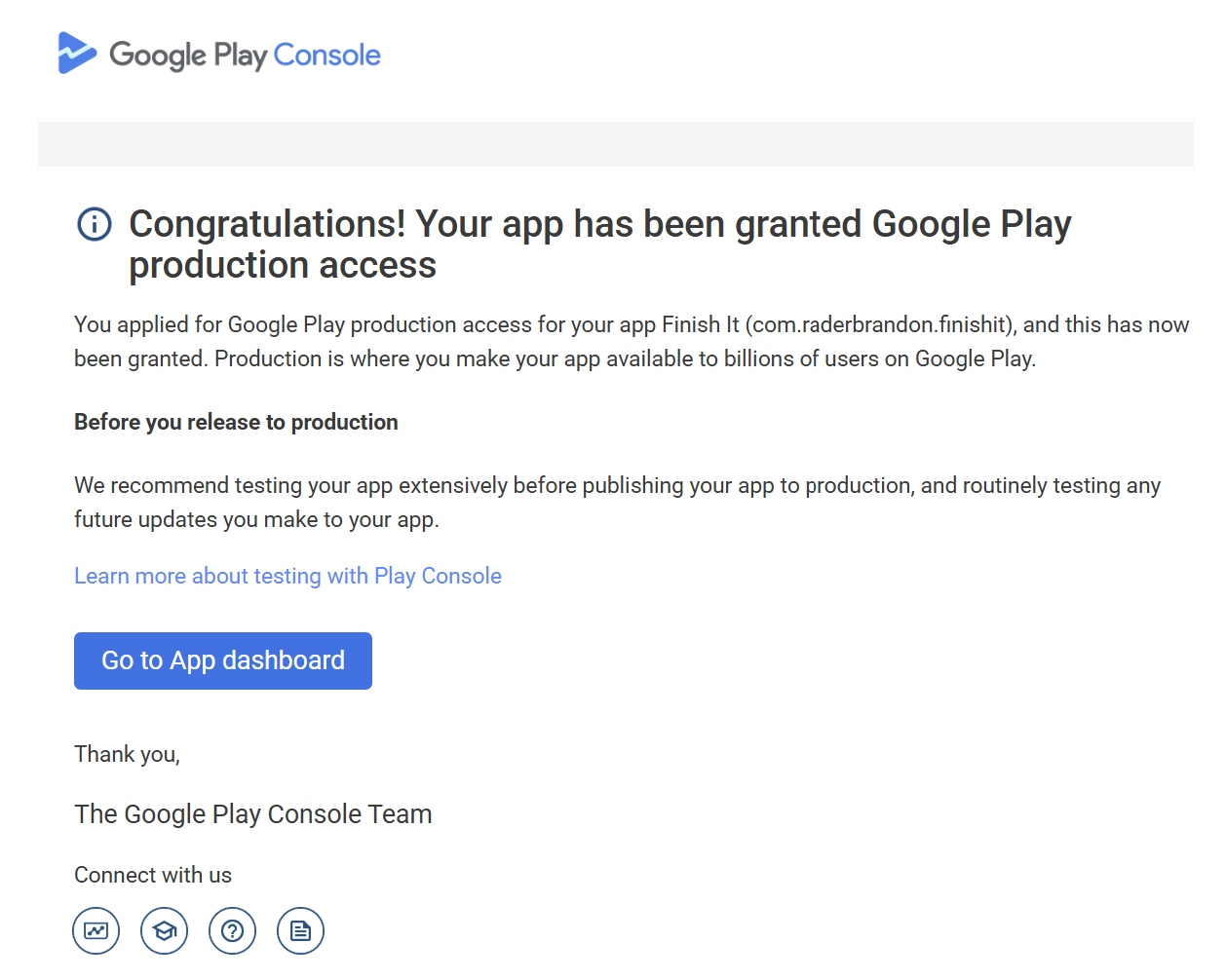
Quality QA Testing Reports
Clear, actionable reports with screenshots and evidence for every important issue found during testing.
Real Device Testing & Diagnostics
Real human testers use physical Android devices to test your app, verify real user flows, and provide clear testing evidence and professional QA reports.
Guaranteed App Approval
Transition your Kotlin Compose app to public production access with confidence. We deliver verified session logs and compliant Console activity.
One Cycle. Complete Approval.
Choose the ideal closed testing cycle for your Kotlin Compose release in the USA.
Loading Packages
Please wait while we fetch the best options for your region...
Frequently Asked Questions
Everything you need to know about passing your closed testing requirements.