Dedicated 12 Testers Google Play Console for Android Apps
Comply with Google Play Console’s closed testing approval criteria with 12 verified testers performing active daily interactions on real Android hardware and verified 14 day engagement for production access approval.
Google Play requires developers with new personal accounts to run a closed test with at least 12 testers for 14 straight days before they can publish an app. This rule is designed to improve app quality on the store. The fastest and most reliable way to meet this requirement is by using a dedicated testing service.
Google play closed testing 12 testers for Notes app projects
In late 2023, Google changed the rules for new developers. Before you can apply for production access and make your app live, you have to prove it's been tested. This isn't just a suggestion; it's a hard requirement.
Here’s the breakdown of what you need to do:
- Find 12 testers: You need a minimum of 12 people to join your test. You might see people searching for "dedicated 12 testers Google Play Console," but the official number you must hit is 12.
- Opt-in is Mandatory: Each of these 12 people must accept your testing invitation and opt-in to the test.
- 14 Consecutive Days: The clock starts after your 12th tester has opted in. From that point, they must remain opted-in for 14 days in a row. If someone leaves on day 5, the clock might reset or pause, creating a huge headache.
Why did Google do this? They want to filter out low-quality apps and spam before they ever hit the Play Store. It forces developers to get early feedback and ensures a baseline level of commitment. While it’s a good intention, it creates a major hurdle for solo developers and small teams.
The Challenge: Where Do You Find 12 reliable people?
This is the biggest problem developers face. Your first thought might be to ask friends and family. This rarely works out.
- They're Busy: Your friends have their own lives. They might forget to opt-in or accidentally leave the test.
- It's Awkward: Constantly reminding people to stay in a test for two weeks can be uncomfortable.
- Lack of Technical Skill: They might not provide useful feedback, which is the whole point of testing.
Your next thought might be online communities like Reddit or Facebook groups. This path is filled with risks. You'll get a lot of people who promise to help but disappear. Worse, you might attract scammers or people using bot accounts, which could put your entire Google Play Developer account at risk.
This is why a dedicated testing service is often the best solution. It removes the stress and uncertainty from the process.
The Smart Solution: Using a Dedicated Testing Service
A dedicated testing service provides real people to test your app and satisfy Google's requirements. Instead of spending weeks trying to gather and manage testers yourself, a service handles it all for you. They have a network of verified, reliable testers who understand the process.
They ensure that you get 12 people who opt-in and, most importantly, stay opted-in for the full 14-day period. This is the key to getting your app approved without delays.
To help you decide, let's compare the different ways you can get your testers.
Finding Testers: A Head-to-Head Comparison
| Feature | AppConsoleLab's Service | Finding Testers Yourself | Fiverr Bots |
|---|---|---|---|
| Reliability | Very High. Guaranteed 12 testers for 14 days. | Very Low. People drop out, forget, or lose interest. | Extremely Low. Often bots that get flagged by Google. |
| Time Investment | Minimal. 5-10 minutes to submit your app. | Huge. Days or weeks spent finding and managing people. | Fast. But the risk isn't worth the speed. |
| Risk of Account Ban | None. Uses real people with real devices. | Low. As long as you know the people are real. | Very High. Google's AI easily detects bot activity. |
| Process Management | Fully Managed. We handle invites and ensure compliance. | All on You. You have to track everything manually. | None. You pay and hope for the best. |
| Cost | Fixed Price. A clear investment for a guaranteed result. | Free (in money). Costs a lot of your time and stress. | Cheap. You get what you pay for: high risk, low quality. |
| Peace of Mind | Complete. You can focus on your app, not on chasing testers. | None. Constant worry about testers dropping out. | Constant Anxiety. Worrying about your account being terminated. |
Phase 1: Getting Your App Ready for Testers
Phase 2: Launching and Managing the Test
The Dangers of Using Bots or Cheap Gigs
It can be tempting to look for a cheap, fast solution on freelance websites. You might see offers for '12 Google Play testers for $5.' These are almost always scams using bot farms or virtual devices.
Google's systems are incredibly smart. They can easily tell the difference between a real person on a real phone and a script running on a server. If they detect suspicious activity, they won't just reject your app—they could terminate your entire developer account. That means you lose your $25 registration fee and are banned from publishing on Google Play for life. The small amount of money you save is not worth the massive risk.
Real Tester Engagement
Fake Bot Activity
Your Step-by-Step Guide to a Successful 14-Day Test
Navigating the Google Play Console can be confusing. Here is a simple timeline of what the process looks like when you use a dedicated service.
Submit Your App to a Service
Create the Closed Test
Testers Opt-In
The 14-Day Clock Starts
Monitor Your Progress
Apply for Production
Struggling with the 14-Day Testing Requirement?
Skip the hassle of recruiting unreliable testers. Our professional fleet of real Android devices guarantees Google Play compliance in exactly 14 days. Zero bots. Zero emulators. 100% production approval guarantee.
This process is designed to be as hands-off as possible for you. While the test is running, you can focus on marketing, preparing your app store listing, or working on your next feature update.
What Happens During the 14 Days?
During the two-week testing period, the testers provided by a service will keep your app installed. They are instructed not to leave the test under any circumstances. This guarantees the 'consecutive days' requirement is met.
You may or may not receive feedback. The primary goal of these services is to help you meet the publishing requirement. While some testers might send feedback if they find a major bug, detailed UX analysis is usually not included. The main value is the guaranteed compliance with Google's rule.
If you're looking for different options, it's a good idea to see how various providers stack up. There are a few reputable companies out there, and you can see a full breakdown in our list of the Best Google Play Closed Testing Services Compared (2026).
After the Test: Applying for Production
Once the 14-day requirement is fulfilled, the final step is to formally ask Google to review your app for publishing. You'll do this from the Dashboard or the 'Publishing overview' section of the console.
This is a separate step from the closed test. A human reviewer at Google will now check your app to make sure it follows all of their policies regarding content, privacy, and functionality. As long as your app is compliant, it will usually be approved within a few days, and you'll finally be able to click that 'Publish' button.
Getting past the 12-tester rule is the biggest hurdle. Once you're through it, the rest of the process is much more straightforward. Using a dedicated service is a small investment to save you weeks of stress and potential risk, letting you get your app to market faster and with confidence.
What happens if one of the 12 testers leaves the test early?
Can I update my app in the Google Play Console during the 14-day test?
Whats the difference between closed, open, and internal testing for this requirement?
How do I know the testers from a service are real people?
Does Google check if the testers actually use the app?
Do I have to pay the testers myself?
How We Deliver 12 Testers
Your journey to Google Play production access, simplified and automated.
Connect Account
Authenticate your account to initialize the 14-day QA fleet for your Android release.
Assign Testers
Upload your testing link. We assign 12 verified users with real Android devices to download and test your Android release.
Daily QA Runs
A dedicated testing supervisor is assigned to monitor progress while testers engage with your Android app and provide feedback throughout the testing period.
Launch Ready
Our lab maintains active installations for two weeks straight, ensuring a clean track record and providing a QA compliance log for your release.
Our Testing Infrastructure
Satisfy your Play Store Console testing obligations with our managed physical device fleet tailored for Android builds.
The 14-Day Production Guarantee
We complete the required 14-day closed testing process with real human testers and physical Android devices, while providing clear testing evidence and documentation throughout the process.
If Google specifically rejects production access due to insufficient testing engagement, you are covered by our free re-run or 100% refund guarantee, subject to our Refund Policy.
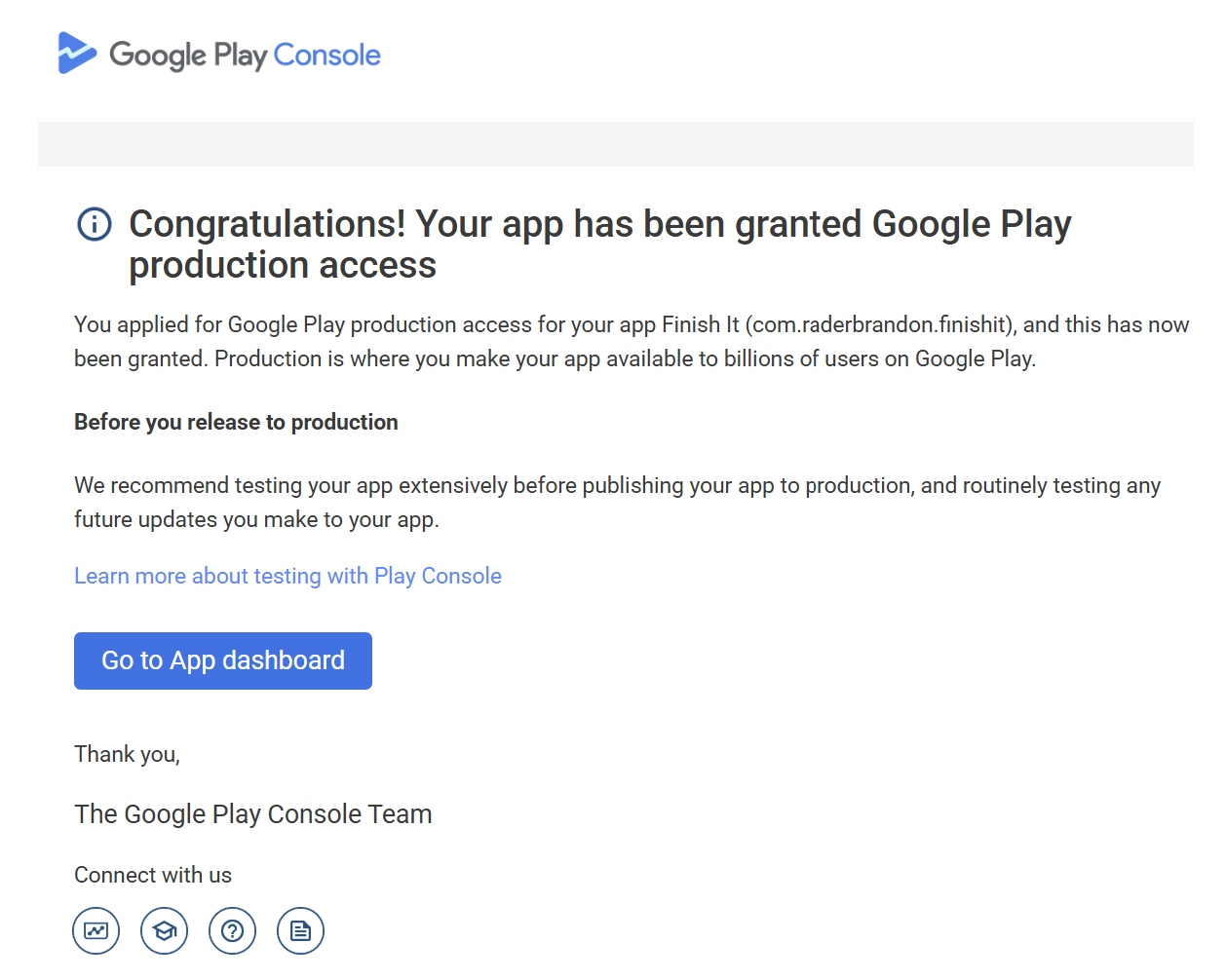
Verified Production Access
Quality QA Testing Reports
Clear, actionable reports with screenshots and evidence for every important issue found during testing.
Real Device Testing & Diagnostics
Real human testers use physical Android devices to test your app, verify real user flows, and provide clear testing evidence and professional QA reports.
Compliance Audit Passed
Our structured 14-day closed testing process is designed to meet Google Play's production requirements for your Android release.
Simple Closed Testing Pricing
Select the plan that fits your Android Notes app complexity.
Loading Packages
Please wait while we fetch the best options for your region...
Frequently Asked Questions
Everything you need to know about passing your closed testing requirements.