Verified 12 Testers Google Play Console for Android Apps
Comply with Google Play Console’s closed testing approval standards for your Unity app with 12 verified testers performing active daily interactions on real Android hardware and verified 14 day engagement for production access approval.
Google Play now requires developers with new personal accounts to test their app with at least 12 people for 14 straight days. This rule is a big change, and it stops many developers from publishing their apps. The goal of this guide is to show you exactly how to meet this requirement and get your app live.
You might have searched for "12 testers" because that was an older, informal number people talked about. The official rule is now 12 testers. Let's break down what you need to do.
14 day closed testing rules for Unity creators
Google introduced this policy to improve the quality of apps on the Play Store. In the past, anyone could create an account and publish an app in a day. This led to many low-quality, copycat, or even harmful apps flooding the store.
This new rule acts as a filter. It makes sure developers are serious about their apps and have received at least some feedback before reaching millions of users. By requiring a 14-day testing period with real people, Google wants to see that your app is stable and offers a good user experience. It’s a way to build trust with users and protect them from broken or malicious software. Think of it as a quality check before your app goes on the big stage.
The Exact Requirements You Must Meet
Let's get specific. The rules are not flexible, and you must meet every single one.
- A New Personal Account: This requirement applies if you created your developer account after November 13, 2023. Older accounts or company accounts have different rules.
- 12 testers Minimum: You need at least 12 different people to join your test. Not 19. Twelve is the magic number.
- Testers Must Opt-In: Each tester must accept your invitation to the closed test and install your app through the Google Play Store. A direct APK installation does not count.
- 14 Continuous Days of Testing: This is the most confusing part for many developers. Your group of 12+ testers needs to be opted-in for 14 days in a row. This doesn’t mean every person has to use the app every single second. It means the test must remain active with your roster of 12+ testers for the full two-week period. Google's system checks for this before you can apply for production access.
If you miss any of these points, the "Apply for production" button in your Google Play Console will remain grayed out. It’s a strict system.
The Challenge: Finding 12 reliable people
Getting 12 real people to test your app for two weeks sounds simple, but it's often the biggest hurdle.
Your first thought might be to ask friends and family. This can work for the first 5 or 6 people. But what about the other 15? People are busy. They might agree to help but then forget to opt-in. Or they might install the app on day one and never open it again. Chasing them with reminder messages gets awkward and is not very effective.
The next idea is often public forums like Reddit or Discord. You can find subreddits like r/AndroidAppTesters where people exchange testing. The problem here is reliability and trust. You might get people who opt-in and then immediately leave. Some are just trying to get you to test their app in return and won't give yours any real attention. It's a lot of work to manage, and the quality of testing can be very low. You spend more time managing people than working on your app.
This whole process can be a huge time sink and a source of major frustration. You built an app you're proud of, and now you're stuck playing project manager for a group of strangers.
Phase 1: Preparing Your App for Testers
Phase 2: Executing the 14-Day Test
Comparing Your Options for Finding Testers
You have three main paths you can take to find 12 testers. Each has clear pros and cons. Choosing the wrong one can cost you time, money, or even risk your developer account.
| Feature | AppConsoleLab's Service | Finding Testers Yourself (DIY) | Fiverr Bots |
|---|---|---|---|
| Success Rate | Very High | Low to Medium | Very Low (High Risk) |
| Time Investment | 5 minutes | 15-12 hours | 1 hour |
| Reliability | Guaranteed 12+ testers for 14 days | Very unpredictable; testers drop out | Testers are bots, often removed by Google |
| Risk of Ban | Zero | Low | High (violates Google's policies) |
| Cost | Fixed, affordable price | Free (but costs you time) | Cheap, but you get what you pay for |
| Real Feedback | Optional, but from real users | Can be good if you find the right people | None, bots don't provide feedback |
| Management | Completely hands-off | Constant follow-ups and management | None, but you'll be managing a crisis later |
Struggling with the 14-Day Testing Requirement?
Skip the hassle of recruiting unreliable testers. Our professional fleet of real Android devices guarantees Google Play compliance in exactly 14 days. Zero bots. Zero emulators. 100% production approval guarantee.
As you can see, the DIY method is free but extremely time-consuming and unreliable. The Fiverr route is cheap but dangerous; using bots or fake accounts is a direct violation of Google's Developer Program Policies and can lead to your app being removed and your account being terminated.
A professional service is designed to solve this specific problem. It provides a verified, managed group of real-device testers who will stay opted-in for the required 14-day period, guaranteeing you meet Google's requirements without the stress or risk.
What Does 'Continuous Testing' Actually Mean?
Google's wording of 'tested continuously for the last 14 days' causes a lot of confusion. It does not mean every tester needs to have your app open 24/7. It also doesn't mean you need to push a new update every single day.
Here’s what it really means:
- A Stable Roster: You must have a group of at least 12 testers who are opted-in to your test for 14 consecutive days. If your tester count drops to 19 on day 10, your 14-day clock might reset. This is why having a few extra testers (e.g., 22-25) is a good safety measure.
- Initial Engagement: Testers need to accept the invite and install the app from the Play Store. This is the first signal Google looks for.
- Signs of Life: Google's systems likely look for some signs of activity over the 14-day period. This could be occasional app opens or background processes. The goal is to prove that the app is installed on real, active devices, not just on a farm of virtual machines that are wiped after installation.
You don't need to force your testers to use every feature daily. You just need to ensure they join, install, and don't leave the test until the 14 days are up. For more details on this, our guide on How to Check Whether Your 14-Day Testing Requirement Is Complete can provide more insight.
Passive Opt-In
Active Feedback
The Step-by-Step Journey to Publishing Your App
Meeting the 12-tester requirement is a clear, sequential process. Whether you do it yourself or use a service, the steps you'll take in the Google Play Console are the same. A service just handles the hardest part for you: finding and managing the people.
Here is a timeline of what the process looks like from start to finish.
App Preparation
Create a Closed Test
Gather Your Testers
Invite and Onboard
The 14-Day Wait
Apply for Production
This process can feel slow, but it's a one-time requirement for your account. Once you pass it, you won't have to do it again for future apps.
Using a dedicated service simplifies this timeline dramatically. You essentially handle steps 1 and 2, and the service takes care of the most difficult parts—steps 3, 4, and 5. It ensures a smooth and predictable path to getting your app reviewed. If you are considering this path, looking at a comparison of the Best Google Play Closed Testing Services Compared (2026) can help you make an informed decision.
The Google Play 12-tester rule is a significant new step in the app publishing process, but it is not impossible to overcome. It forces a focus on quality and preparation, which is ultimately good for both developers and users. By understanding the specific requirements and choosing the right strategy—whether it's a careful DIY approach or a reliable testing service—you can successfully navigate this process and get your app into the hands of users worldwide.
Why did Google change the requirement from 12 or 14 testers to 12?
While there was never an official '12 tester' rule, the community often discussed numbers in that range. Google officially announced the 12-tester requirement in late 2023 to create a more robust and standardized quality check. They likely chose 12 as a number that is challenging enough to deter spammers but achievable for serious developers.
What happens if one of my 12 testers leaves the test early?
If your tester count drops below 12 at any point during the 14-day period, your progress timer may be paused or reset. This is a major risk of the DIY method. It's why professional services often over-provision with 22-25 testers to create a buffer and ensure your count never drops below the minimum.
How does Google know if testers are real people or bots?
Google uses a huge number of signals to verify the authenticity of user accounts. These include account age, device information, IP address, user behavior patterns, and history on Google services. Bot accounts created just for testing often have red flags in these areas and can be easily detected, putting your developer account at risk.
Does this 12-tester rule apply to app updates, or only new apps?
This requirement is specifically for new personal developer accounts trying to publish their first app. Once you have successfully passed this check and published an app, you generally do not need to repeat the 12-tester, 14-day process for subsequent apps or for updates to your existing apps.
Can I use a combination of my friends and a testing service?
Yes, absolutely. You can add your own group of testers (friends, family) to the same email list you provide to a service. As long as the total number of opted-in testers is 12 or more for the 14-day period, you will meet the requirement.
Can I pay people directly to be testers? Is that against the rules?
Paying for a managed testing service is allowed. However, directly paying individuals you find on public forums can be risky and may violate the spirit of Google's policies against incentivized installs if not handled properly. A service acts as a middleman, providing a legitimate platform for connecting developers with real testers.
How We Deliver 12 Testers
Your journey to Google Play production access, simplified and automated.
Connect Account
Authenticate your account to initialize the 14-day QA fleet for your Unity release.
Assign Testers
Upload your testing link. We assign 12 verified users with real Android devices to download and test your Unity release.
Daily QA Runs
A dedicated testing supervisor is assigned to monitor progress while testers engage with your Unity app and provide feedback throughout the testing period.
Launch Ready
Our lab maintains active installations for two weeks straight, ensuring a clean track record and providing a QA compliance log for your release.
Our Testing Infrastructure
Satisfy your Play Store Console testing obligations with our managed physical device fleet tailored for Unity builds.
The 14-Day Production Guarantee
We complete the required 14-day closed testing process with real human testers and physical Android devices, while providing clear testing evidence and documentation throughout the process.
If Google specifically rejects production access due to insufficient testing engagement, you are covered by our free re-run or 100% refund guarantee, subject to our Refund Policy.
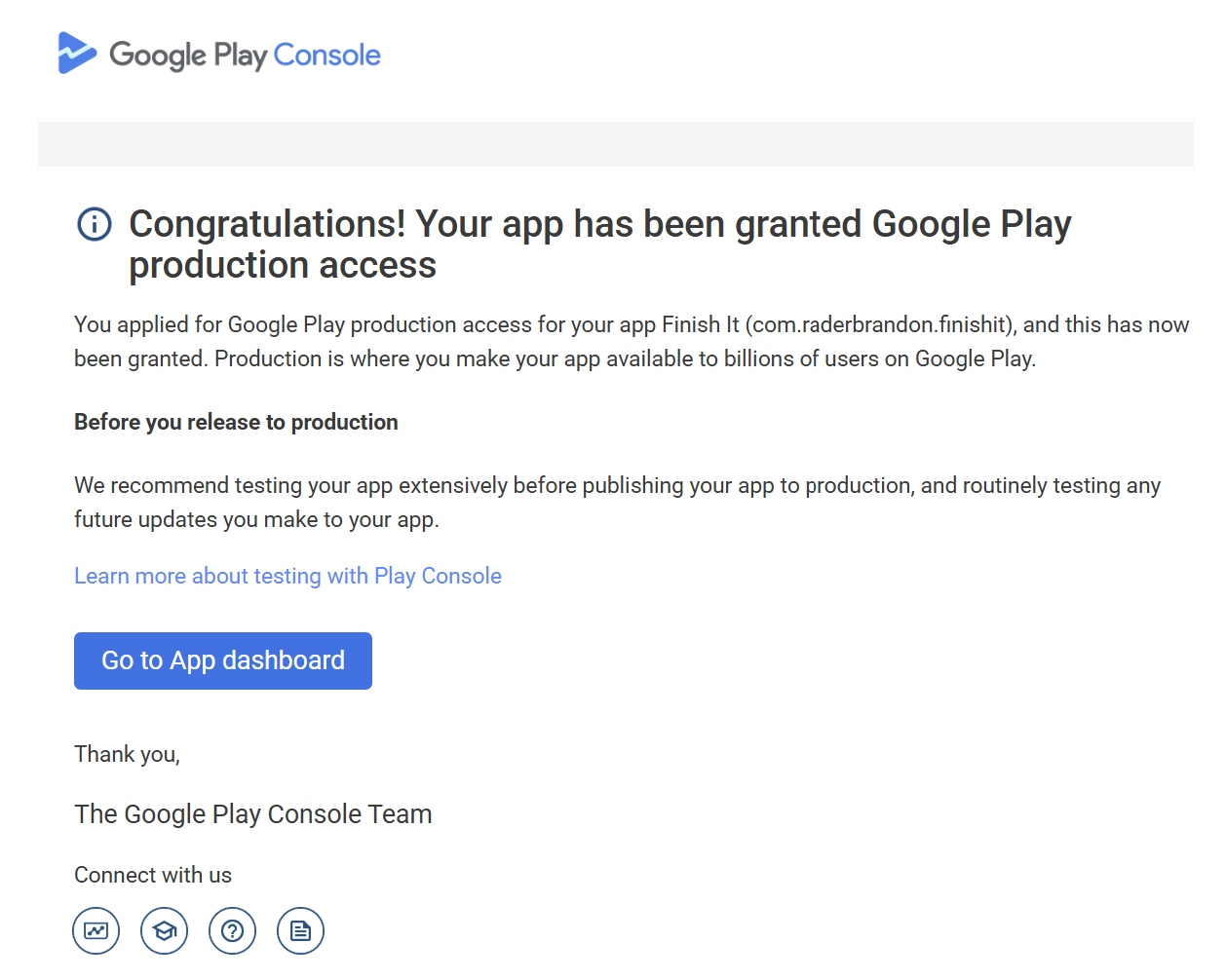
Verified Production Access
Quality QA Testing Reports
Clear, actionable reports with screenshots and evidence for every important issue found during testing.
Real Device Testing & Diagnostics
Real human testers use physical Android devices to test your app, verify real user flows, and provide clear testing evidence and professional QA reports.
Compliance Audit Passed
Our structured 14-day closed testing process is designed to meet Google Play's production requirements for your Unity release.
Simple Closed Testing Pricing
Select the plan that fits your Unity app complexity.
Loading Packages
Please wait while we fetch the best options for your region...
Frequently Asked Questions
Everything you need to know about passing your closed testing requirements.