Reliable Google Play Closed Testing Service for Android Apps
Meet Play Console closed testing eligibility with 12 testers providing real diagnostic sessions from real Android devices and compliant 14-day testing activity for full production access approval.
Google now requires new personal developer accounts to run a closed test before they can publish an app. You need at least 12 testers to be opted-in to your test for 14 consecutive days. This is Google's way of making sure real apps from real developers are hitting the store. It's a hurdle, but you can clear it easily with the right approach.
Google play closed testing requirements for No Bots focused apps apps
Getting your app ready for launch is exciting. You've coded, designed, and debugged. You're ready to share it with the world. Then you hit this 12-tester, 14-day rule. It sounds simple on paper, but it's a major headache for most developers.
Let's break down the challenge.
The Human Factor
First, you need to find 12 people. Not just any people. You need 12 people who will actually follow through.
Think about asking friends and family. They might say yes, but will they remember to click the opt-in link? Will they keep your test app on their phone for two full weeks? Life gets in the way. People forget. They clean up their phones and uninstall apps they aren't using. If even one person drops out, your 14-day clock can reset. It's frustrating.
The Management Nightmare
Okay, so maybe you try online communities like Reddit or Facebook groups. You might find people willing to test. But now you're a project manager. You have to:
- Gather 12+ email addresses.
- Make sure they are all valid Gmail accounts.
- Send out the opt-in links.
- Chase people who haven't opted in.
- Hope they all stay opted-in for 14 days straight.
It’s a lot of work. It takes time and energy away from what you should be doing: improving your app. You become a cat herder instead of a developer.
The Danger of Bad Testers
Desperate developers sometimes turn to cheap services on platforms like Fiverr. They promise 12 testers for a very low price. This is a huge risk.
Most of these services use bots or fake accounts. They might opt-in quickly, but Google is smart. Their systems can detect suspicious activity. They look at device types, IP addresses, and user behavior. If they flag your test as using bots, you could face serious consequences. Your app might be rejected, or worse, your entire developer account could be suspended. It's not worth the risk to save a few dollars.
A reliable Google Play closed testing service solves all these problems. It takes the management off your plate and ensures you meet Google's requirements safely and efficiently.
Choosing Your Path: A Head-to-Head Comparison
When you're facing the 14-day requirement, you have a few options. Each has its own pros and cons. Let's see how a professional service like ours stacks up against the DIY method and cheap bot services.
| Feature | AppConsoleLab's Service | Finding Testers Yourself | Fiverr Bots |
|---|---|---|---|
| Reliability | Very High. Guaranteed 12 testers for 14+ days. | Low. People forget, uninstall, or lose interest. | Extremely Low. High risk of detection and failure. |
| Time Investment | Minimal. About 5 minutes to submit your app. | Very High. Hours spent finding and managing people. | Low. But the time saved isn't worth the risk. |
| Account Safety | Maximum. We use real people on real devices. | Safe. As long as your testers are genuine. | Dangerous. High risk of account suspension. |
| Process | Streamlined. We handle everything for you. | Manual & Messy. You track everything in a spreadsheet. | Black Box. You have no idea what's happening. |
| Success Guarantee | Guaranteed. We ensure you pass the requirement. | Uncertain. Depends entirely on your network. | Likely to Fail. Google's systems are advanced. |
| Cost | Fixed Price. A clear investment for a clear result. | Free (in money). Costs you a lot in time & stress. | Cheap. You get what you pay for: a huge risk. |
Looking at the table, the choice becomes clear. While finding testers yourself seems free, the cost in time and stress is often much higher than the price of a dedicated service. And using bots is simply not an option for any serious developer.
Understanding the 14-Day Rule in Detail
Google's policy isn't just about getting 12 people to install your app. The details matter. Getting them wrong can lead to long delays.
The most important thing to understand is the "consecutive days" part. The 14-day countdown only begins after your 12th tester has accepted the invitation and opted in. From that moment, you need to maintain at least 12 opted-in testers for 14 full days without interruption.
If tester number 12 decides to opt-out on day 9, your count drops to 19. The 14-day clock stops. You won't be able to apply for production access until you get another tester to opt-in, bringing your count back to 12. Then, the 14-day clock starts all over again from Day 1. This is the single biggest reason why DIY testing fails. It's incredibly difficult to ensure 12 people stay committed for two weeks.
A reliable service manages this for you. They often have a pool of backup testers ready to go. If someone drops out, they can quickly get a replacement to opt-in, minimizing any disruption to your 14-day countdown. This is a huge stress reliever. You can learn more about tracking your progress in our guide on How to Check Whether Your 14-Day Testing Requirement Is Complete.
Struggling with the 14-Day Testing Requirement?
Skip the hassle of recruiting unreliable testers. Our professional fleet of real Android devices guarantees Google Play compliance in exactly 14 days. Zero bots. Zero emulators. 100% production approval guarantee.
This whole process can feel a bit overwhelming. Let's simplify it with a clear checklist to make sure you have everything in order before you start.
Phase 1: Getting Your App Ready
Phase 2: Setting Up the Closed Test
The Goal of the Test: What Google Really Wants
It's easy to get confused about the purpose of this test. Are you supposed to be gathering detailed bug reports and user feedback? While that's always a good idea, it's not the primary goal of this specific requirement.
Passive Opt-In (The Requirement)
Active Feedback (A Bonus)
Focusing on the passive opt-in requirement simplifies everything. You don't need to build a complex feedback system or hound testers for their opinions. You just need to ensure they join the test and stay in it. This is exactly what a professional testing service is built to do.
Your Path to Publishing: A Step-by-Step Timeline
Using a reliable service turns a stressful, uncertain process into a clear, predictable timeline. Here’s what it looks like from start to finish.
Place Your Order
We Assemble Your Testers
You Add the Tester List
The 14-Day Test Begins
Continuous Monitoring
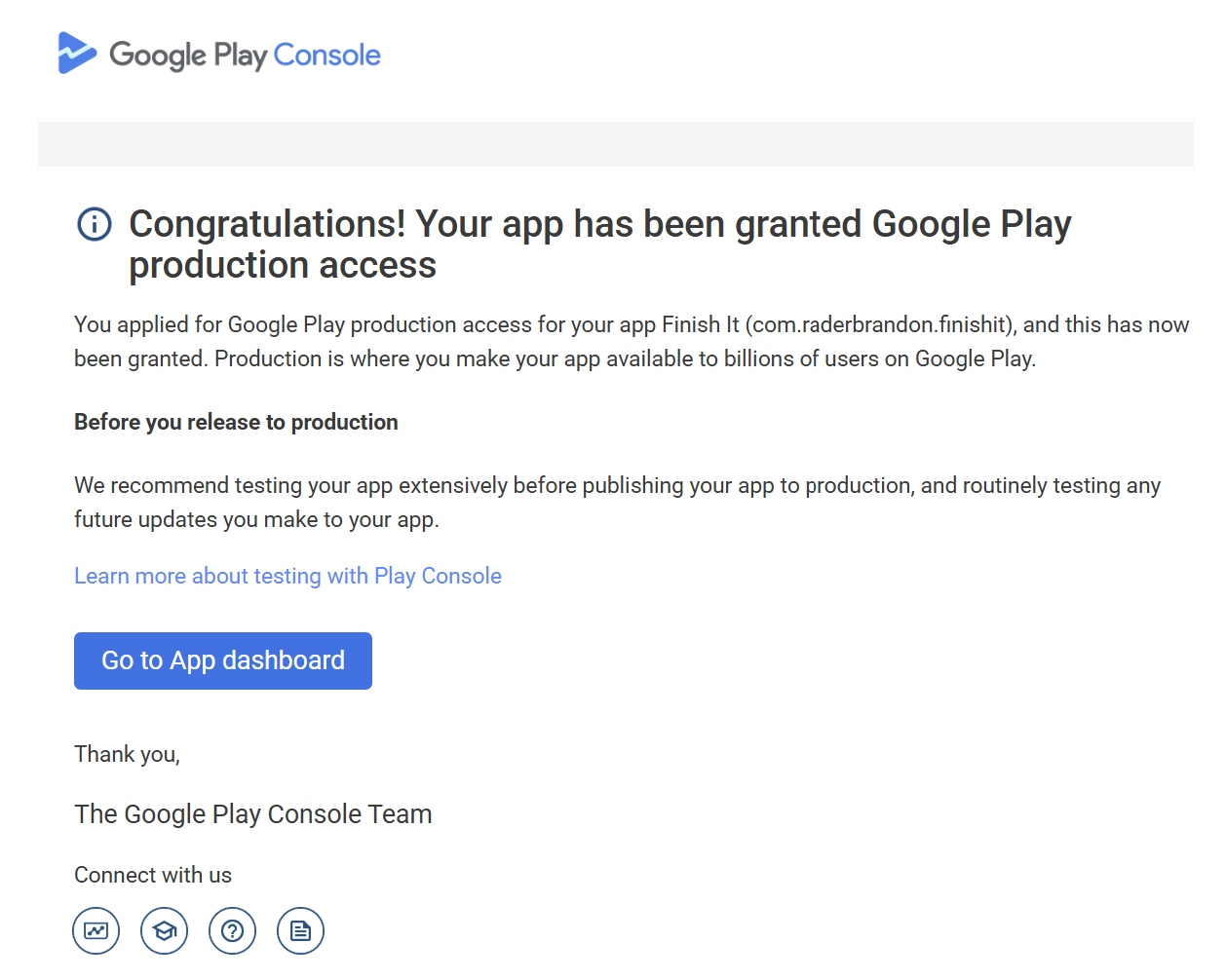
Unlock Production Access
Why a Reliable Service is the Only Way to Go
The key word in all of this is 'reliable.' You need a service that doesn't just promise testers, but guarantees a successful outcome. An unreliable service is just as bad as using bots. It leads to delays, frustration, and wasted money.
A reliable service provides:
- Real Human Testers: Verified people using real Android devices.
- Guaranteed 14-Day Period: They promise to keep the testers opted-in for the full duration.
- Clear Communication: They tell you what's happening at every step.
- Support: If you have questions or issues, they are there to help.
Investing in a high-quality service is an investment in your app's future. It lets you bypass the most annoying new hurdle in app publishing and focus on what you do best: building great applications. If you are looking for the right partner, check out our comprehensive comparison of the Best Google Play Closed Testing Services Compared (2026). It can help you make an informed decision.
Don't let the 12-tester rule stop you. See it as the final checkpoint before you reach the finish line. With the right partner, you can cross it quickly, safely, and without the stress.
What happens if a tester uninstalls the app during the 14 days?
Can I just use my friends and family as testers?
Does Google check the location or demographics of the testers?
How long does the whole process take from start to finish?
Is it safe to give a testing service my apps opt-in link?
Whats the difference between closed, open, and internal testing for this rule?
Our QA Process
How we deploy real devices and guarantee compliance for your release.
Choose Package
Sign in with Google to configure the closed testing environment for your Android build.
Submit Link
Submit your Google Play Console testing link, and our team will assign qualified testers from our testing network to join your Android closed testing release.
Active Testing
A QA supervisor monitors daily check-ins, ensuring 12 unique Android users engage with your Android build every single day.
Get Approved
We guarantee 14 consecutive days of active user check-ins to satisfy Google's compliance policies, delivering an audit-ready PDF feedback report.
The Premium QA Advantage
Experience a next-generation testing infrastructure built for Google Play compliance for your Android release.
The 14-Day Production Guarantee
We complete the required 14-day closed testing process with real human testers and physical Android devices, while providing clear testing evidence and documentation throughout the process.
If Google specifically rejects production access due to insufficient testing engagement, you are covered by our free re-run or 100% refund guarantee, subject to our Refund Policy.
Verified Production Access
Quality QA Testing Reports
Clear, actionable reports with screenshots and evidence for every important issue found during testing.
Real Device Testing & Diagnostics
Real human testers use physical Android devices to test your app, verify real user flows, and provide clear testing evidence and professional QA reports.
Production Access Secured
Get your Android build approved on the first try. We create an audit-ready compliance profile that proves thorough quality assurance.
Affordable Compliance Cycles
Transparent plans built to satisfy Google Play Console guidelines for your Android build.
Loading Packages
Please wait while we fetch the best options for your region...
Frequently Asked Questions
Everything you need to know about passing your closed testing requirements.