Qualified Google Play Closed Testing Service for Android Apps
Pass Google Play closed testing compliance requirements worldwide using 12 testers to generate genuine daily activity on physical Android handsets and genuine 14-day QA activity to guarantee production access clearance.
Google now requires developers with new personal accounts to run a closed test. This test must have at least 12 testers, and it must run for 14 consecutive days. Only after you complete this can you apply to publish your app for everyone.
This rule is a big hurdle for many new developers. Finding 12 reliable people is hard. Making sure they stay opted-in for two full weeks is even harder. This guide explains exactly what you need to do and how a qualified Google Play closed testing service can solve this problem for you, saving you time and stress.
Closed testing services for Android apps apps
Google introduced this policy to improve the quality of apps on the Play Store. For years, the store was flooded with low-effort, spammy, or even harmful apps. It was too easy for anyone to create an account and publish an app with little to no oversight.
This new testing requirement acts as a quality filter. It forces developers to prove a few things:
- You're serious: You've invested enough time in your app to get it ready for at least 12 people.
- Your app works: It's stable enough for a group of people to test without constant crashes.
- There's real interest: You can find at least 12 people who are willing to try your app.
By making you run a closed test, Google ensures that a basic level of quality and commitment is met before an app can reach millions of users. It’s a roadblock for spammers but a manageable step for legitimate developers, especially with the right help.
The Two Big Hurdles: 12 testers and 14 Days
The requirement sounds simple on the surface, but the details are where developers get stuck. Let's break down the two main challenges.
Challenge 1: Finding 12 real, Reliable Testers
Your first thought might be to ask friends and family. This can work for a few people, but finding 12 can be tough.
- Not everyone has an Android phone.
- People are busy and might forget to opt-in or download the app.
- They might not provide useful feedback.
You can't just use any 12 people. You need testers who will actually follow through. They must click the opt-in link, accept the test, and download the app from the Play Store. If they don't complete these steps, they don't count toward your total. Scrambling to find people on social media or forums is time-consuming and often yields unreliable results. People promise to help but then disappear.
Challenge 2: The Continuous 14-Day Period
This is the most misunderstood part of the rule. The 14-day countdown doesn't start until you have at least 12 testers who have opted-in. And it must be a continuous 14-day period.
What does "continuous" mean? It means you need to maintain at least 12 opted-in testers for the entire two weeks. If your tester count drops to 19 on day 10 because someone leaves the test, Google might reset your 14-day clock. This is a huge source of frustration. You could be stuck in a loop, constantly trying to replace testers and restart your countdown.
This is why using a professional service is so effective. They guarantee that the required number of testers will remain active for the full duration, ensuring you meet the requirement on your first try.
How to Set Up a Closed Test in Google Play Console
Setting up the test itself is straightforward. The hard part is finding the people. Here’s how you do it in your Google Play Console:
- Upload Your App: Build a signed AAB or APK file of your app. In the Play Console, go to the "Testing" section and select "Closed testing." Create a new release and upload your app file.
- Create a Tester List: Navigate to the "Testers" tab within your closed testing track. Here, you'll create a list of testers. You can give it a name like "Initial 12 testers."
- Add Tester Emails: You need to add the Gmail addresses of your testers to this list. You can upload a .csv file or enter them one by one. Make sure you have at least 12.
- Get the Opt-in Link: After saving your email list, the Play Console will provide a public opt-in link. This is the link you send to your testers.
- Share the Link: Send the link to all your testers. They need to click it and accept the invitation to become a tester. Once they accept, they can download your app from the Play Store.
You can monitor the status on your dashboard to see how many testers have successfully opted in. This is where you'll watch to make sure your count stays at or above 12.
Struggling with the 14-Day Testing Requirement?
Skip the hassle of recruiting unreliable testers. Our professional fleet of real Android devices guarantees Google Play compliance in exactly 14 days. Zero bots. Zero emulators. 100% production approval guarantee.
The Dangers of Cheap and "Bot" Testing Services
When you search for help, you'll find many cheap services on platforms like Fiverr or other freelance sites. Be very careful. Many of these services use bots or low-quality accounts to meet the numbers.
Using these services is risky for several reasons:
- Google Can Detect Bots: Google's systems are smart. They can detect suspicious activity, like 12 testers joining from the same IP address range, using brand-new accounts, or all uninstalling the app at the same time.
- Account Suspension: If Google suspects you are trying to manipulate their testing policy, they can reject your app or, in the worst case, suspend your entire developer account. A $50 gig isn't worth losing your ability to publish apps forever.
- No Real Feedback: Bots can't give you feedback. The purpose of a test is to find bugs and improve your app. A qualified service uses real people who can tell you what's wrong, what's good, and what's confusing.
A "qualified" service is one that uses real people with real, active Google accounts on physical Android devices. They understand Google's policies and ensure your test is completed without raising any red flags. When looking for help, always ask if they use real people. If the price seems too good to be true, it probably is.
Comparing Your Options: DIY vs. Bots vs. A Professional Service
Choosing how to handle your closed test is a big decision. Let's compare the three main paths you can take.
| Feature | AppConsoleLab's Service | Finding Testers Yourself (DIY) | Fiverr Bots |
|---|---|---|---|
| Google Policy Compliance | ✅ High. Managed by experts who know the rules. | ⚠️ Medium. You are responsible for everything. Easy to make mistakes. | ❌ Very Low. High risk of account suspension. |
| Tester Reliability | ✅ Guaranteed. Testers are contracted to stay for 14+ days. | ⚠️ Low. Friends and family might forget or drop out. | ❌ None. Bots just opt-in; they don't stay. |
| Time Investment | ✅ Low. Set it up once and let the service handle it. | ❌ High. Requires constant chasing, communication, and management. | ⚠️ Medium. Seems fast, but you'll waste time if it fails. |
| Real Feedback | ✅ Yes. You get feedback from real users on real devices. | ⚠️ Maybe. Depends on who you ask. | ❌ No. Bots cannot provide any useful insights. |
| Success Rate | ✅ Very High. Designed to meet the requirement on the first try. | ⚠️ Low to Medium. Often requires multiple attempts. | ❌ Very Low. High chance of rejection. |
| Overall Stress | ✅ Minimal. It's a hands-off, worry-free process. | ❌ High. A major source of frustration for new developers. | ❌ High. The anxiety of a potential ban is stressful. |
As you can see, trying to manage it yourself is time-consuming and stressful. Using bots is a gamble that can cost you your developer account. A professional service like AppConsoleLab is an investment in getting it done right the first time. For a deeper dive, check out our guide on the Best Google Play Closed Testing Services Compared (2026).
Your Step-by-Step Plan for a Successful Test
Here is the entire journey from uploading your app to unlocking production access.
App Upload & Configuration
Tester List Creation
Share the Opt-In Link
The 14-Day Countdown Begins
Monitor & Collect Feedback
Unlock Production Access
Understanding Tester Engagement
Not all testers are created equal in the eyes of Google. It's important to understand the difference between someone who just clicks a link and someone who is genuinely part of your test.
Active Testers
Passive Testers
The Complete Pre-Launch Testing Checklist
Before you even start looking for testers, make sure your app and process are ready. Follow this checklist to ensure a smooth run.
Phase 1: App and Store Preparation
Phase 2: Executing the 14-Day Test
What Happens After the 14 Days?
Once you have successfully maintained 12+ opted-in testers for 14 straight days, a new section will appear in your Google Play Console dashboard. It will show that the testing requirement has been met. You will then be able to apply for production access.
This application is usually a simple button click. Google's review team will then do a final check on your app to ensure it complies with all policies, and then you'll be cleared to publish your app to the world. To see exactly what this looks like, read our guide on How to Check Whether Your 14-Day Testing Requirement Is Complete.
Meeting Google's closed testing requirement is the final gatekeeper before you can launch. Don't let the challenge of finding 12 testers for 14 days stop you. While you can try to do it yourself, a qualified service removes the risk, stress, and uncertainty. It allows you to focus on what you do best: building a great app.
Do I need to update my app during the 14-day test?
What if a tester leaves during the 14-day period?
Can I use testers from any country?
Do the testers need to use the app every day?
Does this rule apply to established developer accounts?
How long does it take to get production access after the test is complete?
The Testing Pipeline
A straightforward 4-step process to get your Android app approved.
Sign In
Connect your Google account and choose your preferred closed testing package for your Android app.
Opt-In URL
Share your Play Store opt-in URL. We immediately deploy 12 real testers to launch and review your Android app daily.
Testing Begins
Our crew initiates daily launch sessions on physical devices, verifying usability and logging crashes for your Android app.
Compliance Complete
We continuously perform closed app testing for 14 days to help you meet Google Play production requirements. We also provide a compliance report.
Why Developers Trust Us
Deploy your Android app onto real retail-grade handsets using our secure laboratory environment.
The 14-Day Production Guarantee
We complete the required 14-day closed testing process with real human testers and physical Android devices, while providing clear testing evidence and documentation throughout the process.
If Google specifically rejects production access due to insufficient testing engagement, you are covered by our free re-run or 100% refund guarantee, subject to our Refund Policy.
Verified Production Access
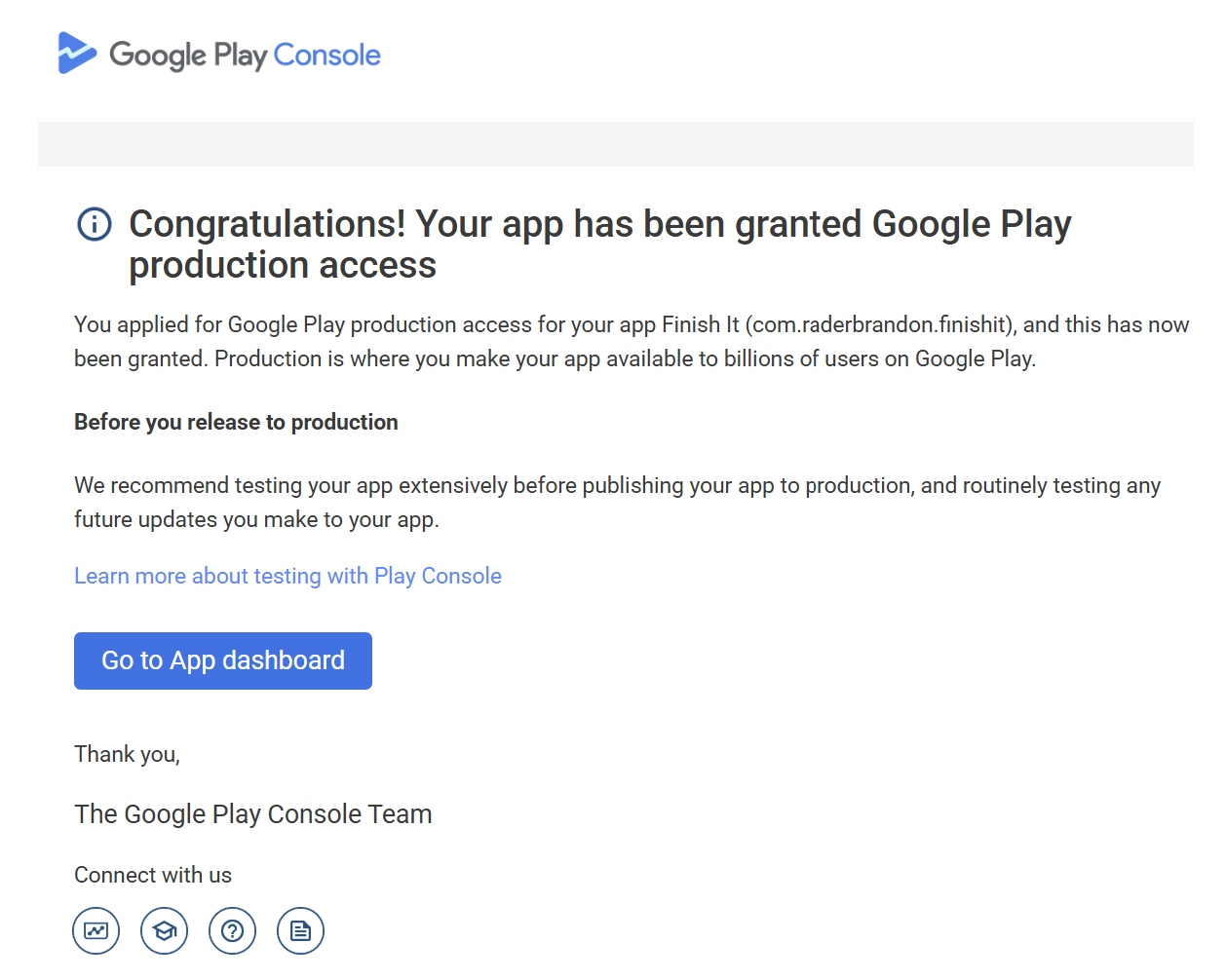
Quality QA Testing Reports
Clear, actionable reports with screenshots and evidence for every important issue found during testing.
Real Device Testing & Diagnostics
Real human testers use physical Android devices to test your app, verify real user flows, and provide clear testing evidence and professional QA reports.
Guaranteed App Approval
Transition your Android app to public production access with confidence. We deliver verified session logs and compliant Console activity.
One Cycle. Complete Approval.
Choose the ideal closed testing cycle for your Android release worldwide.
Loading Packages
Please wait while we fetch the best options for your region...
Frequently Asked Questions
Everything you need to know about passing your closed testing requirements.