Trusted 12 Testers for Google Play in Canada
Meet Play Console closed testing production requirements in Canada with 12 verified testers performing active daily interactions on real Android hardware and verified 14 day engagement for production access approval.
Closed testing 14 days requirement for Android apps
Google now requires new developers with personal accounts to test their app with at least 12 people for 14 continuous days. This rule is part of Google's effort to improve app quality and make sure new apps are stable and useful before they reach a wider audience.
Before this change, anyone could publish an app quickly. This led to many low-quality or abandoned apps on the Play Store. Google's new policy ensures that every new app gets a basic level of human testing. It's a quality check. The goal is to get real feedback from real people over a two-week period. This helps you find bugs and get suggestions before your official launch.
Why 12 testers and 14 Days?
The numbers aren't random. Twelve testers provide enough diverse feedback to spot major issues. Testing across different devices, Android versions, and usage habits is important. A single developer or a small team can easily miss bugs that appear on another person's phone.
The 14-day period is just as important. It’s not enough for testers to just install the app and forget about it. Google wants to see continuous testing. This means people should be using your app over two weeks. This extended period helps uncover issues that don't appear on the first day, like problems with notifications, battery drain, or performance degradation over time. It shows Google that your app is engaging enough for people to open it more than once.
Meeting this requirement is mandatory. If you don't complete this closed test correctly, you won't be able to apply for production access. Your app will be stuck in the testing phase, unable to be published for everyone on the Google Play Store.
The Challenge: Finding Reliable Testers
Finding 12 people who will commit to testing your app for two weeks is harder than it sounds.
- Friends and Family: You might ask friends and family, but they can be unreliable. They might agree to help but forget to install the app or use it consistently. Their feedback can also be biased because they don't want to hurt your feelings.
- Online Forums: You could post on forums like Reddit or developer communities. This can work, but it's time-consuming. You have to vet each person, manage communications, and chase them to make sure they are actually testing. You also risk people not taking it seriously.
- Freelance Sites: Some developers turn to freelance websites. The problem here is quality. Many sellers use bots or fake accounts that simply install the app and do nothing else. Google's systems are smart and can often detect this kind of low-quality activity. If Google suspects you used bots, your test might be invalidated, and you'll have to start over. This can even put your developer account at risk.
This is where a dedicated service becomes a huge help. A trusted service provides real, verified people who understand the testing process. They follow the rules, use the app as required, and give you peace of mind.
How to Properly Run a 14-Day Closed Test
To get approval from Google, you need to follow the rules exactly. Just having 12 people install your app isn't enough. Here’s what you need to do.
Step 1: Set Up Your Closed Test in Google Play Console
First, you need to create a closed testing track.
- Go to your Google Play Console.
- Select your app.
- In the left menu, go to Release > Testing > Closed testing.
- Click Create track. Give it a name you'll remember, like "12 testers Group".
- Upload your app's AAB or APK file.
- Go to the Testers tab. Here, you will create an email list for your testers. Create a new list and add the 12 email addresses provided by your testing service or the people you found yourself.
- Once the list is added, copy the "Join on web" link. This is the link you will share with your testers. They must use this link to opt into the test.
Step 2: Ensure Testers Opt-In and Stay In
This is a big one. Each of the 12 testers must click the opt-in link and agree to become a tester. After they opt-in, they can download the app from the Google Play Store.
Crucially, they must remain "opted-in" for the entire 14-day period. If a tester opts out even for a day, the clock for that tester might reset. This is why using a managed service is safer—they ensure testers stay opted-in. If you're managing this yourself, you'll need to remind your testers not to leave the program until you give them the all-clear.
Step 3: Encourage Active App Usage
Google's review team looks for signs of genuine testing. This means testers should open and use your app regularly during the 14-day period. A simple install-and-delete won't work.
What does "active usage" mean? There's no public formula, but it's safe to assume Google tracks things like:
- Daily app opens.
- Time spent in the app.
- Interactions with different features.
- Crash reports and "Application Not Responding" (ANR) events.
A good testing service will instruct its testers to use the app naturally every day. If you're managing testers, you should give them simple tasks or features to explore each day to encourage this activity.
You can monitor your progress in the Play Console. For a detailed walkthrough, see our guide on how to check whether your 14-day testing requirement is complete. This dashboard will show you how many testers have been active over the last 14 days. You need to see a solid 12 testers for 14 consecutive days before you can apply for production.
Struggling with the 14-Day Testing Requirement?
Skip the hassle of recruiting unreliable testers. Our professional fleet of real Android devices guarantees Google Play compliance in exactly 14 days. Zero bots. Zero emulators. 100% production approval guarantee.
Choosing Your Testers: A Comparison
You have a few options for finding your 12 testers. Each comes with its own pros and cons. Let's break them down.
| Feature | AppConsoleLab's Service | Finding Testers Yourself | Fiverr Bots |
|---|---|---|---|
| Reliability | ✅ High | ⚠️ Medium to Low | ❌ Very Low |
| Compliance | Guaranteed to meet Google's rules | You are responsible for ensuring rules are met | High risk of being flagged by Google |
| Speed | ⚡ Fast (starts within 24 hours) | Slow (can take weeks to find 12 people) | Looks fast, but often fails verification |
| Management | Hands-off, fully managed for you | High effort, requires constant communication | No management, just a transaction |
| Tester Quality | Real, verified users on real devices | Mixed bag (friends, strangers from forums) | Bots or low-quality click-farm accounts |
| Feedback | Optional, but real feedback is possible | Can be good, but often biased or inconsistent | None, or fake, generic feedback |
| Cost | Fixed, predictable price | Can be "free" but costs a lot of your time | Cheap, but you get what you pay for (and risk more) |
As you can see, while managing testers yourself seems free, the time and effort involved are significant. And the risk of using cheap bot services is just too high. A professional service like AppConsoleLab is designed specifically to solve this problem efficiently and reliably. It's often the smartest investment you can make to get your app published without delays. If you're exploring options, our full analysis of the best Google Play closed testing services compared (2026) offers a deeper look.
Genuine Human Testers
Automated Bot Testing
Your Path to a Successful Launch
Getting through the 12-tester requirement is a clear, step-by-step process. Here’s a simple timeline of what to expect when you use a trusted service.
Submit Your App
Tester Onboarding
Testers Opt-In
The 14-Day Test
Monitoring and Reporting
Approval and Next Steps
This structured approach removes all the guesswork and stress. You can focus on improving your app while the testing requirement is handled professionally.
A Checklist for Getting Started
Follow these steps to ensure you're fully prepared for your closed test.
Phase 1: Pre-Launch Setup
Phase 2: Executing the Test
By following this simple plan, you can navigate Google's requirement smoothly. The key is to be organized and use reliable testers who won't waste your time. Don't let this step hold you back from sharing your amazing app with the world.
What happens if one of my 12 testers quits before 14 days?
Can I use my friends and family as testers?
How does Google know if the testers are real?
Do I have to pay the testers myself?
Does the app have to be perfect before starting the test?
Can I update my app during the 14-day testing period?
How We Deliver 12 Testers
How we deploy real devices and guarantee compliance for your release.
Connect Account
Sign in with Google to configure the closed testing environment for your Android build in Canada.
Assign Testers
Submit your Google Play Console testing link, and our team will assign qualified testers from our testing network to join your Android closed testing release.
Daily QA Runs
A QA supervisor monitors daily check-ins, ensuring 12 unique Android users engage with your Android build every single day.
Launch Ready
We guarantee 14 consecutive days of active user check-ins to satisfy Google's compliance policies, delivering an audit-ready PDF feedback report.
Our Testing Infrastructure
Experience a next-generation testing infrastructure built for Google Play compliance for your Android release in Canada.
The 14-Day Production Guarantee
We complete the required 14-day closed testing process with real human testers and physical Android devices, while providing clear testing evidence and documentation throughout the process.
If Google specifically rejects production access due to insufficient testing engagement, you are covered by our free re-run or 100% refund guarantee, subject to our Refund Policy.
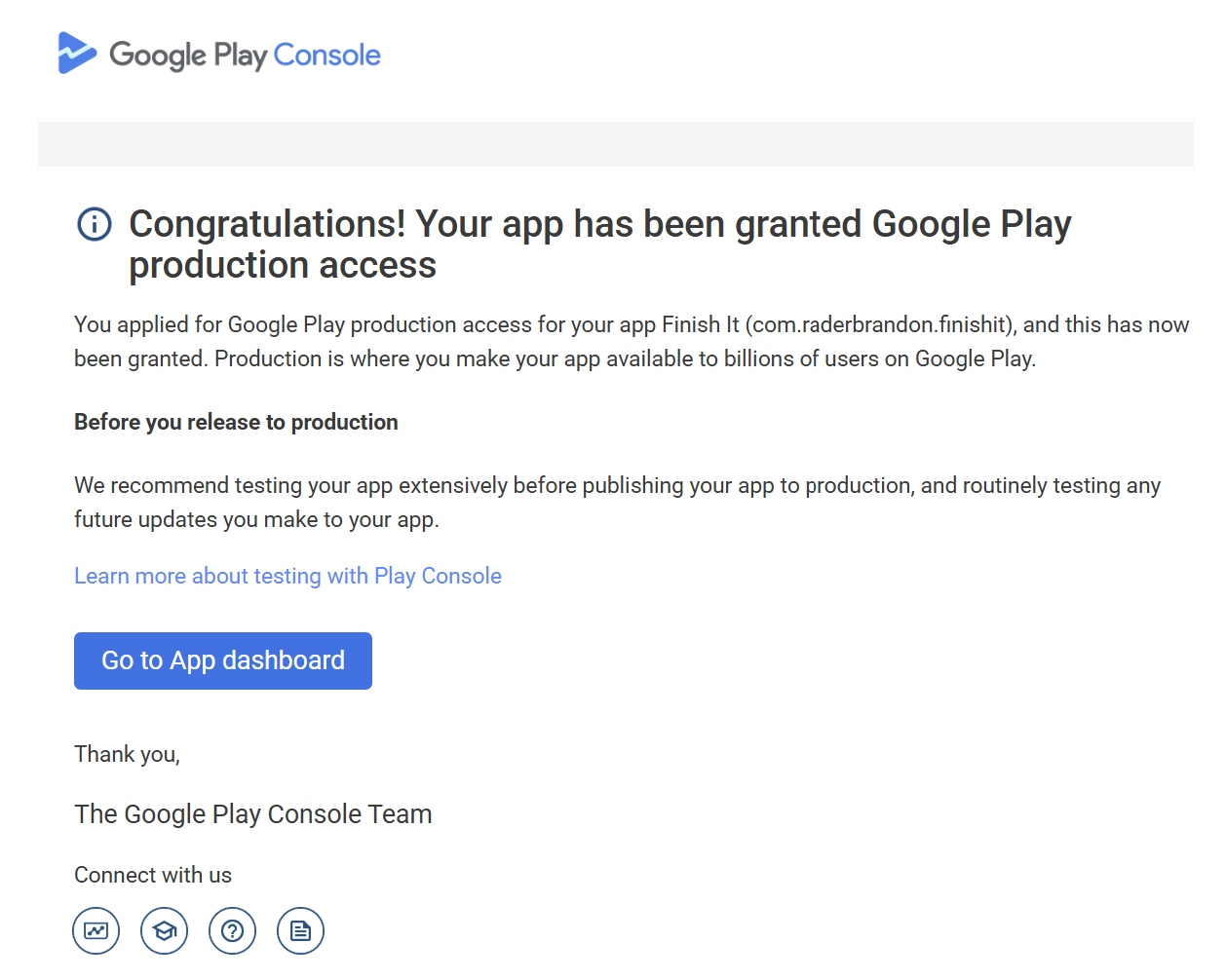
Verified Production Access
Quality QA Testing Reports
Clear, actionable reports with screenshots and evidence for every important issue found during testing.
Real Device Testing & Diagnostics
Real human testers use physical Android devices to test your app, verify real user flows, and provide clear testing evidence and professional QA reports.
Compliance Audit Passed
Get your Android build approved on the first try. We create an audit-ready compliance profile that proves thorough quality assurance.
Affordable Compliance Cycles
Transparent plans built to satisfy Google Play Console guidelines for your Android build.
Loading Packages
Please wait while we fetch the best options for your region...
Frequently Asked Questions
Everything you need to know about passing your closed testing requirements.