Dedicated 12 Testers for Google Play for Android Apps
Meet Play Console closed testing publishing requirements with 12 testers providing real diagnostic sessions from real Android devices and compliant 14-day testing activity for full production access approval.
Play store closed testing for Fast Approval focused apps developers
Google Play now requires new personal developer accounts to run a closed test with at least 12 testers for 14 continuous days before they can publish an app. This rule is designed to improve the quality of apps on the store. While many developers search for "dedicated 12 testers for Google Play," the actual number you need is 12. This guide will walk you through exactly what this means and how to meet the requirement smoothly.
The process can feel confusing, but it's straightforward once you understand the steps. It's about showing Google that your app has been reviewed by real people over a set period.
Why 12 testers, Not 12? Understanding the Rule
Let's clear up the confusion right away. The official requirement from Google is 12 testers. You need a minimum of 12 people who have opted-in to your closed test. The "12 testers" number might come from older, outdated advice or misunderstood guidelines. Sticking to the official number is the only way to guarantee you'll pass the review.
Here are the core parts of the requirement:
- Who it affects: This rule applies to personal developer accounts created after November 13, 2023.
- The magic number: You need at least 12 individual testers to join your test.
- The time frame: Those 12 testers must remain opted-in for 14 days in a row. If someone leaves on day 10, your clock might reset.
- The goal: Google wants to see a period of active testing and feedback before your app is available to the public. This helps filter out low-quality or malicious apps.
Failing to meet this requirement means your app will be stuck in review. You won't be able to apply for production access until the 14-day test is complete. This can cause significant delays in your launch schedule.
The Pitfalls of Finding Testers Yourself
Many developers first turn to friends, family, or online forums to find testers. This seems easy and free, but it's filled with hidden problems.
- Lack of Commitment: Friends and family are busy. They might agree to help but forget to opt-in, or they might leave the test early. Chasing them down for two weeks is frustrating and often fails.
- Time-Consuming Management: Posting on Reddit or Facebook groups means you have to vet each person, send them instructions, and constantly check if they've joined. It's a full-time job.
- Risk of Inactivity: Even if they join, they might not open the app. Google may look for signs of genuine testing, not just a list of names.
- The 14-Day Clock Reset: The biggest risk is having testers drop out. If your count falls below 12 at any point, the 14-day timer stops. You have to find new testers and start the whole process over again.
Using bots or cheap, low-quality gigs from freelance sites is even riskier. Google's systems are smart and can easily detect fake accounts or bot-like behavior. This could lead to a rejection of your app or even a ban on your developer account.
How to Find Reliable Testers: A Comparison
You have a few paths to take. You can try to manage it all yourself, risk a cheap gig, or use a professional service designed for this exact purpose. Here’s how they stack up.
| Feature | AppConsoleLab's Service | Finding Testers Yourself | Fiverr Bots |
|---|---|---|---|
| Reliability | High. Guaranteed 12+ testers stay for the full 14 days. | Low. People forget, lose interest, or leave early. | Very Low. Accounts are often fake and get removed by Google. |
| Speed | Fast. Testers join within 24-48 hours. | Slow. Can take days or weeks to find 12 reliable people. | Fast. Bots can join quickly, but they don't count. |
| Google Compliance | 100% Compliant. Uses real people with real devices. | Depends. If your friends are real, it's compliant. | Non-Compliant. High risk of account suspension. |
| Management Effort | Zero. The service handles everything for you. | Very High. You must recruit, manage, and follow up constantly. | Low. But the consequences are severe. |
| Success Rate | Very High. Designed to meet the requirement every time. | Low. The 14-day clock often resets due to dropouts. | Almost Zero. Google detects and ignores bot activity. |
| Cost | Fixed Price. A one-time fee for a guaranteed result. | Free (in money). Costs a lot of your time and effort. | Cheap. But you'll likely have to pay again when it fails. |
Struggling with the 14-Day Testing Requirement?
Skip the hassle of recruiting unreliable testers. Our professional fleet of real Android devices guarantees Google Play compliance in exactly 14 days. Zero bots. Zero emulators. 100% production approval guarantee.
Your Step-by-Step Roadmap to App Approval
Getting through the closed testing phase is a clear, multi-step process. Following these steps in order will ensure you meet Google's requirements without any surprises.
Prepare Your App for Testing
Set Up Your Closed Test Track
Gather Your Tester List
Invite Testers & Start the Clock
Monitor the 14-Day Period
Apply for Production Access
Active Testers vs. Passive Opt-ins
Google doesn't just want a list of names. They want to see that your app is being tested. This leads to an important distinction in how you approach the 14-day period.
Active Tester Engagement
Passive Opt-in
A reliable testing service focuses on active engagement. They ensure testers don't just join but also install and open the app, providing a much stronger and safer signal to the Google Play review team.
Your Pre-Launch Testing Checklist
Before you even think about inviting testers, make sure you have your ducks in a row. A little preparation saves a lot of headaches down the road.
Phase 1: App & Store Listing Prep
Phase 2: Play Console Configuration
Navigating Google's new testing policy is the final hurdle between you and your users. While it may seem like a roadblock, it's a manageable step when you have the right process. Using a dedicated service removes the guesswork and the risk of delays, letting you focus on what you do best: building great apps. By ensuring you have 12 committed, real-person testers for the full 14 days, you can pass the requirement on your first try.
If you want to explore different options, this guide on the Best Google Play Closed Testing Services Compared (2026) can provide more insight into finding the right partner for your launch.
Do I really need 12 testers, or can I get by with 12 or 15?
You absolutely need a minimum of 12 testers. The requirement is firm. If your tester count drops to 19, even for a day, the 14-day clock will likely reset. It's best to aim for 21 or 22 testers to have a small buffer.
What happens if a tester leaves during the 14-day period?
If a tester leaves and your count falls below 12, you risk having to start the 14-day period all over again. This is the main reason why relying on friends is risky and professional services are a safer bet, as they guarantee the number of testers for the entire duration.
Do the testers need to be in a specific country?
No, Google does not specify that testers must be from any particular country. A global mix of testers is perfectly acceptable and is common with testing services. The key is that they are real people with active Google accounts.
Can I update my app during the 14-day test?
Yes, you can and you should. Pushing updates to your closed test track during the 14-day period is a good signal to Google that you are actively developing and improving your app based on feedback. It does not reset the 14-day clock.
How do I know when the 14-day test is officially complete?
After the 14-day requirement is met, a new section will appear on your main dashboard in the Google Play Console. It will prompt you to 'Apply for production' and ask you a series of questions about your app's testing process. This is the clear signal that you have passed.
Does this testing requirement apply to app updates or only new apps?
This requirement is specifically for new personal developer accounts trying to publish their first app. Once your app is live and you have production access, you do not need to repeat this 12-tester, 14-day process for subsequent app updates.
Our QA Process
How we deploy real devices and guarantee compliance for your release.
Choose Package
Sign in with Google to configure the closed testing environment for your Android build.
Submit Link
Submit your Google Play Console testing link, and our team will assign qualified testers from our testing network to join your Android closed testing release.
Active Testing
A QA supervisor monitors daily check-ins, ensuring 12 unique Android users engage with your Android build every single day.
Get Approved
We guarantee 14 consecutive days of active user check-ins to satisfy Google's compliance policies, delivering an audit-ready PDF feedback report.
The Premium QA Advantage
Experience a next-generation testing infrastructure built for Google Play compliance for your Android release.
The 14-Day Production Guarantee
We complete the required 14-day closed testing process with real human testers and physical Android devices, while providing clear testing evidence and documentation throughout the process.
If Google specifically rejects production access due to insufficient testing engagement, you are covered by our free re-run or 100% refund guarantee, subject to our Refund Policy.
Verified Production Access
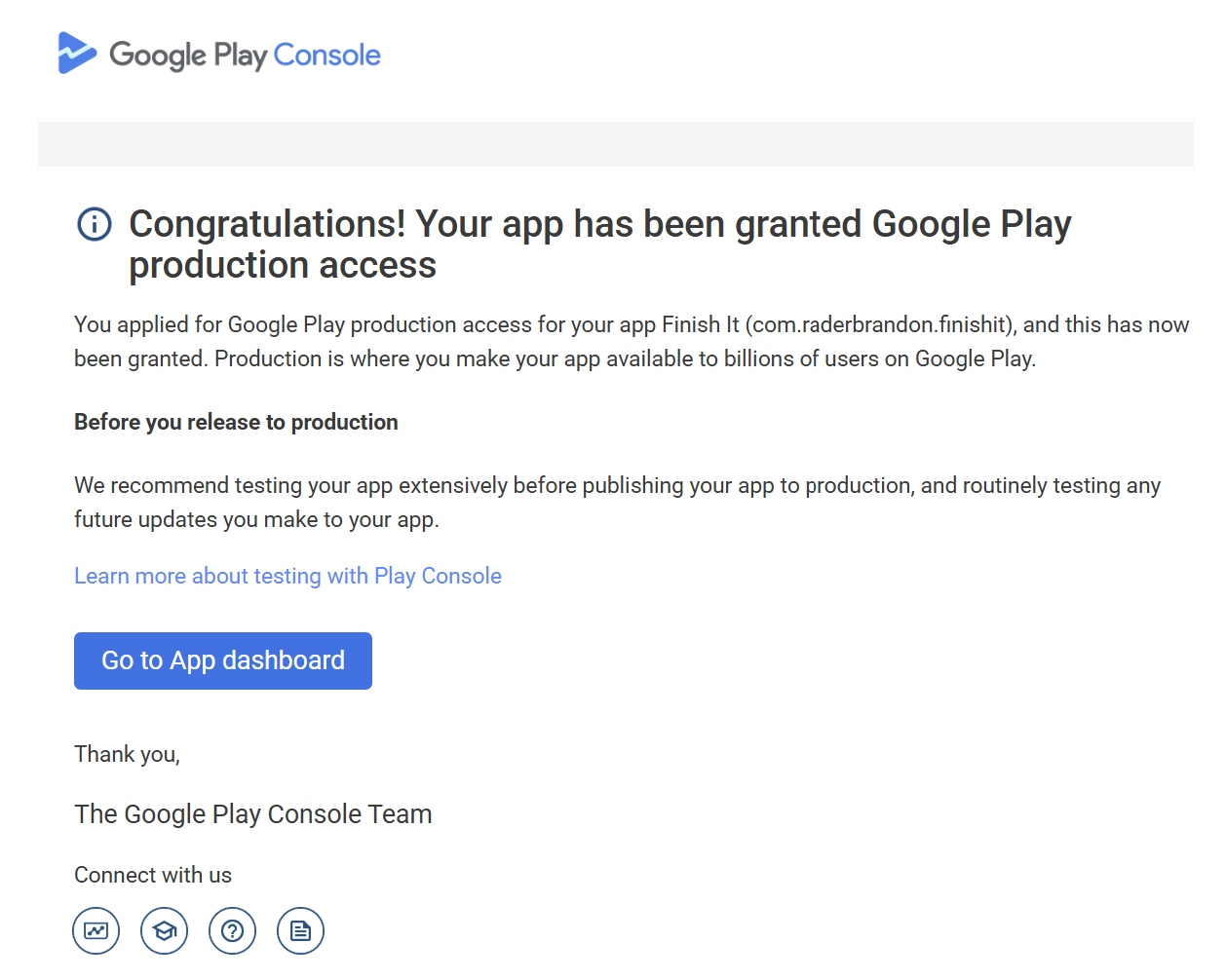
Quality QA Testing Reports
Clear, actionable reports with screenshots and evidence for every important issue found during testing.
Real Device Testing & Diagnostics
Real human testers use physical Android devices to test your app, verify real user flows, and provide clear testing evidence and professional QA reports.
Production Access Secured
Get your Android build approved on the first try. We create an audit-ready compliance profile that proves thorough quality assurance.
Affordable Compliance Cycles
Transparent plans built to satisfy Google Play Console guidelines for your Android build.
Loading Packages
Please wait while we fetch the best options for your region...
Frequently Asked Questions
Everything you need to know about passing your closed testing requirements.