Qualified 12 Testers for Google Play in the USA
Pass Google Play closed testing compliance requirements in the USA using 12 testers to generate genuine daily activity on physical Android handsets and genuine 14-day QA activity to guarantee production access clearance.
12 testers for closed testing on your Android apps project
Google's new closed testing requirement for personal developer accounts is a major hurdle. To publish your app, you now need at least 12 testers to be opted-in to your closed test for 14 continuous days. This rule was created to improve app quality on the Play Store and stop spammy apps from being published.
It’s a big change, and it's causing a lot of headaches for developers. You built your app to code, not to manage a team of 12 people for two weeks. Many developers search for things like "Qualified 12 Testers for Google Play" because older, less strict rules come to mind. But the reality today is a firm 12 testers. Let's break down exactly what you need to do to get your app published, without the stress.
What Exactly Does Google Want to See?
Google isn't just looking for numbers on a screen. They are looking for signs of a genuine testing process. Breaking the rules down helps clarify what you need to aim for.
The 12 Tester Minimum
The magic number is 12. You need to have at least 12 individual people join your closed test. These can't be bot accounts or 12 accounts you created yourself. They need to be real people with active Google accounts. If 5 testers drop out on day 3, you need to find 5 more to keep the count at or above 12 for the rest of the period.
The 14 Continuous Days
This is the part that trips up most developers. The 12 testers must remain opted-in to your test for 14 days in a row. It’s not 14 days total. If you have 12 testers for 10 days, then drop to 18 for a day, the clock might reset. The Play Console tracks this, and there's no way to fool the system. Consistency is everything.
Real Engagement, Not Just Installs
Google's systems are smart. They can likely tell the difference between a tester who installs the app, opens it once, and forgets about it, versus a tester who is actively using it. While Google doesn't publish the exact metrics, it's safe to assume they are looking for signs of life. This means testers should be opening the app, navigating through screens, and using its features over the 14-day period. This is why using low-quality, unmanaged testers often fails.
The Wrong Ways to Find Testers (And Why They Fail)
In a rush to meet the requirement, many developers turn to seemingly easy solutions. Unfortunately, these shortcuts almost always lead to delays, frustration, or even account suspension.
The "Friends and Family" Problem
This is the first stop for most developers. You ask your mom, your cousin, and your college roommate. The problem? It's incredibly hard to find 12 reliable people in your personal network who will commit to this. People forget. They lose interest. They don't provide useful feedback. Chasing them down for two weeks becomes a full-time job, and you'll be lucky if half of them stick with it.
The Danger of Public Forums
Posting on Reddit or Facebook groups like "App Testers Exchange" seems like a good idea. You offer to test someone's app if they test yours. This rarely works as planned. These groups are filled with other developers who are just as busy as you are. They might opt-in for a day or two and then disappear, leaving you scrambling to find replacements. There's no accountability, and the quality of testing is extremely low.
Why Fiverr Bots Will Get You Banned
This is the most dangerous path. You'll see gigs on Fiverr and other freelance sites offering "12 Google Play Testers Instantly." These are almost always bot farms. They use fake accounts to install your app. Google's anti-abuse system is designed specifically to detect this kind of activity. Using these services is a fast track to getting your app rejected and your developer account flagged or even terminated. It's simply not worth the risk.
The Three Paths to Finding Your Testers
So, what are your real options? It boils down to three main approaches, each with its own pros and cons.
| Feature | AppConsoleLab's Service | Finding Testers Yourself | Fiverr Bots |
|---|---|---|---|
| Google Compliance | ✅ 100% Compliant | ⚠️ Risky & Unpredictable | ❌ High Risk of Ban |
| Time Investment | 5 Minutes | 12+ Hours | 15 Minutes |
| Reliability | Guaranteed 12 testers for 14 Days | Very Low | Looks good, but they disappear |
| Management | Fully Managed For You | You handle everything | Zero management, zero quality |
| Cost | Fixed, predictable price | "Free" (but costs you time & sanity) | Cheap (but could cost your account) |
| Success Rate | Very High | Very Low | Extremely Low |
| Real Feedback | Optional, but available | Inconsistent and often poor | None |
As you can see, trying to manage this yourself is a huge time sink with a low chance of success. And using bots is a gamble you can't afford to take. A managed service is built to handle this exact problem, giving you a clear path to publication. If you're weighing your options, our guide on the Best Google Play Closed Testing Services Compared (2026) offers an in-depth look.
Struggling with the 14-Day Testing Requirement?
Skip the hassle of recruiting unreliable testers. Our professional fleet of real Android devices guarantees Google Play compliance in exactly 14 days. Zero bots. Zero emulators. 100% production approval guarantee.
A Step-by-Step Guide to a Successful Closed Test
Getting through the 14-day testing period requires a clear plan. Whether you use a service or go it alone, the core steps are the same. We've broken down the entire journey into a simple timeline.
Step 1: Finalize Your App & Set Up
Step 2: Create Your Tester List
Step 3: Invite Your Testers & Go Live
Step 4: The 14-Day Monitoring Period
Step 5: Gather Feedback (Optional but Smart)
Step 6: Apply for Production Access
Understanding the Nuances: What 'Qualified' Really Means
Google's language is often vague, leaving developers to guess what they mean. Two concepts are key to understanding what makes a test 'qualified' in Google's eyes: engagement and continuity.
Opt-In vs. Active Engagement
Continuous vs. Intermittent Testing
Preparing Your App for a Smooth Testing Phase
A little preparation goes a long way. Following a structured checklist ensures you don't miss any critical steps before you start your 14-day countdown.
Phase 1: Pre-Testing Setup
Phase 2: Managing the 14-Day Test
What Happens After the 14 Days?
Once you've successfully completed the 14-day testing period, you're in the home stretch. The final step is to formally apply for production access.
On your Google Play Console dashboard, you'll see a new card prompting you to apply. This involves answering a few questions about your app and the testing you conducted. You'll need to explain what your app does, who you tested it with, and what feedback you received. Be honest and clear in your answers.
After you submit your answers, the 'Apply for production' button will become active, and you can submit your app for a final review. Because you've gone through a proper, documented testing phase, your chances of a smooth and quick approval are much higher. If you're unsure if you've met the criteria, you can follow our guide on How to Check Whether Your 14-Day Testing Requirement Is Complete.
Navigating the 12-tester requirement is the new reality for Android developers. While it adds an extra step, it also pushes you to build a better, more stable app. By understanding the rules and choosing the right method to find testers, you can turn this requirement from a roadblock into a valuable part of your launch process.
Do the 12 testers have to use the app every single day for 14 days?
Can I use my friends and family as testers?
What happens if one of my testers leaves the test on day 10?
Is there a way to track the progress of the 14-day test in the Play Console?
Do I have to pay for testers?
Can the same 12 people test multiple apps for me?
The Testing Pipeline
A straightforward 4-step process to get your Android app approved.
Sign In
Connect your Google account and choose your preferred closed testing package for your Android app.
Opt-In URL
Share your Play Store opt-in URL. We immediately deploy 12 real testers to launch and review your Android app daily.
Testing Begins
Our crew initiates daily launch sessions on physical devices, verifying usability and logging crashes for your Android app.
Compliance Complete
We continuously perform closed app testing for 14 days to help you meet Google Play production requirements. We also provide a compliance report.
Why Developers Trust Us
Deploy your Android app onto real retail-grade handsets using our secure laboratory environment.
The 14-Day Production Guarantee
We complete the required 14-day closed testing process with real human testers and physical Android devices, while providing clear testing evidence and documentation throughout the process.
If Google specifically rejects production access due to insufficient testing engagement, you are covered by our free re-run or 100% refund guarantee, subject to our Refund Policy.
Verified Production Access
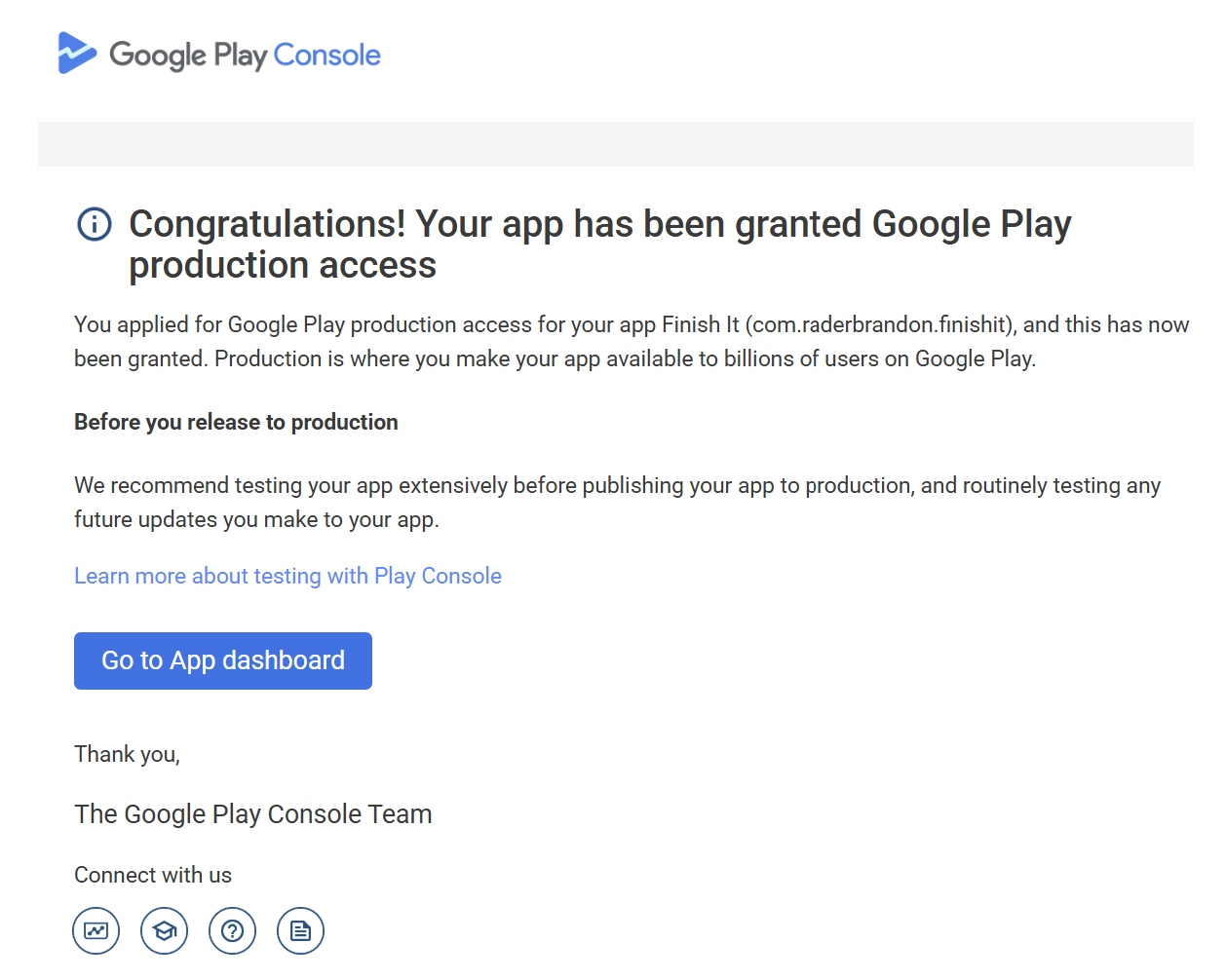
Quality QA Testing Reports
Clear, actionable reports with screenshots and evidence for every important issue found during testing.
Real Device Testing & Diagnostics
Real human testers use physical Android devices to test your app, verify real user flows, and provide clear testing evidence and professional QA reports.
Guaranteed App Approval
Transition your Android app to public production access with confidence. We deliver verified session logs and compliant Console activity.
One Cycle. Complete Approval.
Choose the ideal closed testing cycle for your Android release in the USA.
Loading Packages
Please wait while we fetch the best options for your region...
Frequently Asked Questions
Everything you need to know about passing your closed testing requirements.