Qualified Google Play Closed Testing Service for Android Apps
Satisfy Google Play closed testing compliance requirements with 12 verified testers performing active daily interactions on real Android hardware and verified 14 day engagement for production access approval.
12 testers google play: Approval guide for Production Access focused apps
Google now requires new developers with personal accounts to run a closed test before they can publish an app. You need at least 12 people to be opted-in as testers for 14 continuous days. This rule is a big hurdle for many developers, but it's completely manageable when you understand the process.
This guide breaks down exactly what you need to do, the common pitfalls to avoid, and how a qualified Google Play closed testing service can make it simple.
Why Does This 12 Tester Rule Exist?
Google introduced this policy to improve the quality of apps on the Play Store. They want to ensure that new apps have been tested by a group of real people before being released to the public. This helps catch bugs, gather initial feedback, and prevent low-quality or malicious apps from flooding the store.
While the intention is good, the execution can be a major headache for solo developers or small teams. Finding 12 reliable people is hard. Getting them to stay opted-in for two full weeks is even harder.
The Rules of the 14-Day Test, Explained Simply
Let's get specific. Here’s what Google’s policy means in plain English:
- 12 testers Minimum: You must have at least 12 individual people join your closed test.
- 14 Continuous Days: The clock starts once you have 12 testers. Those 12 testers (or more) must remain opted-in for 14 days in a row. If your tester count drops below 12 at any point, the 14-day clock may reset.
- Opt-in is Key: The most important action is that the testers accept your test invitation and are officially "opted-in" on Google Play. While Google encourages you to get feedback, the core requirement is about the opt-in status.
- Who Can Be a Tester? Anyone with a Google account (@gmail.com) can be a tester. They just need to access your specific opt-in link.
Failing to meet these requirements means your app stays unpublished. You can't move forward to production until you've successfully completed this testing period. It’s a hard gate. You can learn more about how to track your progress by reading our guide on how to check whether your 14-day testing requirement is complete.
The Challenge: Why Finding 12 testers is So Difficult
If you've tried to find testers yourself, you already know the pain. It's not just about asking a few friends.
- Recruitment is a Grind: Where do you find 12 people? You can post on Reddit, in Discord channels, or on Facebook groups. But you're competing with hundreds of other developers doing the same thing. It takes a lot of time and effort to get responses.
- People are Unreliable: Even if people agree to help, life gets in the way. They might forget to click the link. They might opt-out after a few days by mistake. Chasing people down with reminder messages is exhausting and often feels like begging.
- The Dreaded Drop-Off: The 14-day continuous part is the real killer. Let's say you get 21 testers. On day 5, two of them leave the test. Your count drops to 19. The clock resets. You have to find two new testers and start the 14-day countdown all over again. This can create a frustrating loop that lasts for weeks or even months.
- Time Zone Chaos: Managing testers across different time zones adds another layer of complexity. Sending reminders and answering questions becomes a 24/7 job.
This entire process distracts you from what you should be doing: improving your app. Instead of coding, you're stuck being a project manager for a group of volunteers.
Phase 1: Pre-Test Setup
Phase 2: Tester Onboarding & Management
The Three Paths to Getting Your 12 testers
You have three main options to meet Google's requirement. Let's be honest about the pros and cons of each.
Struggling with the 14-Day Testing Requirement?
Skip the hassle of recruiting unreliable testers. Our professional fleet of real Android devices guarantees Google Play compliance in exactly 14 days. Zero bots. Zero emulators. 100% production approval guarantee.
1. The DIY Method (The Hard Way)
You can try to find all 12 testers on your own. This involves spending hours on social media and forums, convincing strangers to help you for free.
- Pros: It costs no money.
- Cons: It costs a huge amount of your time and energy. The failure rate is very high due to tester drop-off. You might spend weeks stuck in a loop of recruiting and re-recruiting.
2. Fiverr Bots (The Risky Way)
Some sellers on platforms like Fiverr offer to get you 12 'testers' for a very low price. Be careful. These are almost always bots or fake accounts.
- Pros: It's cheap and seems fast.
- Cons: Google's systems are smart. They can easily detect bot activity. Using these services puts your app and your entire developer account at risk of being banned. These are not real testers, so you get zero feedback and violate Google's policies.
3. A Qualified Testing Service (The Smart Way)
A professional service, like AppConsoleLab, manages the entire process for you. We maintain a community of real, verified testers who understand the 14-day requirement.
- Pros: It's fast, reliable, and guaranteed. You save dozens of hours and avoid the risk of account suspension. The process is completely handled for you.
- Cons: It has a cost, but it's an investment in getting your app published quickly and safely.
To help you decide, here's a direct comparison of the options.
| Feature | AppConsoleLab's Service | Finding Testers Yourself (DIY) | Fiverr Bots |
|---|---|---|---|
| Tester Quality | ✅ Real, verified people | ❓ Varies wildly, often unreliable | ❌ Bots or fake accounts |
| Success Rate | 💯 Guaranteed 14-day completion | 📉 Very low, high drop-off rate | 🚨 High risk of failure or ban |
| Time Investment | ⏰ 5 minutes to sign up | ⏳ 12-40 hours of active work | ⏰ 10 minutes to order |
| Risk of Ban | ✅ None, fully compliant | ✅ None | ⛔️ Extremely high |
| Management | 👨💼 Fully managed by us | 😫 You handle all communication | 🤖 None, it's automated |
| Cost | 💲 Fixed, predictable fee | 💸 Free (but costs your time) | 💲 Very cheap |
When you look at the options, it becomes clear that trying to save a small amount of money can cost you weeks of delay and put your developer account in jeopardy. For a deeper dive into different providers, check out our comparison of the best Google Play closed testing services compared (2026).
How a Qualified Testing Service Works
Using a service simplifies everything. You hand off the most frustrating part of app publishing and focus on your product.
Submit Your App
We Assemble Your Team
Testers Opt-In
The 14-Day Clock Starts
We Ensure They Stay
Testing Complete!
Understanding Tester Lists: Opt-in Links vs. Google Groups
When you set up your closed test, Google gives you two ways to manage who can join: an open opt-in link or a list of emails (often managed with Google Groups).
Public Opt-in Link
Email List / Google Group
For the purpose of meeting the 12 testers/14 days rule, the public opt-in link is almost always the better choice. It removes the friction of collecting and managing individual email addresses.
Don't let a compliance hurdle stop your app launch. This requirement is a box that needs to be checked, and using a qualified service is the most efficient way to check it. You can save yourself weeks of frustration and focus on what matters: building a great app that people will love.
What happens if one of the testers from a service leaves the test early?
Does Google check if the testers actually download and use the app?
Can I just use my friends and family as testers?
How long does the entire process take with a qualified testing service?
Is using a paid testing service against Googles Terms of Service?
What if my app is very basic or not fully polished yet?
How We Deliver 12 Testers
A straightforward 4-step process to get your Android app approved.
Connect Account
Connect your Google account and choose your preferred closed testing package for your Android app.
Assign Testers
Share your Play Store opt-in URL. We immediately deploy 12 real testers to launch and review your Android app daily.
Daily QA Runs
Our crew initiates daily launch sessions on physical devices, verifying usability and logging crashes for your Android app.
Launch Ready
We continuously perform closed app testing for 14 days to help you meet Google Play production requirements. We also provide a compliance report.
Our Testing Infrastructure
Deploy your Android app onto real retail-grade handsets using our secure laboratory environment.
The 14-Day Production Guarantee
We complete the required 14-day closed testing process with real human testers and physical Android devices, while providing clear testing evidence and documentation throughout the process.
If Google specifically rejects production access due to insufficient testing engagement, you are covered by our free re-run or 100% refund guarantee, subject to our Refund Policy.
Verified Production Access
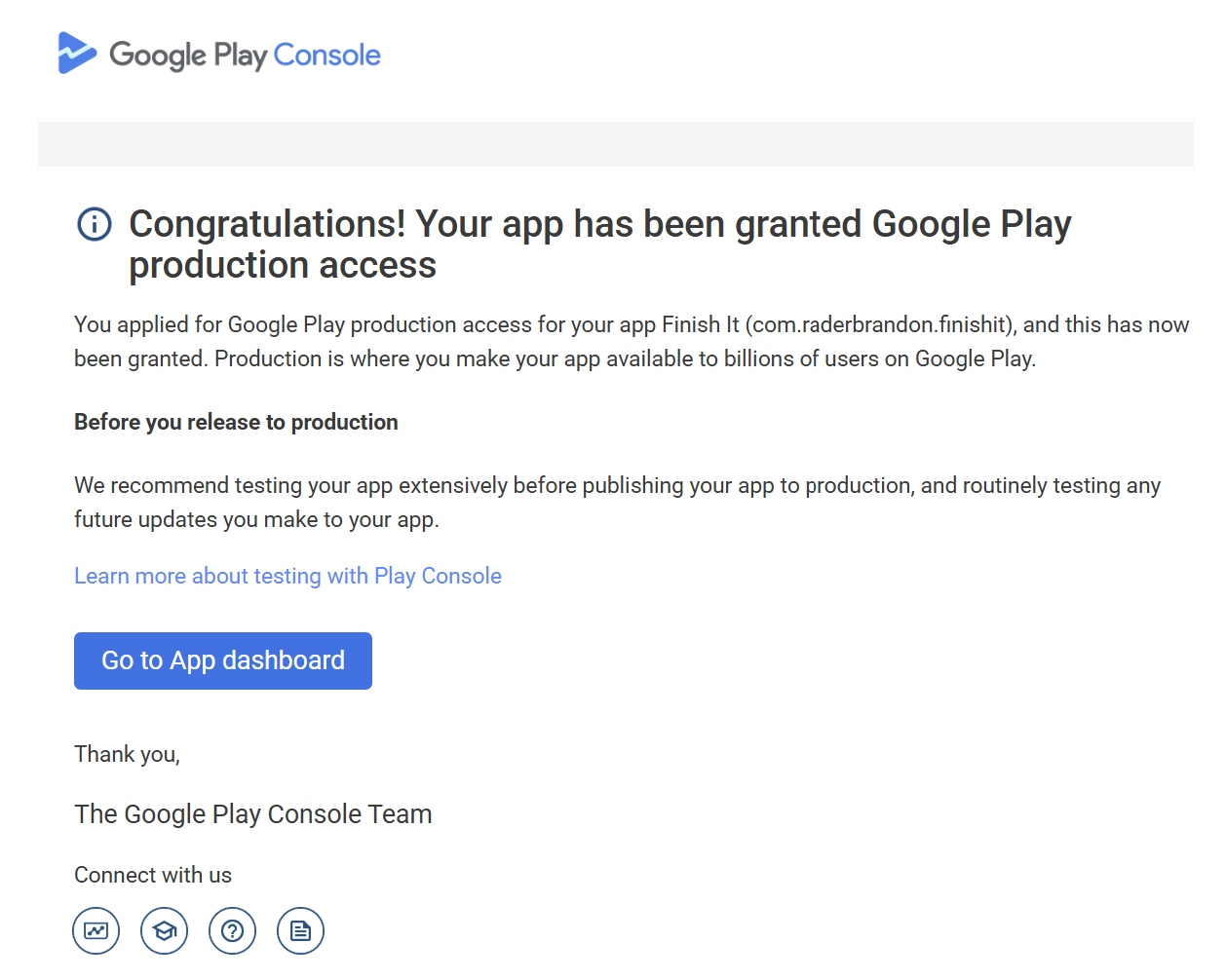
Quality QA Testing Reports
Clear, actionable reports with screenshots and evidence for every important issue found during testing.
Real Device Testing & Diagnostics
Real human testers use physical Android devices to test your app, verify real user flows, and provide clear testing evidence and professional QA reports.
Compliance Audit Passed
Transition your Android app to public production access with confidence. We deliver verified session logs and compliant Console activity.
One Cycle. Complete Approval.
Choose the ideal closed testing cycle for your Android release.
Loading Packages
Please wait while we fetch the best options for your region...
Frequently Asked Questions
Everything you need to know about passing your closed testing requirements.