Professional Closed Testing Services for Android Apps
Comply with Google Play Console’s closed testing approval criteria for your Capacitor app worldwide with 12 verified testers performing active daily interactions on real Android hardware and verified 14 day engagement for production access approval.
Closed testing 14 days requirement for Capacitor
Google Play now requires developers with new personal accounts to run a closed test before they can publish an app. You need at least 12 people to opt-in and test your app for 14 consecutive days. This rule is a major roadblock for many developers. It's designed to weed out low-quality apps, but it creates a huge challenge if you don't have a network of 12 reliable friends.
The simple solution is a professional closed testing service. These services handle the entire process for you, ensuring you meet Google's requirements quickly and safely. This guide explains everything you need to know.
What is Google's 12-Tester, 14-Day Rule?
Let's break down exactly what Google is asking for. It's not as simple as just getting 12 downloads.
- 12 testers Minimum: You need at least 12 individual people to agree to become a tester for your app.
- Opt-In Required: Each person must click your test link and officially "opt-in" to the test through the Google Play Store. Just sending them the APK file doesn't count.
- 14 Consecutive Days: This is the hardest part. Once a tester opts-in, they must remain opted-in for 14 days in a row. If a tester leaves on day 10, the clock for that person stops. You need a full group of 12 to complete the entire 14-day period.
Google implemented this to make sure real people are looking at new apps before they go live. It’s a quality control measure. For a solo developer or a small team, finding 12 people and making sure they stick around for two full weeks is a massive headache. It's a project in itself, taking time away from what you should be doing: improving your app.
The Problem with Finding Testers Yourself
Your first thought might be to ask friends, family, or people in online communities. This sounds easy, but it rarely works out smoothly.
Here’s why the do-it-yourself approach often fails:
- Finding 12 people is Hard: You might have 12 friends, but how many use Android? How many are willing to download an unpublished app? The pool of candidates shrinks fast.
- Commitment is Low: People are busy. They might agree to help but forget to opt-in. Or they'll opt-in and then leave the test a few days later, breaking the "consecutive days" rule. You'll constantly be chasing people and sending reminders.
- Managing is a Full-Time Job: You need a spreadsheet just to track who has opted in, for how long, and who has dropped out. You'll spend hours messaging people, finding replacements, and checking your Google Play Console. This is valuable time you could be spending on coding or marketing.
- Biased Feedback: Friends and family often don't want to hurt your feelings. They might say "It's great!" instead of giving you the honest, critical feedback you need to actually make your app better.
Trying to manage this yourself can lead to weeks of delays and frustration, all before your app is even published.
The Hidden Dangers of Cheap Bot Services
When you search for solutions, you'll see super cheap offers on sites like Fiverr. They promise 12 testers for a few dollars. Be very careful. These services almost always use bots or click farms, not real people.
Using a bot service is one of the fastest ways to get your developer account suspended.
Google's systems are incredibly smart. They can easily detect suspicious activity. Here are the red flags that bot services create:
- Simultaneous Opt-ins: All 12 "testers" join within a few minutes of each other. Real user behavior is more spread out.
- Geographic Clustering: All testers come from the same country or even the same IP address range.
- No Real Engagement: The bots will opt-in and maybe download the app once. They won't open it, use it, or generate any of the usage data Google expects from real testers.
- Identical Device Profiles: The "testers" often use emulated devices with very similar software and hardware profiles.
If Google detects this kind of activity, it will flag your app. At best, your application for production will be rejected. At worst, Google may terminate your entire developer account for violating their policies. Saving a few dollars is not worth losing your ability to publish apps on the Play Store forever.
Struggling with the 14-Day Testing Requirement?
Skip the hassle of recruiting unreliable testers. Our professional fleet of real Android devices guarantees Google Play compliance in exactly 14 days. Zero bots. Zero emulators. 100% production approval guarantee.
How a Professional Service Solves Everything
A professional closed testing service is the gold standard for meeting Google's requirements. These companies maintain large, diverse communities of real people with real Android devices who are paid to test apps.
It's a simple, hands-off process for you:
- You give the service your app's testing link.
- They invite their community of verified, reliable testers.
- They ensure at least 12 people opt-in and stay opted-in for the full 14 days.
- They monitor the process daily and replace anyone who drops out.
- They notify you when the 14-day period is complete.
This approach is safe, reliable, and 100% compliant with Google's policies. You get peace of mind knowing the requirement is being met correctly, allowing you to focus on your app. When choosing a provider, be sure to check out reviews and comparisons of the Best Google Play Closed Testing Services Compared (2026) to find one that is reputable.
Comparing Your Options: Pro Service vs. DIY vs. Bots
| Feature | AppConsoleLab's Service | Finding Testers Yourself | Fiverr Bots |
|---|---|---|---|
| Google Policy Compliance | ✅ 100% Safe | ✅ Safe | ❌ High Risk of Ban |
| Success Guarantee | ✅ Guaranteed Completion | ⚠️ Unreliable | ❌ Often Fails |
| Time & Effort | ⏱️ Low (10 minutes) | ⏱️ High (Many hours) | ⏱️ Low (but risky) |
| Real Testers | ✅ Real, verified people | ✅ Real people (if you can find them) | ❌ Automated bots |
| Reliability | dependable | 📉 High dropout rate | 📉 Unpredictable |
| Tester Management | 👨💼 We handle everything | 👨💼 You handle everything | 🤖 None |
Preparing Your App for a Successful Test
Before you start your closed test, a little preparation goes a long way. Following these steps ensures the process is smooth for both you and your testers.
Phase 1: App Readiness
Phase 2: Setting Up the Closed Test
Understanding Tester Behavior
Not all testing is created equal. The difference between how a real person interacts with your app versus a bot is huge, and it's something Google's review process looks for.
Real Tester Engagement
Bot & Click-Farm Activity
Your Path to Publication: The Testing Process
Using a professional service turns a complicated process into a clear, step-by-step timeline. Here’s what it looks like from start to finish.
Step 1: Place Your Order
Step 2: Tester Invitation
Step 3: Testers Opt-In
Step 4: The 14-Day Test Period
Step 5: Test Completion
Step 6: Apply for Production
Once the 14 days are over, you might wonder how to be sure the requirement has been met. There are specific places in the Google Play Console where this information appears. You can learn more about How to Check Whether Your 14-Day Testing Requirement Is Complete.
Don't let the 12-tester rule stop you from launching your app. While it seems like a major hurdle, it's a problem that has already been solved. By using a professional testing service, you can bypass the stress, risk, and time sink of finding testers yourself. You can get your app through the required testing period safely and efficiently, and move on to the most exciting part: sharing your creation with the world.
Is using a professional closed testing service allowed by Google?
What happens if one of the 12 testers leaves the test early?
Do I get feedback on my app from the testers?
Can I update my app in the middle of the 14-day test?
How long does the entire process take, from start to finish?
Do I need to provide the APK or AAB file to the testing service?
How We Deliver 12 Testers
Your journey to Google Play production access, simplified and automated.
Connect Account
Authenticate your account to initialize the 14-day QA fleet for your Capacitor release.
Assign Testers
Upload your testing link. We assign 12 verified users with real Android devices to download and test your Capacitor release.
Daily QA Runs
A dedicated testing supervisor is assigned to monitor progress while testers engage with your Capacitor app and provide feedback throughout the testing period.
Launch Ready
Our lab maintains active installations for two weeks straight, ensuring a clean track record and providing a QA compliance log for your release.
Our Testing Infrastructure
Satisfy your Play Store Console testing obligations with our managed physical device fleet tailored for Capacitor builds.
The 14-Day Production Guarantee
We complete the required 14-day closed testing process with real human testers and physical Android devices, while providing clear testing evidence and documentation throughout the process.
If Google specifically rejects production access due to insufficient testing engagement, you are covered by our free re-run or 100% refund guarantee, subject to our Refund Policy.
Verified Production Access
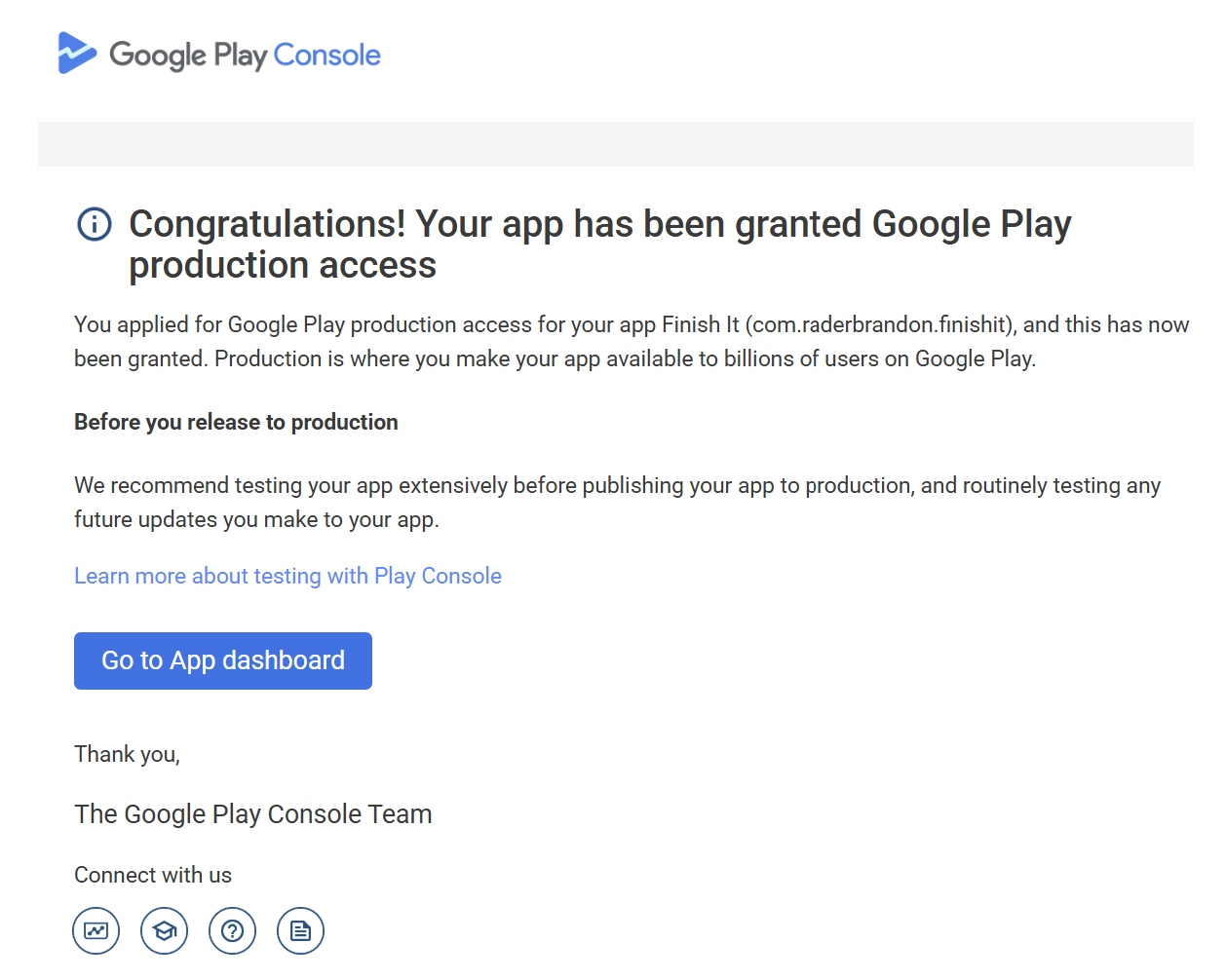
Quality QA Testing Reports
Clear, actionable reports with screenshots and evidence for every important issue found during testing.
Real Device Testing & Diagnostics
Real human testers use physical Android devices to test your app, verify real user flows, and provide clear testing evidence and professional QA reports.
Compliance Audit Passed
Our structured 14-day closed testing process is designed to meet Google Play's production requirements for your Capacitor release worldwide.
Simple Closed Testing Pricing
Select the plan that fits your Capacitor app complexity.
Loading Packages
Please wait while we fetch the best options for your region...
Frequently Asked Questions
Everything you need to know about passing your closed testing requirements.