Verified Google Play Closed Testing Service for Android Apps
Fulfill Google Play Console’s closed testing approval standards worldwide using 12 testers to generate genuine daily activity on physical Android handsets and genuine 14-day QA activity to guarantee production access clearance.
Google Play now requires new personal developer accounts to run a closed test with at least 12 testers for 14 continuous days. This rule is in place to help improve the quality of apps on the Play Store. It sounds simple, but organizing it can be a huge challenge. This guide breaks down exactly what you need to do and how a verified Google Play closed testing service can solve this problem for you, saving you time and stress.
12 testers google play console: How to pass with Production Access focused apps
Before you can publish your app for the world to see, Google wants to know it's been tested. Properly tested. This isn't just a suggestion; it's a hard requirement for developers with new personal accounts.
Here’s the breakdown in plain English:
- You need 12 people. Not 19. at least 12.
- They must opt-in to your closed test. You’ll generate a link from your Play Console that they need to use.
- They must remain opted-in for 14 days in a row. This is the part that trips up most developers. If a tester leaves on day 10, the clock for that tester stops. If you drop below 12 testers at any point, your 14-day count might be in jeopardy.
The goal is to stop low-effort or harmful apps from flooding the store. By forcing a testing period, Google ensures you've put in the work and that a small group of real people has at least installed your app. For you, it’s a chance to catch bugs before a public launch. But it’s also a major logistical hurdle.
Why Is This So Hard to Do Yourself?
You might think, "I'll just ask my friends and family." It's a good first thought, but it rarely works out as planned.
- People are busy. Your friends have jobs, school, and their own lives. They might agree to help but forget to opt-in. They might install the app and then delete it a few days later to free up space, not realizing they just reset your progress.
- Coordination is a nightmare. Chasing 12 people with reminder emails and messages is a full-time job. You'll spend more time managing testers than you will improving your app.
- Finding 12 people is tough. You might have five or ten reliable friends who will help. But 12? That’s a lot of favors to ask. You might turn to online forums or social media groups, but the quality of testers there is unpredictable.
- The "Continuous" Trap. The 14-day period must be continuous. If several testers drop off midway, you have to find replacements and hope they stick around. This can drag the process out for weeks, delaying your launch and causing immense frustration.
This is where many developers get stuck. Their app is finished, polished, and ready to go, but they can't get past this one administrative roadblock.
Your Options for Getting 12 testers
You have three main paths you can take to meet this requirement. Each has very different costs, risks, and outcomes.
Path 1: The DIY (Do It Yourself) Method
This involves finding testers on your own. You can ask friends, family, colleagues, or post in online communities like Reddit or developer forums.
- Pros: It's free (in terms of money).
- Cons: It takes a massive amount of your time and energy. It's unreliable, and you risk a high dropout rate, which can delay your launch indefinitely. The people you know might not want to give you honest, critical feedback either.
Path 2: Risky Freelance Gigs (Fiverr & Upwork)
You'll see many gigs on freelance sites offering "12 Android testers" for a very low price. Be extremely careful with these.
- Pros: They seem cheap and fast.
- Cons: The risk is huge. Many of these gigs use bots or virtual devices, not real people with real Google accounts. Google's systems are very good at detecting this kind of fake activity. Using a bot-based service can get your app flagged or even your entire developer account suspended. It's a shortcut that can lead to a dead end.
Path 3: A Verified Google Play Closed Testing Service
This is the professional approach. A dedicated service maintains a network of real, verified people who are ready to test apps. They handle the entire process for you.
- Pros: It’s reliable and completely hands-off. You get real testers who understand the process. The service guarantees that 12 testers will stay opted-in for the full 14 days, ensuring you meet Google's requirement. It's the fastest and safest way to get your app published.
- Cons: It costs money, but you are paying for peace of mind and speed.
To make the choice clearer, here is a direct comparison.
| Feature | AppConsoleLab's Service | Finding Testers Yourself (DIY) | Fiverr Bots |
|---|---|---|---|
| Reliability | ✅ High (Guaranteed 12 testers for 14 days) | ❌ Low (High dropout rate) | ❌ Extremely Low (Often fake users) |
| Risk Level | ✅ Very Low (Uses real, verified testers) | ✅ Low (No risk of suspension) | 💀 High (Risk of app/account suspension) |
| Time Investment | ⏱️ Minimal (5 minutes to submit your app) | ⏱️ Very High (Weeks of coordination) | ⏱️ Low (But the risk isn't worth it) |
| Speed to Publish | 🚀 Fastest (Exactly 14 days) | 🐢 Slowest (Can take a month or more) | ❓ Unpredictable (Might get you banned) |
| Management | 🏖️ Fully managed by the service | 🤯 You manage everything and everyone | 🤖 You "manage" a black box service |
| Cost | 💰 Paid service | 💸 Free (but costs your time) | 💰 Seems cheap, but can cost you your app |
For developers who value their time and want to avoid any risk of suspension, using a professional service is the clear winner. If you're looking for a reliable provider, check out our guide on the Best Google Play Closed Testing Services Compared (2026).
Struggling with the 14-Day Testing Requirement?
Skip the hassle of recruiting unreliable testers. Our professional fleet of real Android devices guarantees Google Play compliance in exactly 14 days. Zero bots. Zero emulators. 100% production approval guarantee.
How a Verified Testing Service Works, Step-by-Step
Using a service like AppConsoleLab removes all the guesswork and manual labor. The process is designed to be as simple as possible for you, the developer.
Submit Your App Link
Service Onboards Testers
Testers Opt-In
The 14-Day Monitoring Period
Requirement Confirmation
Apply for Production
This managed process means you can focus on what you do best: building and improving your app. You don't have to worry about chasing people or checking your tester count every day.
Preparing Your App for Closed Testing
Before you hand over your app link, make sure you're ready. A little preparation goes a long way.
Phase 1: Your Pre-Flight Check
Phase 2: Launch and Monitor
The Real Goal: Feedback vs. Compliance
It's important to understand the two different mindsets when it comes to this requirement. Are you just trying to check a box, or are you looking for real feedback to improve your app? A good service can often help with both.
Testing for Compliance
Testing for Feedback
For most new developers, testing for compliance is the immediate need. Once your app is live, you can always run more feedback-oriented tests to refine it. The first step is just getting it on the store.
Passing Google's 12-tester requirement doesn't have to be a roadblock that delays your launch for weeks. While the DIY method is tempting, it's often a slow and frustrating path. Using a verified, professional closed testing service is a small investment that guarantees you meet the requirement quickly and safely. It lets you bypass the logistical headaches and move straight to what matters most: getting your app into the hands of users.
What happens if a tester from a service leaves during the 14 days?
Does Google allow developers to use paid testing services?
Do I need to give the testers a free copy of my paid app?
How long does the entire process take with a service?
Can I use my own friends as testers alongside a service?
Will I get user feedback from a standard compliance testing service?
The Testing Pipeline
Your journey to Google Play production access, simplified and automated.
Sign In
Authenticate your account to initialize the 14-day QA fleet for your Android release.
Opt-In URL
Upload your testing link. We assign 12 verified users with real Android devices to download and test your Android release.
Testing Begins
A dedicated testing supervisor is assigned to monitor progress while testers engage with your Android app and provide feedback throughout the testing period.
Compliance Complete
Our lab maintains active installations for two weeks straight, ensuring a clean track record and providing a QA compliance log for your release.
Why Developers Trust Us
Satisfy your Play Store Console testing obligations with our managed physical device fleet tailored for Android builds.
The 14-Day Production Guarantee
We complete the required 14-day closed testing process with real human testers and physical Android devices, while providing clear testing evidence and documentation throughout the process.
If Google specifically rejects production access due to insufficient testing engagement, you are covered by our free re-run or 100% refund guarantee, subject to our Refund Policy.
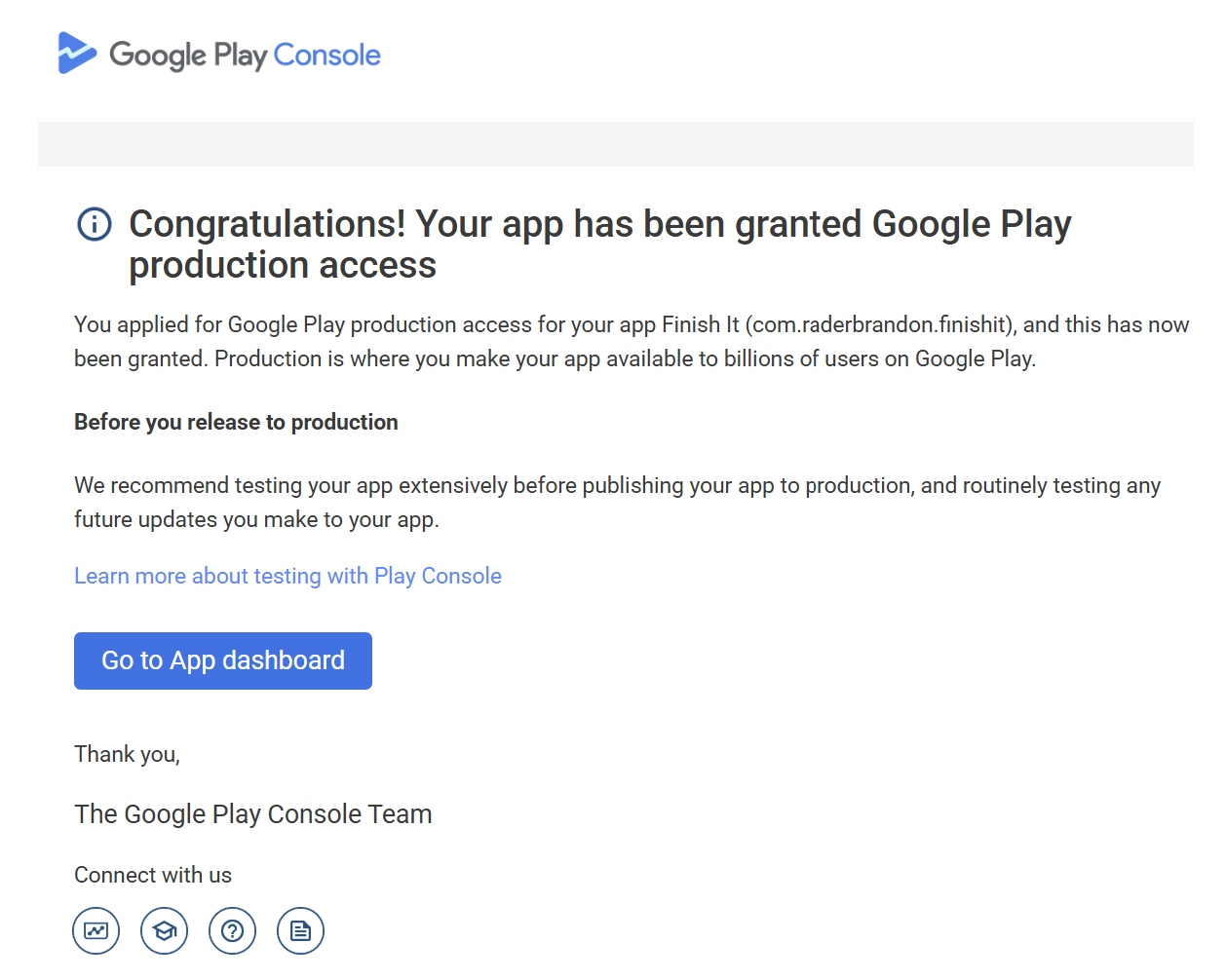
Verified Production Access
Quality QA Testing Reports
Clear, actionable reports with screenshots and evidence for every important issue found during testing.
Real Device Testing & Diagnostics
Real human testers use physical Android devices to test your app, verify real user flows, and provide clear testing evidence and professional QA reports.
Guaranteed App Approval
Our structured 14-day closed testing process is designed to meet Google Play's production requirements for your Android release worldwide.
Simple Closed Testing Pricing
Select the plan that fits your Android app complexity.
Loading Packages
Please wait while we fetch the best options for your region...
Frequently Asked Questions
Everything you need to know about passing your closed testing requirements.