Play Store testers for 14-day Android app closed testing in Ireland
Hire Play Store testers in Ireland for Google Play closed testing. Secure 12 testers for 14 days to clear Play Console rules and launch your app.
Ireland is a major European tech hub with a thriving startup scene in Dublin and Cork. But writing brilliant code is only the first step. To reach users, you must pass Google Play Closed Testing.
Google is strict about what makes it onto their platform. They demand stable, secure, and user-friendly applications. To prove your app is ready, you must have real people test it before launch. This is a mandatory compliance check.
This brings developers to a significant roadblock. You need a dedicated group to interact with your application daily. Meeting the strict standard of 12 Testers for 14 Days is difficult if you lack a large local network.
Why Authentic Testing Matters for Your App
You cannot fake your way through the Play Store Closed Testing phase. Google uses sophisticated algorithms to track how testers interact with your app. They know the difference between a real user in Galway and a scripted bot.
If Google detects fake engagement, your developer account is at serious risk. Your app could be permanently banned. This is why you need authentic engagement from real Android devices.
Real users also provide actual value. They will find the bugs that your development team missed. They will tell you if your user interface is confusing. This feedback is what makes your app successful in the long run.
Real Testers in Ireland
Real human testers provide authentic engagement that Google's algorithms reward. When actual people in Ireland download and use your app, they create organic usage patterns. They tap, swipe, and navigate through your menus just like your future customers will.
This genuine activity ensures you breeze through the review process. Furthermore, real testers will catch localization issues, ensuring your app feels natural to an Irish audience. They provide feedback that bots simply cannot generate, helping you build a better product.
Fake Bot Networks
Using automated bots or click-farms is a massive risk. Google's systems are designed to detect robotic, repetitive actions. Bots often use emulators rather than real Android devices, and their IP addresses are frequently flagged.
If you are caught using fake testers, the consequences are severe. Your app will be rejected, and your entire developer account could be terminated. You will lose all your hard work, and you will be permanently banned from publishing on the platform. It is never worth the risk.
The Challenge of Navigating Play Store Closed Testing
For many independent developers and small studios in Ireland, the biggest hurdle to launching an app is not the coding, it is the compliance. The Google Play Closed Testing requirements were introduced to raise the overall quality of apps available to consumers. While this is a great goal for the ecosystem, it creates a massive logistical headache for creators. You are no longer just a developer - you suddenly have to become a project manager, a quality assurance lead, and a community organizer all at once.
Finding people to test your app is one thing, but keeping them engaged is entirely different. You might be able to convince your friends and family to download your app on day one. However, asking them to actively open it, use it, and report bugs every single day for a full two weeks is a huge favor. Most people simply forget, or they lose interest after the first few minutes. When your testers drop off, your testing phase fails, and you are forced to start all over again.
This is where the concept of 12 Testers for 14 Days becomes incredibly relevant. You need a reliable, dedicated group of individuals who understand their role in this process. They need to know that their daily engagement is the key to unlocking your production release. Without this sustained activity, the Play Console will simply show that your app lacks the necessary testing data to proceed.
Moreover, testing is not just about logging in. It is about exploring different features, testing various screen sizes, and ensuring the app performs well under different network conditions. An app that works perfectly on a high-end device in a Dublin office might crash on an older phone using a weak signal in a rural area. Comprehensive testing covers these edge cases, which is why having a diverse and committed group of testers is so crucial for your success.
Struggling with the 14-Day Testing Requirement?
Skip the hassle of recruiting unreliable testers. Our professional fleet of real Android devices guarantees Google Play compliance in exactly 14 days. Zero bots. Zero emulators. 100% production approval guarantee.
Comparing Your Closed Testing Options
When it comes to fulfilling the Google Play Closed Testing requirements, you generally have three paths you can take. You can try to handle everything yourself, you can take a dangerous shortcut, or you can use a professional service. The table below breaks down how these options compare.
| Feature | Our Professional Service | DIY (Friends & Family) | Fake Bots & Emulators |
|---|---|---|---|
| Real Human Users | Yes, absolutely guaranteed. | Yes, but highly limited. | No, entirely automated. |
| Daily Engagement | Consistent activity for 14 days. | Usually drops off after day 2. | Repetitive and easily detected. |
| Play Store Compliance | 100% compliant and safe. | Compliant, if they finish it. | High risk of account termination. |
| Actionable Feedback | Detailed bug reports and UI notes. | "Looks good to me!" | Zero qualitative feedback. |
| Time Investment | You do nothing, we handle it all. | Hours of begging and reminding. | Fast, but ultimately destructive. |
| Device Diversity | Tested across multiple Androids. | Limited to what your friends own. | Usually just desktop emulators. |
Pre-Launch Prep Checklist for the Play Store
Before you even invite your first tester, you need to make sure your app and your Play Console account are completely ready. Failing to prepare properly can lead to delays, confusion, and a rejected application. Use this comprehensive checklist to ensure you are fully prepared for the Closed Testing phase.
App Development and Stability
Eliminate all critical crash bugs: Your app should not crash during basic navigation. Testers cannot evaluate an app that immediately closes when they open it.
Optimize for various screen sizes: Ensure your user interface scales correctly on both small smartphones and larger Android tablets.
Check your network handling: The app should gracefully handle lost internet connections without freezing or displaying confusing error codes.
Finalize your core features: While you can add minor updates during testing, the main functionality of your app must be present and working.
Secure all user data: If your app handles personal information, ensure it is encrypted and complies with European GDPR regulations.
Google Play Console Setup
Complete your store listing: Add a compelling title, a detailed description, and high-quality screenshots. Even testers need to see a professional listing.
Fill out the content rating questionnaire: You must accurately answer Google's questions about violence, language, and other sensitive topics to get an age rating.
Set up your privacy policy: You must host a clear privacy policy on an active website and link it within the Play Console.
Configure your pricing and distribution: Decide if your app will be free or paid, and select the specific countries where it will be available, such as Ireland.
Upload your Android App Bundle (AAB): Ensure your final build is properly signed and uploaded to the Closed Testing track.
Tester Management Strategy
Create a clear feedback channel: Decide how testers will report bugs. Will they use an email address, a Discord server, or an in-app form?
Draft your testing instructions: Write a simple guide explaining what features you want them to focus on and how often they should log in.
Prepare an update schedule: Plan when you will push bug fixes during the 14-day window so testers can verify the solutions.
Set up analytics: Integrate basic analytics to monitor which screens testers are visiting and where they might be getting stuck.
Your Roadmap to Production Success
Navigating the path from a finished codebase to a live application requires a strategic approach. We have broken down the entire journey into clear, manageable steps. By following this roadmap, you can confidently move your app through the Play Store Closed Testing process and out into the Irish market.
Step 1: Finalize Your Internal Testing
Before you invite outside users, you must conduct rigorous internal testing. Install the app on your own devices, click every button, and try to intentionally break things. This is the time to catch the obvious errors so you do not waste your testers time.
Step 2: Prepare Your Play Console Account
Log into your Google developer account and fill out every required form. This includes your privacy policy, content rating, and store listing details. Upload your final Android App Bundle to the testing track and ensure it passes the initial automated review.
Step 3: Secure Your Testers
This is where you lock in your testing group. Whether you are using our professional service or organizing your own group, you need to collect their Google account email addresses and add them to your approved tester list in the Play Console.
Step 4: Launch the 14-Day Testing Phase
Once your testers are approved, they will receive a link to download your app. For the next two weeks, they need to actively engage with your software. They will explore features, test performance, and generate the usage data that Google requires.
Step 5: Monitor Feedback and Push Updates
As testers use your app, they will report bugs and suggest improvements. Review this feedback daily. If you find a critical issue, fix the code and push an update through the Play Console so your testers can verify that the problem is resolved.
Step 6: Submit for Production Approval
After the required testing period is complete and you have met the 12 Testers for 14 Days threshold, the Play Console will allow you to apply for production. You will answer a few final questions about your testing process and submit your app for Google's final review.
Step 7: Launch to the Public
Once Google approves your production request, your app is officially live! Anyone in Ireland, and any other countries you selected, can now find and download your app directly from the Google Play Store.
Frequently Asked Questions (FAQ) about Play Store Closed Testing
Understanding the intricacies of the testing process can be confusing. We have compiled a massive list of the most common questions developers have when trying to launch their apps in Ireland. These detailed answers will clear up any confusion and help you move forward with confidence.
What exactly is the purpose of the testing requirement?
Google implemented this requirement to improve the overall ecosystem of the Play Store. In the past, the store was flooded with broken, malicious, or poorly designed apps. By forcing developers to undergo real human testing, Google ensures that only functional and safe applications make it to the public. It protects the end user and raises the standard for mobile software.
Does the 12 Testers for 14 Days rule apply to all developers?
The specific numbers can vary depending on when you created your developer account and what type of account it is. Many new personal accounts are required to have 20 testers for 14 days. However, the core concept remains exactly the same - you need a dedicated group of real people engaging with your app daily. Always check your specific Play Console dashboard to confirm your exact threshold.
Can I just use automated scripts to click around my app?
Absolutely not. This is one of the fastest ways to get your developer account permanently banned. Google uses advanced machine learning to analyze user behavior. They can easily distinguish between the organic, slightly unpredictable taps of a real human and the perfectly timed, repetitive actions of a bot. If you are caught faking your testing data, you will lose everything.
What happens if a tester misses a day of testing?
Consistency is key during the testing phase. If a tester fails to open the app for several days, Google's systems may flag them as inactive. If too many testers become inactive, your entire testing period could be invalidated, forcing you to start the 14-day clock all over again. This is why having a reliable group is so important.
Do testers need to be located in Ireland?
No, your testers do not strictly need to be in the same country where you plan to launch. However, having localized testers is incredibly beneficial. They can verify that your app makes sense to an Irish audience, check that your pricing is displaying correctly in Euros, and ensure that location-based features are working properly within the country.
How do testers actually download the app?
You will add the email addresses of your testers into the Play Console. Google will then generate a specific opt-in link. You share this link with your testers. Once they click the link and accept the invitation, they will be redirected to the Play Store app on their Android device, where they can download your app just like any other public application.
Can I update my app while the testing phase is active?
Yes, and it is highly encouraged! The entire point of the testing phase is to find bugs and fix them. If your testers report a major issue on day three, you should absolutely write a patch and upload a new version to the Closed Testing track. Your testers will receive the update automatically, and the 14-day clock will not reset.
What kind of feedback does Google expect me to collect?
When you finally apply for production access, Google will ask you to summarize the feedback you received during testing. They want to know what bugs were discovered, what usability issues were raised, and how you addressed them. You need to provide a thoughtful, detailed response that proves you actually listened to your testers and improved your app.
Can I pay my friends to test my app?
While you can certainly offer incentives to your personal network, relying on friends and family often ends poorly. They might download the app, but they rarely commit to the daily engagement required. They also tend to give overly positive feedback rather than the critical, honest critique you need to actually improve your software.
How long does it take Google to review my app after testing is done?
Once you complete the testing phase and submit your app for the final production review, the waiting time can vary. It usually takes anywhere from a few days to a full week. During this time, Google's team will review your testing data, your app content, and your answers to the production questionnaire.
Is my privacy policy really that important?
Yes, your privacy policy is critical. Google takes user data protection very seriously, especially in regions governed by the GDPR, like Ireland. If your app collects any personal information, even just email addresses for accounts, you must have a clear, accessible privacy policy linked in your Play Console. Failure to provide one will result in rejection.
What devices should my testers be using?
Diversity is the goal here. The Android ecosystem is incredibly fragmented, with thousands of different phone models, screen sizes, and operating system versions. Having your app tested on a wide variety of devices ensures that it will perform well for the vast majority of your future user base. This is a major advantage of using a professional testing service.
What happens if my app is rejected after the testing phase?
If Google rejects your production application, they will send you an email detailing exactly why it failed. It could be due to a policy violation, a lack of testing engagement, or a serious bug. You simply need to read their feedback, fix the issues in your code or your store listing, and submit the app for review again.
Do I need to keep the testing track open after I launch?
Once your app is live in production, you are not strictly required to keep the closed testing track active. However, many successful developers use it as a staging area for future updates. Before releasing a major new feature to all your Irish users, you can push it to your closed testing group first to catch any last-minute bugs.
How do I ensure my app complies with European regulations?
Launching in Ireland means you must adhere to the General Data Protection Regulation (GDPR). Your app must clearly request permission before tracking users or collecting data. You must provide a way for users to delete their accounts and their data. Your privacy policy must clearly state what information you collect, why you need it, and how you store it securely.
How It Works
How we deploy real devices and guarantee compliance for your release.
Get Started
Sign in with Google to configure the closed testing environment for your Android build.
App Submission
Submit your Google Play Console testing link, and our team will assign qualified testers from our testing network to join your Android closed testing release.
14-Day Cycle
A QA supervisor monitors daily check-ins, ensuring 12 unique Android users engage with your Android build every single day.
Production Access Approval
We guarantee 14 consecutive days of active user check-ins to satisfy Google's compliance policies, delivering an audit-ready PDF feedback report.
Why Choose AppConsoleLab
Experience a next-generation testing infrastructure built for Google Play compliance for your Android release.
The 14-Day Production Guarantee
We complete the required 14-day closed testing process with real human testers and physical Android devices, while providing clear testing evidence and documentation throughout the process.
If Google specifically rejects production access due to insufficient testing engagement, you are covered by our free re-run or 100% refund guarantee, subject to our Refund Policy.
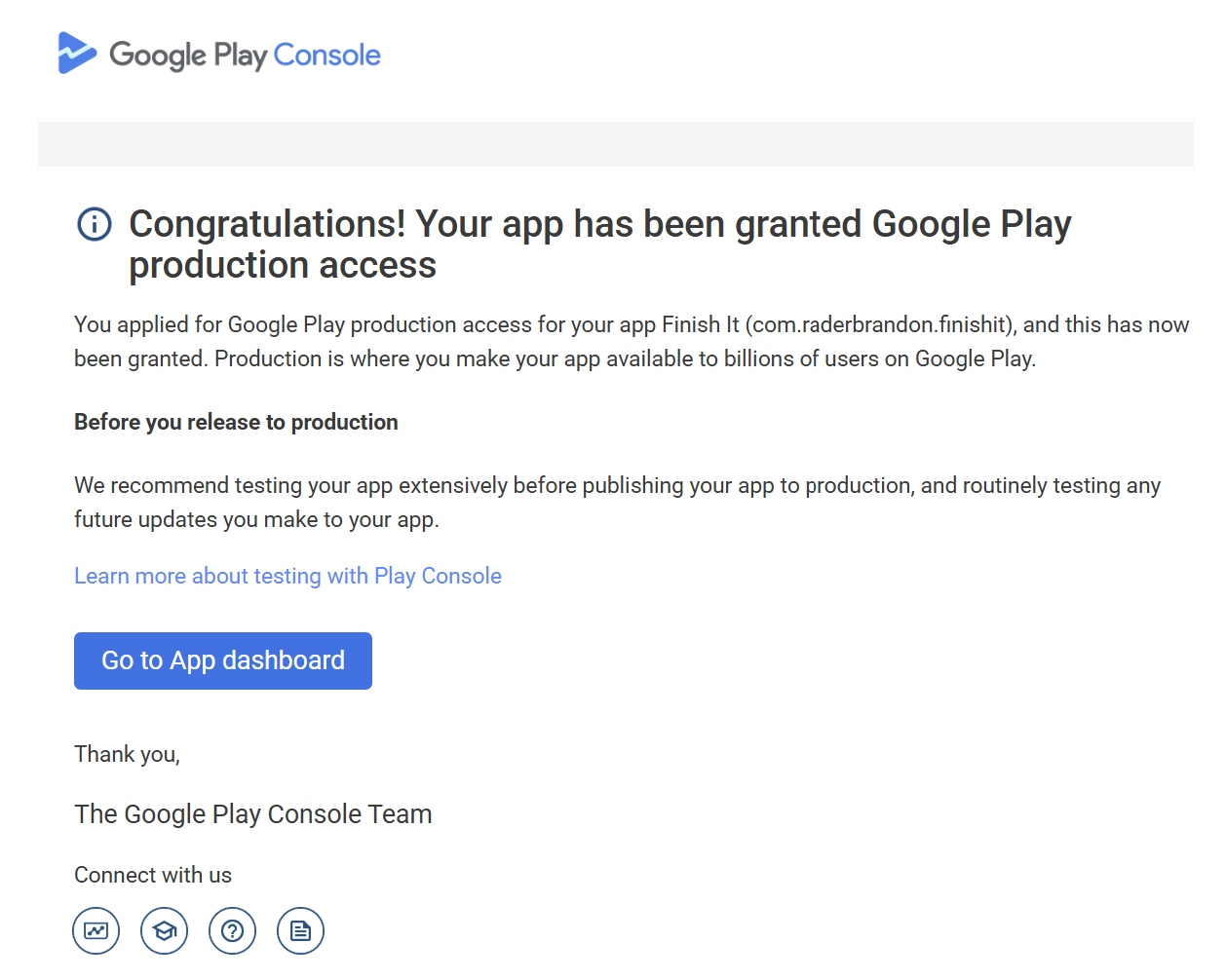
Verified Production Access
Quality QA Testing Reports
Clear, actionable reports with screenshots and evidence for every important issue found during testing.
Real Device Testing & Diagnostics
Real human testers use physical Android devices to test your app, verify real user flows, and provide clear testing evidence and professional QA reports.
Play Store Ready
Get your Android build approved on the first try. We create an audit-ready compliance profile that proves thorough quality assurance.
Affordable Compliance Cycles
Transparent plans built to satisfy Google Play Console guidelines for your Android build.
Loading Packages
Please wait while we fetch the best options for your region...
Frequently Asked Questions
Everything you need to know about passing your closed testing requirements.