Play Store testers for 14-day Android app closed testing in Japan
Get Japanese Play Store testers for Google Play closed testing. Easily clear the Play Console with real 12 testers for 14 days for your Android app.
Launching an Android app in Japan is not just about translating your text into Japanese. It is about matching the intense local demand for flawless digital experiences. Japanese smartphone users have some of the highest standards in the world. If an app feels clunky or crashes on the first day, they will simply delete it and move on. This makes your Google Play Closed Testing phase the most important step of your entire development cycle.
Google requires new developer accounts to run a strict test before they can publish anything. You have to gather a group of people for a set amount of time, with guidelines often demanding 12 Testers for 14 Days depending on your console history. You cannot simply click a button and skip to production. The Play Console wants proof that real people are engaging with your software. When your target audience is in Japan, running this test properly gives you a massive advantage. You get to find those hidden bugs before your actual customers ever see them.
Why Play Store Closed Testing is Critical for Japan
The Japanese mobile ecosystem is incredibly competitive. App designs, user interfaces, and even the way menus are structured differ from Western apps. You cannot risk launching a broken product in a market that expects absolute perfection. The Google Play Closed Testing phase acts as your ultimate safety net.
If you use this time wisely, you can catch layout issues on popular local devices like Sony Xperia or specific Sharp Aquos models. The Play Store Closed Testing period is not just a hoop to jump through for Google. It is your dedicated window to fix localization errors, check payment gateway flows, and ensure your app feels native to a Japanese audience. Skipping this or rushing it will almost certainly lead to your app being rejected by both the Play Console and your future users.
The Danger of Fake Testing Accounts
Many developers look at the 14-day requirement and panic. They try to find shortcuts. The internet is full of cheap services offering automated bots to click around your app. This is a massive mistake. Google has incredibly smart algorithms. They track how a user behaves, how long they stay on a screen, and where they tap. If they detect bot activity, your developer account could be suspended forever.
Real Testers in Japan
Real users install your app on their actual physical devices. They scroll at normal speeds, tap on menus like a human, and naturally leave the app running in the background. They provide genuine crash reports that Google likes to see. This perfectly satisfies the Google Play Closed Testing rules because the data looks completely organic.
Automated Bots
Bots use server farms and virtual emulators. They click the exact same spots at the exact same times. The Play Console sees multiple accounts logging in from the same IP address block and flags it instantly. Using bots for your Play Store Closed Testing is the fastest way to get your app banned before it even launches.
When you are targeting a specific region like Japan, having real testers from that country is a huge bonus. Even though Google does not strictly demand testers from your target country, local testers provide localization feedback that bots simply cannot replicate.
Struggling with the 14-Day Testing Requirement?
Skip the hassle of recruiting unreliable testers. Our professional fleet of real Android devices guarantees Google Play compliance in exactly 14 days. Zero bots. Zero emulators. 100% production approval guarantee.
Comparing Your App Testing Strategies
When you face the Google Play Closed Testing requirement, you generally have three paths to choose from. You can try to do it all yourself, you can risk using a shady bot farm, or you can use a dedicated service that provides real human testers.
| Feature | Real Tester Service | DIY (Friends & Family) | Automated Bots |
|---|---|---|---|
| Passes Google Policy | Yes, 100% compliant | Yes, usually compliant | No, high risk of ban |
| Effort Required | Very Low | Extremely High | Low |
| Device Variety | High (Many brands) | Low (Whatever friends own) | None (Emulators) |
| Quality of Feedback | Professional & Actionable | Vague or non-existent | None |
| Reliability for 14 Days | Guaranteed | Very low (people forget) | High but useless |
Let us break down why the DIY route is so difficult. You might think you can just ask your friends to help you out. But remember, the rule often requires 12 Testers for 14 Days or sometimes up to 20 testers depending on your specific console requirements. Asking people to open an app every single day for two weeks is a massive favor. Most people will do it for the first two days and then completely forget. When the Play Console sees that engagement drop to zero, your test fails.
The bot method, as we discussed, is just asking for an account ban. That leaves a professional testing service as the only logical choice for serious developers. A good service guarantees that real humans will opt-in, download your app, and engage with it consistently for the entire 14-day duration, allowing you to focus on building a great product.
The Ultimate Preparation Checklist for Japan
Before you invite a single tester to your app, you need to make sure your Play Console is perfectly set up. If you miss a step, your testers will not be able to download the app, and you will lose precious time trying to figure out what went wrong.
Initial Console Setup
App Details and Localization
Release Management
This checklist might seem extensive, but Google is very strict about these foundational steps. If your store listing is incomplete, the review team will not let your app into the testing phase. When targeting Japan, paying attention to the localization steps in the checklist will also help you later when you finally apply for production access.
Your Roadmap to a Successful Launch
Understanding the journey from a finished piece of code to a live app in the Japanese Play Store can take the stress out of the entire process. Here is exactly what you should expect during your Google Play Closed Testing journey.
Step 1: Finalize Your Build
Before you even think about testers, your app needs to be stable. Test it extensively on your own physical devices. Make sure the core features work and the Japanese text displays correctly without breaking your layout boundaries.
Step 2: Configure the Testing Track
Navigate to the Play Console and set up your closed testing track. Upload your AAB file, fill out the store listing, and submit it for the initial review. This review can take a few days, so be patient while Google checks the baseline policy compliance.
Step 3: Onboard Your Testers
Once Google approves the track, you will get a unique opt-in link. Send this link to your confirmed testers. They must click it, accept the invitation to the testing program, and then download the app directly from the Play Store on their Android devices.
Step 4: The 14-Day Engagement Period
This is the waiting game. For the next 14 days, your testers need to keep the app installed and open it regularly. Monitor the dashboard to ensure there are no massive crashes that need an emergency fix.
Step 5: Apply for Production
When the 14 days are over and the Play Console confirms you have met the requirements, the button to apply for production will unlock. You will answer a few final questions about what you learned during the test, and then submit your app for its final launch in Japan.
Following this roadmap ensures you do not trigger any red flags with Google. Rushing through the steps or trying to apply for production before the 14 days are truly up will just result in a frustrating rejection.
Frequently Asked Questions About Testing in Japan
Navigating the rules for Play Store Closed Testing can be incredibly confusing for new developers. Here are the most common questions developers have when preparing to launch their apps, especially when looking at international markets like Japan.
Do my testers actually have to be located in Japan?
No, Google does not strictly mandate that your testers must live in the exact country you are targeting for your launch. The Google Play Closed Testing policy simply requires that you have the required number of real testers opted-in and engaged for 14 continuous days. However, if your app is entirely in Japanese and requires a deep understanding of local culture, having testers based in Japan is highly recommended. They can spot language errors, cultural missteps, and layout issues that a non-Japanese speaker would completely miss. From a pure compliance standpoint, testers from anywhere in the world will satisfy the Play Console requirement, as long as they are real humans using real devices.
What exactly does 12 Testers for 14 Days mean?
The standard rule for personal developer accounts created after November 2023 is that you need a minimum of 20 testers opted-in to your closed test for 14 straight days. However, many developers often refer to 12 Testers for 14 Days based on varying regional rules, legacy account statuses, or enterprise requirements. Regardless of the exact number your specific Play Console dashboard displays, the core concept is identical. A specific group of real people must keep your app installed on their devices and engage with it periodically for two full weeks. If a tester uninstalls the app on day ten, they no longer count towards your total, which could jeopardize your entire testing phase.
Can I update my app while the 14-day test is running?
Yes, you absolutely can update your app during the Play Store Closed Testing period, and Google actually encourages this. If your testers find a bug on day three, you should fix it, compile a new App Bundle, and push it to the closed testing track. Your testers will receive the update through the Play Store just like a normal app update. Pushing updates shows the Play Console review team that you are actively maintaining the app and responding to feedback. It does not reset your 14-day timer, provided your testers keep the app installed and remain opted-in during the update process.
What happens if a tester uninstalls the app early?
If a tester uninstalls your app before the 14 days are finished, they drop off your active tester count. If your total active testers falls below the minimum required number, your test will fail to meet the criteria for production access. You will have to find replacement testers to get your numbers back up, and in many cases, you might have to restart the 14-day clock from scratch. This is exactly why relying on random friends or family members is so dangerous. Using a professional service ensures that you have a buffer of reliable testers who guarantee they will not uninstall the app prematurely.
How does Google know if my testers are real humans?
Google Play Services runs deep within the Android operating system and collects a vast amount of telemetry data. They do not just look at the simple download count. They analyze device IDs, Google account histories, network IP addresses, and behavioral patterns. Real humans have varied usage times, they receive notifications from other apps, their battery levels fluctuate, and they connect to different cell towers and Wi-Fi networks. Bots and emulators usually have static IP addresses, identical screen resolutions, and repetitive click patterns. If Google detects that your testers lack organic behavioral data, they will flag your account for policy violations.
What should I write in the final production application?
After you successfully complete the 14 days of Google Play Closed Testing, a button will appear allowing you to apply for production access. Clicking this brings up a mandatory questionnaire. Google will ask you how you gathered your testers, what kind of feedback you received, and what changes you made to the app based on that feedback. You must answer these questions thoroughly and honestly. Do not give one-word answers. Explain that you ran a rigorous closed test, list a few minor bugs your testers found, and describe how you patched them. Providing a detailed, thoughtful response proves to the reviewers that you took the testing phase seriously.
Is it safe to use a paid testing service?
Using a paid service is perfectly safe and compliant, provided you choose a legitimate company that uses real people with actual physical Android devices. A reputable service simply acts as a platform to connect developers with freelance testers. These testers use their everyday smartphones to download and evaluate your app. This organic process aligns completely with Google policies. It only becomes dangerous if you hire a cheap service that secretly uses automated scripts, emulators, or click farms. Always verify that the service you are hiring guarantees real human engagement to protect your developer account.
How long does the final review take after the test is done?
Once your 14-day period is over and you submit your application for production access, the Google review team will evaluate your account. This final review typically takes anywhere from two to seven business days. During this time, they manually check your testing data, read your questionnaire responses, and review your app for broader policy compliance. The timeline can vary depending on the time of year and the current backlog of apps. It is crucial that your testers keep the app installed during this final review period, just in case Google checks the active install base one last time before granting approval.
Do I need a separate test for different Android versions?
You do not need to run separate 14-day tests for different versions of Android. The Google Play Closed Testing requirement is focused on the overall stability and engagement of the app itself, not testing every single OS version in existence. However, it is highly beneficial if your pool of testers naturally uses a wide variety of Android versions and device manufacturers. A diverse testing group helps ensure your app works flawlessly on older devices as well as the latest flagship phones. A professional testing service usually provides a good mix of devices by default.
Why are Japanese users so sensitive to app crashes?
The Japanese market is highly saturated with premium digital products. Users in Japan are accustomed to services that function perfectly right out of the box. If an app crashes, drains the battery excessively, or has poorly translated menus, it shatters their trust in the brand. They are very likely to leave a detailed negative review on the Play Store and immediately uninstall the app. Because the standard for quality is so immense, running a thorough Play Store Closed Testing phase is not just a Google requirement, it is a fundamental business necessity if you want your app to survive and thrive in Japan.
Bringing an app to Japan is a massive achievement. By respecting the process, securing real human testers, and treating the 14-day requirement as a valuable QA period rather than an annoying chore, you are setting yourself up for long-term success. Focus on the quality of your code, let dedicated testers handle the compliance, and get ready to launch with total confidence.
How We Deliver 12 Testers
Your journey to Google Play production access, simplified and automated.
Connect Account
Authenticate your account to initialize the 14-day QA fleet for your Android release.
Assign Testers
Upload your testing link. We assign 12 verified users with real Android devices to download and test your Android release.
Daily QA Runs
A dedicated testing supervisor is assigned to monitor progress while testers engage with your Android app and provide feedback throughout the testing period.
Launch Ready
Our lab maintains active installations for two weeks straight, ensuring a clean track record and providing a QA compliance log for your release.
Our Testing Infrastructure
Satisfy your Play Store Console testing obligations with our managed physical device fleet tailored for Android builds.
The 14-Day Production Guarantee
We complete the required 14-day closed testing process with real human testers and physical Android devices, while providing clear testing evidence and documentation throughout the process.
If Google specifically rejects production access due to insufficient testing engagement, you are covered by our free re-run or 100% refund guarantee, subject to our Refund Policy.
Verified Production Access
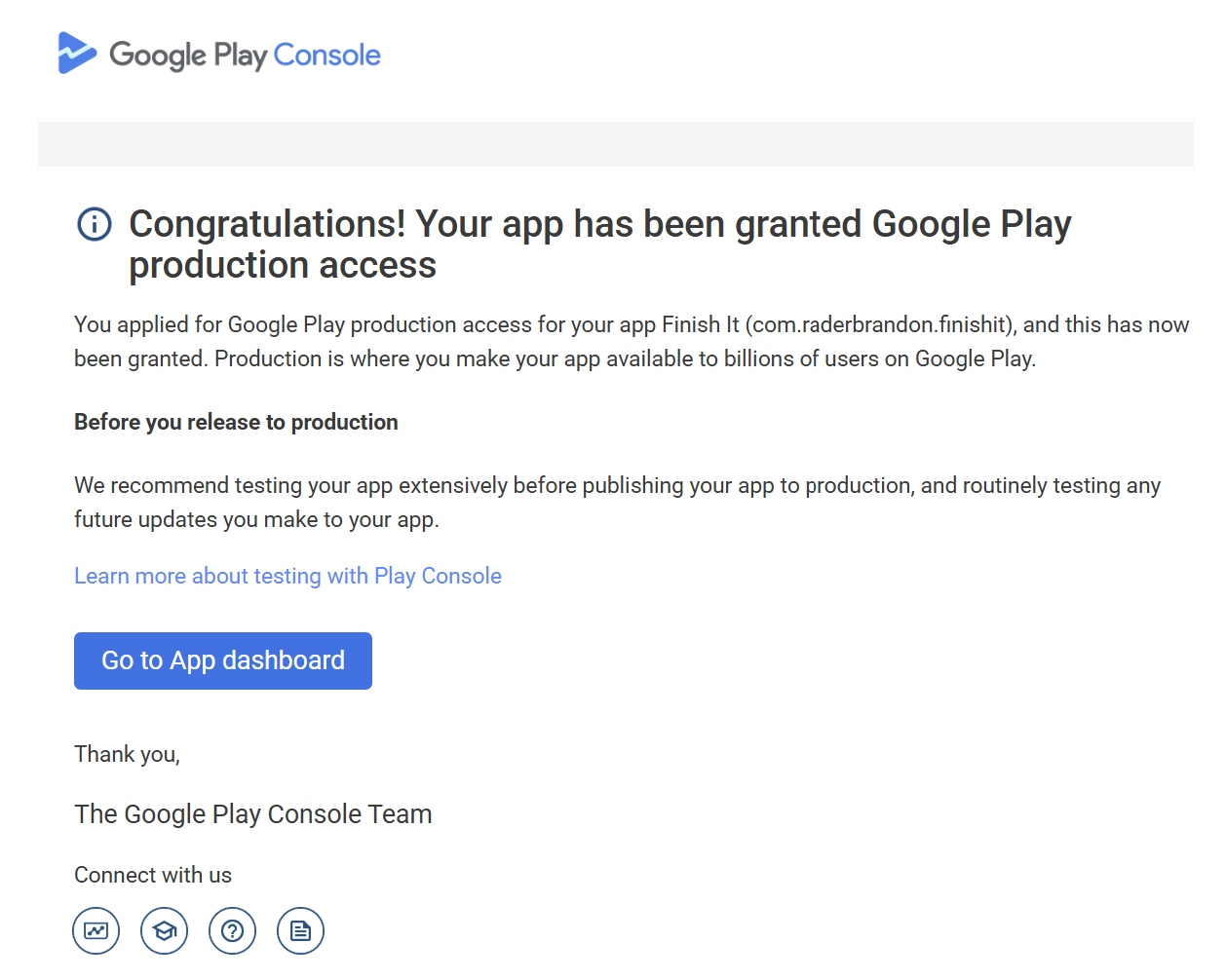
Quality QA Testing Reports
Clear, actionable reports with screenshots and evidence for every important issue found during testing.
Real Device Testing & Diagnostics
Real human testers use physical Android devices to test your app, verify real user flows, and provide clear testing evidence and professional QA reports.
Compliance Audit Passed
Our structured 14-day closed testing process is designed to meet Google Play's production requirements for your Android release.
Simple Closed Testing Pricing
Select the plan that fits your Android app complexity.
Loading Packages
Please wait while we fetch the best options for your region...
Frequently Asked Questions
Everything you need to know about passing your closed testing requirements.