Play Store testers for 14-day Android app closed testing in Turkey
Hire Play Store testers in Turkey for Google Play closed testing. Secure your Play Console approval quickly with real 12 testers for 14 days.
Turkey is an absolute powerhouse for mobile gaming and utility apps, but before your app can even touch this vibrant market, it has to survive the Google Play Console sandbox. If you are developing an app for Turkish users, securing real Play Store testers for 14-day Android app closed testing in Turkey isn't just a technical hurdle, it is the difference between launching successfully and getting stuck in developer purgatory. Google's strict requirements mean that having a random group of people tap around isn't enough. You need 12 testers for 14 days actively engaging with your app, reporting bugs, and providing the localized feedback that actually matters to Turkish audiences. Your app's survival depends on this phase.
Why the Turkish Market Demands Authentic Testing
In Turkey, mobile users have notoriously high standards for localization, performance, and intuitive design. If your app crashes on a popular local device or fails to handle Turkish characters correctly, uninstalls will happen instantly. Real testers catch these localized issues early, ensuring your launch isn't ruined by easily preventable bugs.
Google Play Closed Testing is mandatory for new personal developer accounts. They strictly enforce the testing rules to ensure apps are genuinely polished before hitting the public store. If you rely on unengaged users, Google's algorithms will detect the lack of real activity and reject your production access request.
The Hidden Dangers of Fake Testing Services
It is tempting to cut corners and buy cheap automated testing services, but doing so is incredibly risky. The Play Console tracks session duration, crash reports, and natural usage patterns with terrifying precision. Bots fail these checks spectacularly and instantly raise red flags.
When your Play Store Closed Testing fails due to artificial engagement, you don't just lose two weeks of time. You risk permanent account penalties and have to start the entire testing phase over from scratch. Genuine testers from Turkey provide authentic engagement metrics that Google actively looks for.
Real Turkish Testers vs. Automated Bots
Choosing the right testing method is the most important decision you will make before launch. Here is how authentic testing compares to the alternatives.
Authentic Turkish Testers
- Use diverse, real Android devices commonly found in the Turkish market.
- Provide deep, contextual feedback on Turkish localization and cultural nuances.
- Engage naturally with your app, easily passing all Google Play Closed Testing checks.
- Generate valid, actionable crash reports and highly realistic usage statistics.
Automated Bot Services
- Run on cheap emulators with identical, easily detectable hardware profiles.
- Offer absolutely zero feedback on language, culture, or the overall user experience.
- Frequently flagged by Google's anti-spam systems, resulting in rejected apps.
- Only simulate basic taps, completely failing to explore complex app features.
When you break down the different options, it becomes obvious why investing in real users is the only viable path forward for your success.
| Feature | Real Turkish Testers | DIY (Friends/Family) | Bot Services |
|---|---|---|---|
| Google Compliance | 100% Guaranteed | Variable & Unreliable | Extremely Low |
| Localization Feedback | Deep & Contextual | Superficial at Best | Absolutely None |
| Engagement Realism | Natural Usage Patterns | Highly Inconsistent | Robotic & Flagged |
| Time Investment | Minimal for Developer | Frustratingly High | Low but Risky |
| Account Safety | Completely Safe | Generally Safe | High Risk of Ban |
Getting Ready for Closed Testing in Turkey
Preparation is everything. Before you invite a single tester, you need to ensure your app and your Play Console account are fully ready for the 14-day gauntlet.
Essential Pre-Testing Preparation
Active Mid-Testing Monitoring
Struggling with the 14-Day Testing Requirement?
Skip the hassle of recruiting unreliable testers. Our professional fleet of real Android devices guarantees Google Play compliance in exactly 14 days. Zero bots. Zero emulators. 100% production approval guarantee.
The Roadmap to Production Access in Turkey
Navigating the Google Play Console doesn't have to be overwhelming if you follow a structured, proven process. Here is your roadmap to securing production access.
Step 1: Finalize Your Alpha Build
Before you even think about finding 12 testers for 14 days, your app must be exceptionally stable. Fix all known bugs, finalize the Turkish localization, and ensure your core loop is genuinely engaging. An unstable, crashing app will only frustrate your testers and completely skew your vital engagement data, leading to a rejected production application.
Step 2: Onboard Real Turkish Testers
Gather your dedicated group of Android users based specifically in Turkey. Carefully add their Google accounts to the closed testing email list in the Play Console. Make absolutely sure they understand that the primary goal is authentic, daily usage, not just a quick five-minute look. Provide them with clear instructions on how to opt-in via the web link or the Play Store app.
Step 3: The 14-Day Engagement Period
This is the most critical phase of the entire process. For 14 consecutive days, your testers must install the app, keep it active on their local devices, and open it regularly. Google Play Closed Testing algorithms monitor this daily activity incredibly closely to ensure compliance. If testers uninstall the app early or forget to open it, the 14-day timer might reset, costing you valuable time.
Step 4: Collect and Analyze Feedback
As the testing period progresses, actively gather deep insights on how Turkish users interact with your specific app. Are they completely understanding the onboarding process? Is the local payment gateway clear and trustworthy? Use this qualitative data to make crucial, last-minute pre-launch improvements that will significantly boost your app's retention rates upon public release.
Step 5: Apply for Production Access
Once the arduous 14 days are successfully completed, you must fill out the comprehensive production access questionnaire in the Play Console. Detail the specific feedback you received from your Turkish testers and explain exactly how you actively improved the app based on their suggestions. A vague application will be rejected, so be as detailed and transparent as possible about your development journey.
Comprehensive Frequently Asked Questions About Testing in Turkey
Developers targeting the Turkish market always have questions about the strict Play Console requirements. Here are the most detailed answers to help you navigate the process flawlessly.
Why do I specifically need testers from Turkey for my app?
While Google does not explicitly force you to use testers from the exact country you are targeting, using real testers from Turkey is highly recommended if your app is built for that demographic. Turkish users will provide the most accurate, culturally relevant feedback on your localization, UI design, and overall user experience. Furthermore, testing on local cellular networks and common regional devices helps uncover specific performance issues that international testers might completely miss. If your app relies on local Turkish APIs, payment gateways, or location-based services, regional testers are absolutely essential for a successful, bug-free launch.
What exactly does the '12 testers for 14 days' rule mean?
This is a strict policy implemented by Google for all newly created personal developer accounts. It mandates that you must recruit a minimum of 12 distinct, real users who will opt into your closed testing track. These 12 users must keep your app installed on their primary Android devices and actively engage with it on a regular basis for 14 consecutive days. If testers uninstall the app before the 14 days are up, or if they simply never open it, Google's automated systems will flag the test as incomplete, and your application for production access will be firmly denied.
Can I use automated bots to pass the Google Play Closed Testing requirements?
You absolutely should never use automated bots, emulator farms, or cheap click-services to bypass the testing requirements. Google Play Closed Testing employs highly sophisticated algorithms designed specifically to detect unnatural usage patterns, identical device fingerprints, and robotic engagement. If Google catches you using fake testers, your production access request will be instantly rejected. In severe cases, your entire developer account could be suspended or permanently banned, completely destroying your hard work. Always invest in real, authentic human testers.
How do I ensure my Turkish testers remain engaged for the full 14 days?
Keeping testers engaged requires clear communication and a genuinely interesting app. Start by providing a detailed but easy-to-read testing guide that outlines exactly what features they should explore each day. Send polite, friendly reminders through email or a dedicated messaging group to encourage them to open the app. Most importantly, ensure your app is stable, as frequent crashes are the number one reason testers abandon an app early. Acknowledge their feedback quickly to show them that their time and effort are truly valued.
What happens if a tester accidentally uninstalls the app on day 10?
If a tester uninstalls the app before the 14-day requirement is fully met, they are generally no longer counted towards your required minimum of 12 active testers. This is why it is incredibly highly recommended to recruit more than the minimum 12 users, perhaps 15 or 20, to act as a buffer. If you drop below the required 12 active users, your 14-day continuous testing period may completely reset, forcing you to start the waiting game all over again. Always plan for a small amount of tester drop-off.
Is Google Play Closed Testing required for all developer accounts?
The strict requirement of having 12 testers for 14 days applies specifically to personal developer accounts created after November 13, 2023. If you have an older, well-established personal account, or if you registered as a verified corporate or enterprise organization, you might be exempt from this specific numerical requirement. However, regardless of your account type, conducting a thorough closed testing phase is always considered a critical best practice to ensure your app is polished, stable, and ready for a public audience.
What kind of feedback should I expect from testers in Turkey?
When working with real users in Turkey, you should expect highly specific feedback regarding your app's localization quality. They will point out awkward translations, incorrect grammar, or cultural misunderstandings in your text. They will also provide insights on UI responsiveness, loading times on local internet providers, and how well the app functions on mid-range Android devices which are highly popular in the region. This qualitative data is pure gold for refining your app before the official launch.
How detailed does the production access questionnaire need to be?
When your 14-day testing period concludes, Google will ask you to fill out a questionnaire to apply for production access. You must treat this application very seriously. Provide incredibly detailed, comprehensive answers about the exact feedback you received from your testers. Explain, step-by-step, the specific changes, bug fixes, and feature improvements you implemented based on that feedback. Vague, one-sentence answers like 'fixed bugs' will almost certainly result in a rejection. Show Google that you actively used the testing period to significantly improve your app.
How long does Google take to review the production access application?
Once you submit the comprehensive production access questionnaire, the Google Play review team typically takes anywhere from 24 hours to 7 business days to manually evaluate your application. This timeline can fluctuate heavily depending on the current volume of submissions they are processing and the overall complexity of your application. During this waiting period, it is a very good idea to ask your testers to keep the app installed and occasionally open it, just in case Google checks the live engagement metrics during the review.
If my application is rejected, do I have to wait another 14 days?
If your application for production access is unfortunately rejected, you do not necessarily have to wait another full 14 days, provided your testers have kept the app installed and active. Usually, Google will provide specific reasons for the rejection, such as a lack of detail in your questionnaire answers or insufficient engagement metrics. You can carefully address these specific concerns, perhaps by gathering more detailed feedback or improving your app further, and then reapply without waiting another two weeks. However, if the rejection was due to bot usage, you will likely have to start completely over.
Can I update my app while the 14-day testing is actively running?
Yes, you can absolutely push updates to your closed testing track during the 14-day period. In fact, doing so can actively demonstrate to Google that you are engaged in the development process and rapidly responding to tester feedback. However, be cautious not to introduce game-breaking bugs that might frustrate your testers and cause them to uninstall the app early. Ensure any updates you push are relatively stable and clearly communicate the new changes to your testing group so they know what to look for.
How can I track if my testers are actually opening the app daily?
While the Google Play Console provides aggregated data on active installations and daily active users, it does not give you a granular, user-by-user breakdown of exactly who opened the app on a specific day due to strict privacy regulations. To get a better understanding of individual engagement, you should integrate robust analytics tools like Firebase, Mixpanel, or Amplitude. These tools allow you to track anonymous session data and custom events, helping you verify that your testing group is maintaining the required level of daily activity.
How We Deliver 12 Testers
A straightforward 4-step process to get your Android app approved.
Connect Account
Connect your Google account and choose your preferred closed testing package for your Android app.
Assign Testers
Share your Play Store opt-in URL. We immediately deploy 12 real testers to launch and review your Android app daily.
Daily QA Runs
Our crew initiates daily launch sessions on physical devices, verifying usability and logging crashes for your Android app.
Launch Ready
We continuously perform closed app testing for 14 days to help you meet Google Play production requirements. We also provide a compliance report.
Our Testing Infrastructure
Deploy your Android app onto real retail-grade handsets using our secure laboratory environment.
The 14-Day Production Guarantee
We complete the required 14-day closed testing process with real human testers and physical Android devices, while providing clear testing evidence and documentation throughout the process.
If Google specifically rejects production access due to insufficient testing engagement, you are covered by our free re-run or 100% refund guarantee, subject to our Refund Policy.
Verified Production Access
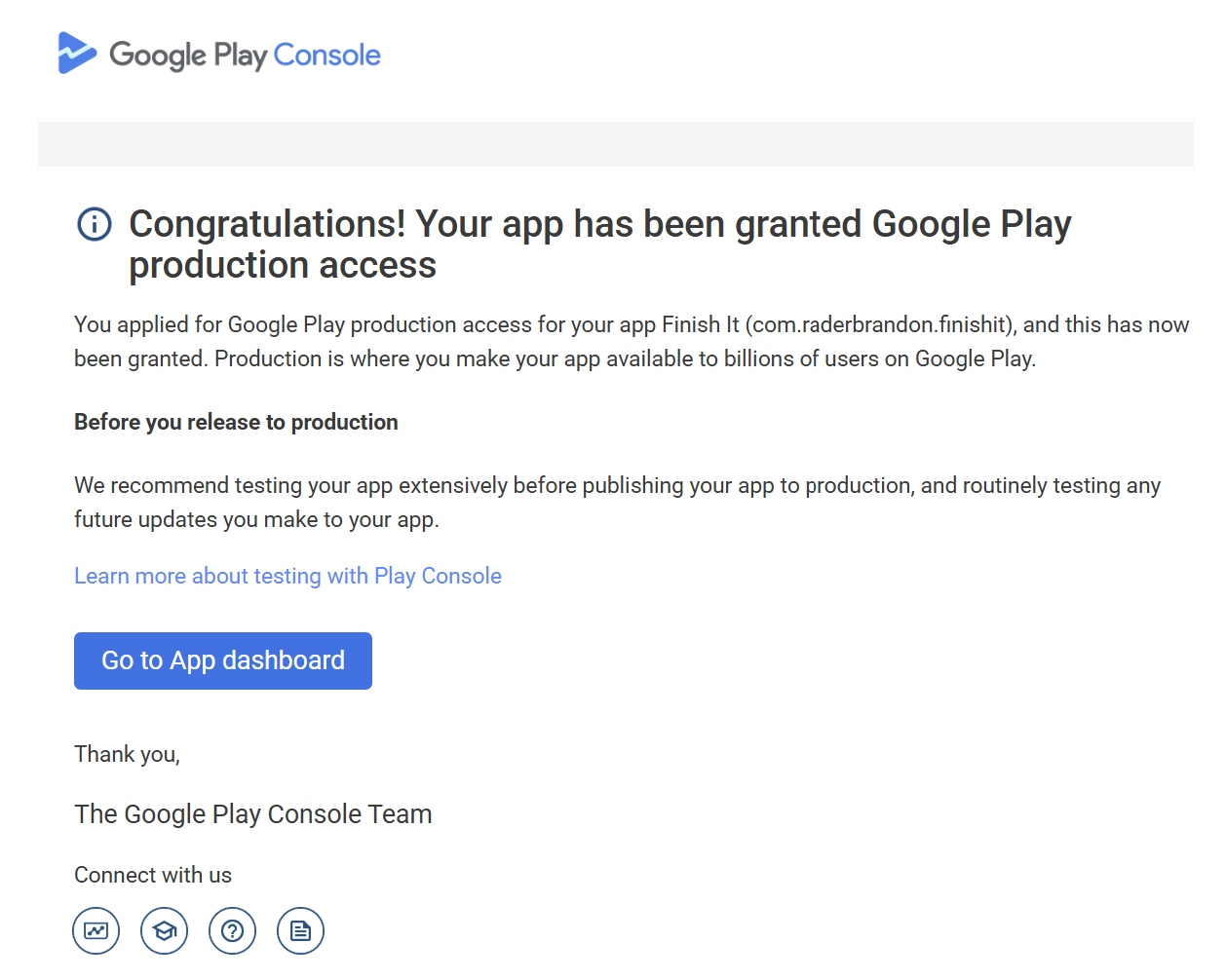
Quality QA Testing Reports
Clear, actionable reports with screenshots and evidence for every important issue found during testing.
Real Device Testing & Diagnostics
Real human testers use physical Android devices to test your app, verify real user flows, and provide clear testing evidence and professional QA reports.
Compliance Audit Passed
Transition your Android app to public production access with confidence. We deliver verified session logs and compliant Console activity.
One Cycle. Complete Approval.
Choose the ideal closed testing cycle for your Android release.
Loading Packages
Please wait while we fetch the best options for your region...
Frequently Asked Questions
Everything you need to know about passing your closed testing requirements.