Play Store testers for 14-day Android app testing in Egypt now
Get Play Store testers in Egypt for Google Play closed testing now. Secure 12 testers for 14 days to clear Play Console rules and launch your app.
Egypt is rapidly becoming a massive hub for mobile app growth and development. But if you want your Android app to stand out in the crowded Egyptian market, you cannot just upload it and hope for the best. Google Play has tightened its rules to make sure only high quality, bug free apps reach users. This means you must pass Google Play Closed Testing before you can hit that publish button. It is not just a hoop to jump through. It is your best chance to catch critical errors on local devices, test how your app handles spotty internet connections in Cairo, and ensure your app resonates with local users. Getting real people in Egypt to test your app is the smartest move you can make before launching.
Understanding the Testing Requirements
The rules are pretty clear, but they can be a headache to manage entirely on your own. To pass the requirements for Play Store Closed Testing, you need a dedicated group of real human beings to install and open your app. They cannot just download it and immediately forget it exists on their phone. They have to actively keep the app installed and engage with it on a regular basis.
If you fail to meet these engagement metrics, Google will simply reject your production application outright. This pushes you right back to square one. You will have to start the entire testing phase over again, delaying your launch and frustrating your team. Finding reliable testers who understand the assignment is the only way to avoid this trap and secure your launch.
The Danger of Using Bots and Fake Accounts
Real Testers in Egypt
Real users provide genuine feedback that can save your app from immediate uninstalls upon release. They use real devices like popular Samsung or Xiaomi phones commonly found across Egypt. This means they will catch device specific bugs and UI glitches that emulators miss. They connect to local mobile networks, allowing you to see how your app performs under real world latency conditions. Most importantly, real users meet Google's strict engagement requirements naturally, ensuring you pass the review process smoothly and safely without risking a permanent developer account ban. They act exactly as a regular user would.
Fake Bot Testing Services
Bot services might promise incredibly quick results, but they are a massive risk that could destroy your business. Google's algorithms are incredibly smart and can easily detect emulator usage, scripted behaviors, or VPN spoofing from click farms. Bots do not give you any usable feedback on user experience, design flaws, or confusing navigation flows. If you get caught using fake accounts for your 12 Testers for 14 Days approach or the standard tester requirement, your entire developer account could be permanently terminated. It is a gamble that simply is not worth the few dollars you might save upfront.
Comparing Your Testing Options
When it comes to completing your Play Store Closed Testing, you generally have three distinct paths to choose from. You can attempt to do it all yourself, hire a professional testing service with real users, or risk everything with cheap automated bots. Here is how they stack up against each other across several vital metrics.
| Feature | Professional Service | DIY Testing | Bot Services |
|---|---|---|---|
| Pass Rate | Very High | Medium | Extremely Low |
| Account Safety | 100% Safe | Mostly Safe | High Risk of Ban |
| Time Investment | Minimal | Very High | Minimal |
| Real Feedback | Yes | Yes (if they reply) | No |
| Cost | Predictable | Variable (Time/Favors) | Cheap but risky |
| Stress Level | Low | Very High | Constant Worry |
Struggling with the 14-Day Testing Requirement?
Skip the hassle of recruiting unreliable testers. Our professional fleet of real Android devices guarantees Google Play compliance in exactly 14 days. Zero bots. Zero emulators. 100% production approval guarantee.
Pre-Launch Checklist for the Egyptian Market
Before you even think about inviting external testers to review your hard work, your app needs to be fully ready for public consumption. A sloppy app will just result in a failed test, frustrated testers, and a massive waste of your valuable time. Use this comprehensive checklist to ensure you are fully prepared for a successful, stress free testing phase that meets all requirements.
Initial App Preparation
You need to compile and generate a signed Android App Bundle file. This is the modern, optimized format Google requires for all new uploads, replacing the older and bulkier APK format. Make absolutely sure your digital signing keys are securely backed up in a safe location. If you lose them, you will have a massive headache trying to push future updates, potentially forcing you to create an entirely new app listing.
Your Google Play store listing does not have to be totally flawless yet, but it absolutely needs to be complete. Add a clear, localized title, a solid description explaining the core benefits, and decent screenshots showcasing the main interface. Even dedicated testers need to know exactly what they are downloading. A sketchy looking, incomplete listing might deter people from actually installing the app, even if they explicitly agreed to test it beforehand.
Google is incredibly strict about protecting user data worldwide. You must have a valid, legally compliant privacy policy linked within your Play Console and easily accessible within the app itself. It needs to clearly and transparently explain exactly what user data you collect, how you securely store it, and how you use it. Do not skip or rush this critical step, or your app will be swiftly rejected before the testing phase even officially begins.
Technical Readiness
Integrate a robust crash reporting tool like Firebase Crashlytics or Sentry before you launch. When a tester's app crashes unexpectedly, you need to know exactly why, on what specific device model, and running which Android version. Relying on average users to manually report complex crashes is a terrible, ineffective strategy. You need automated error logs to identify and fix critical issues quickly during the short testing window.
Keep a close, watchful eye on how much battery power and mobile data your app actively consumes. In Egypt, mobile data can be expensive for average consumers and network speeds can heavily fluctuate depending on the specific location. If your app is a massive resource hog that drains batteries, testers will simply uninstall it in frustration, instantly ruining your continuous testing streak and forcing you to find replacements.
If your app natively supports Arabic, which it should for the Egyptian market, make sure the Right-to-Left layout works absolutely flawlessly across all screens. Misaligned text, backwards animations, or buttons that awkwardly overlap can completely ruin the overall user experience. Test this localization thoroughly on many different screen sizes and aspect ratios internally before inviting external testers to find these embarrassing visual bugs.
Google Play Console Configuration
Carefully navigate to the designated testing section in your Play Console dashboard and create a brand new closed testing track. Give it a highly descriptive, unique name so you do not accidentally confuse it with future tests or different regional launches. This specific track is exactly where you will upload your code, manage your specific releases, and add the emails of your dedicated testers.
You will need to manually gather the specific Google account email addresses of your chosen testers. Create a dedicated Google Group or upload a clean email list directly within the console settings. Make sure you strictly only add people who have explicitly agreed to participate, who own compatible Android devices, and who fully understand the daily engagement requirements expected of them.
Once your app is manually reviewed and approved for closed testing by Google, the platform will generate a unique opt-in link. This is the exact URL you will send out to your prepared testers. They absolutely must click this link, sign into their Google account, and officially join the testing program before they can legally download the app directly from the hidden Play Store page.
Your Roadmap to a Successful App Launch
Getting from a finished, compiled codebase to a live, money making app on the Play Store is a multi-step journey that requires patience. Here is the exact, proven roadmap you need to carefully follow to ensure you successfully meet all Google requirements without suffering any unnecessary delays or painful rejections.
Step 1: Finalize Your Internal Testing
Before you even think about involving external people, thoroughly test the app yourself. Install it on every single physical Android device you own or can borrow. Ask your friends, colleagues, and family to try it out for a few days. Your main goal here is to quickly catch the obvious, surface level bugs. The app immediately crashing on startup, broken authentication screens, or missing visual assets should be fixed immediately. You want your external Google Play Closed Testing phase to focus exclusively on deeper functionality issues and pure compliance, not silly technical mistakes you easily could have caught yourself.
Step 2: Prepare the Play Console
Log into your main Google Play Developer Console account. Methodically fill out all the necessary regulatory forms, including detailed content ratings, target audience declarations, and comprehensive data safety questionnaires. Upload your signed App Bundle securely to the closed testing track you created earlier. This entire administrative process can easily take a few hours to complete properly, so set aside dedicated, uninterrupted time to go through it carefully. Any missing or contradictory information will significantly delay your initial review process.
Step 3: Submit for Initial Google Review
Once absolutely everything is uploaded, categorized, and filled out, you have to formally submit your changes for review. Google will then perform an automated and sometimes manual check of your application to ensure it does not blatantly violate any core platform policies, such as containing malware or prohibited content. This is not the final, deep review, but it is a mandatory, necessary step before any external testers can legally access your app. This initial review queue can take anywhere from a few short hours to a few stressful days.
Step 4: Onboard Your Testers
As soon as Google finally approves your app for testing, immediately grab the generated opt-in link from the dashboard. Send this link directly to your dedicated, pre-selected group of testers based in Egypt. Make sure they fully understand the strict assignment. They need to opt-in, download the app to their main device, and genuinely open it regularly for the next two weeks. Clear, concise communication and setting expectations here is absolutely critical for the ultimate success of your testing campaign.
Step 5: Monitor the 14-Day Testing Period
This is the notoriously stressful waiting game. For the next 14 consecutive days, your recruited testers need to keep the app installed on their phones and actively use it. You can monitor their overall progress, active install base, and daily engagement metrics directly in the Play Console. If a tester uninstalls the app out of boredom or goes completely inactive, you might need to find a suitable replacement quickly to ensure you continuously meet the strict minimum requirements set by Google.
Step 6: Apply for Production Access
After the grueling 14 days have officially passed and you have successfully met all the continuous engagement requirements without dipping below the threshold, a special button will finally unlock in your Play Console dashboard allowing you to apply for full production access. You will need to carefully answer a few mandatory questions about what you learned during the test, the feedback you received, and how you specifically improved the app. Once formally submitted, Google will do one final, comprehensive review before letting you publish your app to the public.
Frequently Asked Questions About Closed Testing
Navigating Google's constantly changing requirements and strict enforcement policies can be incredibly confusing for new and veteran developers alike. We have meticulously compiled and answered the most common, pressing questions developers ask about the mandatory testing phase, especially when specifically targeting the growing Egyptian market.
Why is Google Play Closed Testing absolutely mandatory for all new developers today?
Google recently introduced this strict requirement to significantly improve the overall, baseline quality of apps available on the Play Store. In the past, the store was increasingly flooded with extremely low quality, completely buggy, or immediately abandoned apps that ruined the user experience. By firmly forcing all new personal developers to extensively test their apps with real people for two full weeks, Google ensures that the app at least functions properly, does not crash on startup, and provides a decent user experience before it is widely available to millions. It effectively filters out lazy developers who are not serious about their software and deeply protects everyday users from downloading broken, frustrating applications.
Does the testing phase have to be done exclusively by users physically located in Egypt?
No, Google does not strictly require the testers to physically reside in the exact same country you are targeting for your primary launch. However, if your app is specifically designed, localized, and marketed for the Egyptian consumer market, it is highly recommended to use actual testers based in Egypt. Local users will provide much better feedback on localized Arabic content, accurately test the app on local mobile network infrastructures which might have very different speeds or restrictions, and ultimately ensure the application genuinely resonates with your actual target demographic. Testing locally eliminates blind spots you might easily miss from afar.
What exactly constitutes a valid 'tester' in Google's strict automated monitoring systems?
A truly valid tester, according to Google's complex monitoring algorithms, is a unique individual who possesses a real, established Google account with normal usage history. They must explicitly opt into your specific testing program using the uniquely provided link, securely download the app directly to a physical, non-emulated Android device, and actively keep it installed for the entire uninterrupted 14 day duration. Crucially, they also need to periodically open and genuinely interact with the app. Google's highly sophisticated backend systems can easily and quickly spot inactive ghost accounts, multiple artificial accounts running on the exact same physical device, or cloud based emulators, and these will absolutely not count towards your required goal.
What precisely happens if a recruited tester uninstalls the app unexpectedly on day 10?
If a tester uninstalls the application for any reason before the full 14 days are completely up, they instantly no longer count towards your daily active tester requirement for that specific day and any subsequent days. If this single action unfortunately drops your total number of concurrent active testers below the absolute minimum required threshold, you may tragically have to start the entire 14 day clock completely over from scratch. At the very least, you might have to extend the testing period indefinitely until you have managed 14 continuous, unbroken days with the minimum required number of active testers. This severe penalty is exactly why sourcing highly reliable, committed testers is absolutely crucial.
Can I successfully use the popular '12 Testers for 14 Days' strategy instead of finding 20?
While you might frequently read outdated blogs or hear risky strategies mentioning lower numbers like the 12 Testers for 14 Days approach, you must be extremely careful. Google's official, current policy explicitly and rigidly requires a minimum of 20 opted-in, highly active testers for 14 continuous days for any personal developer accounts created after November 2023. Attempting to bypass this with fewer testers is almost guaranteed to fail the automated checks. It is always significantly safer and highly advised to aim for slightly more than the required 20 testers. Perhaps aim for 25 or even 30 to provide a comfortable safety buffer just in case someone accidentally deletes the app, gets their phone stolen, or buys a new device entirely during your critical testing phase.
How should I properly answer the final questionnaire when applying for production access?
When the grueling two week testing period is finally over, Google will prompt you to thoroughly summarize the specific feedback you received from your testers and explain the concrete changes you made to the codebase in response. Be completely honest and highly detailed in your answers. Explicitly mention specific bugs that were found by testers and exactly how you fixed them in subsequent updates. Discuss any user interface layout tweaks, text changes, or performance improvements made directly based on tester feedback. Google manually reviews these answers and desperately wants to see that you actually, genuinely used this testing period to improve the app, and did not just treat it as a useless waiting room.
Is it entirely safe to pay money for a third-party application testing service?
It depends entirely on the specific methods used by the service in question. If a cheap service offers instant, guaranteed results using automated scripts, server emulators, or overseas click farms, it is extremely dangerous, highly detectable by Google, and will almost certainly lead to your developer account being permanently banned without warning. However, premium, highly professional services that ethically source real, individual human testers who use physical Android devices in targeted regions are generally entirely safe and fully compliant with Google's strict developer policies. You must always aggressively vet any external service thoroughly, ask about their exact methodologies, and read authentic reviews before giving them any access to your application.
Exactly how long does the final, post-testing review take after the 14 days are completed?
Once you finally apply for full production access and submit your comprehensive feedback questionnaire, the final review process typically takes anywhere from a few short days to a full week. However, it can sometimes take longer during busy holiday periods or if there is a massive backlog. During this critical time, Google's internal team manually reviews your app's core functionality, scrutinizes your store listing for policy violations, and deeply analyzes your testing engagement data for any anomalies or signs of bot activity. It is incredibly important to remain completely patient during this opaque phase. If you submit a high quality, fully compliant app with a complete store listing and totally solid, organic testing data, the final review process is usually straightforward and ends in approval.
Am I allowed to push code updates to my app during the 14-day testing period?
Yes, absolutely. You can and strongly should update your app multiple times during the active testing phase if necessary. If your dedicated testers find a critical, app breaking bug on day 3, you should immediately fix it in your code, compile and upload a new App Bundle to the active closed testing track, and politely have your testers update their app via the Play Store. This proactive behavior explicitly shows Google that you are actively maintaining the software, closely monitoring crash logs, and dynamically responding to real user issues. Pushing these technical updates absolutely does not reset your 14 day timer, as long as the core group of testers firmly remains opted-in and engaged.
What exact steps should I take if my app sadly gets rejected for production after testing?
If your app is unfortunately rejected for production, Google will usually provide a specific reason in the Play Console dashboard or via a detailed email. Read this crucial rejection notice incredibly carefully. It might be a very simple, easily fixable policy violation buried in your store listing text, an issue with your app icon, or it might mean their automated systems simply did not see enough genuine tester engagement to satisfy their requirements. You must immediately address the specific, outlined issues they mention, run another full round of testing with new users if strictly necessary, and reapply only when ready. Do not ever just blindly resubmit the exact same binary without making substantial changes, as this can lead to further penalties.
The Testing Pipeline
How we deploy real devices and guarantee compliance for your release.
Sign In
Sign in with Google to configure the closed testing environment for your Android build.
Opt-In URL
Submit your Google Play Console testing link, and our team will assign qualified testers from our testing network to join your Android closed testing release.
Testing Begins
A QA supervisor monitors daily check-ins, ensuring 12 unique Android users engage with your Android build every single day.
Compliance Complete
We guarantee 14 consecutive days of active user check-ins to satisfy Google's compliance policies, delivering an audit-ready PDF feedback report.
Why Developers Trust Us
Experience a next-generation testing infrastructure built for Google Play compliance for your Android release.
The 14-Day Production Guarantee
We complete the required 14-day closed testing process with real human testers and physical Android devices, while providing clear testing evidence and documentation throughout the process.
If Google specifically rejects production access due to insufficient testing engagement, you are covered by our free re-run or 100% refund guarantee, subject to our Refund Policy.
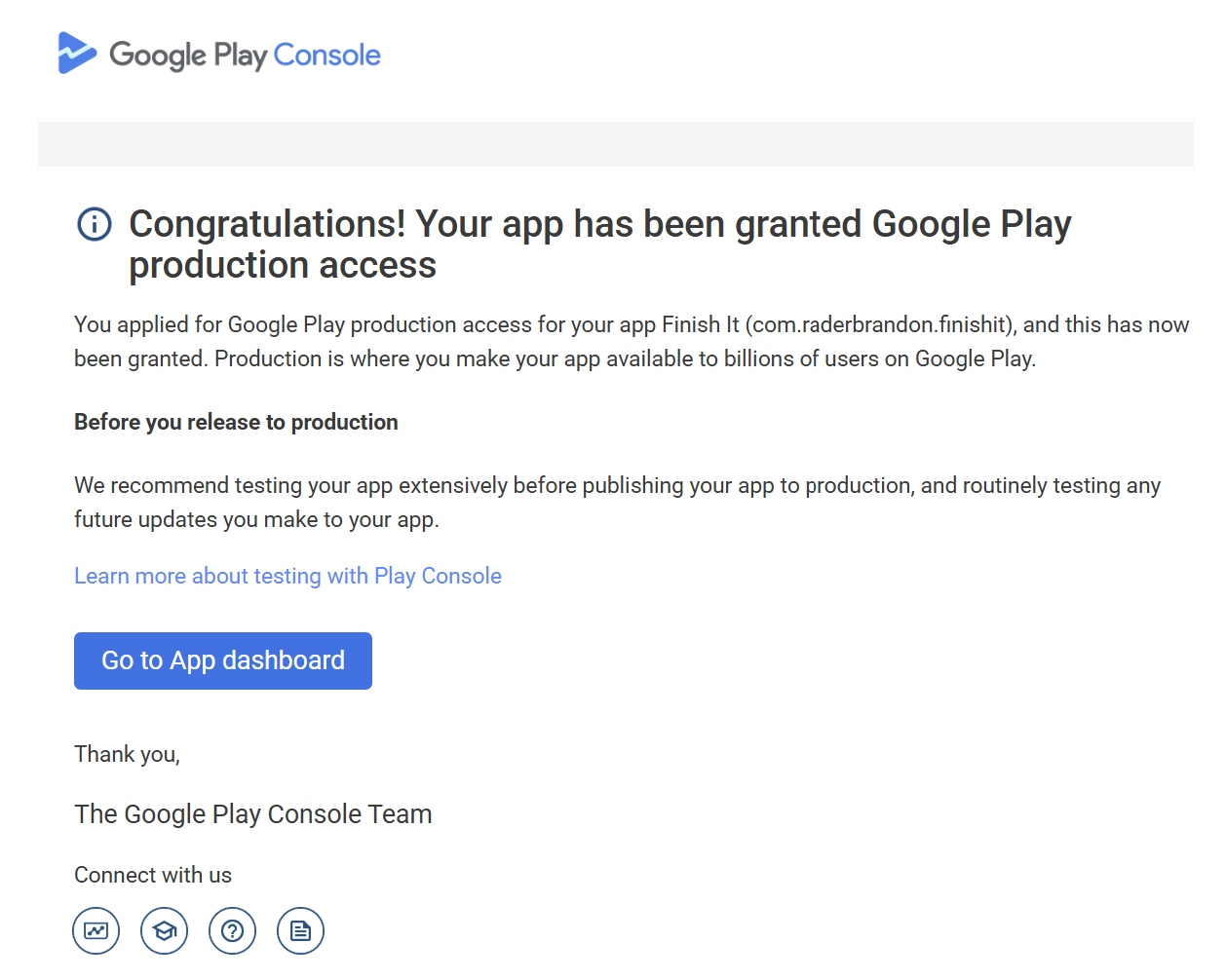
Verified Production Access
Quality QA Testing Reports
Clear, actionable reports with screenshots and evidence for every important issue found during testing.
Real Device Testing & Diagnostics
Real human testers use physical Android devices to test your app, verify real user flows, and provide clear testing evidence and professional QA reports.
Guaranteed App Approval
Get your Android build approved on the first try. We create an audit-ready compliance profile that proves thorough quality assurance.
Affordable Compliance Cycles
Transparent plans built to satisfy Google Play Console guidelines for your Android build.
Loading Packages
Please wait while we fetch the best options for your region...
Frequently Asked Questions
Everything you need to know about passing your closed testing requirements.