Play Store testers for 14-day Android closed testing in Algeria
Find Play Store testers in Algeria for 14-day Google Play closed testing. Fulfill Play Console requirements with 12 real testers and launch quickly.
Understanding the 12 Testers for 14 Days Mandate in Algeria
Google introduced closed testing requirements to eliminate unstable apps, broken payment gateways, and substandard user interfaces from the Play Store ecosystem. For developers across North Africa, meeting this standard means orchestrating a group of real people who install, open, and interact with your application every single day over a two-week period.
+-------------------------------------------------------------------------+
|                  14-DAY CONTINUOUS CLOSED TESTING CYCLE                 |
+-------------------------------------------------------------------------+
|  Day 1-3: Opt-in confirmation, base install, first session telemetry    |
|  Day 4-8: Feature exploration, UI stress testing, network switching     |
|  Day 9-12: Background sync, push notification check, memory profiling   |
|  Day 13-14: Final build feedback, zero crash spikes, production ready    |
+-------------------------------------------------------------------------+
The algorithm running behind the Google Play Console tracks continuous engagement rather than simple install counts. If your testers drop out on Day 6, or if their devices fail to ping Google Play Services, the 14-day timer can reset or pause, prolonging your release cycle and blocking access to international revenue channels.
Local Device Ecosystems and Algerian Telecom Challenges
Testing an app in North Africa involves unique technical dynamics that emulators and generic testing pools fail to replicate. In Algeria, smartphone market share is heavily distributed among budget and mid-range devices from Xiaomi (Redmi series), Samsung Galaxy A-series, Realme, Oppo, and Transsion brands (Tecno and Infinix). These phones run aggressive background battery savers like MIUI, HyperOS, and HiOS that often kill background services, worker managers, and push notification receivers.
Furthermore, network switching between 4G and 3G on Mobilis, Djezzy, and Ooredoo can cause unexpected socket drops, authentication token expirations, and delayed asset caching. Real device testing surfaces these regional edge cases early:
- Aggressive RAM Management: Custom OEM skins terminate foreground services when users minimize the app.
- Variable Bandwidth Latency: Intermittent connectivity reveals poor offline caching or broken retry logic in network calls.
- Biometric and Hardware API Differences: Different budget optical fingerprint scanners and camera sensors test compatibility edge cases.
- RTL and Arabic Localization Layouts: Real bilingual testers catch layout overflows, clipping, and reversed glyphs when switching between French, Arabic, and English.
Real Device Testers vs. Emulator Bot Networks
When searching for testers, some indie developers make the mistake of using automated bot services, emulator farms, or reciprocal testing groups found on social media forums. Google Play's automated fraud detection inspects hardware identifiers, Google Play Services sync events, and user interaction signals. Fake testing rings result in immediate review denials or account bans.
Authentic Managed Testers
- Genuine Hardware: Verified physical Android devices across various OEM brands and OS versions (Android 10 through 15).
- Natural User Behavior: Daily unique sessions, varied touch interactions, screen rotations, and realistic navigation flows.
- Organic Log Generation: Continuous Google Play Services telemetry, ANR reporting, and crash metric streams.
- Constructive Qualitative Feedback: Meaningful suggestions submitted via private Google Play feedback channels.
- Zero Account Risk: Compliant with all Google Play Developer Distribution Agreement guidelines.
Emulator Rings & Sub Exchanges
- Virtual Device Signatures: Emulators running identical generic build fingerprints that trigger Play Console fraud flags.
- Dead Opt-ins: Testers accept the web invite but delete or never open the application after Day 1.
- High Churn Drops: Group members abandon testing mid-cycle, resetting the 14-day mandatory timer.
- Zero Interaction Telemetry: No UI events, background tasks, or real network state changes recorded in console analytics.
- Production Rejection: High rate of failed production questionnaires and permanent account scrutiny.
Comparing Closed Testing Strategies for Android Teams
Choosing how to run your Google Play closed testing track determines whether your production application gets approved on your first attempt or gets stuck in repeat rejection cycles.
| Strategy Metric | Professional Managed Testing | DIY Friends & Family Pool | Social Media Swap Groups | Bot & Virtual Device Farms |
|---|---|---|---|---|
| Active 14-Day Retention | 100% Guaranteed Daily Opt-in | High Dropout after Day 3 | Frequent Ghosting / Leaves | Artificial / Stagnant Pings |
| Device Diversity | Diverse OEMs (Samsung, Xiaomi, etc.) | Limited to personal network | Random, unverified | Cloned emulator instances |
| Play Console Telemetry | Complete organic session logs | Sparse and irregular | Virtually zero engagement | Flagged as automated traffic |
| Qualitative Feedback | Actionable bug reports and UX notes | Casual or generic notes | Copy-paste generic text | None or script-generated |
| Production Approval Rate | Extremely High (>98%) | Moderate to Low | Very Low (<25%) | Immediate Rejection / Ban Risk |
| Setup Overhead | Zero developer management time | High time spent reminding peers | Daily monitoring and chasing | Low setup, catastrophic risk |
Organized testing gives you clean, undeniable metrics in your Play Console dashboard. Google's review algorithm evaluates your app's stability indices, cold start latency, memory footprint, and crash-free session percentage before human reviewers evaluate your production questionnaire answers.
Struggling with the 14-Day Testing Requirement?
Skip the hassle of recruiting unreliable testers. Our professional fleet of real Android devices guarantees Google Play compliance in exactly 14 days. Zero bots. Zero emulators. 100% production approval guarantee.
Step-by-Step Closed Testing Deployment Roadmap
To achieve an effortless approval from Google Play, your closed testing pipeline should follow an organized, step-by-step process. Here is how professional engineering teams execute the 14-day closed track:
Track Configuration & Opt-in Setup
Create a Closed Testing Track inside Google Play Console. Define your release name, upload your signed Android App Bundle (AAB), and configure your tester email list. Ensure your opt-in URL (web and Android links) is ready for distribution.
Tester Onboarding & Initial Install
Distribute the opt-in invite to at least 12 to 20 verified testers. Each tester joins via Google Groups or direct email list, accepts the testing invitation on Google Play, and downloads the app onto their active daily smartphone.
Daily Interaction & Deep Exploration
Testers launch the app daily across different network conditions (Mobilis 4G, Ooredoo, home Wi-Fi). They navigate screens, input forms, test offline modes, and exercise background sync operations to generate consistent Android vitals data.
Monitoring Android Vitals & Crash Logs
Monitor your Google Play Console vitals tab daily. Watch for Application Not Responding (ANR) rates and crash-free user percentages. Fix any discovered bugs by pushing minor patch updates directly to the closed testing track.
Gathering Private Store Feedback
Collect qualitative feedback submitted through the private Google Play store feedback interface. Document user suggestions, performance notes, and resolution steps to prepare your answers for Google's release questionnaire.
Production Access Application
Once the 14 consecutive days conclude with all testers active, access the 'Apply for Production' button. Fill out the mandatory questionnaire with comprehensive, detailed reflections on your testing feedback, bug fixes, and release readiness.
Essential Pre-Launch Compliance Checklist
Before applying for production access on Google Play Console, run through this comprehensive technical and administrative checklist to guarantee compliance:
Google Play Console Configuration
Technical Stability & Performance
Writing Winning Answers for the Production Questionnaire
The final obstacle after finishing the 14-day test cycle is the Google Play Production Access Questionnaire. This form is scrutinized by human evaluation teams to verify that your testing phase was meaningful rather than superficial.
+--------------------------------------------------------------------+
|                PLAY CONSOLE PRODUCTION ACCESS REVIEW               |
+--------------------------------------------------------------------+
|  1. How did you recruit your testers?                              |
|     -> Detail specific outreach, QA partners, and real users.      |
|  2. What feedback did you receive during testing?                  |
|     -> List concrete UI/UX bugs, network edge cases, and crashes. |
|  3. What changes did you make based on this feedback?              |
|     -> Reference specific build version updates and patch notes.   |
|  4. How did you decide your app is ready for production?           |
|     -> Highlight Android Vitals stability metrics and zero ANRs.   |
+--------------------------------------------------------------------+
Avoid short, one-sentence answers such as "We tested with friends and found no bugs." Such answers signal a lack of real testing and almost always trigger an immediate rejection. Instead, write in-depth paragraphs:
- Tester Recruitment Details: Explain that you engaged a dedicated cohort of real device testers across multiple hardware specifications and network providers in Algeria.
- Specific Feedback Examples: Mention how testers on specific devices (like Xiaomi or Samsung running Android 13) encountered specific UI clipping in Arabic mode or network latency issues during checkout.
- Iterative Updates: Explain how you published an updated AAB build (e.g., version code 2) during the testing window to fix discovered defects.
- Readiness Metrics: Cite zero crash occurrences in your final build, low cold-start latency, and positive confirmation from your testing group.
Frequently Asked Questions
Why does Google Play require 12 testers for 14 days for Algerian developers?
Google enforces this rule for all personal developer accounts registered after November 2023 worldwide, including Algeria. The purpose is to verify application quality, security, and stability before an app reaches the public store. By requiring at least 12 real people to test the app continuously for two weeks, Google ensures that developers uncover critical bugs, optimize performance across diverse hardware, and demonstrate active maintenance.
Can I use emulators or bot software to satisfy the 14-day testing criteria?
No. Using emulators, automated bots, or virtual devices is a violation of Google Play policies and will lead to rejection. Google Play Services monitors hardware metrics, sensor data, natural interaction patterns, and device identification parameters. When automated pings are detected, the Play Console flags the account, pauses or resets the testing timer, and may permanently restrict production access.
What happens if a tester uninstalls the app or stops opening it during the 14 days?
If your active tester count drops below 12 opted-in users at any point during the 14-day window, Google Play Console may pause the countdown or fail to unlock the production application button. To protect your release schedule against unexpected dropouts, it is recommended to maintain a buffer of 15 to 20 active testers throughout the entire testing period.
Do testers need to be physically located in Algeria to test an Algerian app?
Testers do not necessarily have to reside in Algeria unless your app is geo-restricted in the Play Console to the Algerian territory. However, if your app targets the Algerian market, having testers evaluate the app on local telecom networks like Mobilis, Djezzy, and Ooredoo with French and Arabic language settings provides invaluable real-world validation that prevents post-launch negative reviews.
Can I publish bug fix updates while the 14-day closed test is ongoing?
Yes, updating your app during closed testing is strongly encouraged. When you upload a new Android App Bundle (AAB) to the closed track, Google updates the build for your testers without resetting your 14-day timer. In fact, demonstrating that you deployed updates in response to tester feedback provides concrete evidence of active quality assurance when completing the production access questionnaire.
How does our managed testing service guarantee 100% Google Play compliance?
Our service provides a dedicated community of verified human testers with active physical Android devices. We manage the entire opt-in process, guarantee daily app interactions, generate natural telemetry, and provide constructive feedback throughout the full 14 days. We also provide step-by-step guidance on answering the production access questionnaire, ensuring your app gets approved for production smoothly.
The Testing Pipeline
Your journey to Google Play production access, simplified and automated.
Sign In
Authenticate your account to initialize the 14-day QA fleet for your Android release.
Opt-In URL
Upload your testing link. We assign 12 verified users with real Android devices to download and test your Android release.
Testing Begins
A dedicated testing supervisor is assigned to monitor progress while testers engage with your Android app and provide feedback throughout the testing period.
Compliance Complete
Our lab maintains active installations for two weeks straight, ensuring a clean track record and providing a QA compliance log for your release.
Why Developers Trust Us
Satisfy your Play Store Console testing obligations with our managed physical device fleet tailored for Android builds.
The 14-Day Production Guarantee
We complete the required 14-day closed testing process with real human testers and physical Android devices, while providing clear testing evidence and documentation throughout the process.
If Google specifically rejects production access due to insufficient testing engagement, you are covered by our free re-run or 100% refund guarantee, subject to our Refund Policy.
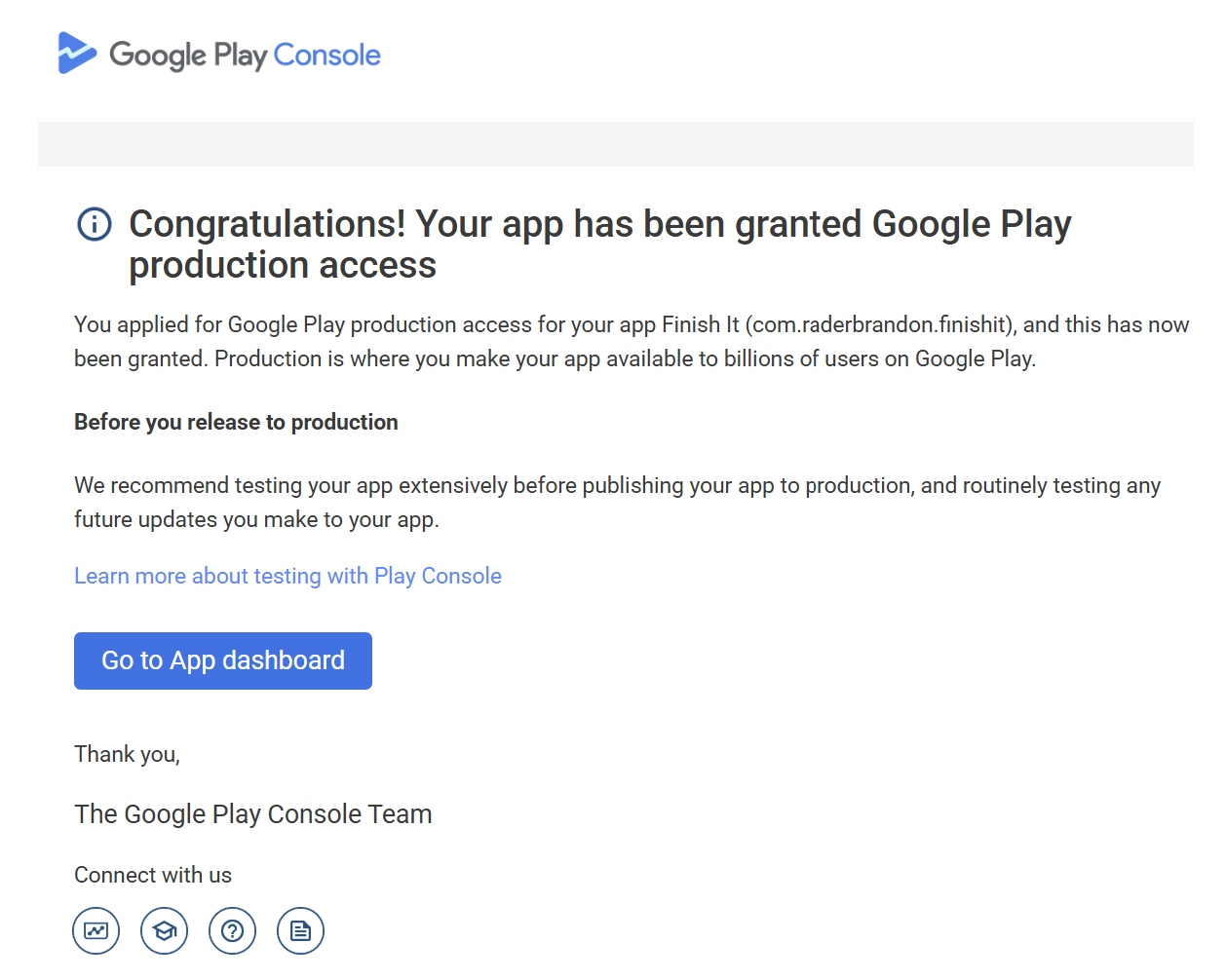
Verified Production Access
Quality QA Testing Reports
Clear, actionable reports with screenshots and evidence for every important issue found during testing.
Real Device Testing & Diagnostics
Real human testers use physical Android devices to test your app, verify real user flows, and provide clear testing evidence and professional QA reports.
Guaranteed App Approval
Our structured 14-day closed testing process is designed to meet Google Play's production requirements for your Android release.
Simple Closed Testing Pricing
Select the plan that fits your Android app complexity.
Loading Packages
Please wait while we fetch the best options for your region...
Frequently Asked Questions
Everything you need to know about passing your closed testing requirements.