Play Store testers for 14-day Android closed testing in Azerbaijan
Find Play Store testers in Azerbaijan for 14-day Google Play closed testing. Fulfill Play Console requirements with 12 real testers and launch quickly.
Navigating Closed Testing in the Azerbaijani Developer Ecosystem
Meeting Google's testing requirements in Azerbaijan demands an understanding of both local user behavior and strict platform policies. In Baku's vibrant startup accelerators and tech labs, software teams frequently develop apps optimized for local mobile network environments like Azercell, Bakcell, and Nar, alongside multilingual interfaces supporting Azerbaijani Latin script. When submitting to Play Store Closed Testing, your testing cohort must generate natural telemetry on authentic hardware across these conditions.
Google's automated review system evaluates background telemetry to confirm that opted-in users do not just click an invite link and abandon the app. The algorithm expects ongoing interactions, session variety, and continuous installations across the full two-week window. If your testing group fails to interact regularly, or if active installs drop below the strict minimum of 12, Google's internal evaluation pauses, dragging out your release timeline.
Real Device Telemetry vs Synthetic Bot Traps
When developers in Ganja or Baku face tight launch deadlines, the temptation to cut corners by turning to automated bot farms or virtual device pools can be strong. Some shady providers promise instant completion of your 12 testers for 14 days requirement using scripted Android emulators running on distant server racks. Taking this route is the quickest way to ruin your developer reputation and trigger an irreversible account termination from Google.
Google Play Console utilizes advanced machine learning heuristics to analyze touch vectors, accelerometer input, battery drain, and network latency. Scripted bots and emulators leave obvious digital fingerprints: static network locations, identical device IDs, perfectly timed taps, and zero real-world sensor variation. If Google flags your testing track for synthetic engagement, your production access will be denied immediately, and your developer profile may receive a permanent policy violation.
Authentic Human Testers in Azerbaijan
Real people across Azerbaijan install your application through official Google Play opt-in URLs directly onto their personal smartphones. They use authentic Google accounts with established activity histories across diverse Android OS versions ranging from Android 9 to Android 15.
These testers interact naturally by exploring menus, rotating device screens, experiencing real-world mobile data fluctuations, and generating organic touch inputs. When unexpected UI glitches or crashes occur on specific screen resolutions, they provide clear, human feedback that helps you refine your software and pass production review seamlessly.
Automated Scripts & Bot Farms
Automated scripts run headless emulator instances on cloud server farms, generating empty installation numbers without genuine touch inputs. They operate on freshly spun-up Google accounts that have zero real-world search history or payment activity, immediately raising security red flags in Play Console.
Bot services cannot evaluate localized Azerbaijani UI elements, test network handoffs, or submit meaningful qualitative feedback. When Google's anti-abuse algorithms spot these artificial engagement patterns, your closed testing cycle gets wiped out, your production request is rejected, and your developer account risks permanent suspension.
Strategic Testing Approaches Compared
Selecting the right testing path directly determines whether your Android application launches on time or remains trapped in review purgatory. Whether you choose to organize your own testing circle among acquaintances in Sumqayit, utilize automated tools, or enlist a managed testing service, the operational trade-offs are significant.
| Feature & Metric | Professional Managed Service | DIY Personal Network | Automated Emulator Farms |
|---|---|---|---|
| Google Policy Compliance | 100% Guaranteed and Verified | Highly Volatile (Risk of Drop-offs) | Immediate Account Flagging Risk |
| Hardware Environment | Diverse Physical Android Phones | Limited to Friends' Exact Devices | Virtual Emulators & Server Farms |
| Active Engagement Duration | Full 14 Consecutive Days Managed | Inconsistent Daily App Opens | Scripted, Identical Launch Times |
| Actionable Bug & UX Feedback | Structured Written QA Reports | Casual Comments like "Looks Good" | Completely Non-Existent |
| Network & Locale Diversity | Real Cellular Networks (4G/5G/Wi-Fi) | Narrow Local Network Testing | Data Center IP Ranges (Proxy/VPN) |
| Production Access Approval Rate | Exceptionally High on First Attempt | Frequent Rejections Due to Inactivity | Automatic Rejection & Account Ban |
| Developer Time & Effort | Zero Management Overhead | Hours Spent Chasing Friends Daily | High Anxiety and Account Risk |
The Developer Roadmap from Track Setup to Production Release
Navigating the journey from your initial binary upload in Baku to a fully approved public launch on Google Play requires a disciplined, step-by-step workflow. By executing each phase with strict adherence to Google Play Closed Testing guidelines, you eliminate guesswork and build a flawless compliance trail.
Create and Sign Your Production Build
Assemble your final Android App Bundle (AAB) in Android Studio, ensuring you target the latest required Android API level. Sign the bundle with your secure upload key, configure your proguard obfuscation rules properly, and verify that all debug flags are disabled before submitting the package to the Google Play Console.
Configure the Closed Testing Track
Inside the Play Console, set up a dedicated closed track. Prepare a complete Google Group or email roster containing the verified Google accounts of your designated testers. Ensure your store listing details, high-definition app icon, localized screenshots, and official privacy policy URL are live and accurate.
Execute Opt-In and Real Device Installations
Distribute the official Google Play web and Android opt-in links to your verified testers across Azerbaijan. Testers accept the testing invitation and download the build directly through the Google Play Store client onto their physical smartphones, logging official installation events on Google's servers.
Maintain 14 Days of Active Engagement
Over the course of 14 continuous days, testers launch the app, explore workflows, test edge cases, and exercise features across diverse network connections. This uninterrupted activity feeds clean user telemetry into Play Console, establishing that your app is stable, responsive, and retention-ready.
Analyze Pre-Launch Telemetry and Push Fixes
Monitor your Android Vitals, crash logs, and ANR metrics inside the console dashboard. If real user sessions uncover unexpected memory leaks or UI bugs on specific screen densities, upload patched updates directly to the closed testing track without resetting the 14-day timer.
Submit Your Production Access Application
Once the 14-day period concludes with flawless attendance, the 'Apply for Production' button becomes active. Complete the required developer questionnaire with comprehensive details regarding your testing methodology, feedback collected, and technical refinements made, paving the way for immediate approval.
Struggling with the 14-Day Testing Requirement?
Skip the hassle of recruiting unreliable testers. Our professional fleet of real Android devices guarantees Google Play compliance in exactly 14 days. Zero bots. Zero emulators. 100% production approval guarantee.
Comprehensive Pre-Launch Compliance Checklist
Before you publish a closed track release and invite testers, your app architecture, metadata, and developer account must meet all Google Play requirements. Any missing privacy disclosure or broken permission declaration can compromise your entire testing phase.
Google Play Console Setup & Verification
Verify your Google Play Developer identity completely, including your legal business or individual developer name, verified phone number, physical address, and associated merchant payment profile.
Publish a comprehensive, HTTPS-secured Privacy Policy on a public web domain that clearly outlines user data collection, storage policies, third-party SDK disclosures, and account deletion procedures.
Complete the mandatory Google Play Data Safety declaration, precisely documenting every data type collected, encrypted in transit, and shared with third-party advertising or analytics networks.
Fill out the Content Rating questionnaire accurately to obtain official global age rating certificates across all international rating authorities.
Build Quality, Performance & Asset Preparation
Compile a fully optimized 64-bit Android App Bundle (AAB) targeting the latest mandatory Target SDK level without fatal launch exceptions.
Test deep links, back stack navigation, and dark/light theme switching to verify smooth UI rendering across various aspect ratios and font scaling settings.
Upload professional store listing creative assets, including an eye-catching 512x512 app icon, a 1024x500 feature graphic banner, and at least four high-resolution device screenshots showcasing actual in-app functionality.
Audit background service execution, location permission requests, and battery consumption to ensure the app complies with strict Android background execution limits.
Closed Testing Track & Cohort Management
Create a closed testing track in Play Console and generate both web browser and direct Android Play Store opt-in join links.
Confirm a dedicated cohort of at least 12 to 20 verified testers with active, established Google accounts ready to participate.
Establish a dedicated channel or internal logging tool for testers to report bugs, usability issues, and crash context throughout the testing cycle.
Set up active monitoring on your Google Play Console dashboard to track daily active opted-in users and catch drop-offs before they impact compliance.
Deep Dive: What Google's Review Team Looks for in Production Applications
Reaching day 15 is a major milestone, but submitting your application for production access is where many independent developers hit an unexpected wall. Google's human evaluation team reviews your application alongside automated telemetry to verify that the app underwent genuine quality assurance.
When completing the production access questionnaire, generic one-sentence answers will lead to rejection. Google specifically asks:
- How did you recruit your testing cohort?
- What specific feedback did your testers provide during the 14-day closed test?
- What changes, bug fixes, or performance enhancements did you implement in response to tester feedback?
- How did you decide that your application is ready for public production release?
If you used automated bots or an unengaged testing circle that never filed feedback or opened the app, you will have no meaningful data to share. Conversely, running a professional test with real users across Azerbaijan gives you rich, authentic QA records. You can highlight specific UI improvements made for localized layouts, network optimization tweaks for fluctuating connectivity, and crash fixes on specific device models. This level of thoroughness gives Google the exact confidence required to unlock production access on your very first submission.
The Business Value of Managed Testing for Azerbaijani Studios
For development teams and indie creators across Azerbaijan, outsourcing the closed testing phase is a strategic business choice rather than an added cost. Building an app requires hundreds of hours of design, architecture, and coding. Putting that entire investment at risk by relying on unreliable tester swaps or risky bot platforms can set your roadmap back by months.
A managed testing service provides guaranteed reliability:
- Guaranteed Cohort Retention: A managed testing pool maintains an active buffer of extra testers, ensuring your count never dips below 12 even if a user replaces their phone.
- Zero Distraction for Developers: Instead of spending hours each day messaging friends on Telegram or WhatsApp to open your app, your engineers can stay focused on building features, refining marketing assets, and planning post-launch growth.
- Pristine Developer Account Standing: Clean engagement from real human accounts safeguards your Play Console developer profile from automated policy flags, maintaining a spotless record for future app releases.
By approaching the 12 testers for 14 days rule as a structured quality milestone, you ensure that when your application finally launches publicly in Azerbaijan and international markets, it delivers a smooth, 5-star user experience from day one.
Frequently Asked Questions
Why does Google Play strictly enforce the 12 testers for 14 days closed testing requirement?
Google Play introduced this mandatory closed testing requirement for all newly created personal developer accounts registered after November 13, 2023. The policy was established to raise the baseline quality of applications on the Play Store, reduce day-one crash rates, prevent spam and low-effort clones, and ensure that developers thoroughly test their software on real physical hardware before offering it to global public users. By demonstrating sustained testing engagement across two consecutive weeks, developers prove that their application is stable, secure, and ready for commercial production distribution.
Do my closed testers have to be physically located within Azerbaijan?
No. Google Play Console policies do not mandate that your testers reside in the specific country where your developer account is registered or where your app will primarily launch. While having testers in Azerbaijan is invaluable for testing localized Azerbaijani language strings, regional payment flows, and local network behavior on Azercell or Bakcell, Google accepts valid opt-ins from verified Google accounts worldwide. The crucial requirement is that every tester is a real human using an active, authentic Google account on a physical Android device.
What happens if an active tester uninstalls the app or leaves during the 14-day window?
If an opted-in tester uninstalls your application or leaves the testing program, your active tester count decreases in the Play Console. If your total number of active, installed testers falls below the mandatory minimum of 12 at any point during the 14 days, Google's system may pause your compliance progress or reset the testing counter entirely. To eliminate this risk, professional testing services always maintain a surplus safety buffer of active testers (typically 15 to 20 testers) so your active count remains safely above the threshold at all times.
Can I push software updates and bug fixes to the closed track while the 14-day test is running?
Yes, absolutely. Pushing new builds and bug fixes to your closed testing track during the 14-day period is fully supported by Google and is viewed positively by review algorithms as evidence of active development. Uploading a new Android App Bundle (AAB) to address crashes, fix layout issues, or optimize performance will not reset your 14-day progress, provided that your testers update the app and continue their daily interactions without dropping below the required 12-tester threshold.
How does Google distinguish between real human testers and automated bot services?
Google utilizes sophisticated behavioral heuristics, hardware profiling, and account telemetry to identify synthetic testing. Real human testers exhibit natural touch dynamics, variable session durations, screen rotations, network transitions between Wi-Fi and mobile cellular data, and belong to long-standing Google accounts with diverse usage histories. In contrast, bot services run repetitive click scripts on rooted cloud emulators with identical hardware identifiers and fresh, unverified Google accounts. These artificial patterns trigger automated anti-abuse systems, leading to testing disqualification and potential account termination.
What specific details should I provide when applying for production access in Google Play Console?
When applying for production access after completing the 14-day requirement, you must complete a detailed review questionnaire. You should provide clear, professional answers detailing how you gathered your testing cohort, summarizing the specific qualitative and technical feedback received, outlining the bugs and UI adjustments resolved in subsequent builds, and explaining your criteria for production readiness. Providing concrete, transparent examples of your QA process demonstrates to human Google reviewers that your app has undergone thorough validation, maximizing your approval chances on the first submission.
The Testing Pipeline
Your journey to Google Play production access, simplified and automated.
Sign In
Authenticate your account to initialize the 14-day QA fleet for your Android release.
Opt-In URL
Upload your testing link. We assign 12 verified users with real Android devices to download and test your Android release.
Testing Begins
A dedicated testing supervisor is assigned to monitor progress while testers engage with your Android app and provide feedback throughout the testing period.
Compliance Complete
Our lab maintains active installations for two weeks straight, ensuring a clean track record and providing a QA compliance log for your release.
Why Developers Trust Us
Satisfy your Play Store Console testing obligations with our managed physical device fleet tailored for Android builds.
The 14-Day Production Guarantee
We complete the required 14-day closed testing process with real human testers and physical Android devices, while providing clear testing evidence and documentation throughout the process.
If Google specifically rejects production access due to insufficient testing engagement, you are covered by our free re-run or 100% refund guarantee, subject to our Refund Policy.
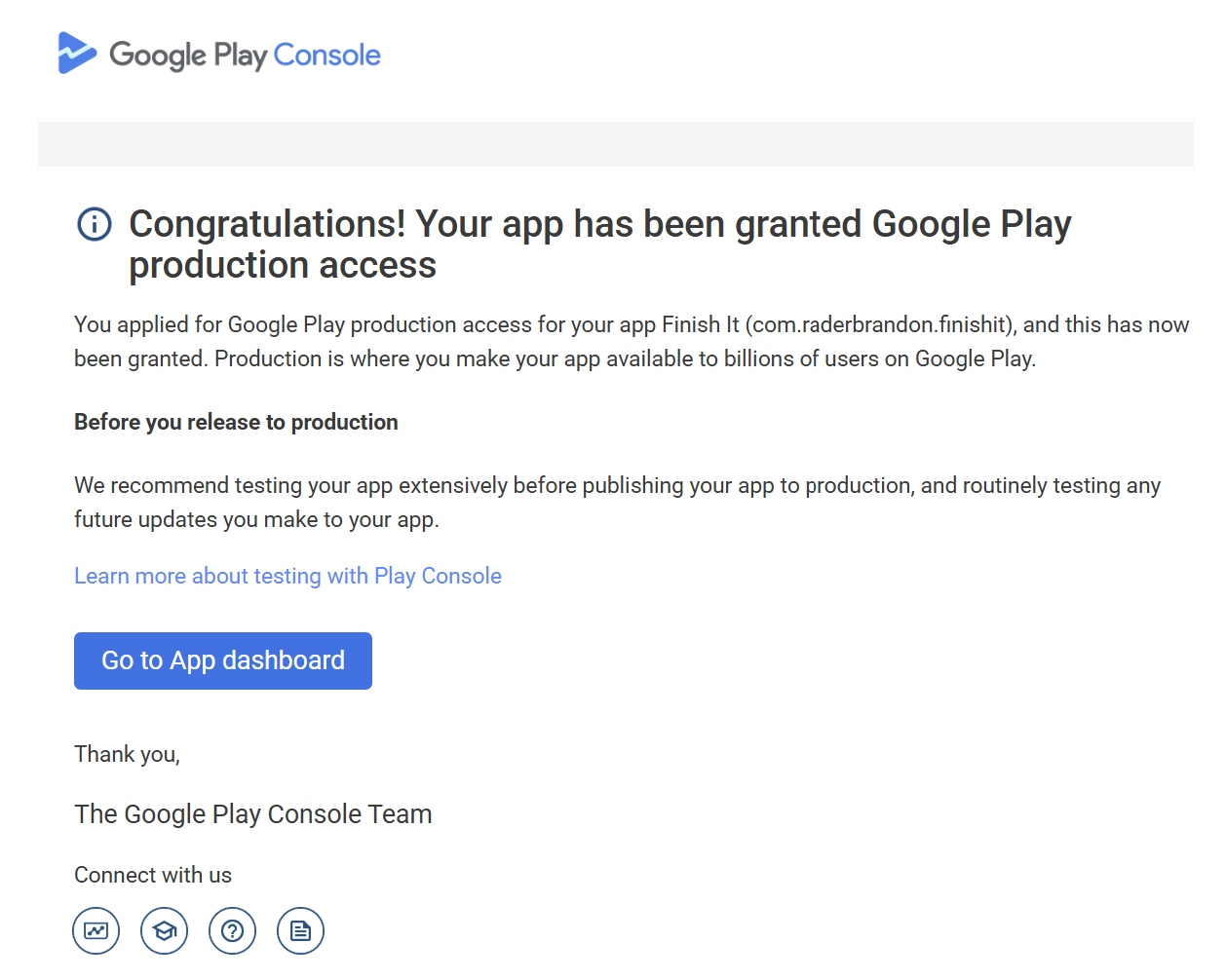
Verified Production Access
Quality QA Testing Reports
Clear, actionable reports with screenshots and evidence for every important issue found during testing.
Real Device Testing & Diagnostics
Real human testers use physical Android devices to test your app, verify real user flows, and provide clear testing evidence and professional QA reports.
Guaranteed App Approval
Our structured 14-day closed testing process is designed to meet Google Play's production requirements for your Android release.
Simple Closed Testing Pricing
Select the plan that fits your Android app complexity.
Loading Packages
Please wait while we fetch the best options for your region...
Frequently Asked Questions
Everything you need to know about passing your closed testing requirements.